

For dedicated volunteers, the joy of giving back is often dampened by the tedious chore of tracking travel expenses. Scrambling to reconstruct a driving history at tax time is not only stressful but frequently leads to forfeited deductions due to fear of IRS audits.
While the IRS allows taxpayers to write off expenses incurred during charitable service, claiming these benefits requires navigating strict substantiation rules. Taxpayers must adhere to the federal stipulation that any deduction requires a contemporaneous record documenting the specific philanthropic intent behind every trip.
For example, driving 50 miles a week to distribute supplies for a local food bank can yield substantial tax savings under the 14-cents-per-mile charitable rate-offering valuable financial relief to volunteers, provided they have the exact dates and odometer readings secured.
To help you maximize these savings, this article provides IRS-compliant mileage log templates and essential record-keeping strategies designed to streamline your tax preparation.
Volunteer Mileage Reimbursement Form
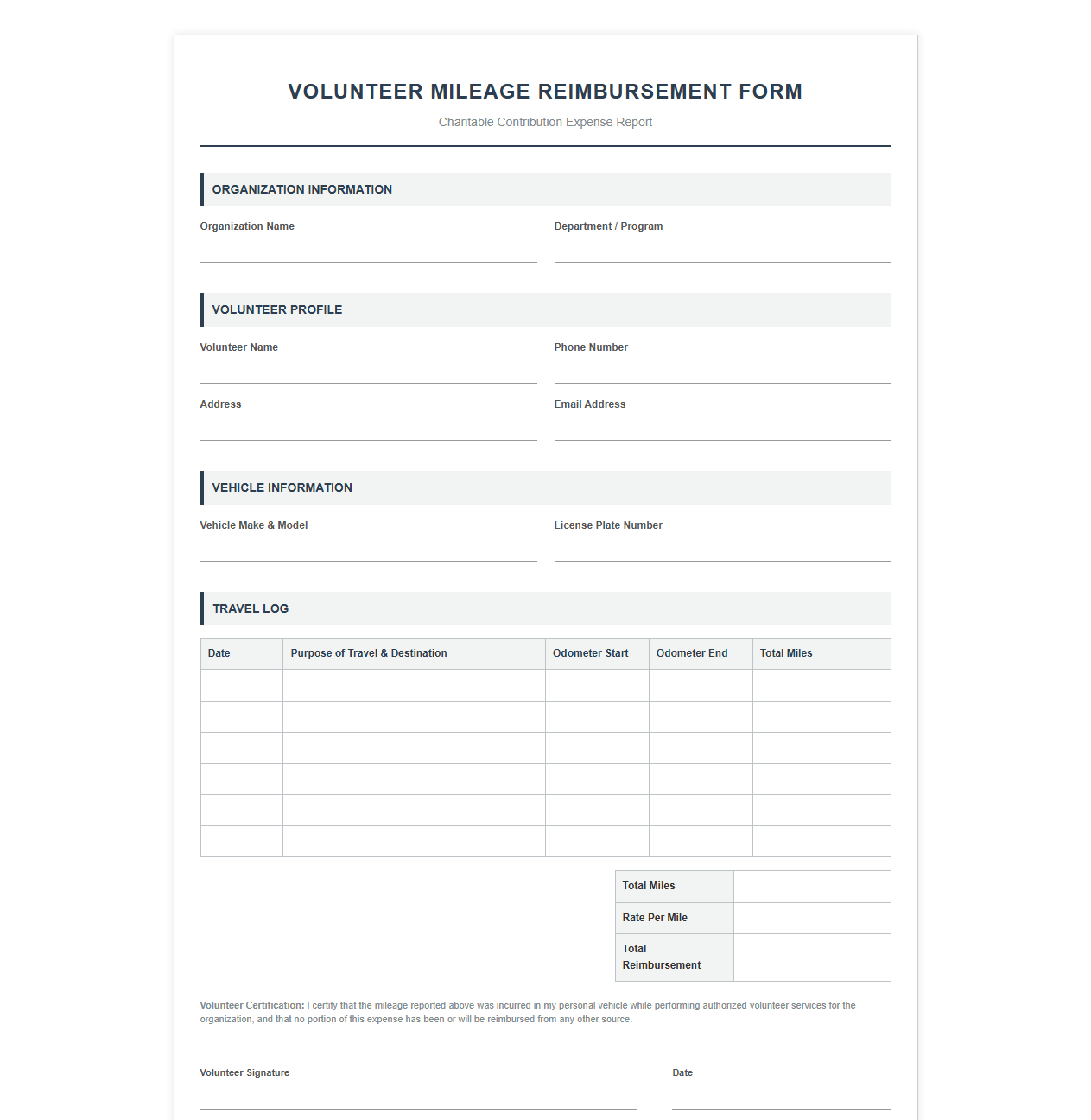 Download: .PDF
Charity Driving Expense Tracker
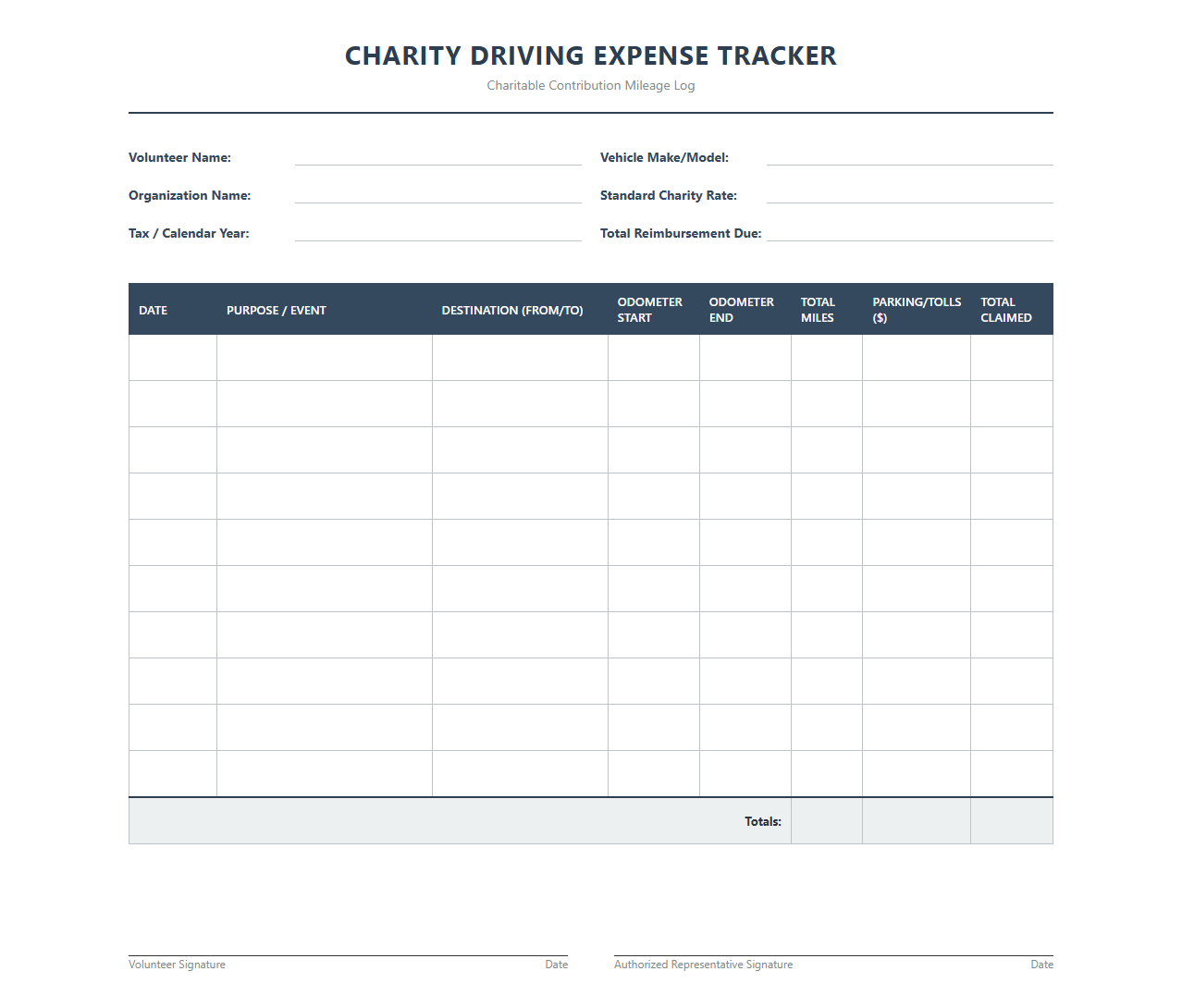 Download: .PDF
Nonprofit Volunteer Mileage Log Template
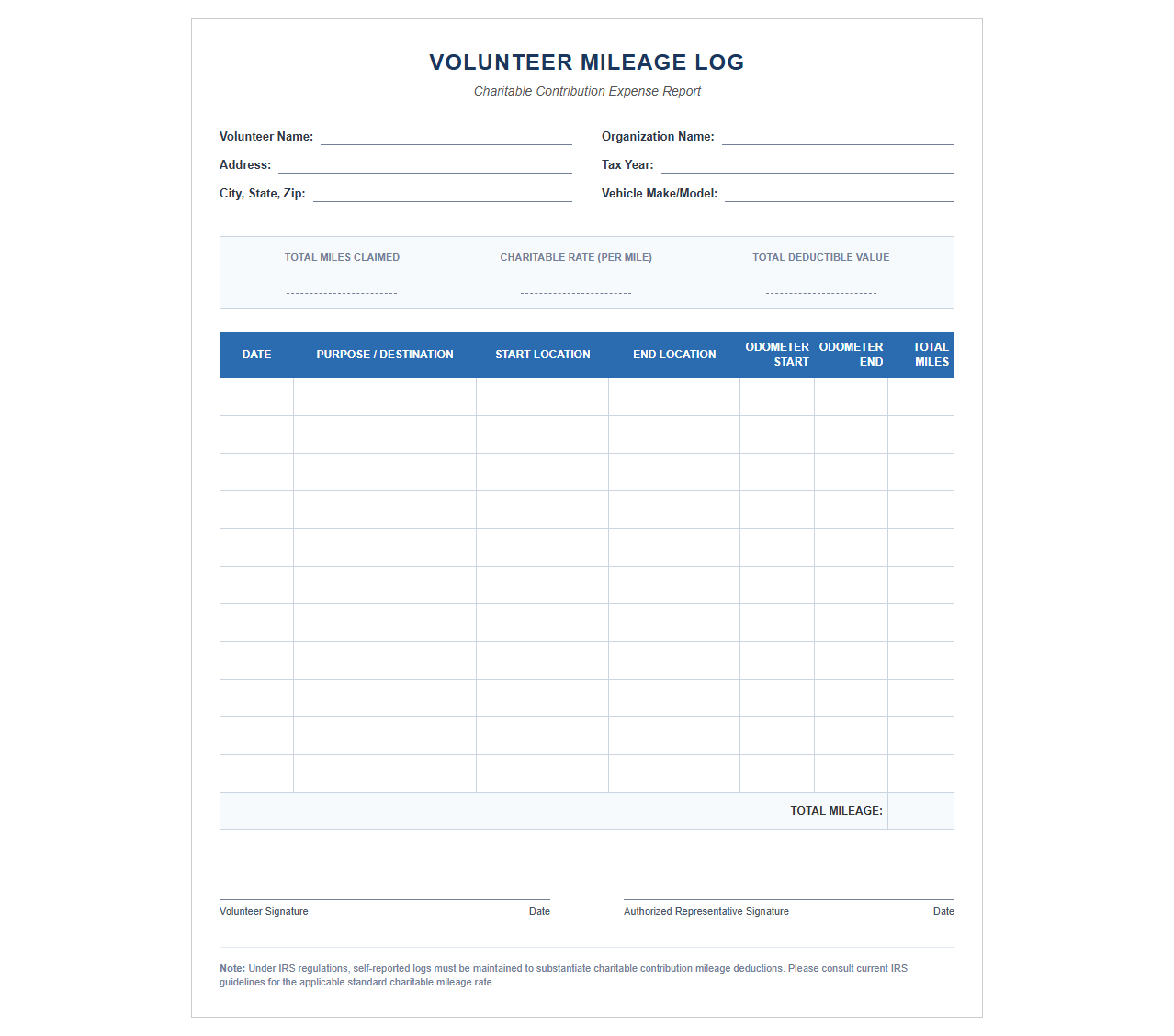 Download: .PDF
Charitable Contribution Vehicle Mileage Sheet
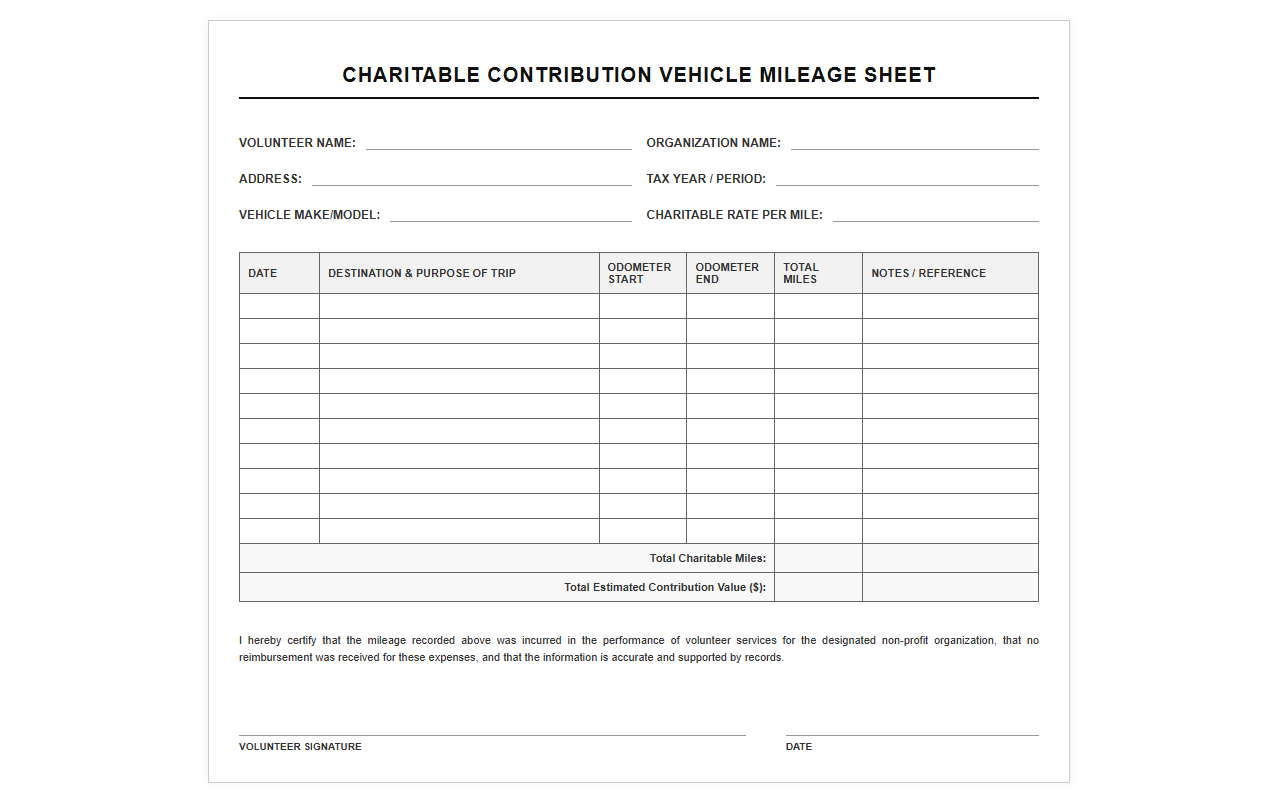 Download: .PDF
Volunteer Tax Deduction Mileage Template
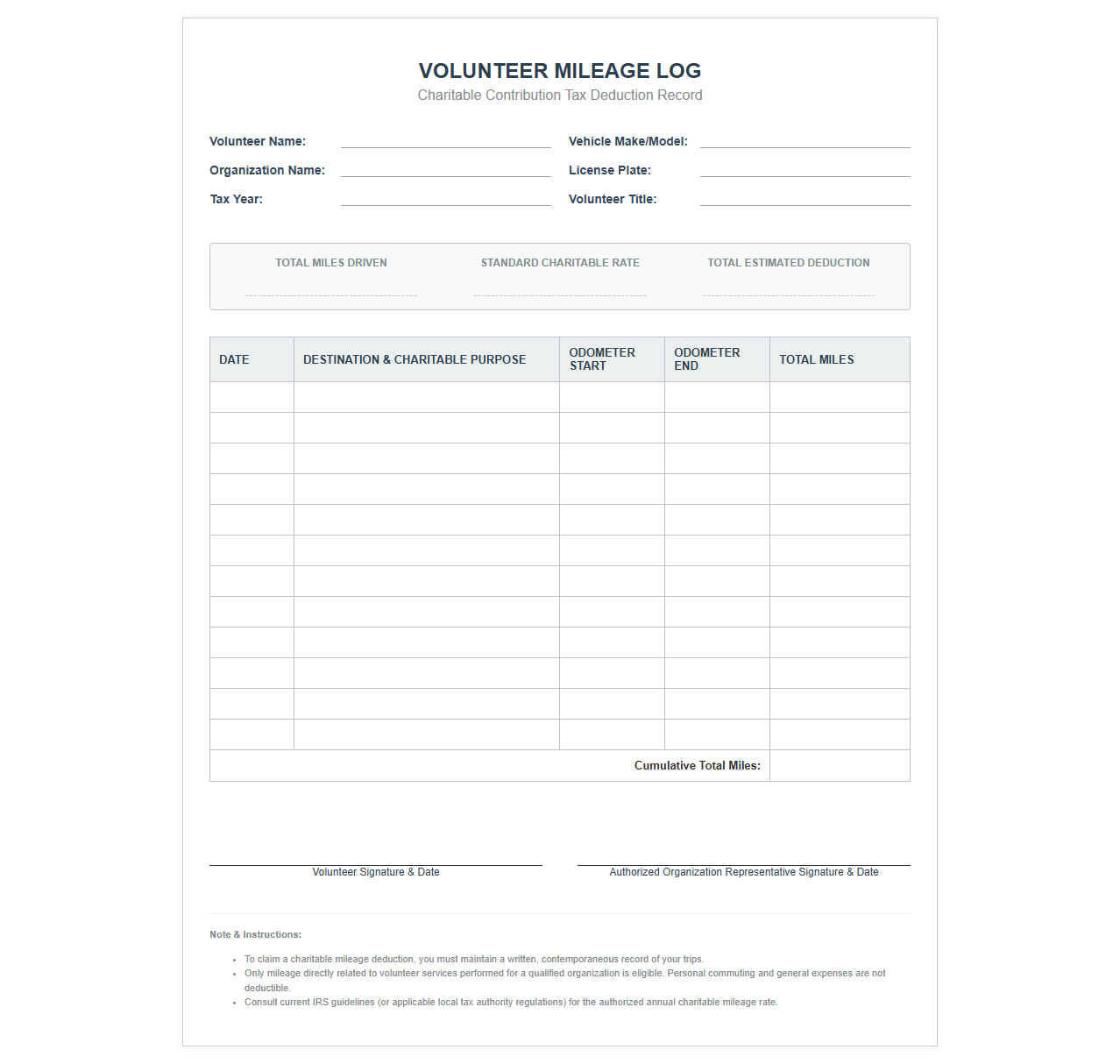 Download: .PDF
Charity Travel Expense Claim Form
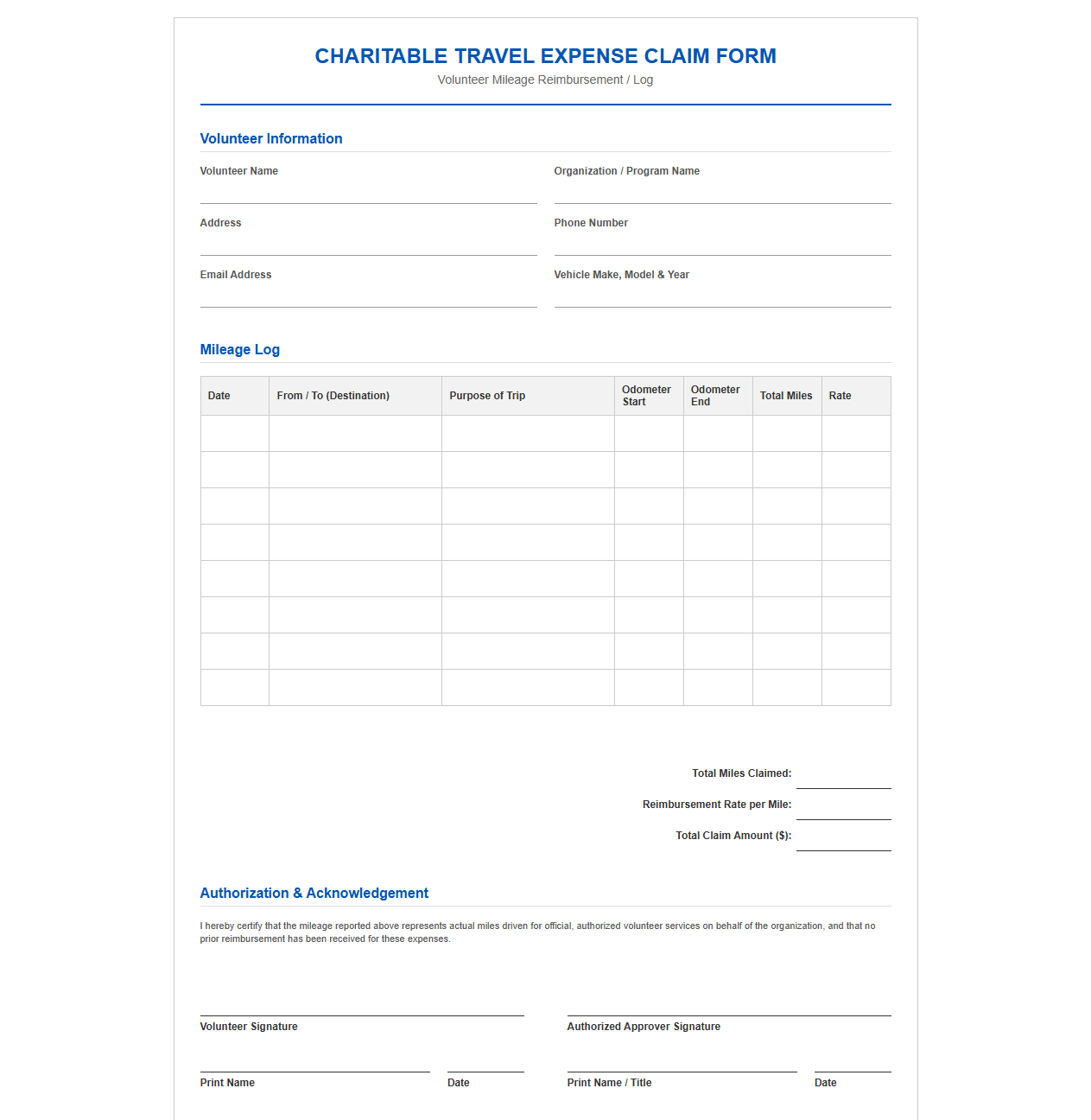 Download: .PDF
Donor Mileage Tax Deduction Spreadsheet
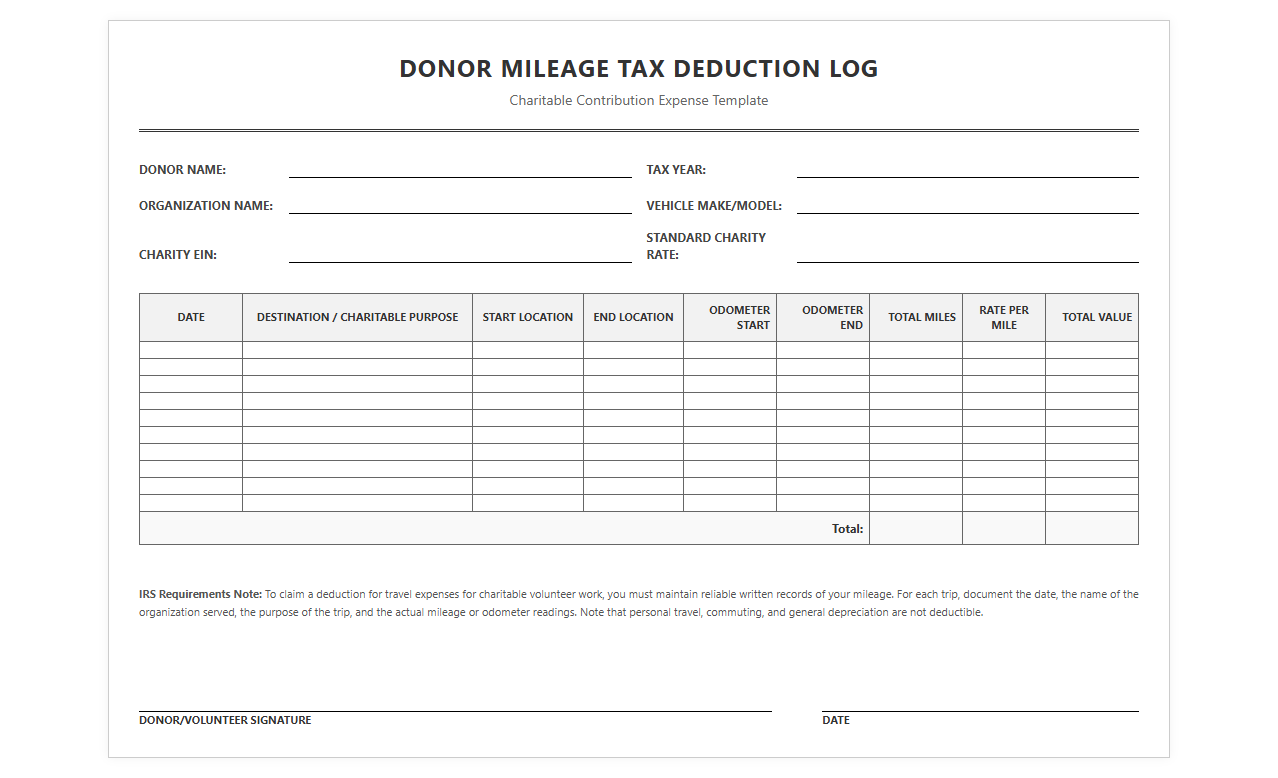 Download: .PDF
Nonprofit Mileage Reimbursement Template
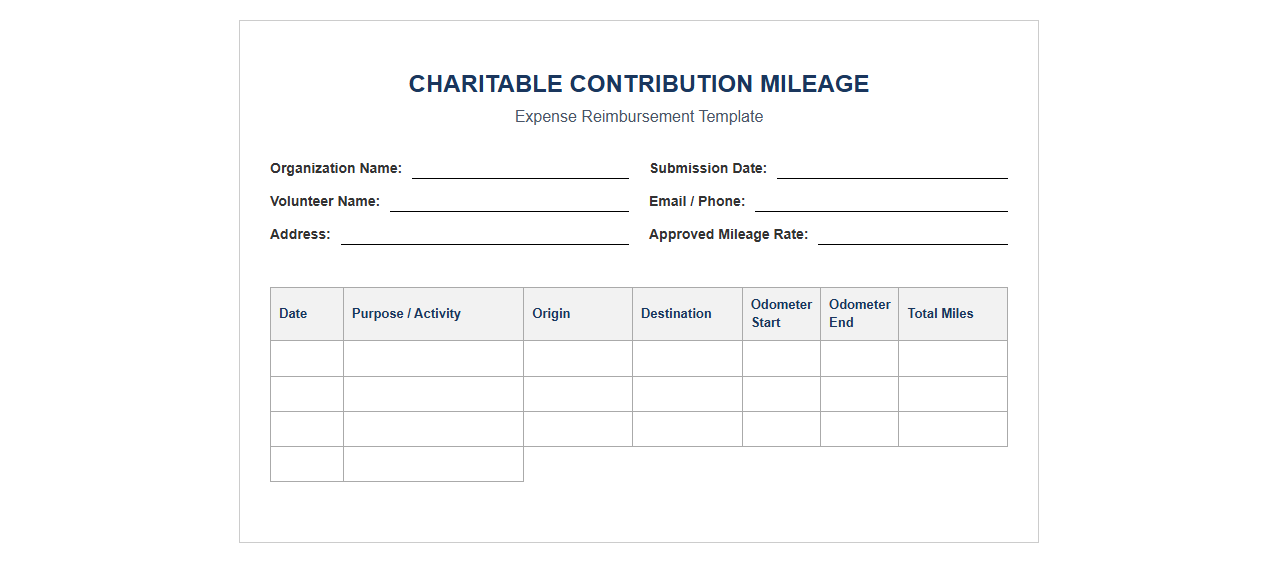 Download: .PDF
Introduction to Charitable Volunteer Mileage Deductions
Giving your time to a charitable cause is highly rewarding, but the out-of-pocket costs of driving can quickly add up. Fortunately, the Internal Revenue Service (IRS) allows volunteers to recoup some of these expenses by claiming a tax deduction for their charitable mileage. By maintaining an accurate mileage log, you can transform your volunteer road trips into valuable write-offs that reduce your overall tax liability.
Whether you are delivering meals to the elderly, transporting rescue animals, or driving to weekly nonprofit board meetings, every mile you drive for a qualified organization counts. Keeping a precise record of your travels ensures you do not leave money on the table when tax season arrives.
Understanding IRS Rules for Volunteer Driving
To claim a deduction for volunteer driving, you must understand the specific guidelines set by the IRS. The current federal standard mileage rate for charitable service is 14 cents per mile. While this rate is lower than the business mileage rate, it still offers significant savings when tracked consistently over the tax year.
To qualify for this tax benefit, your driving must be directly related to active volunteer work for a qualified 501(c)(3) organization. You cannot deduct mileage for general travel that only incidentally benefits a charity, nor can you deduct the value of your personal time. Furthermore, the IRS requires that you maintain contemporaneous records-meaning you should record your mileage at or near the time of the trip rather than reconstructing your driving history at the end of the year.
Key Elements of a Compliant Mileage Log Template
To withstand IRS scrutiny, your mileage log must contain specific, detailed information for every single charitable trip you make. Using a standardized template helps ensure you never omit critical data points required for tax compliance.
- Date of the Trip: The exact day, month, and year the charitable travel occurred.
- Charitable Purpose: A brief description of the volunteer activity (e.g., "Delivering food pantry donations").
- Destination: The specific name of the charity, location, or route driven.
- Odometer Readings: The starting and ending numbers on your vehicle's odometer to calculate exact distance.
- Total Mileage: The net miles driven solely for the charitable event.
Digital vs. Paper Mileage Log Templates
Choosing how to log your miles depends on your personal workflow and comfort level with technology. Below is a comparison of traditional paper logs and modern digital tracking tools to help you decide which format fits your needs.
| Method | Pros | Cons |
|---|---|---|
| Printable Paper Templates | Easy to keep in the glove compartment; requires no technical skills or battery power. | Prone to physical damage or loss; requires manual math calculations at tax time. |
| Digital Spreadsheets & Apps | Calculates totals automatically; easy to back up in the cloud; highly organized. | Requires a smartphone or computer; potential for data loss if not backed up regularly. |
Step-by-Step Guide to Recording Your Volunteer Trips
Establishing a consistent routine is the easiest way to ensure your mileage log remains accurate and compliant throughout the year. Follow this chronological process for every volunteer journey:
- Record Starting Odometer: Write down your vehicle's starting mileage before you shift into drive.
- Complete Your Volunteer Trip: Drive directly to your charitable destination without taking personal detours.
- Record Ending Odometer: Note the final mileage as soon as you arrive at your destination or return home.
- Calculate and Log Details: Subtract the start reading from the end reading, then note the date, destination, and purpose of the trip.
- Compile Records for Tax Prep: Sum your total annual volunteer miles and hand the organized log to your CPA or enter the figures into your tax software.
Common Mistakes to Avoid When Claiming Deductions
Even well-intentioned volunteers can make mistakes that lead to IRS audit red flags. One of the most common errors is estimating or rounding off distances instead of recording the exact odometer numbers. The IRS does not accept rough estimations like "about 20 miles round trip" during an audit.
Another frequent mistake is combining personal errands with volunteer trips. If you stop at a grocery store for personal shopping on your way back from a charity event, you must split your mileage and only deduct the portion directly dedicated to the volunteer work.
Maximize Your Tax Savings with Organized Records
Taking the time to track your driving habits pays off when you file your taxes. With an organized, audit-ready mileage log, you can confidently claim every cent you deserve, keeping your hard-earned money in your pocket while continuing to support the causes closest to your heart.
Ready to simplify your tax season? Download our professionally designed, IRS-compliant mileage log templates today to start tracking your charitable trips with ease.
Download Your Free Mileage Log Templates

Leave a comment