

For many self-employed professionals, tax season brings the frustrating realization that thousands of dollars in legitimate mileage deductions have slipped through the cracks. This financial leak is rarely due to a lack of driving, but rather the rigorous, often overwhelming record-keeping standards required to withstand audit scrutiny.
Transitioning to the right mileage expense templates bridges this gap, transforming a tedious administrative chore into a high-yield financial strategy that secures your rightful write-offs. However, these tools are only effective if they strictly adhere to regulatory guidelines; a basic spreadsheet is useless unless it is designed for compliance.
To satisfy tax authorities, an optimized template must consistently capture specific details, such as the date, business purpose, and precise starting and ending odometer readings. In this article, we will examine the best self-employed mileage templates available, compare digital and physical formats, and outline a simple workflow to maximize your annual tax savings.
Self-Employed Mileage Expense Log Template
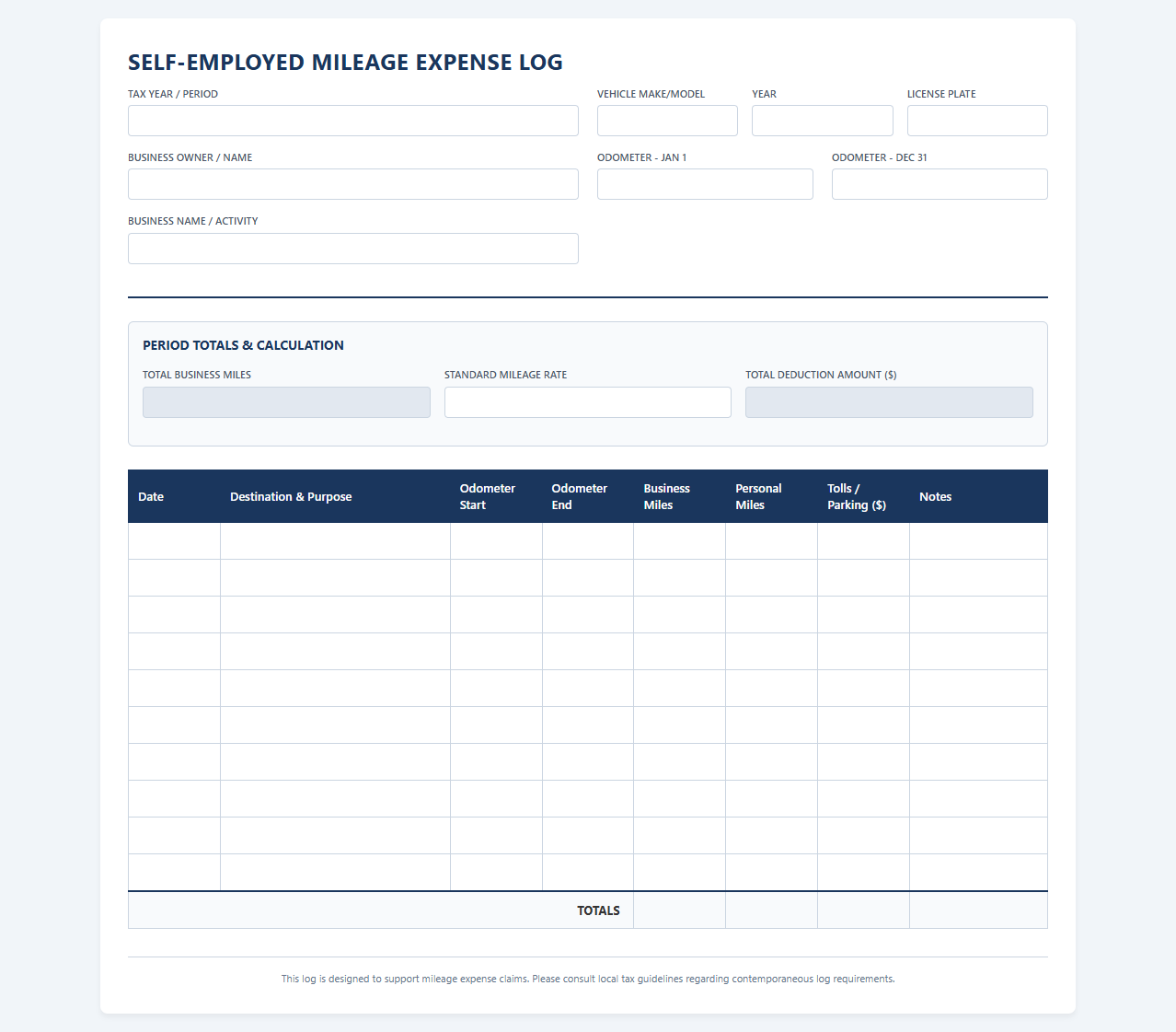 Download: .PDF
Freelancer Mileage and Travel Expense Spreadsheet
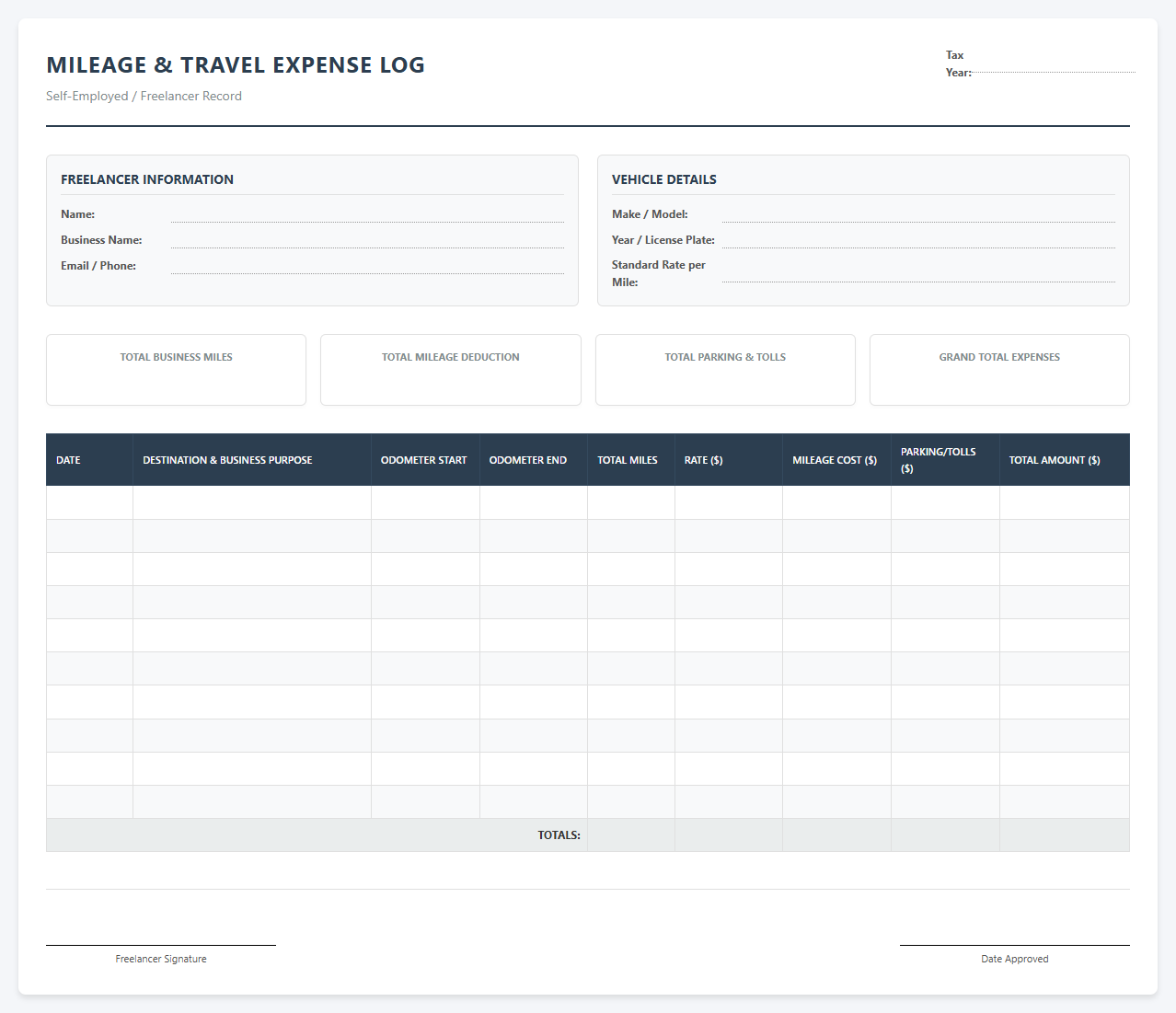 Download: .PDF
Sole Trader Business Mileage Claim Form
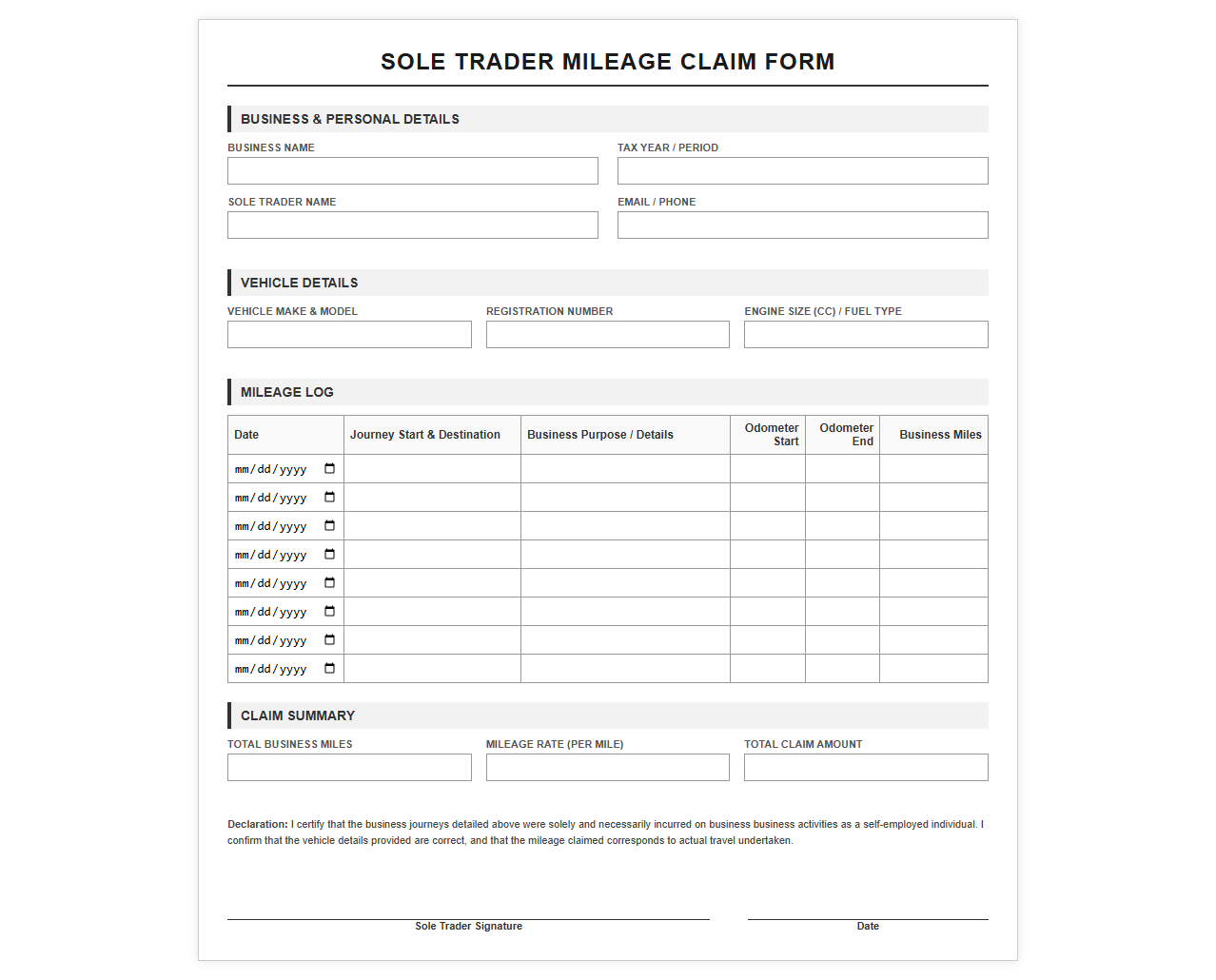 Download: .PDF
Independent Contractor Mileage Expense Tracker
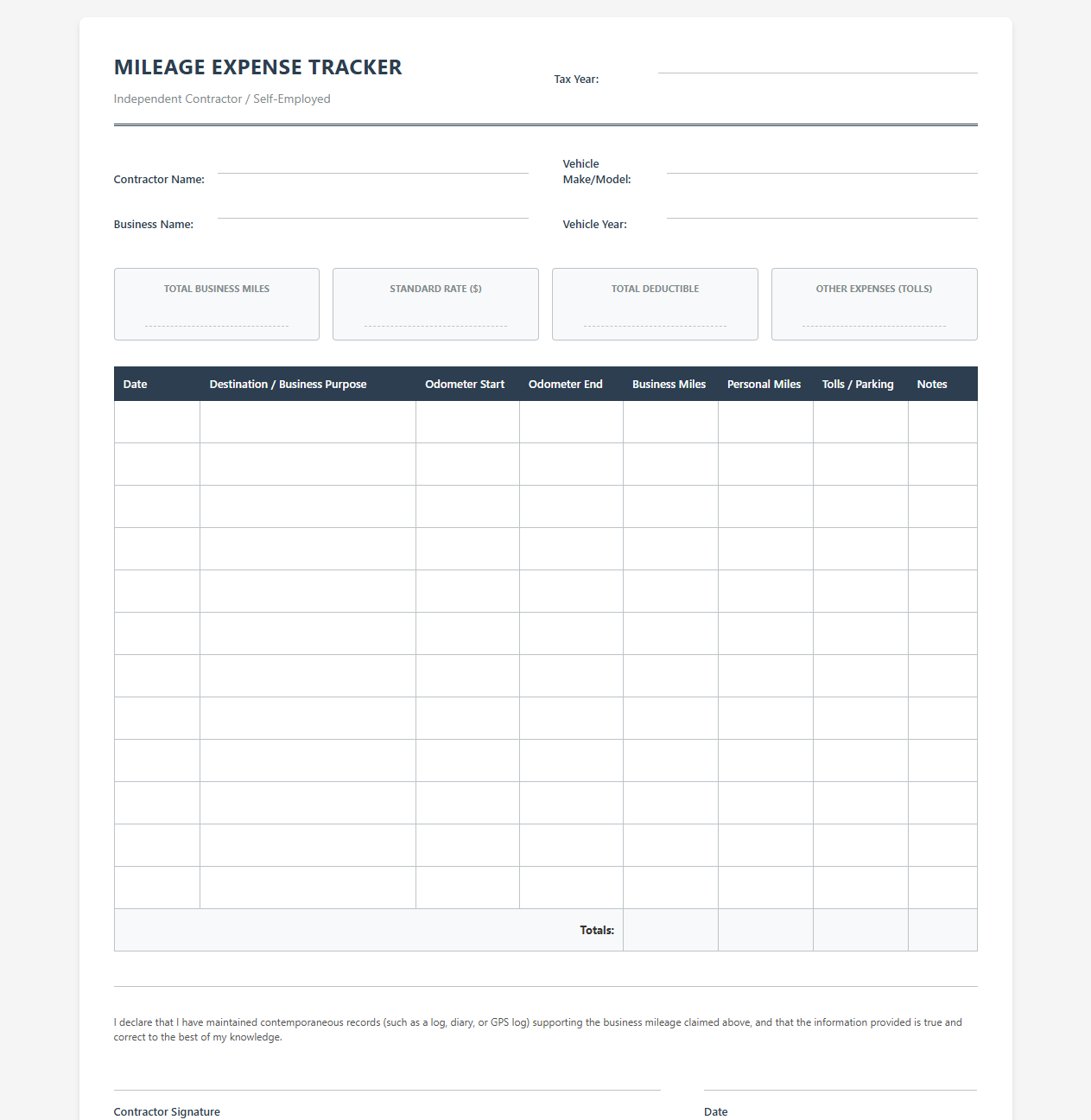 Download: .PDF
Self-Employed Vehicle Expense and Mileage Sheet
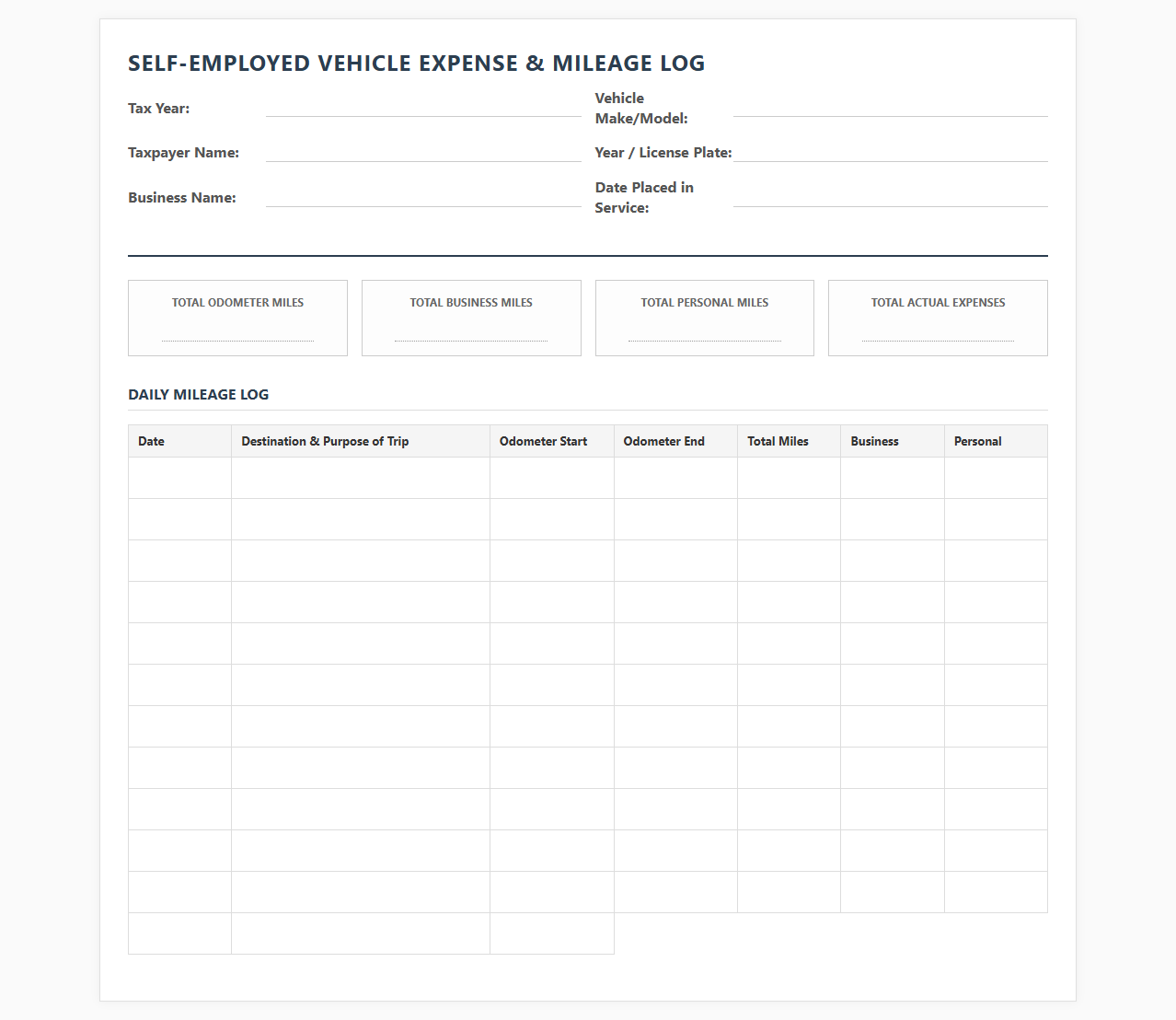 Download: .PDF
Tax Deductible Mileage Log for Self-Employed
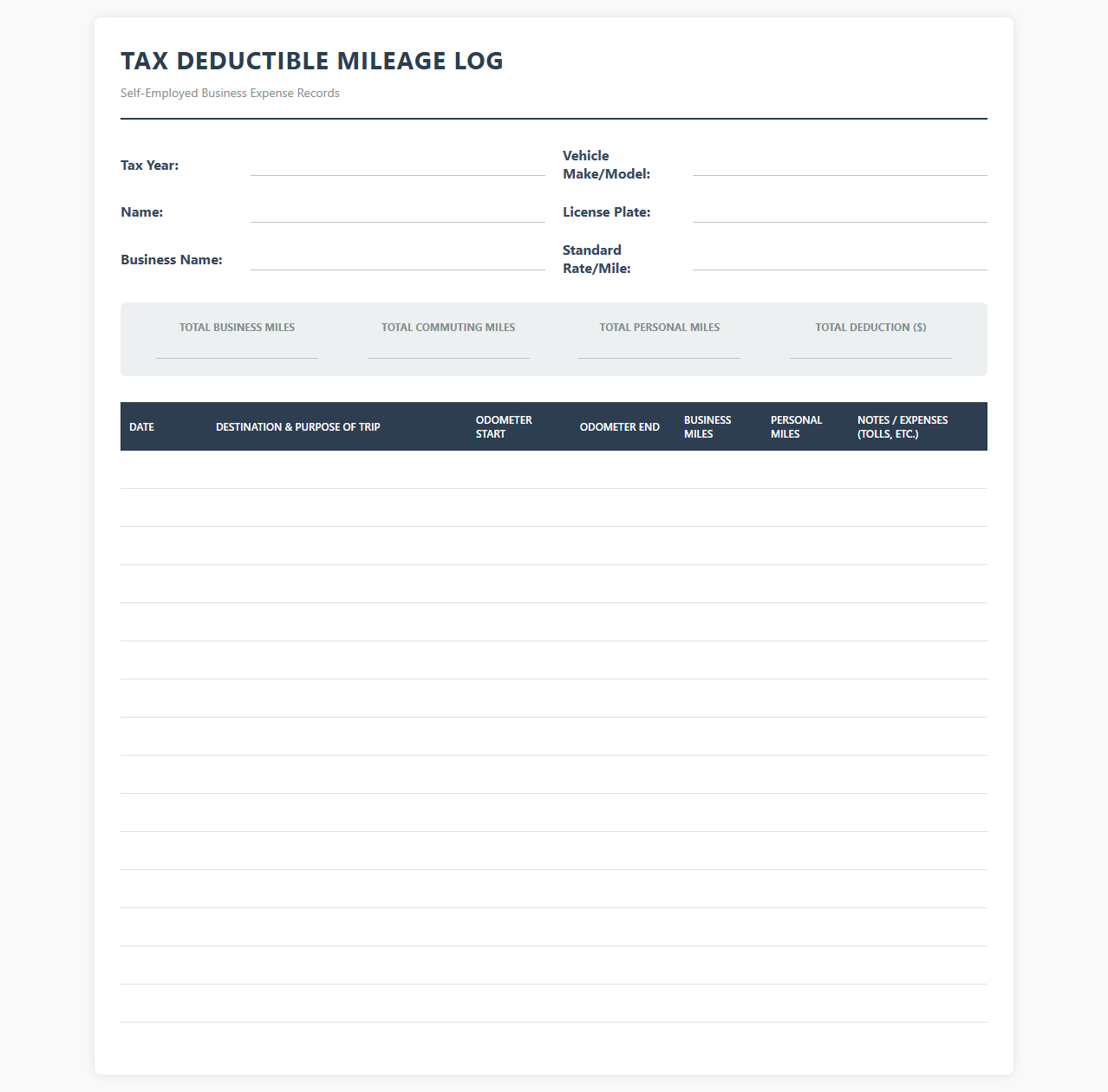 Download: .PDF
Self-Employed Business Travel Mileage Template
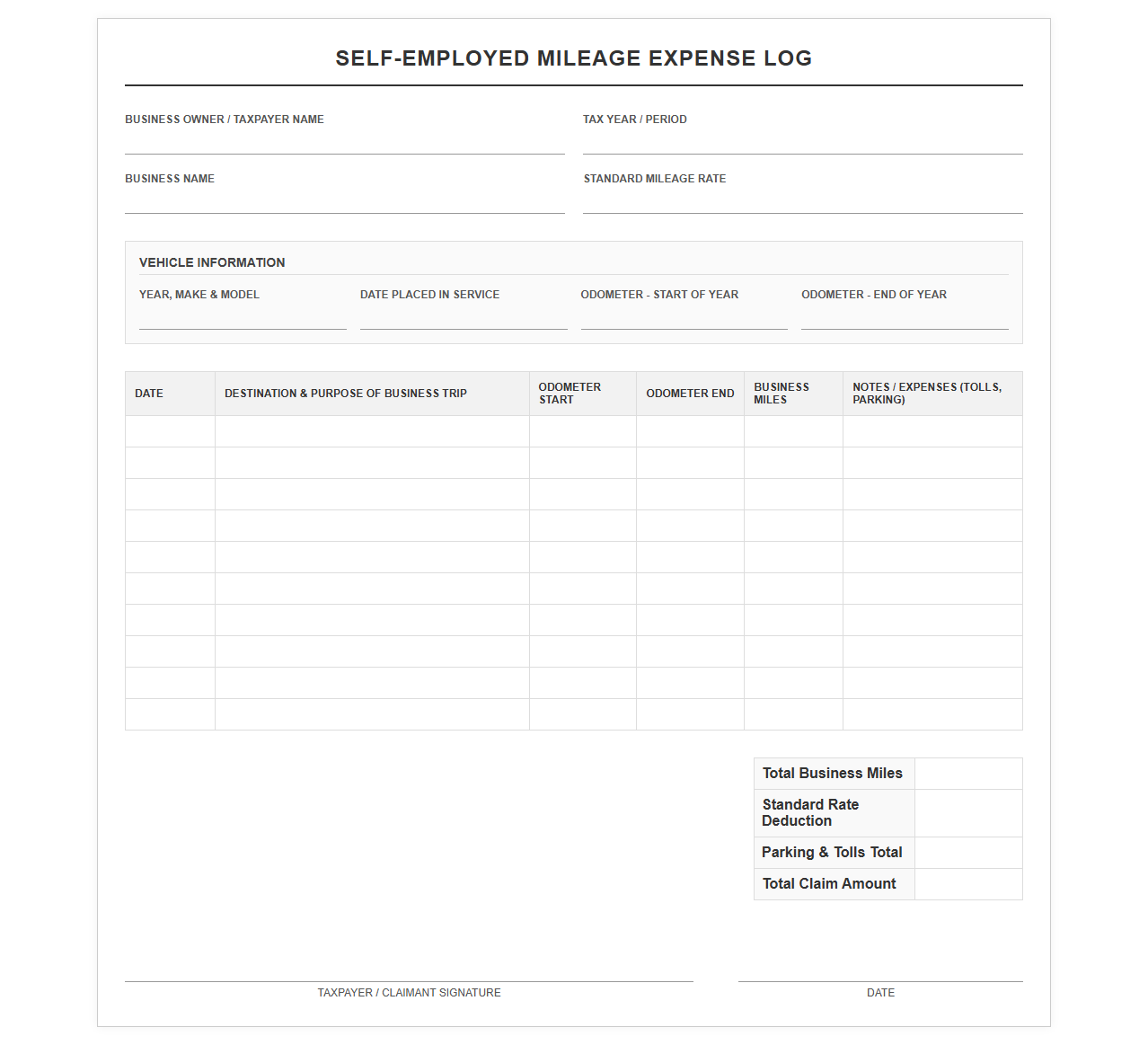 Download: .PDF
Annual Mileage Expense Calculator for Self-Employed
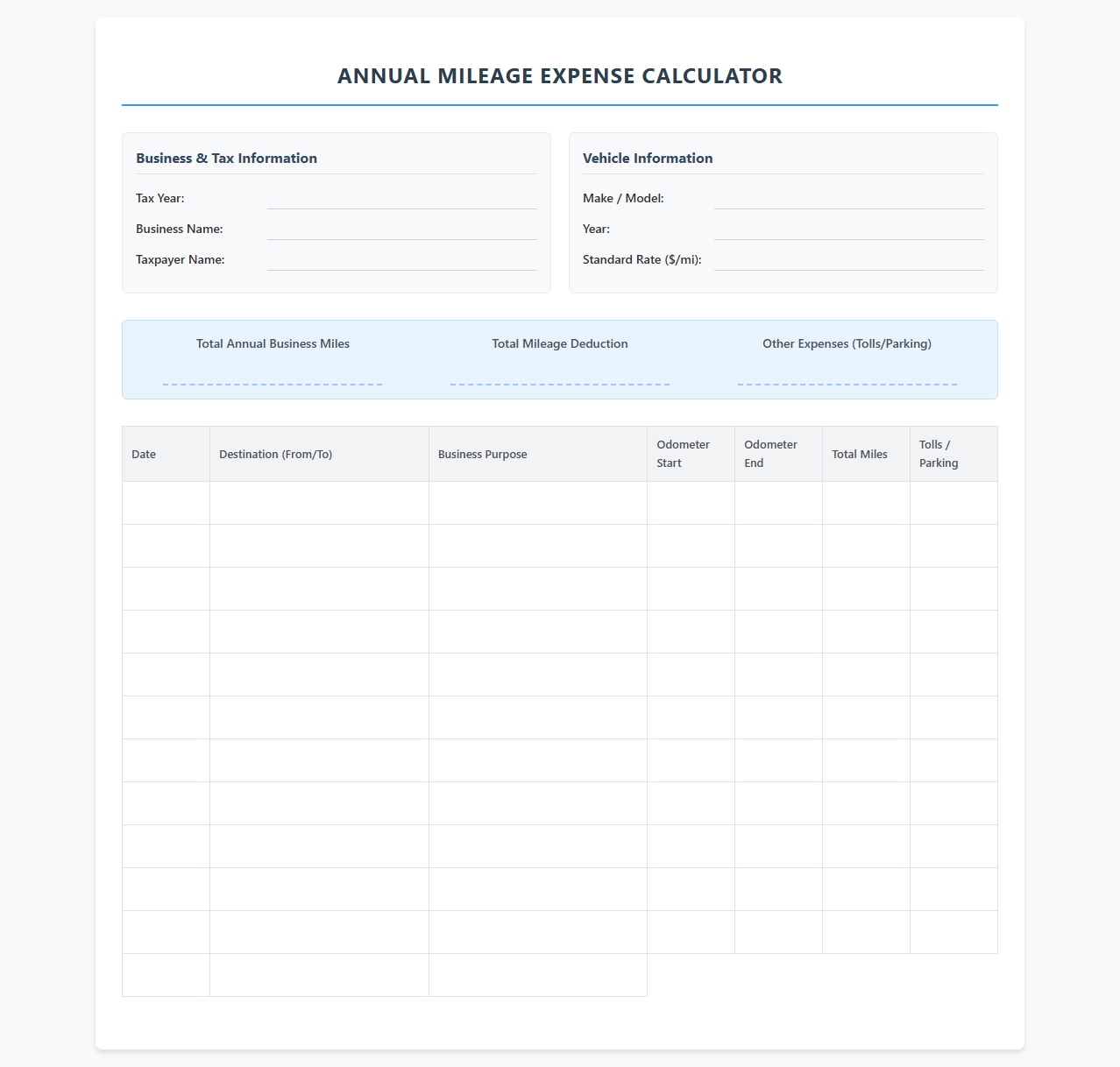 Download: .PDF
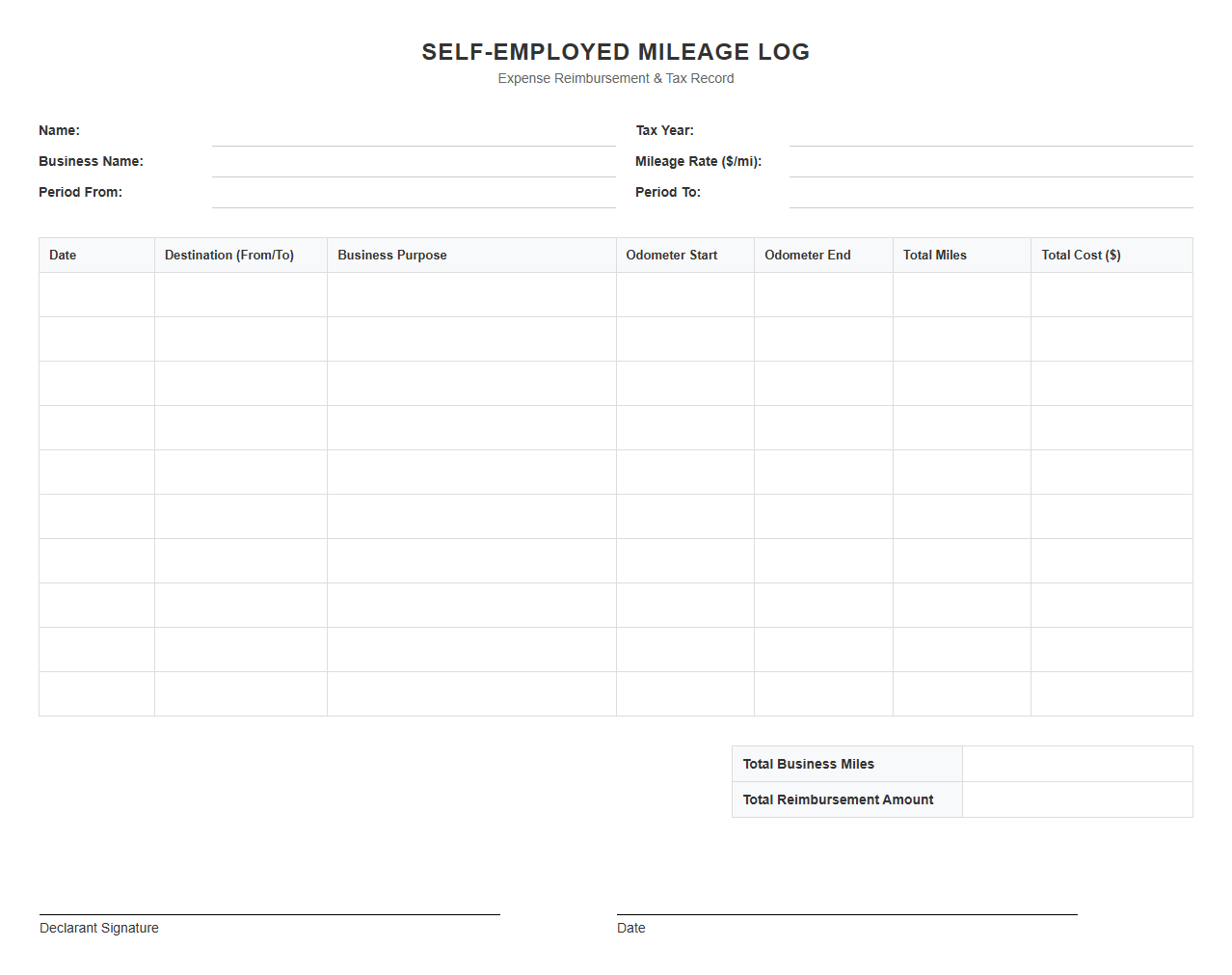
Simple Self-Employed Mileage Reimbursement Template
 Download: .PDF
Introduction to Mileage Write-Offs for the Self-Employed
For self-employed professionals, freelancers, and independent contractors, every mile driven for business purposes represents a valuable tax deduction. Missing out on tracking these miles is equivalent to leaving free money on the table. Maximizing your tax write-offs through meticulous mileage tracking can significantly lower your taxable income, saving you thousands of dollars when tax season arrives.
IRS Requirements for Valid Mileage Logs
To successfully claim a mileage deduction, you must strictly adhere to the guidelines set by the IRS. A vague estimate or a last-minute guess will not survive a tax audit. Your records must be contemporaneous, meaning they are recorded at or near the time of the trip.
- The exact date of each business trip.
- The total mileage driven for each trip.
- The physical destination or location of the business activity.
- The specific business purpose of the travel.
The Power of Standardized Mileage Templates
Using a standardized template is one of the most effective ways to simplify your bookkeeping. By establishing a set structure, you eliminate the guesswork associated with daily tracking. Consistently capturing data in the same format reduces human error and ensures that no vital piece of information is overlooked. This systematic approach saves hours of administrative stress during tax season, allowing you to focus on growing your business rather than reconstructing past journeys.
Essential Fields Every Mileage Template Must Have
A compliant and highly functional mileage log template must feature specific columns to ensure complete records. When setting up your tracking system, make sure it includes these essential data fields:
- Date of the journey to verify the tax year.
- Odometer starting reading before the trip begins.
- Odometer ending reading at the completion of the trip.
- Total miles driven calculated from the odometer readings.
- The specific business purpose and destination.
Choosing Your Format: Digital Spreadsheets vs. Printable PDFs
Deciding between digital mileage templates and physical printable logs depends heavily on your daily workflow. Both options have distinct advantages and drawbacks that you should weigh before making a choice.
| Format | Pros | Cons |
|---|---|---|
| Digital Spreadsheets (Excel/Google Sheets) | Automatic math calculations, easily backed up to the cloud, customizable. | Requires access to a mobile device or computer, learning curve for formulas. |
| Printable PDFs | Easy to keep in the glovebox, quick to write in manually, no battery needed. | Manual calculations required, risk of physical damage or loss, harder to share with accountants. |
Best Practices for Consistent Mileage Tracking
Developing a consistent habit is the most challenging aspect of mileage tracking. By integrating simple routines into your workday, you can ensure your records remain spotless throughout the year.
Recording your odometer reading should be as automatic as fastening your seatbelt. Keep your physical log in plain sight or pin your digital spreadsheet shortcut to your phone home screen. Additionally, store digital copies of any parking receipts or toll payments alongside your mileage log to serve as supporting evidence.
Finalizing Your Tax Strategy with the Right Templates
Securing your hard-earned tax deductions requires proactive planning and the right tools. Transitioning from disorganized notes to a structured mileage template system protects your business from audit penalties while maximizing your annual write-offs. Do not wait for tax season to catch up on your records. Download our professional templates today and take absolute control of your business vehicle deductions.
Get Your Free Mileage Tracking Templates Now
Leave a comment