

For construction contractors, few obstacles are as disruptive to daily operations as cash flow bottlenecks caused by delayed draw request approvals. Before resolving these delays, however, project managers must first navigate a complex web of lender requirements and diverse stakeholder billing preferences. Standardizing your billing with adaptable, multi-format templates grants your firm the operational agility needed to bypass administrative hurdles and secure faster project funding.
Notably, these tools are only fully effective when paired with a disciplined process of documentation verification and strict schedule of values alignment. Specifically, utilizing automated Excel sheets for precise internal calculations alongside polished, uneditable PDF exports for formal submissions serves as a concrete safeguard against processing errors. In this guide, we will examine how implementing these versatile templates can streamline your payment pipeline, minimize stakeholder disputes, and protect your project's financial momentum.
Construction Draw Request Invoice Template
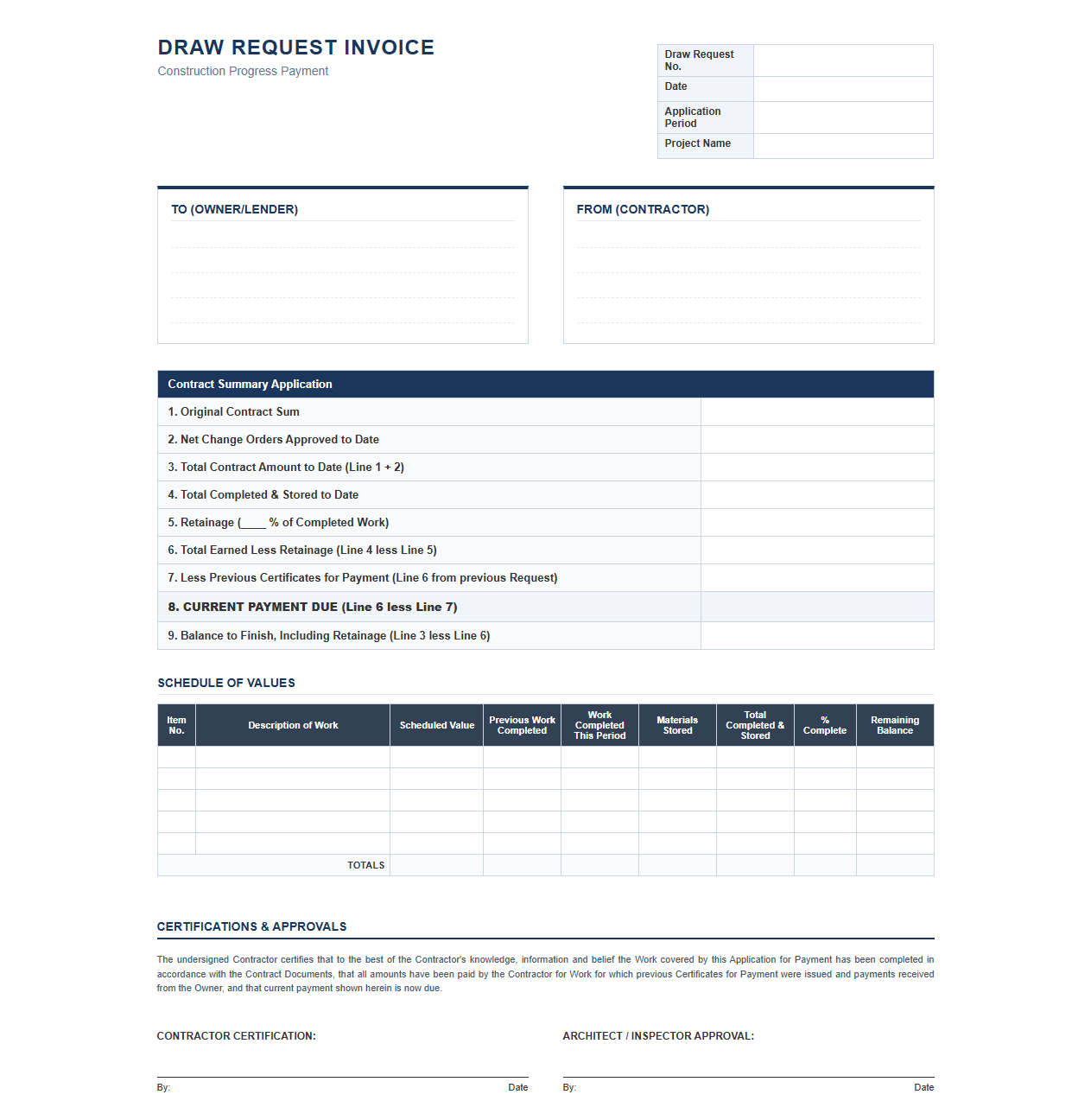 Download: .PDF
Progress Payment Draw Request Invoice
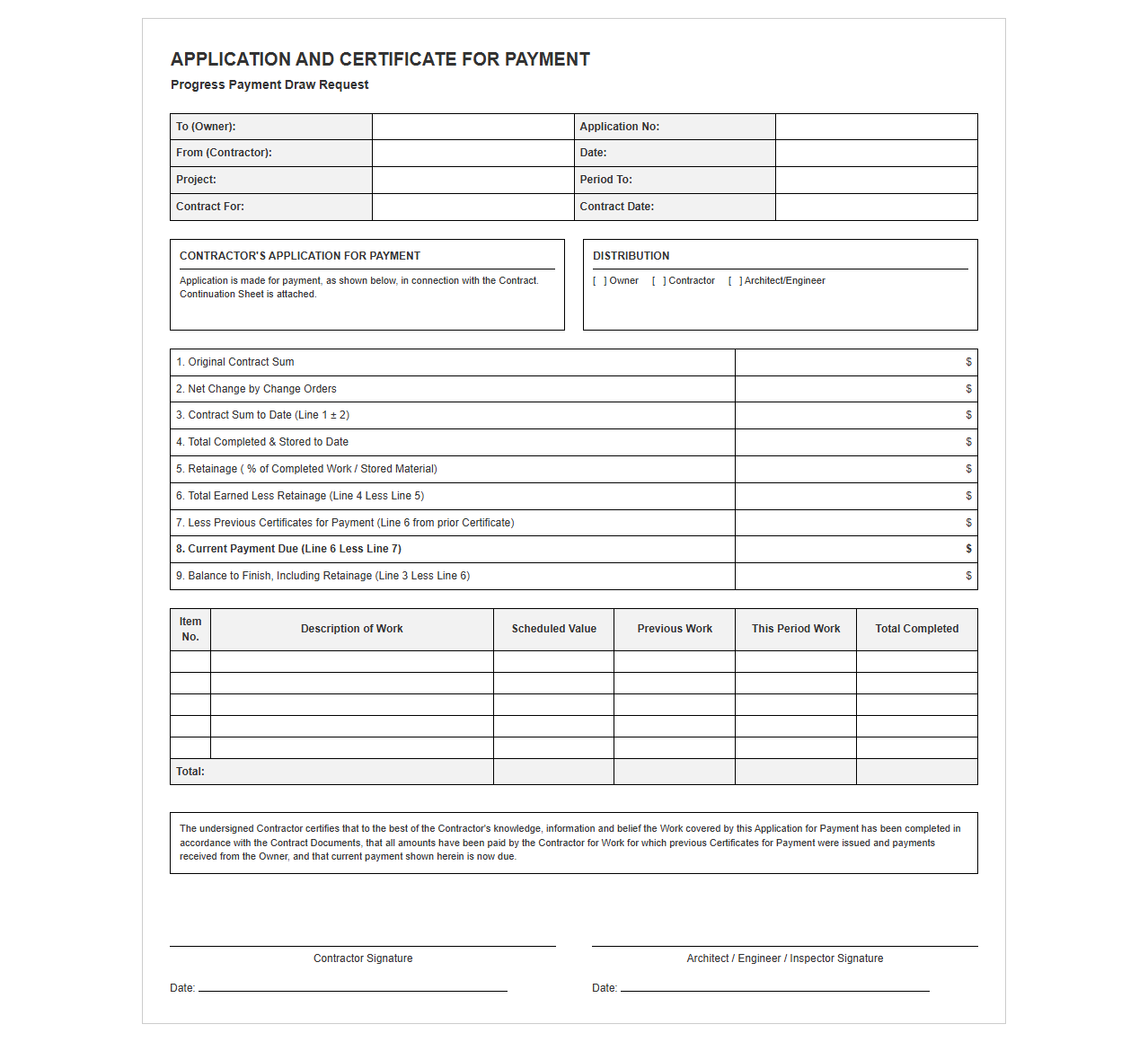 Download: .PDF
Contractor Progress Billing Draw Template
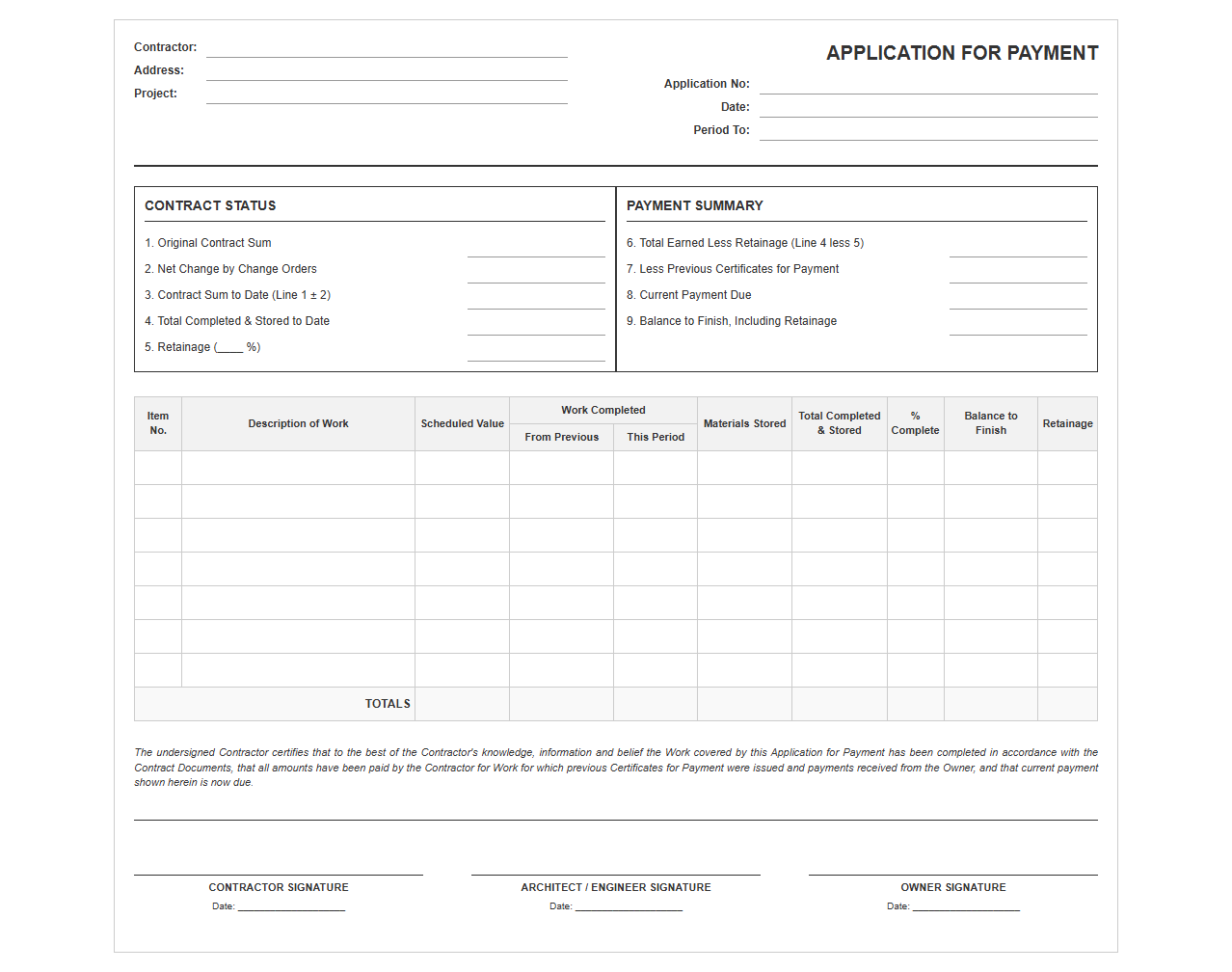 Download: .PDF
Construction Loan Draw Request Form
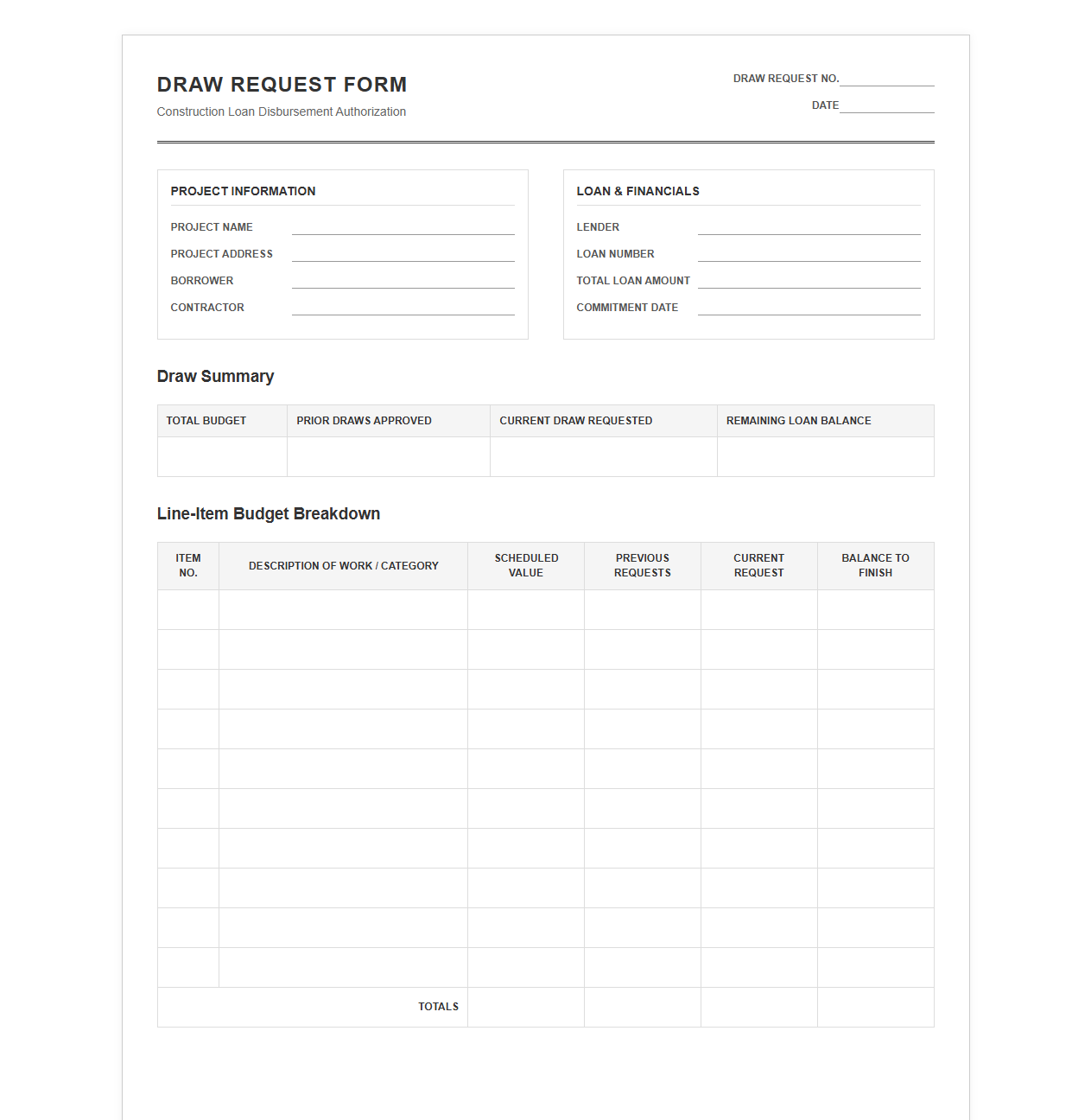 Download: .PDF
Project Funding Draw Request Invoice
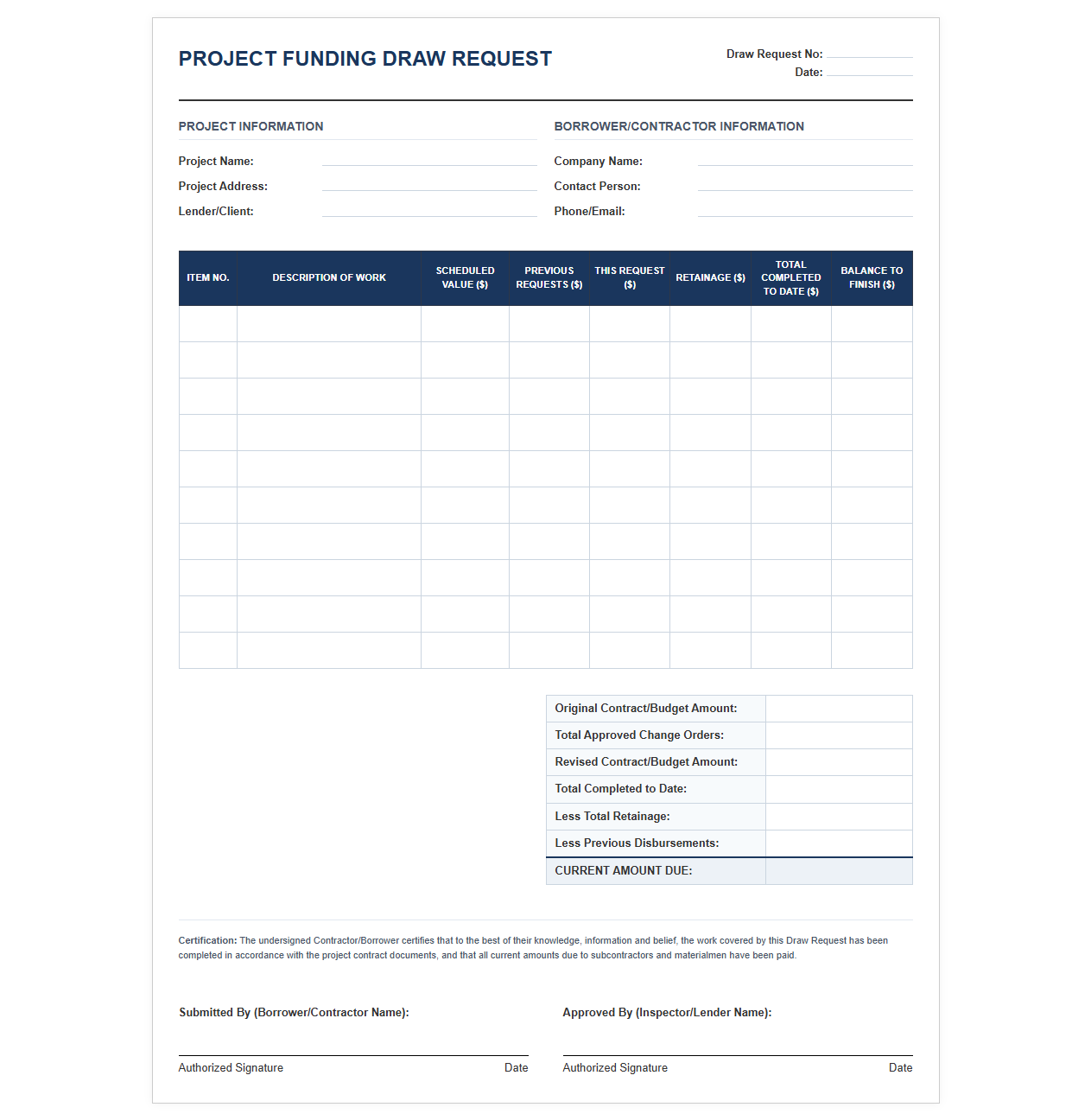 Download: .PDF
Monthly Construction Draw Request Template
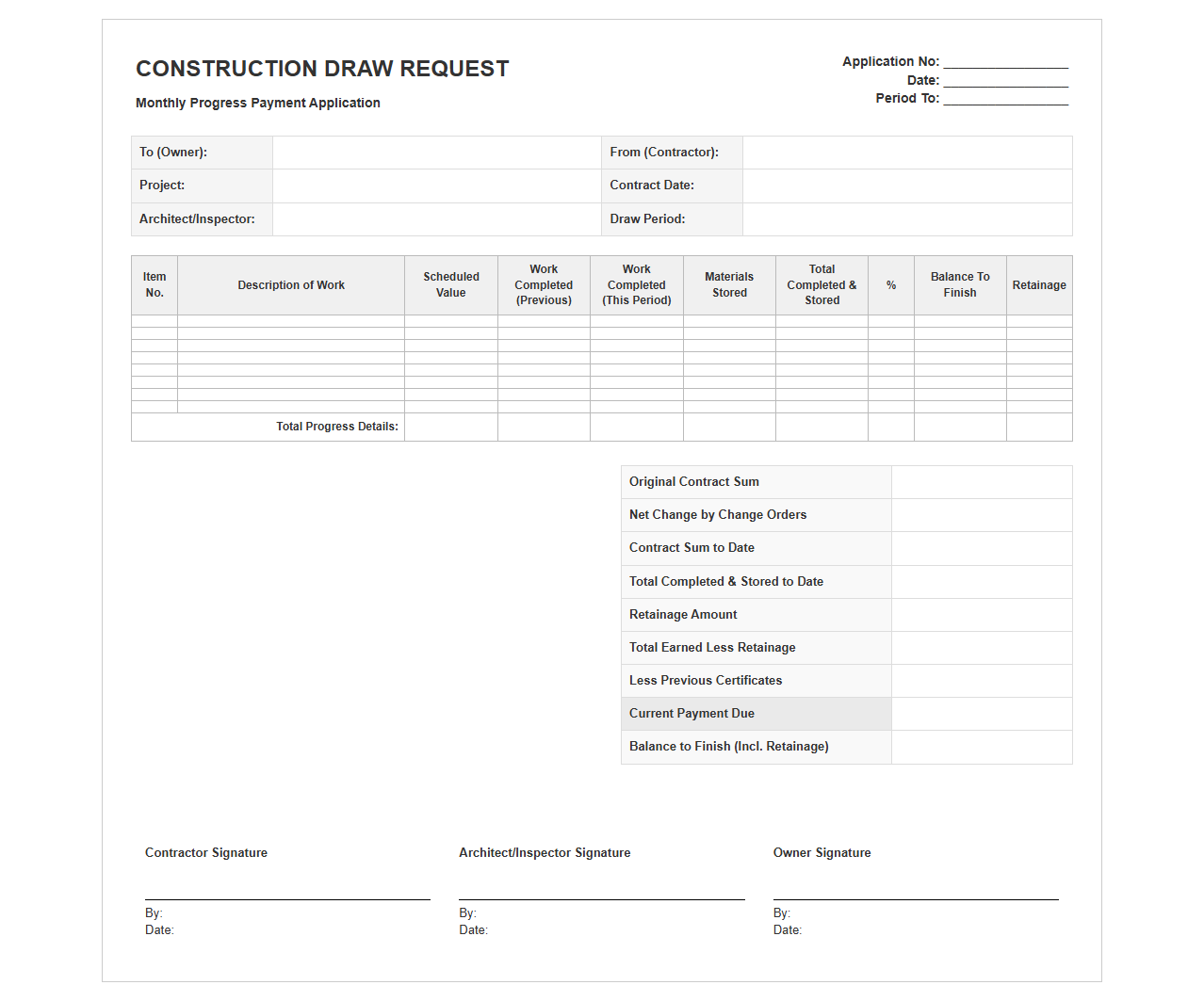 Download: .PDF
Subcontractor Draw Request Billing Invoice
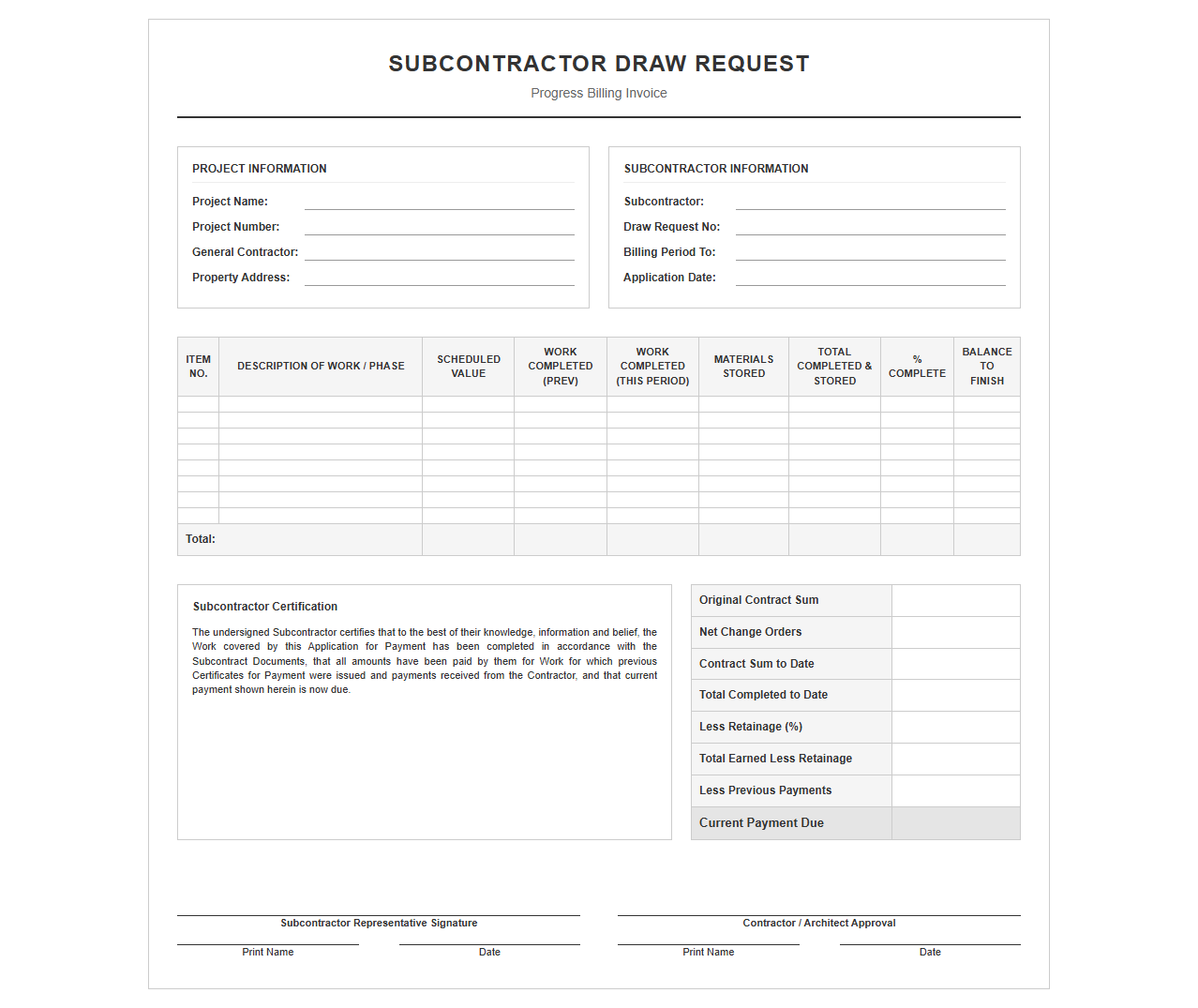 Download: .PDF
Commercial Project Draw Request Invoice
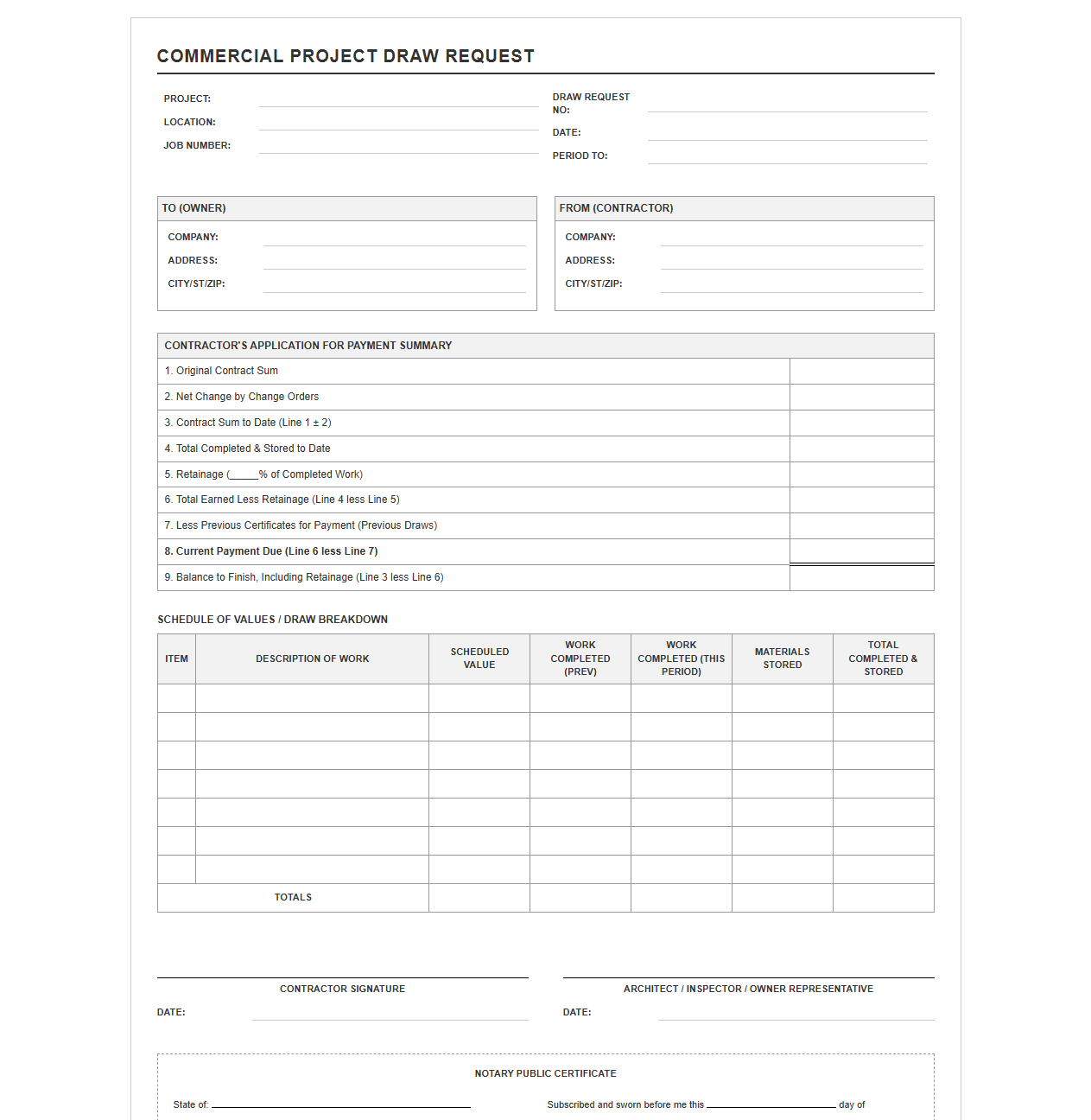 Download: .PDF
The Cost of Waiting: Understanding Construction Payment Delays
In the construction industry, cash flow is the lifeblood of every project. Yet, subcontractors and general contractors often face severe bottlenecks waiting for payments to clear. According to industry data, the average construction payment cycle takes over 83 days, which is the longest waiting period of any global industry. These delays cascade down the supply chain, halting progress on the job site, straining vendor relationships, and threatening business solvency.
To overcome these costly delays, smart construction firms are abandoning fragmented invoicing methods in favor of structured draw request templates. By standardizing how payment applications are prepared and submitted, businesses can dramatically reduce processing times, align expectations with financial partners, and secure the capital required to keep projects moving forward.
Decoding the Draw Request: Why Manual Invoicing Fails
A draw request is far more complex than a standard retail invoice. It is a comprehensive documentation package that justifies why a specific amount of funding should be released based on the percentage of work completed. When construction companies rely on manual, non-standardized invoicing systems, the risk of administration errors rises exponentially. Lenders and project owners require precise verification, and any inconsistency can lead to the entire package being rejected.
Traditional, manual processes typically fail due to several recurring pain points:
- Mathematical errors: Manual calculations of completed work percentages and remaining balances often lead to arithmetic discrepancies.
- Missing documentation: Forgetting to attach necessary back-up documents, such as supplier invoices or payroll records, pauses the review process.
- Inconsistent formatting: Submitting custom, unstructured spreadsheets confuses lenders, lengthening their internal review cycles.
- Lack of version control: Multiple revisions of the same spreadsheet floating around lead to disputes over which figures are current.
The Power of Choice: Why Multi-Format Templates are Essential
No two construction projects are identical, and different stakeholders have varying preferences when it comes to reviewing financial data. Project owners, lenders, and architects all look at draw requests through different lenses. Employing multi-format templates-available in Excel, PDF, and Word-ensures that every party receives the information in the format most suited to their workflow, bypassing compatibility hurdles and accelerating approvals.
- Excel Format (.xlsx)
- Best for contractors and accountants who need dynamic calculations. Excel templates allow for automated formulas, auto-calculating percentages of completion, retainage, and overall totals without manual math.
- PDF Format (.pdf)
- Ideal for lenders and bank inspectors who require non-editable, standardized records. This format ensures that once a draw request is finalized, no data can be accidentally altered or corrupted during distribution.
- Word Format (.docx)
- Suited for project managers who need to customize the narrative elements of the request, such as detailed descriptions of work milestones or specific contractual terms, before submitting.
Core Elements of a Standardized Draw Request Invoice
A standardized draw request must contain specific, transparent components to survive rigorous lender audits. To prevent disputes and ensure that reviewers can easily cross-reference progress with the initial budget, your templates should always include the following critical sections:
| Core Component | Description | Why It Matters for Approval |
|---|---|---|
| Schedule of Values (SOV) | An itemized list of work items, showing the original budget allocated for each. | Establishes the baseline against which completed work is verified. |
| Retainage Tracking | A designated section outlining the percentage of funds withheld until project completion. | Ensures legal compliance and protects the owner's financial safety net. |
| Change Orders | A running log of any approved modifications to the original contract price. | Accounts for budget adjustments, preventing payment rejections due to cost overruns. |
| Lien Waivers | Signed legal documents confirming that subcontractors have been paid for prior work. | Protects the owner from potential property liens, giving lenders confidence to release funds. |
Accelerating the Approval Workflow
Implementing structured draw request templates transforms a chaotic payment chase into an organized, predictable sequence. When everyone knows exactly where to look for key numbers, verification moves at a fraction of the usual time. Follow these steps to optimize your billing-to-funding workflow:
- Compile Progress Data: Use the standardized template to enter completed work percentages, referencing the Schedule of Values.
- Attach Supporting Proof: Link daily logs, photos, and subcontractor lien waivers directly to the corresponding line items.
- Conduct Internal Audit: Perform a rapid check using the template's auto-calculation features to confirm that retainage and change orders balance correctly.
- Submit to Project Inspector: Send the clean, multi-format package to the third-party inspector for physical site validation.
- Lender Review and Release: The lender verifies the structured document against their checklist, authorizing the immediate release of funds.
Best Practices for Template Implementation and Integration
To maximize the efficiency of your new draw request templates, they must not live in isolation. Construction businesses should actively integrate these tools into their ongoing daily routines, training project managers and estimators on how to accurately fill out the formats. Syncing the outputs with your core financial tools minimizes duplicate entry and drastically cuts down on administrative overhead.
Pro Tip: Map the database fields of your accounting software directly to your standardized Excel or PDF draw templates. Automating the transfer of data from your general ledger to the payment application removes human transcription errors and cuts submission prep time by up to 50%.
Securing Cash Flow: Your Path to Faster Construction Payments
Adopting standardized, multi-format draw request templates is a practical step toward neutralizing cash flow issues before they disrupt your job sites. When you make it easy for lenders, owners, and architects to review and approve your invoices, you eliminate friction, build trust, and ensure that funds flow smoothly from bank to builder. Transitioning from chaotic spreadsheets to structured billing formats represents an investment in your company's operational resilience.

Leave a comment