

For construction contractors and project-based businesses, managing outstanding retainage is a persistent financial bottleneck, often leaving significant cash reserves locked up long after project completion. Standard accounting platforms frequently fail to track these withheld funds with the necessary granularity, creating blind spots in working capital.
By implementing specialized retention receivables ledger templates, organizations secure immediate visibility into deferred cash flows, ensuring every outstanding dollar is systematically tracked. However, a critical stipulation remains: these templates only deliver accuracy when coupled with rigorous, contract-by-contract updates of release dates and milestone achievements.
With practical tools such as aging retention schedules and automated milestone-triggered alerts, businesses can transition from reactive billing to proactive capital recovery. This guide will explore how to select, customize, and integrate these ledger templates into your existing financial workflow for peak cash flow performance.
Retention Accounts Receivable Ledger Sheet
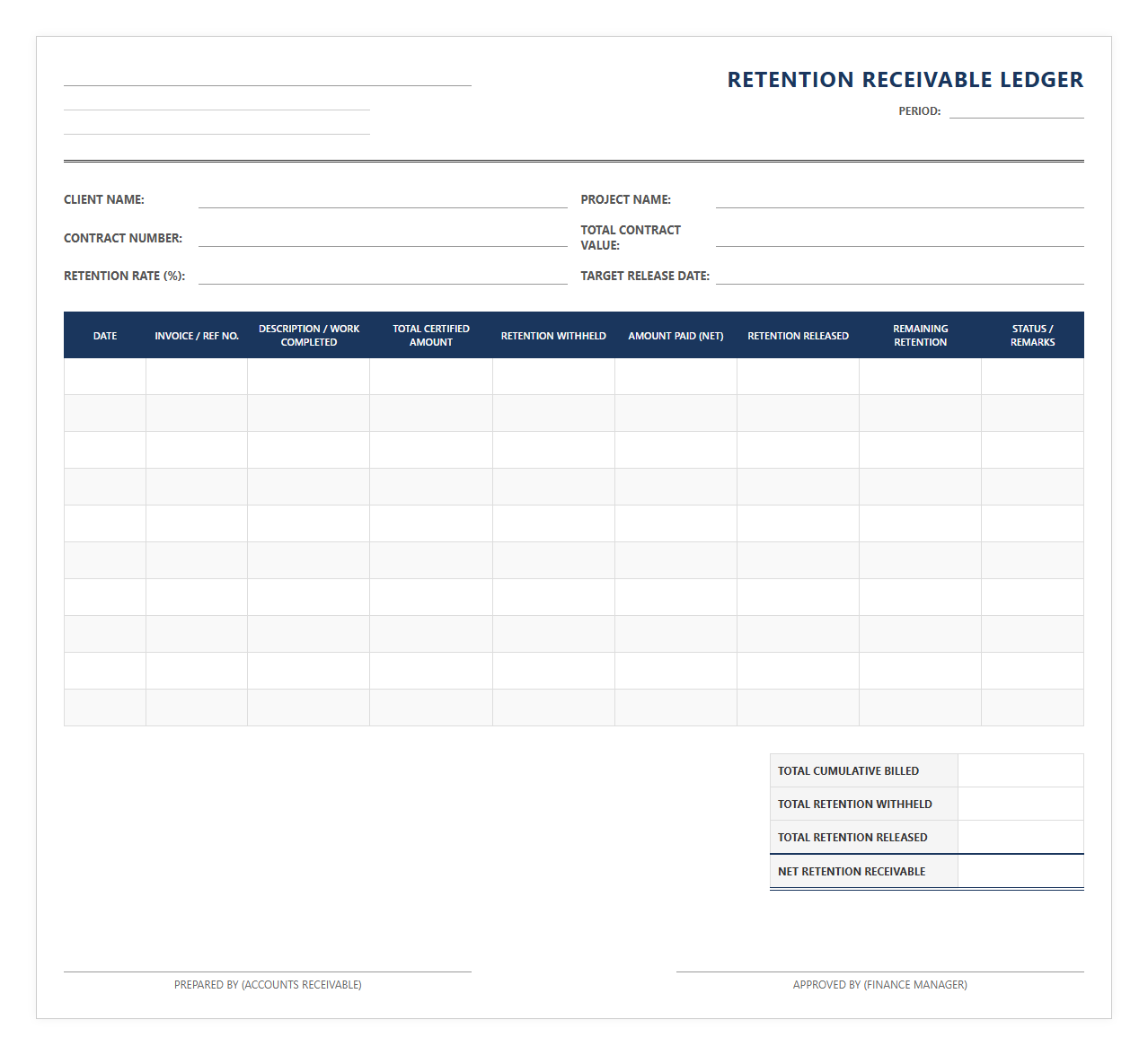 Download: .PDF
Contract Retention Receivables Tracking Ledger
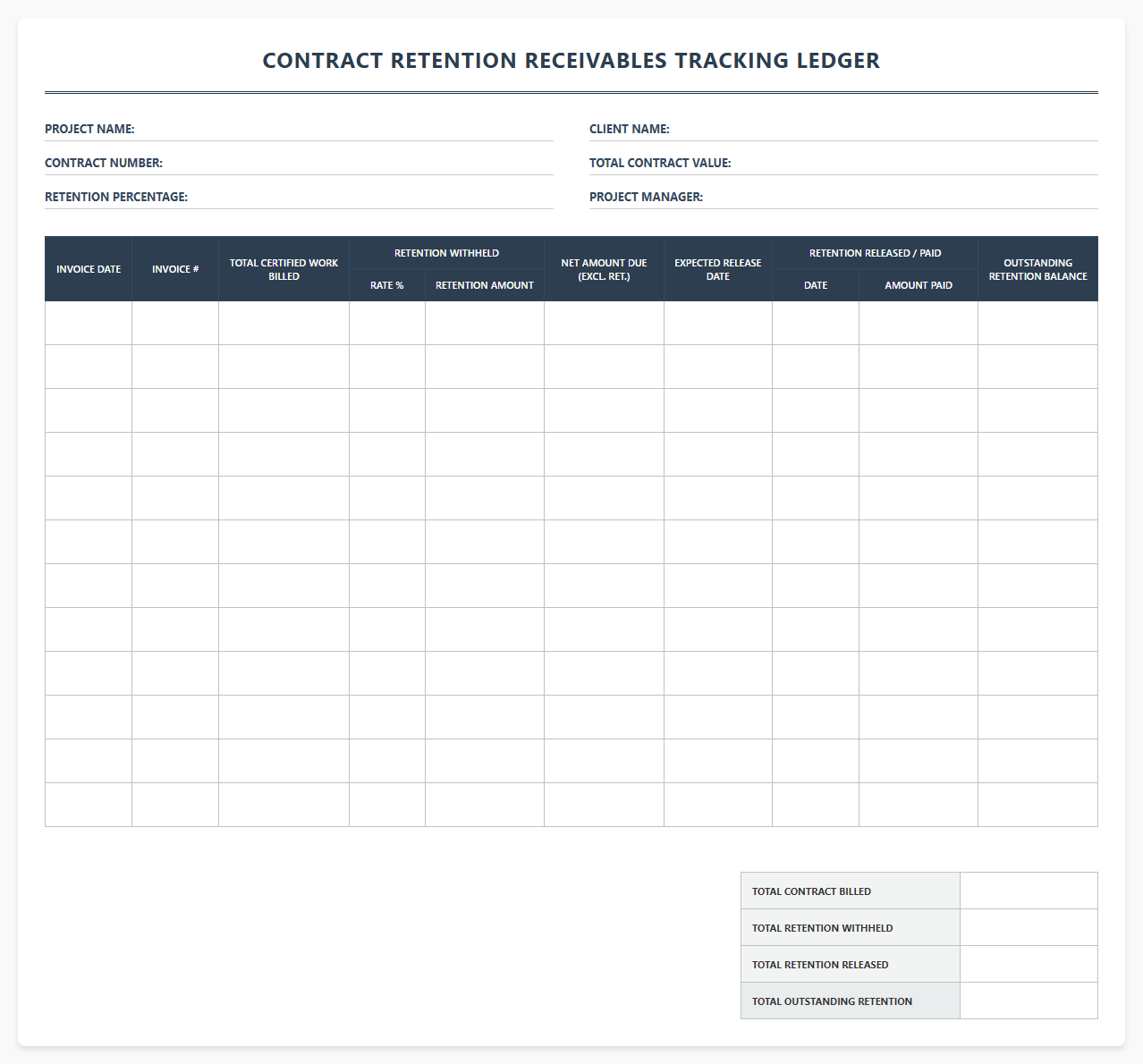 Download: .PDF
Construction Retention Receivable Ledger Template
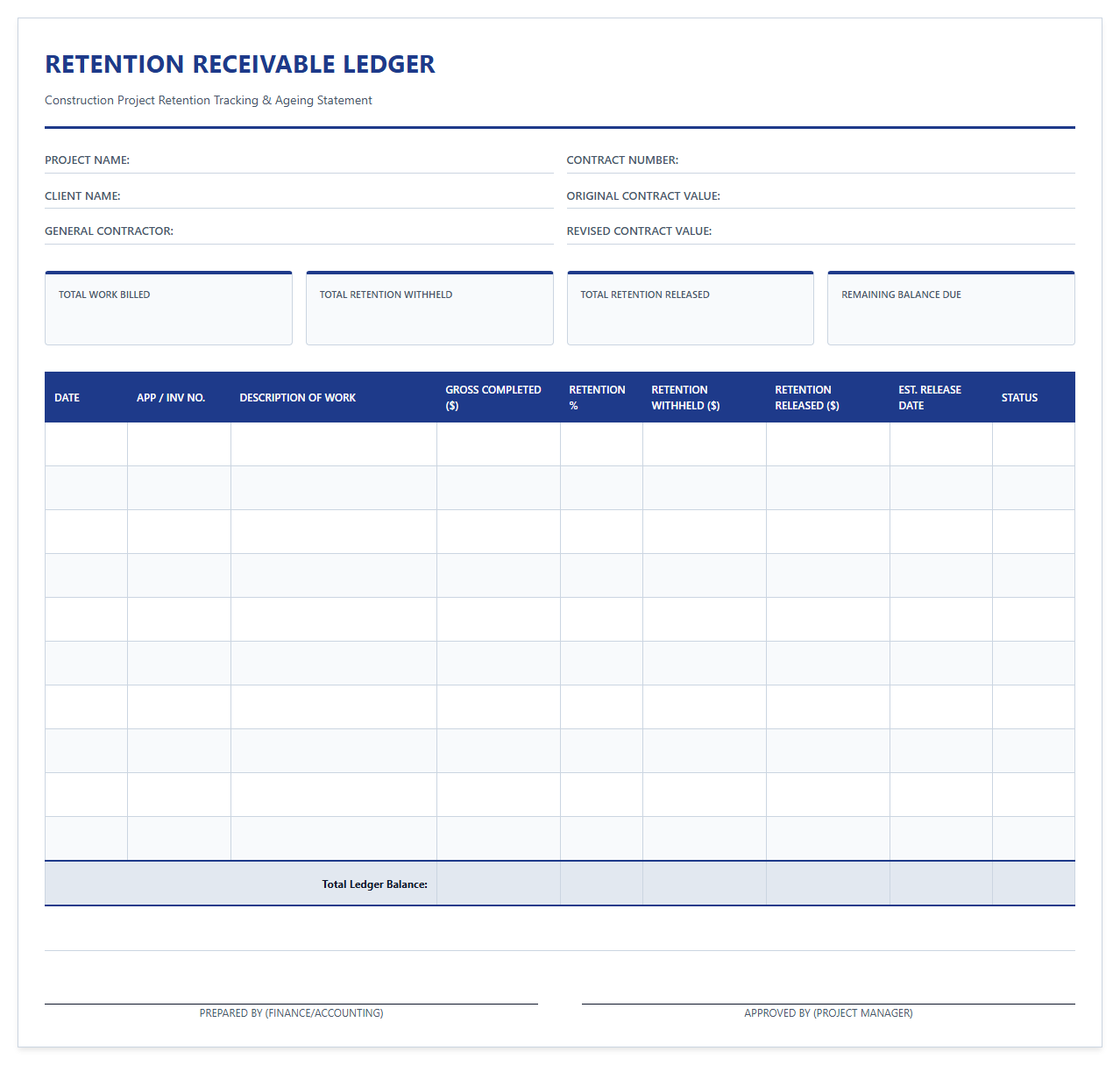 Download: .PDF
Retainage Receivables Ledger and Tracker
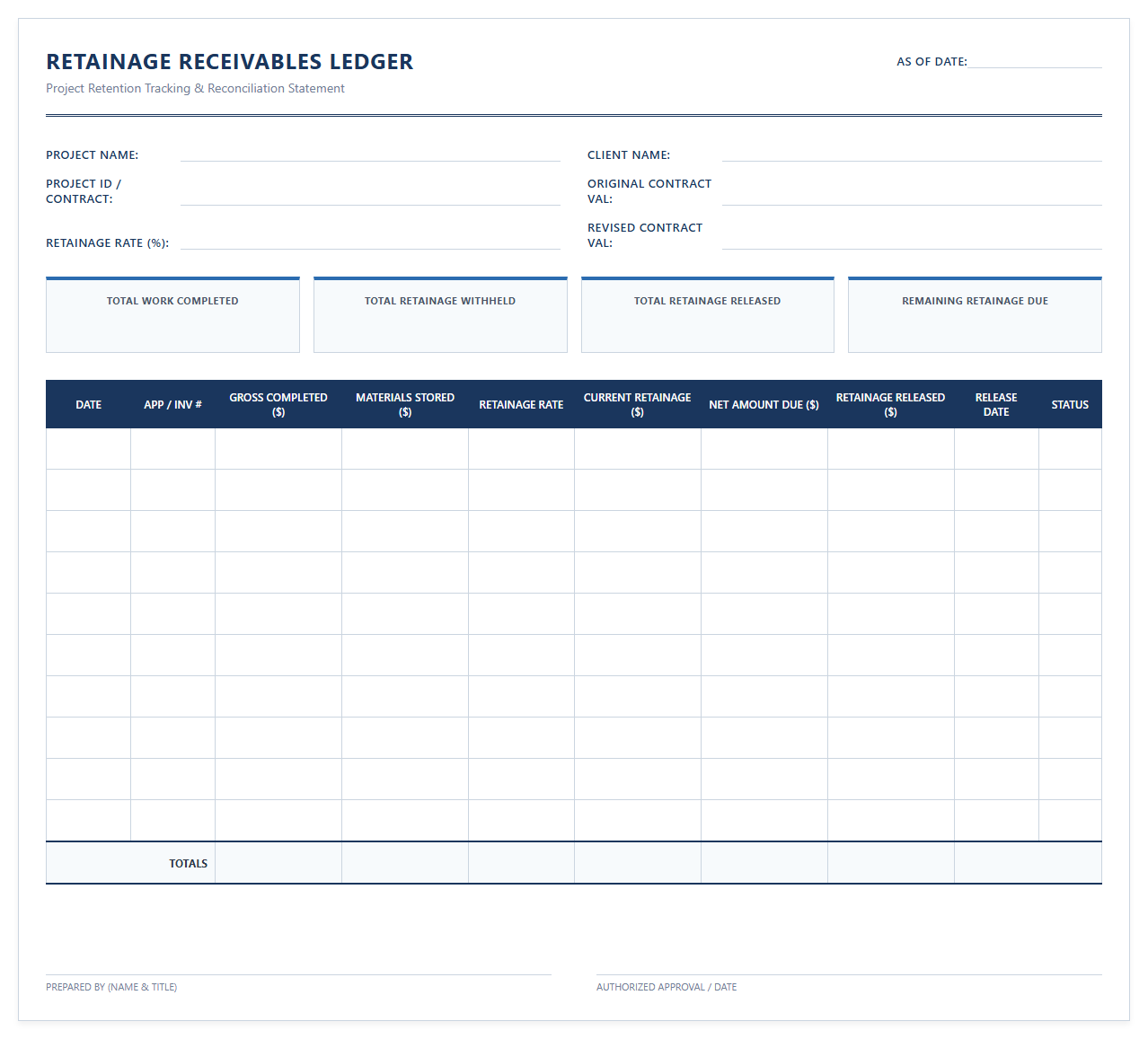 Download: .PDF
Project Retention Receivables Ledger Template
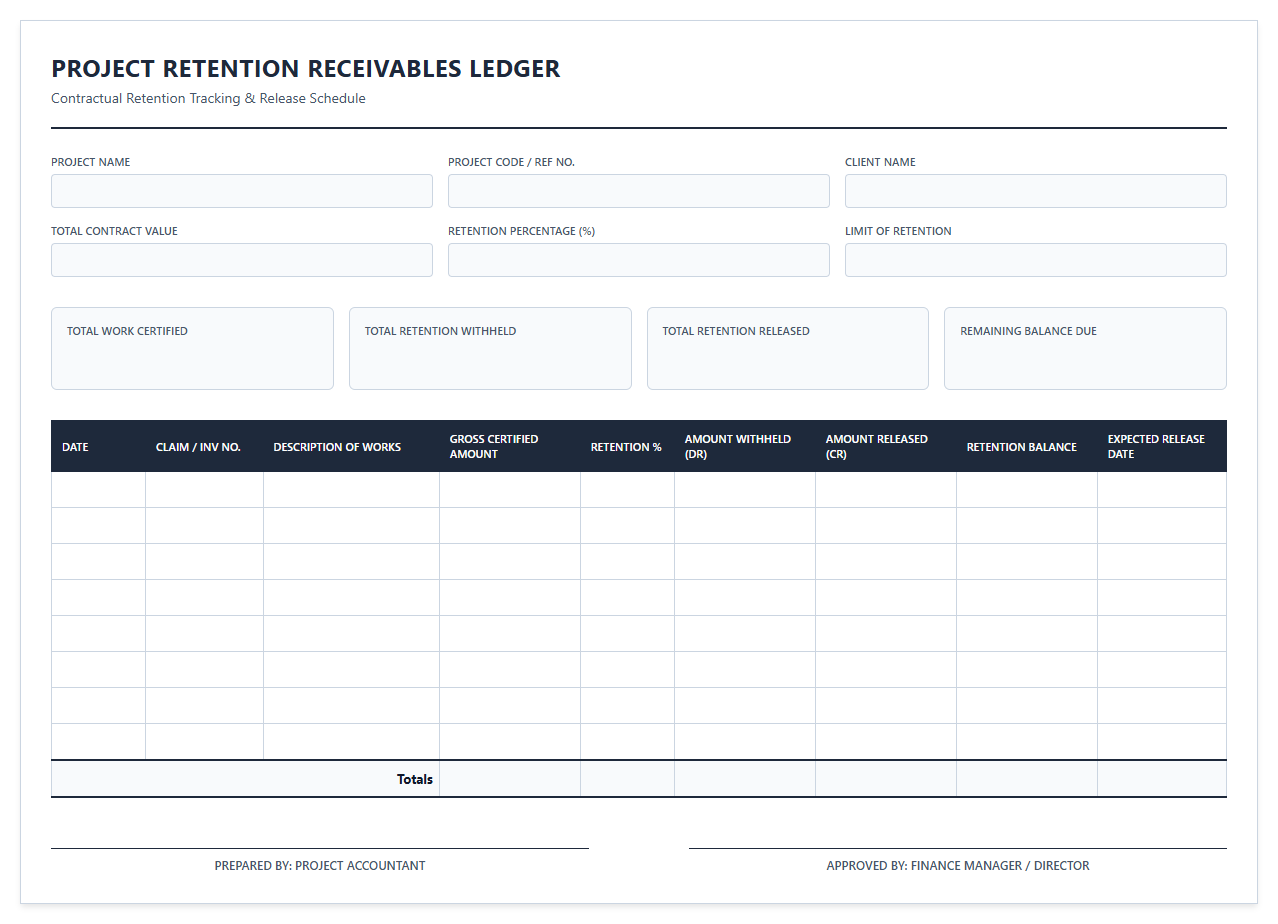 Download: .PDF
Subcontractor Retention Accounts Receivable Ledger
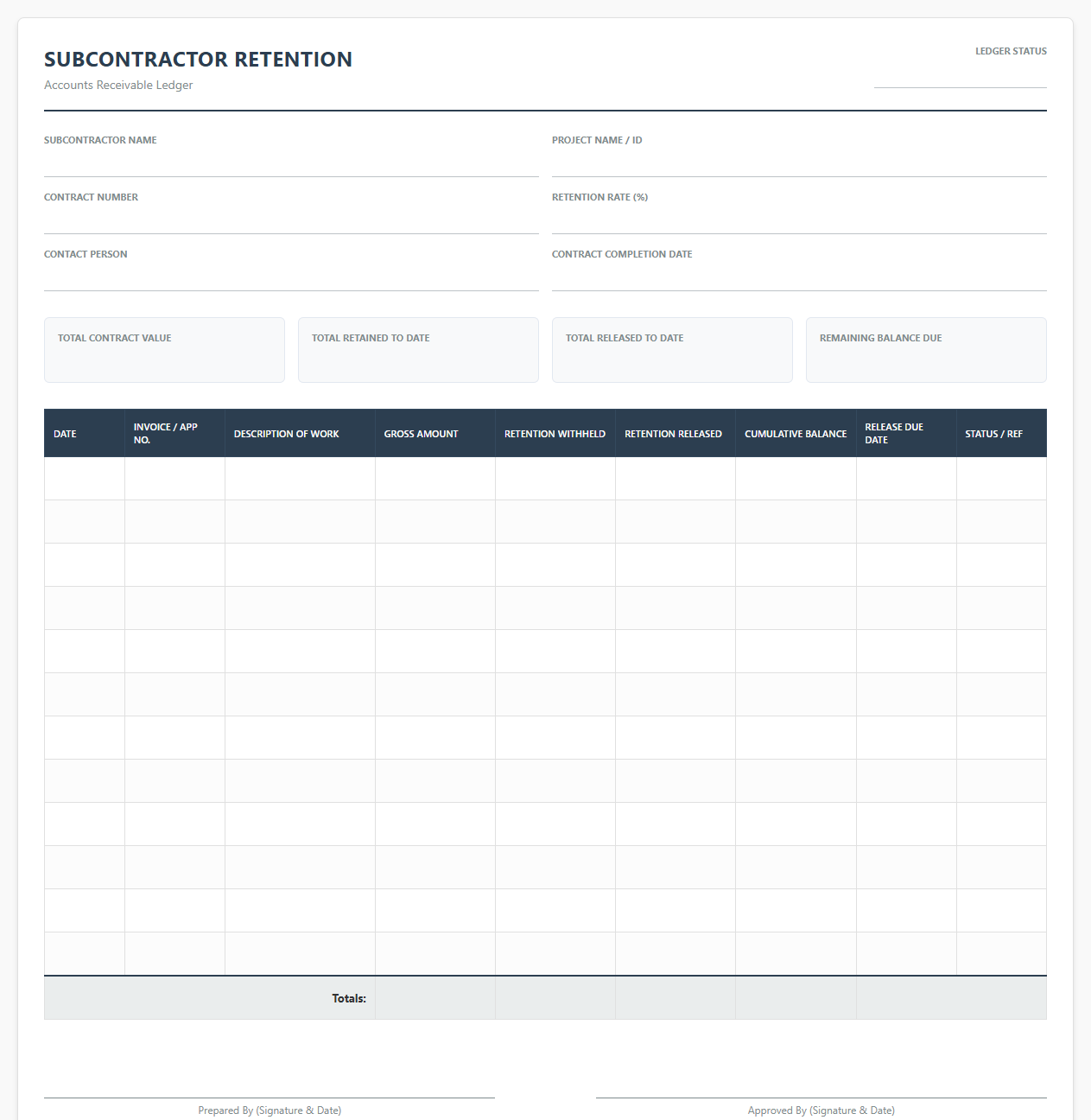 Download: .PDF
Monthly Retention Receivables Reconciliation Ledger
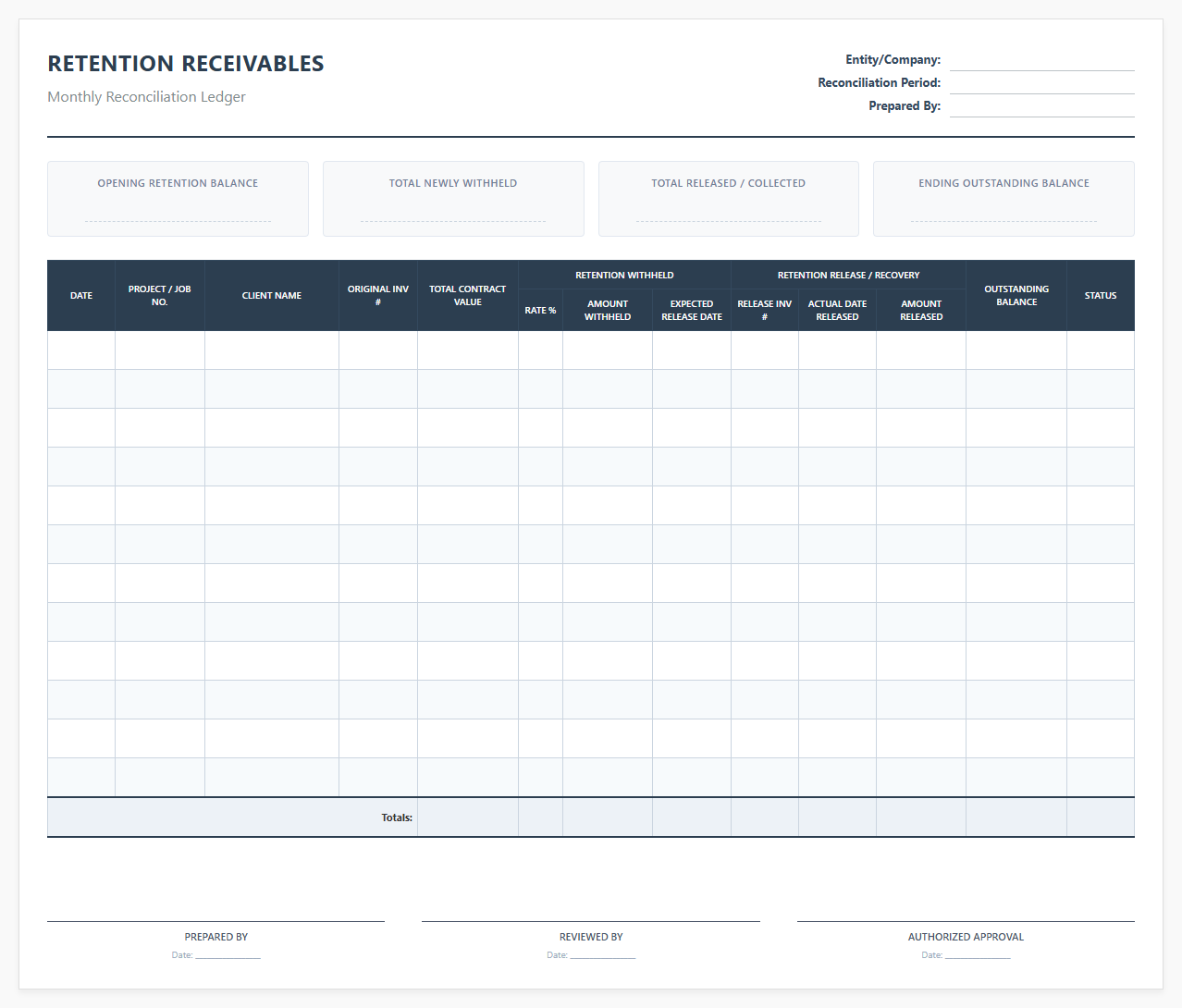 Download: .PDF
Retained Funds Receivable Ledger
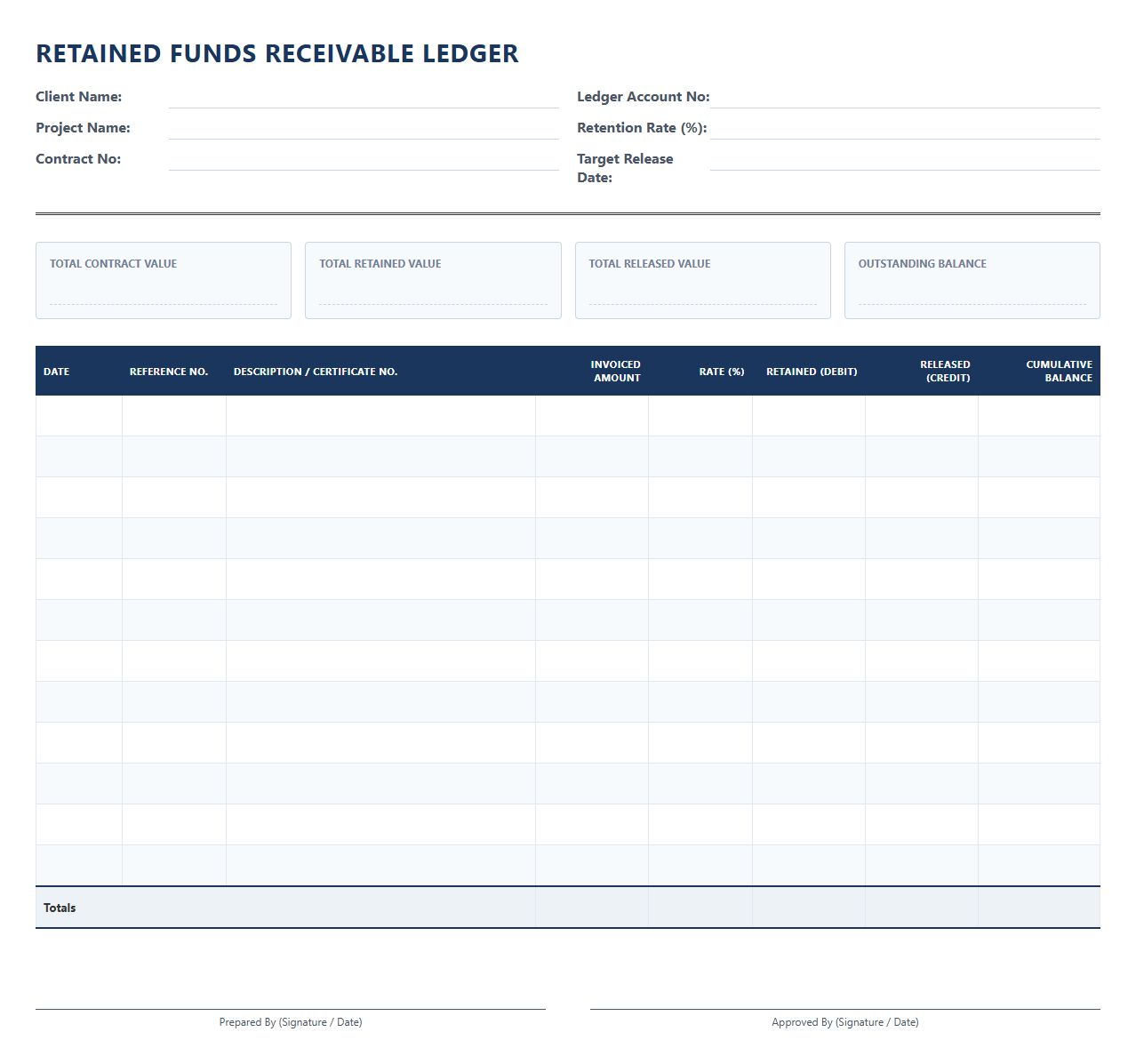 Download: .PDF
Understanding Retainage and Its Impact on Construction Cash Flow
In the construction industry, cash flow is the lifeblood of every project. Retainage-sometimes called retention-is a portion of agreed-upon contract payments withheld until a project is substantially completed. Typically set at 5% to 10% of each progress billing, this practice exists to provide project owners and general contractors with leverage, ensuring that subcontractors finish all punch-list items and fulfill their contractual obligations.
While retainage serves as a security deposit for quality work, it places an immense financial burden on subcontractors. Often, the withheld retention amount is equal to or greater than the subcontractor's entire profit margin on the job. When a business lacks a system to closely monitor these funds, tracking errors crop up, leading to forgotten or severely delayed payments that can stifle cash flow and restrict the ability to take on new projects.
Why Standard Accounting Ledgers Fall Short for Retention Tracking
Generic accounts receivable (AR) ledgers are built for traditional invoicing cycles, where a bill is generated, sent, and paid within a standard 30-to-60-day window. Withheld retention operates on a completely different timeline, sometimes spanning months or years after the initial work is completed. Relying on standard ledgers introduces several operational hazards:
- Invisibility of Withheld Funds: Standard AR aging reports lump retention in with active unpaid invoices, distorting the true status of current cash flow.
- Lack of Milestone Association: Generic systems cannot easily tie the release of funds to specific physical milestones, like substantial completion or certificate of occupancy.
- High Risk of Forgetting Collections: Because retention invoices are often billed months after the workforce has left the jobsite, it is easy for busy administrative teams to lose track of outstanding balances.
Essential Columns and Fields for an Effective Retention Ledger
To prevent money from slipping through the cracks, a specialized retention ledger is necessary. This tracking tool must capture specific variables that standard invoicing software overlooks.
Critical Data Points to Track
An effective retention ledger should include the following structural columns:
Contract_ID: A unique identifier linking the entry to the master contract agreement.Original_Contract_Value: The baseline value of the subcontract before any change orders.Retention_Percentage: The agreed-upon withholding rate, usually5%or10%.Accrued_Retention_To_Date: The cumulative amount withheld from all progressive invoices.Target_Release_Date: The projected calendar date for the release of funds, based on project schedule milestones.Billing_Status: An active field indicating whether the retention has been "Unbilled," "Billed," or "Collected."
Choosing Your Tool: Excel Templates vs. Dedicated Construction ERPs
Depending on the scale of your operations, you may choose to manage your ledger using a customized spreadsheet template or upgrade to a dedicated Enterprise Resource Planning (ERP) platform. Each approach offers distinct advantages and challenges.
| Feature/Aspect | Spreadsheet Templates (Excel/Google Sheets) | Dedicated Construction ERPs |
|---|---|---|
| Cost of Entry | Low/Free. Minimal upfront investment required. | High. Involves licensing, implementation, and training fees. |
| Customization | High. Fully adaptable to any custom project workflow. | Moderate. Rigid frameworks require conforming to software design. |
| Data Entry & Integrity | Manual. Susceptible to user calculation and entry errors. | Automated. Integrates directly with billing and schedule data. |
| Scalability | Low. Difficult to manage once active projects exceed a certain threshold. | High. Easily handles hundreds of concurrent subcontracts. |
Best Practices for Streamlining Your Retention Collection Process
Active management is the secret to recovering withheld funds quickly. Waiting passively for the general contractor or owner to issue payment once a project concludes is a recipe for delay.
"The most successful subcontractors treat retention billing as a separate project milestone with its own dedicated follow-up schedule, rather than treating it as an afterthought of the final billing cycle."
To secure these funds efficiently, establish a routine of regular milestone audits. Project managers and financial officers should meet bi-weekly to review actual project progress against target release dates. Coupling these audits with automated calendar alerts set 30 days prior to scheduled substantial completion ensures your team submits the retention invoice the exact moment it becomes due, rather than weeks after the fact.
How to Implement a Retention Ledger Template in Your Workflow
Transitioning to a structured tracking workflow does not require a complete overhaul of your existing administrative systems. Instead, integrate the ledger into key phases of your current pipeline.
Step-by-Step Integration
- Contract Intake Phase: Immediately upon executing a contract, enter the project into the retention ledger, noting the agreed withholding percentage and expected completion milestones.
- Monthly Billing Cycle: When generating progress billings, update the ledger with the exact retention amount withheld from that month's invoice.
- Substantial Completion Audit: As the project nears 90% completion, verify the total accrued retention matches the owner's records and confirm the target release date.
- Invoicing and Closeout: Submit a formal application for the release of retention as soon as the contract milestones are met, updating the ledger status to "Billed."
- Collection and Reconciliation: Once funds are received, mark the entry as "Collected" and reconcile the balance in your general ledger.
Securing Your Bottom Line through Diligent Retainage Tracking
Maintaining a dedicated retention ledger is one of the most straightforward ways to protect your business margins. By closely monitoring when funds are withheld and aggressively pursuing them as milestones are met, you prevent your hard-earned profits from being left on the table. Consistent tracking ensures that your working capital returns to your accounts where it belongs, fueling your next phase of business growth.
Take control of your cash flow today by implementing a robust tracking system. You can download our free Excel Retention Ledger Template to jumpstart your tracking process, or reach out to our team to learn how to upgrade your accounting workflow for automated collections.

Leave a comment