

Managing subcontractor payables often feels like a chaotic balancing act. General contractors frequently struggle to track disparate billing cycles and varying contract terms, leading to costly administrative delays and strained vendor relationships. Before rushing to adopt expensive software, establishing a structured financial framework is a critical first step. Standardizing your accounting with versatile ledger templates grants your team immediate operational clarity, dramatically reducing payment disputes.
However, these tools are not magic fixes; their success relies on disciplined data entry and regular reconciliation. A robust ledger must accurately track specific variables such as progress billing, retainage percentages, and lien waiver statuses. In this article, we will examine the key components of effective subcontractor ledgers, provide customizable templates, and outline best practices to streamline your payment workflows.
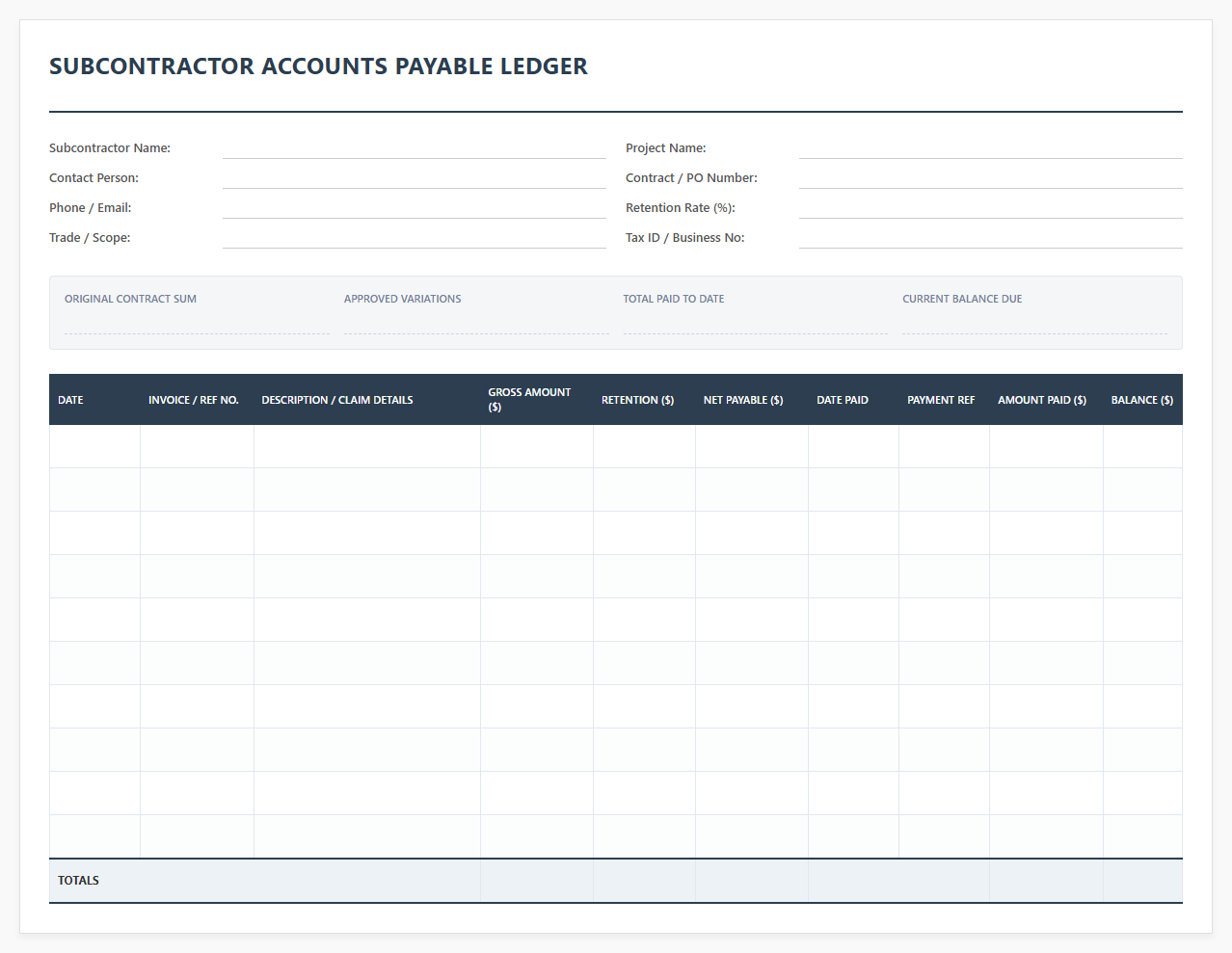
Subcontractor Accounts Payable Ledger Template
 Download: .PDF
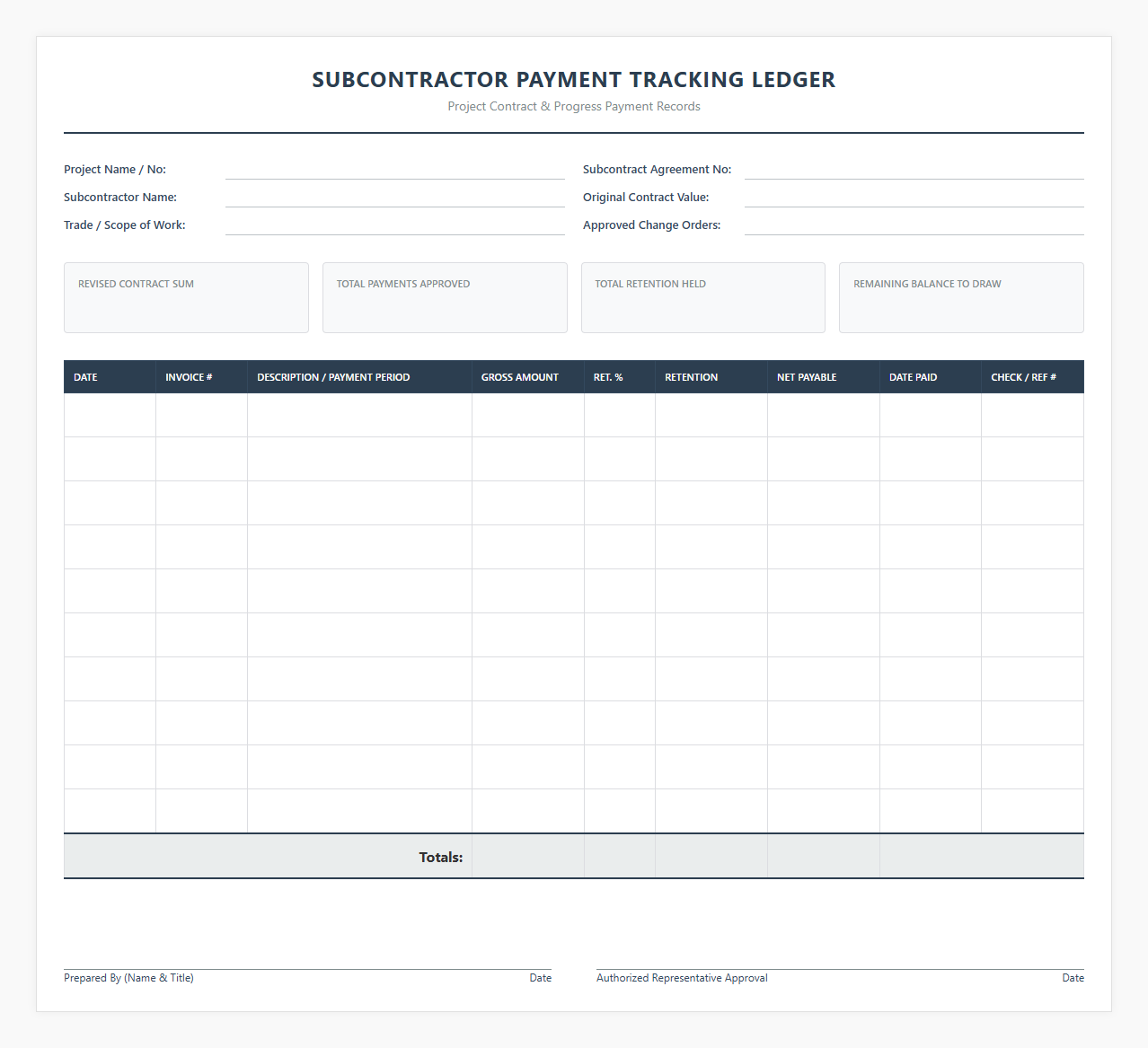
Subcontractor Payment Tracking Ledger
 Download: .PDF
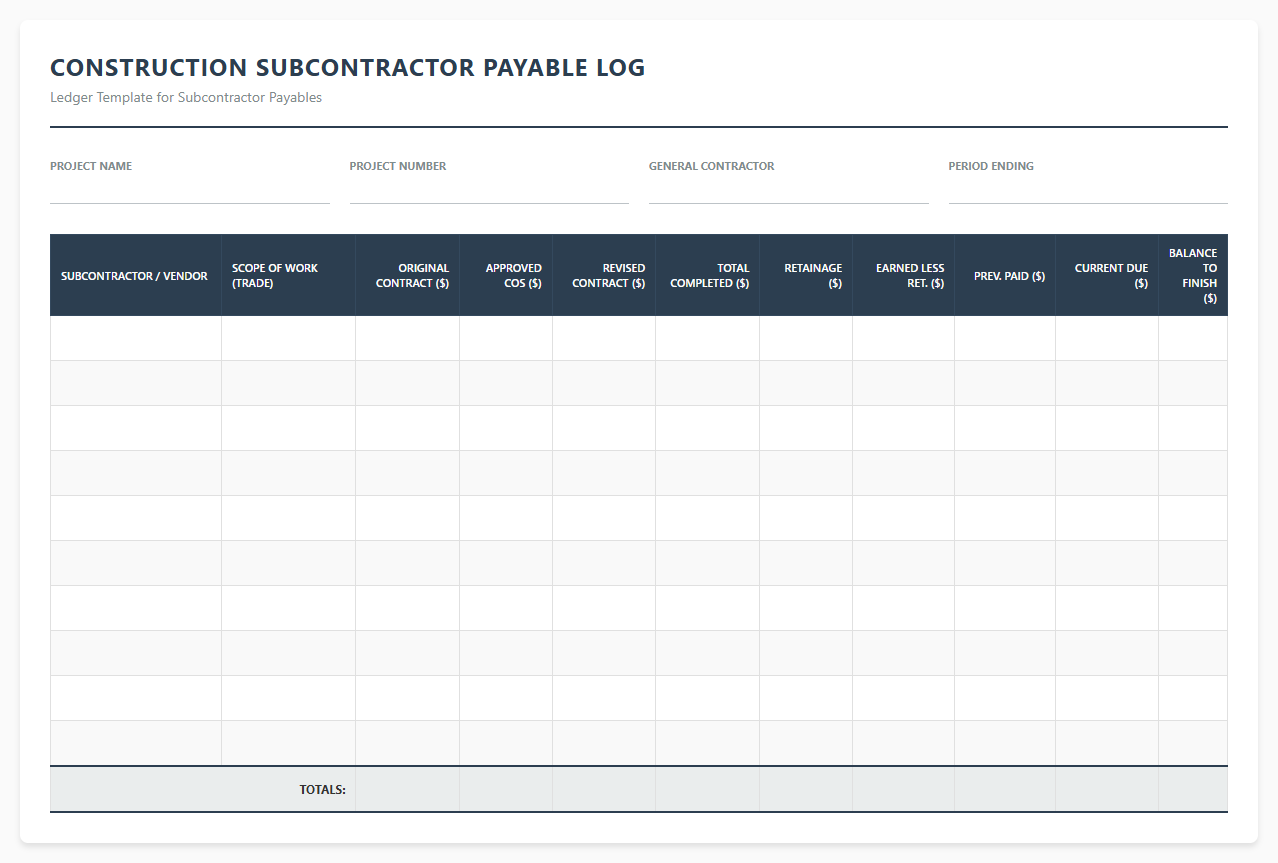
Construction Subcontractor Payable Log
 Download: .PDF
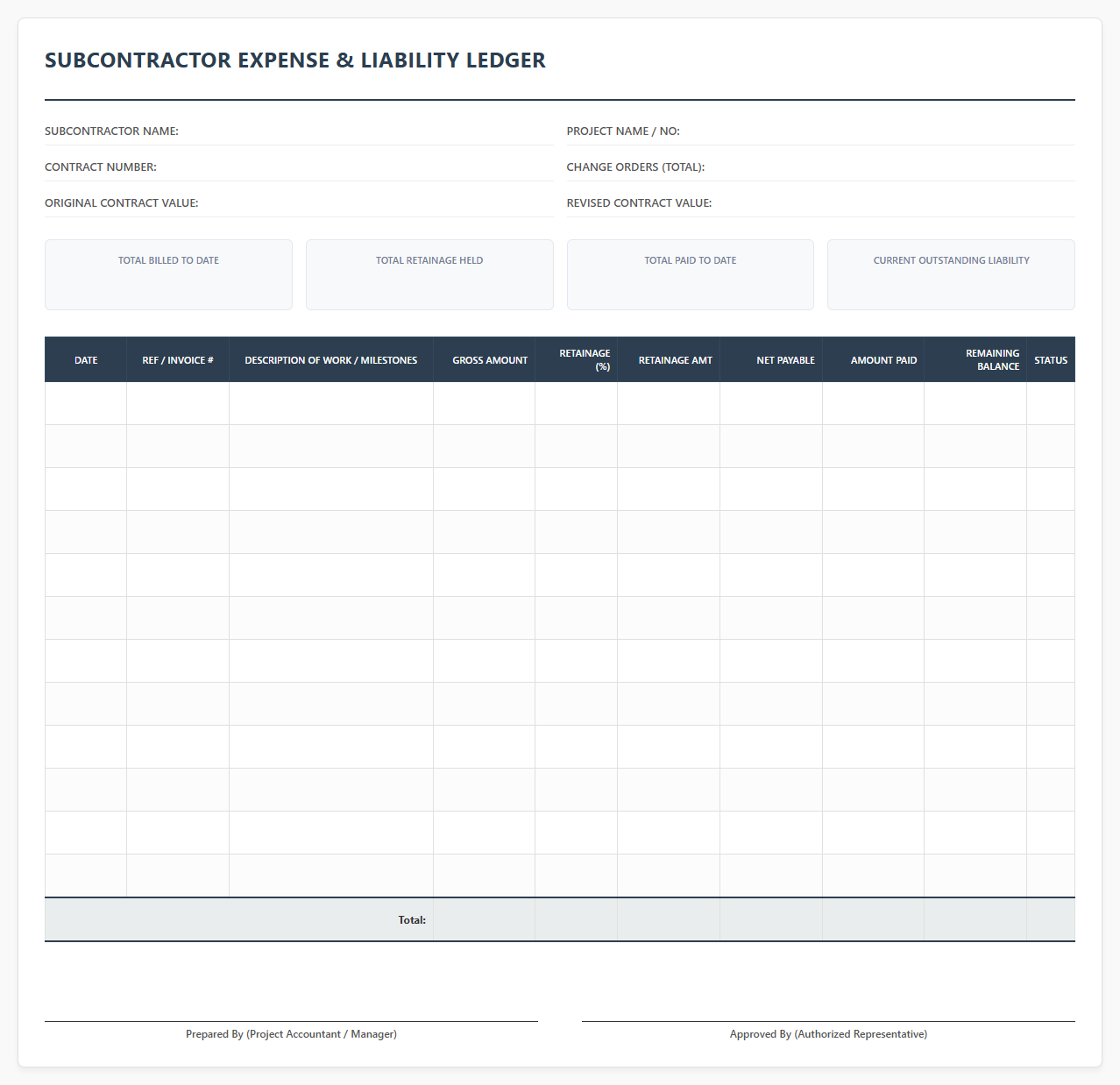
Subcontractor Expense and Liability Ledger
 Download: .PDF
Vendor and Subcontractor Payable Balance Sheet
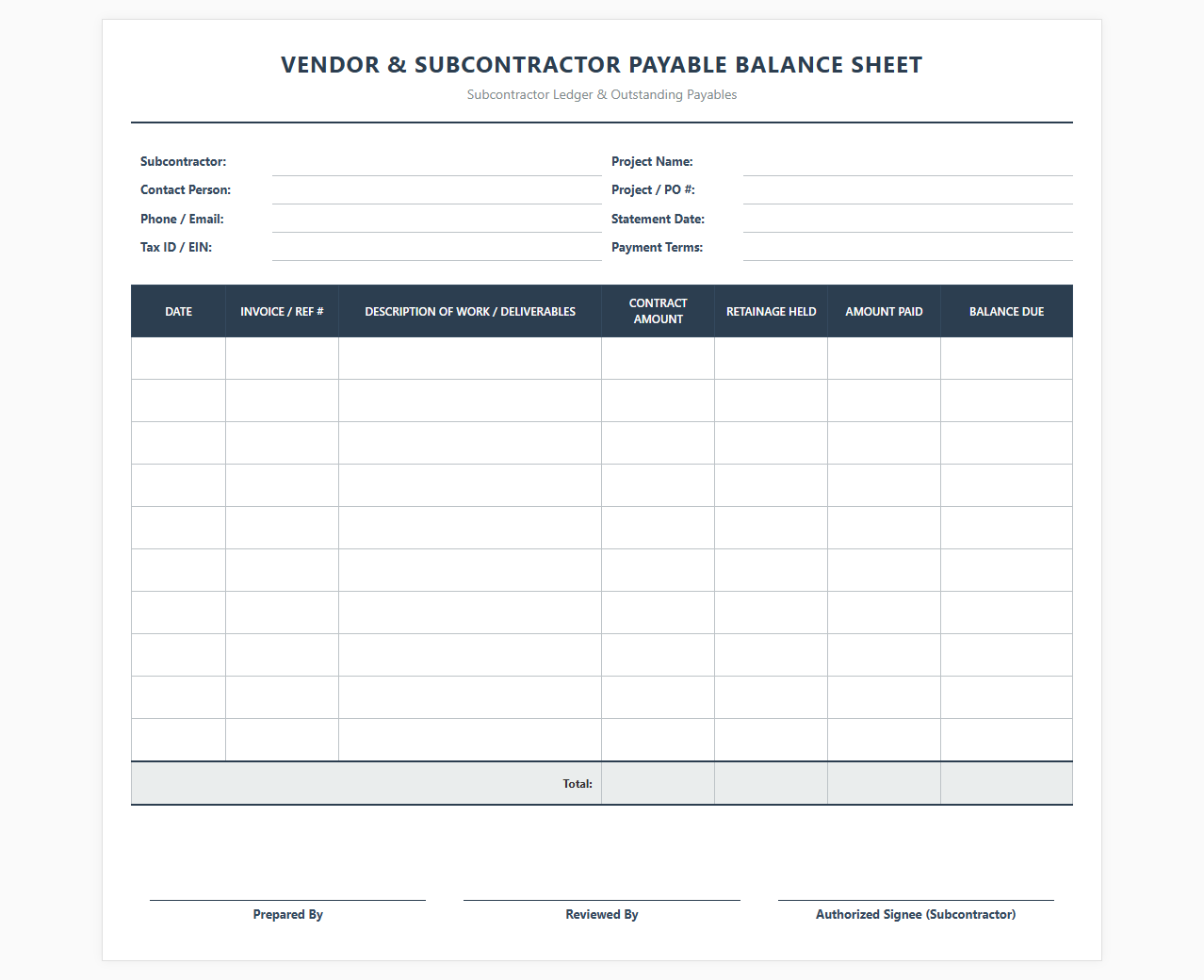 Download: .PDF
Monthly Subcontractor Outstanding Invoice Ledger
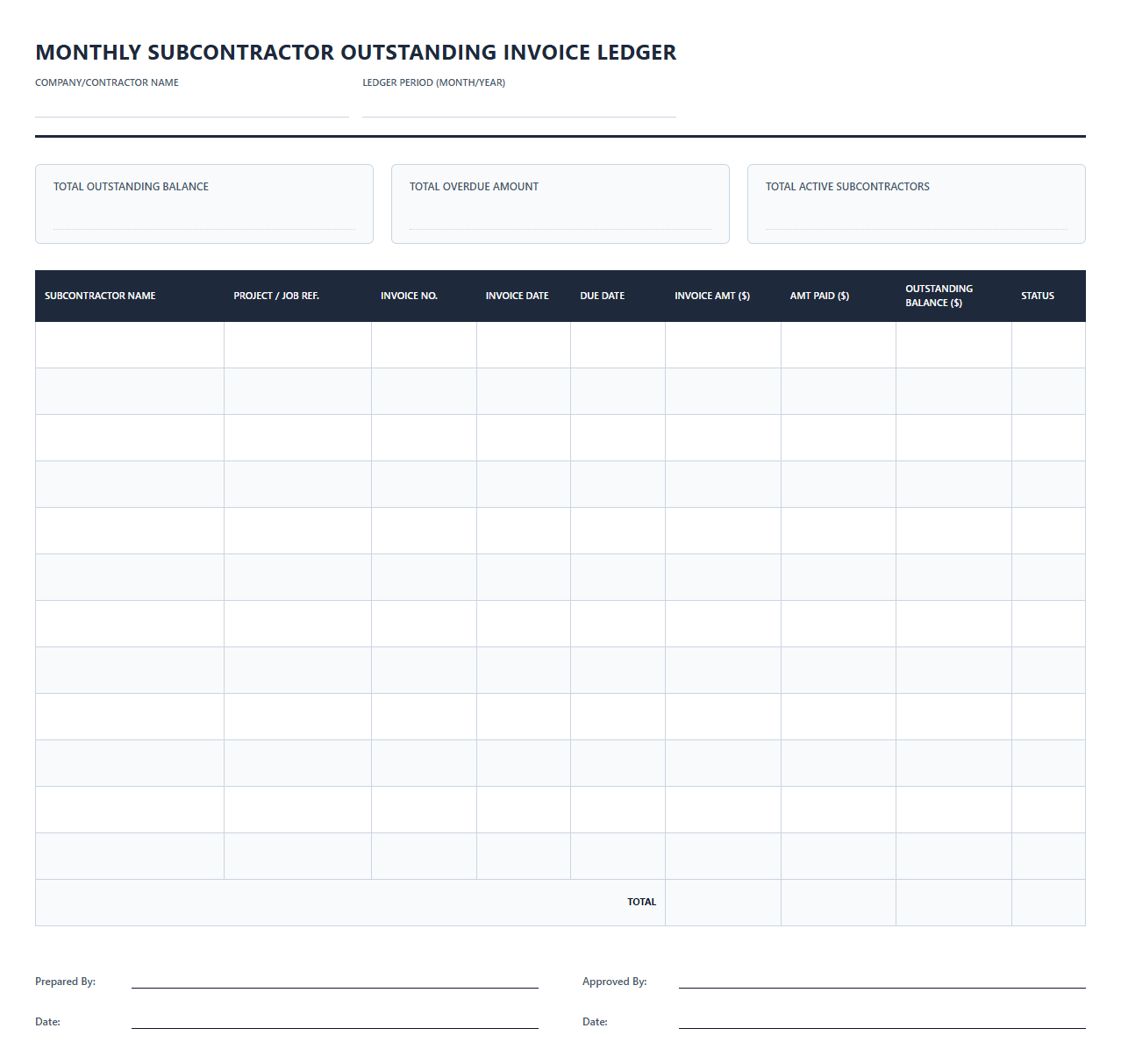 Download: .PDF
Subcontractor Contract and Payment Ledger
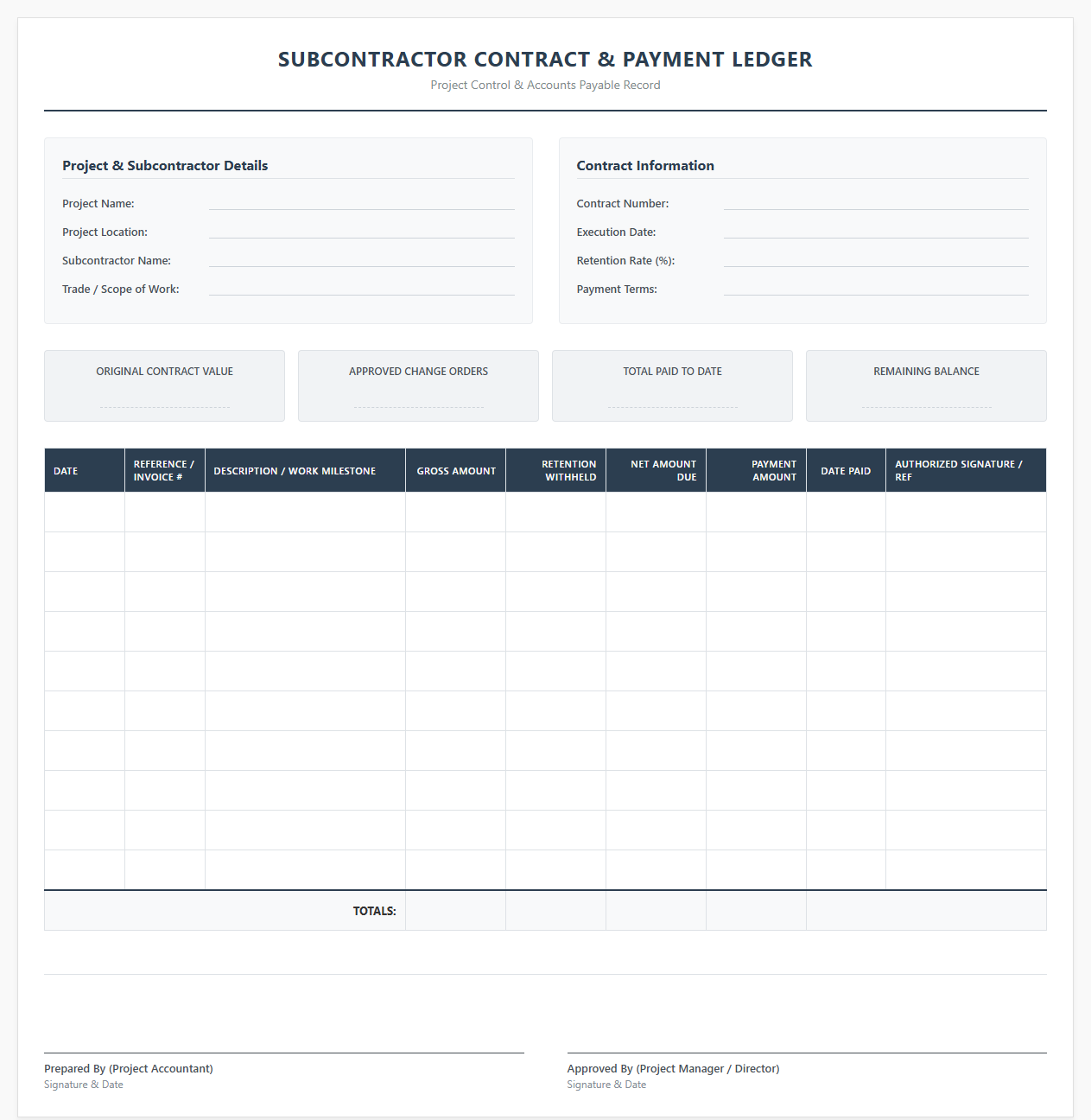 Download: .PDF
Project-Based Subcontractor Ledger Template
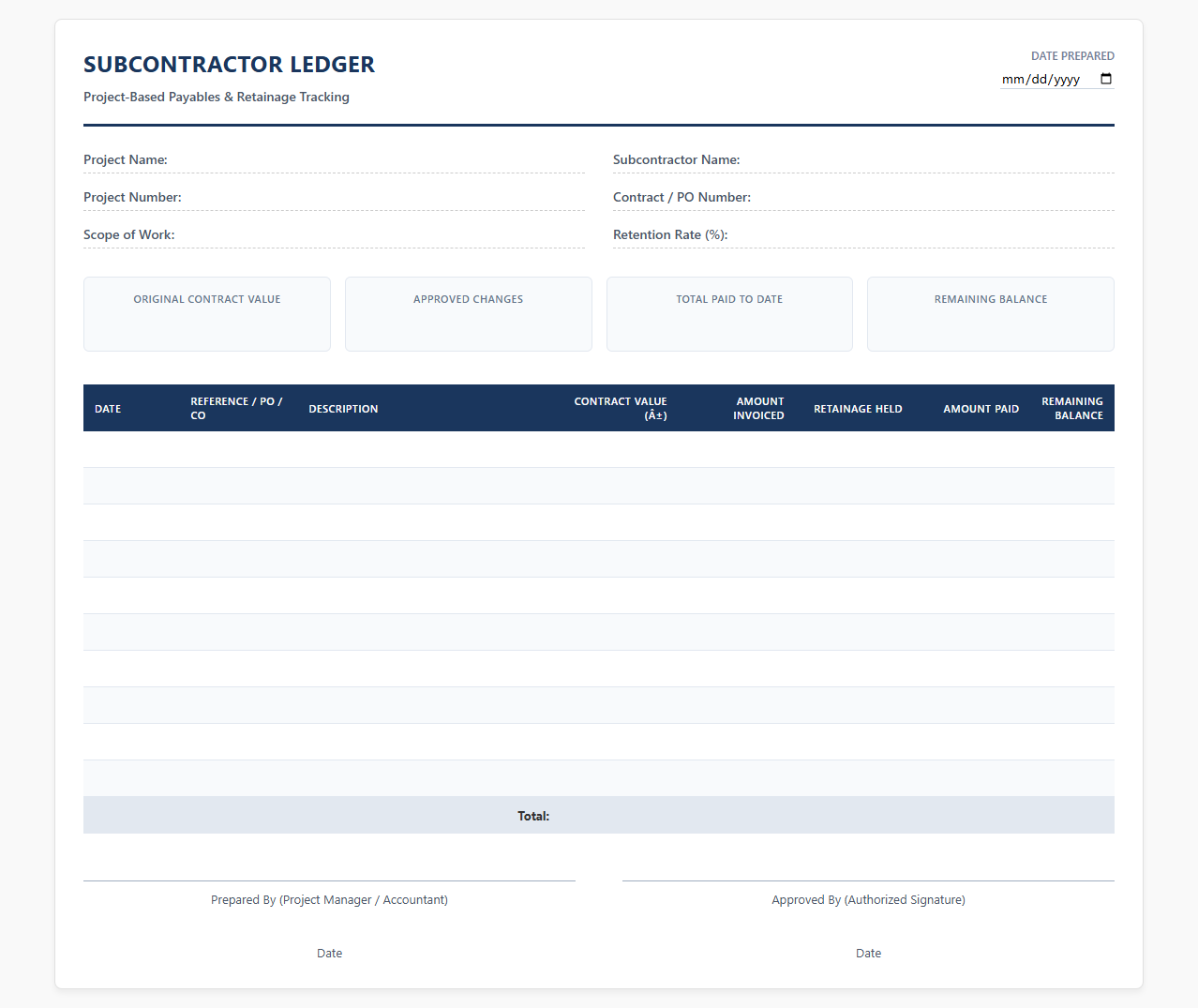 Download: .PDF
The Challenge of Subcontractor Payables in Modern Construction
Managing subcontractor payments in modern construction projects is an intricate balancing act. With multiple trades operating on-site simultaneously, tracking diverse payment schedules, retainage percentages, and work-completed certifications becomes exponentially difficult. Relying on manual tracking methods introduces significant financial risks, including duplicate payments, missed deadlines, and strained trade relations. To maintain project momentum, construction firms must transition to streamlined financial workflows that ensure accuracy and transparency.
Understanding Versatile Ledger Templates
Versatile ledger templates are adaptable financial tracking frameworks designed specifically to capture the dynamic nature of construction billing. By serving as a single source of truth, these templates consolidate all financial transactions, contract adjustments, and payment history into a unified view. This transparency is crucial for fostering healthy contractor-subcontractor relationships, as it ensures both parties have real-time visibility into what has been billed, approved, and paid.
Essential Elements of a High-Functioning Subcontractor Ledger
To ensure no financial detail falls through the cracks, a high-functioning subcontractor ledger must contain specific, well-defined tracking categories. A robust layout includes the following columns:
- Original Contract Value: The initial agreed-upon price for the scope of work.
- Approved Variations: Change orders that alter the original contract sum.
- Retention Sums: Funds withheld until project completion to guarantee quality.
- Payments Made to Date: A cumulative record of all completed transactions.
- Outstanding Balance: The remaining amount due to the subcontractor.
Why Standardization Drives Efficiency and Compliance
Standardizing ledger templates across all projects yields immediate operational benefits. By removing the guesswork from financial record-keeping, administrative teams save countless hours previously spent deciphering non-standard invoices and tracking sheets. This uniform approach drastically minimizes human errors, ensuring that calculations are consistent. Furthermore, standardized data structures make financial audits stress-free and help firms maintain strict tax and regulatory compliance without last-minute scrambles.
Implementing Ledger Templates Into Your Existing Workflow
- Assess Current Processes: Audit your legacy tracking methods to identify common pain points and data gaps.
- Select and Customize a Template: Choose a versatile template and adapt it to match your specific payment terms and retention policies.
- Train Key Personnel: Run training sessions for project managers and accounting staff to ensure consistent data entry.
- Migrate Historical Data: Carefully transfer outstanding balances and active contract details into the new standardized system.
- Launch and Monitor: Roll out the template on live projects, monitoring compliance and gathering feedback for continuous improvement.
Best Practices for Ongoing Ledger Maintenance
Maintaining the integrity of your subcontractor ledgers requires continuous diligence and strict adherence to process rules. Regular weekly or monthly reconciliation prevents minor data entry mistakes from snowballing into major financial discrepancies at project closeout.
"Resolving disputes quickly requires a transparent audit trail. When change orders and payment requests are logged chronologically, resolving conflicts becomes a matter of reviewing objective data rather than debating recollections."
Additionally, protecting sensitive financial details is paramount. Restrict editing permissions on shared ledgers to authorized personnel only, preventing accidental modifications and safeguarding private subcontractor business data.
Future-Proofing Contractor Payments for Scalable Growth
Embracing structured ledger templates is more than a short-term fix; it is a critical step toward complete financial modernization. By mastering standardized tracking now, project managers lay the groundwork for seamless integration with advanced automated construction software. Taking control of your payment workflows today strengthens subcontractor partnerships and positions your firm for scalable, long-term success. Learn more about optimizing your construction workflows to build a resilient financial foundation.

Leave a comment