

Managing contractor payroll often feels like chasing a moving target, fraught with manual data entry errors, mismatched hours, and administrative friction. Before investing in complex, automated software, establishing a standardized documentation workflow is the critical first step to maintaining regulatory compliance and budget control. Implementing a structured validation process grants business leaders immediate operational clarity, significantly reducing payout disputes and saving hours of weekly overhead.
While these templates streamline daily tracking, it is important to stipulate that they serve to support, rather than fully replace, localized legal and certified accounting oversight. Utilizing concrete, standardized tools-such as hourly timesheet templates, verified invoice trackers, and milestone sign-off sheets-ensures every billable hour is audit-ready. In this guide, we will explore the essential document templates required to optimize your hourly tracking and simplify your contractor payment cycle.
Independent Contractor Hourly Timesheet Template
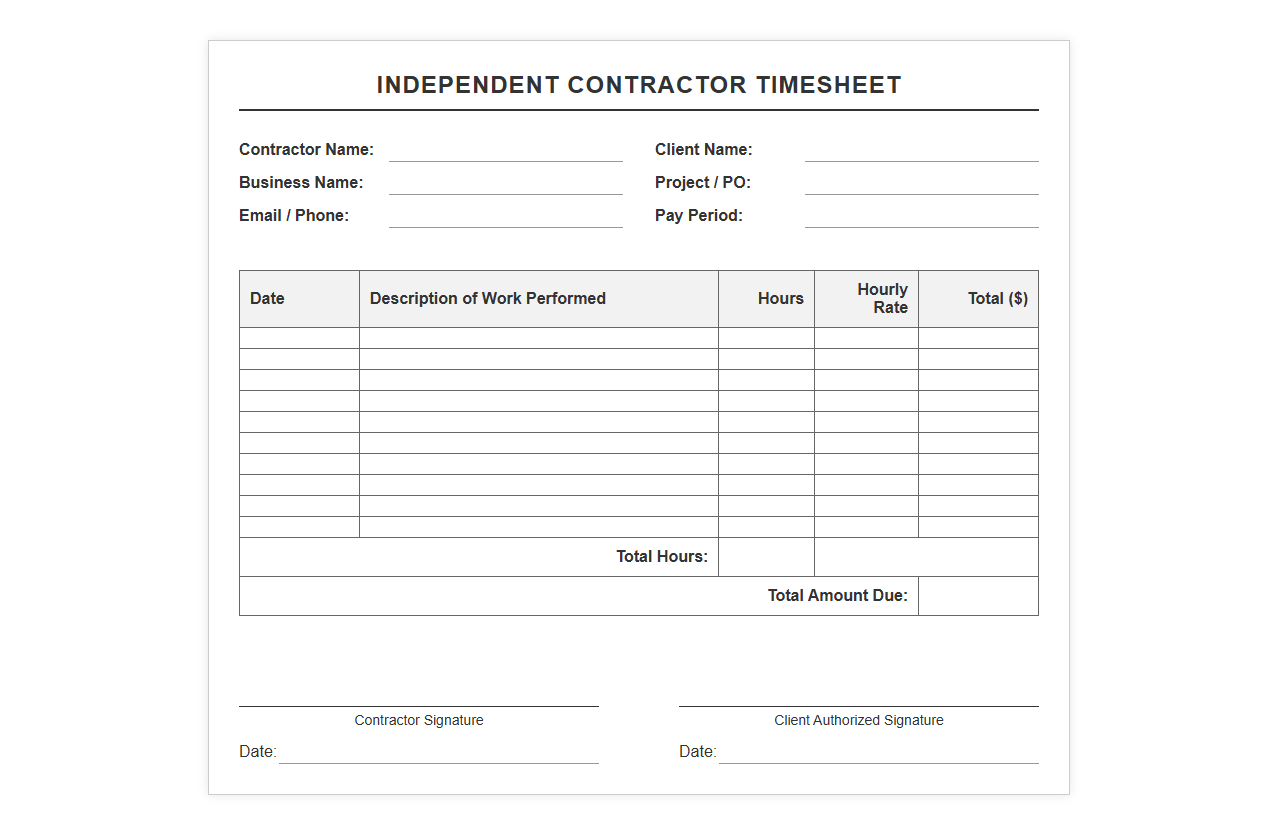 Download: .PDF
Freelancer Payroll and Hours Tracker
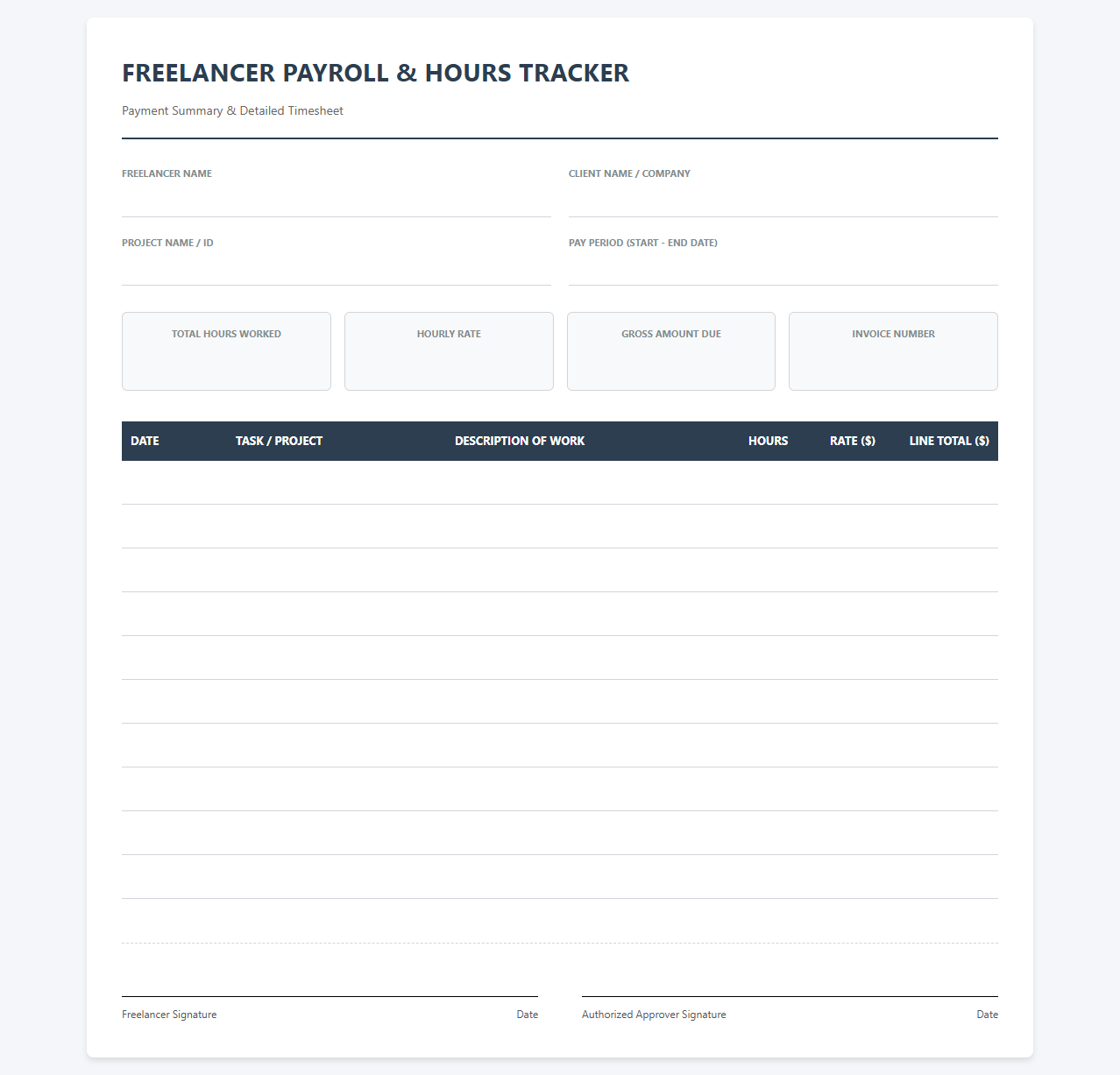 Download: .PDF
Contractor Hourly Invoice and Payroll Spreadsheet
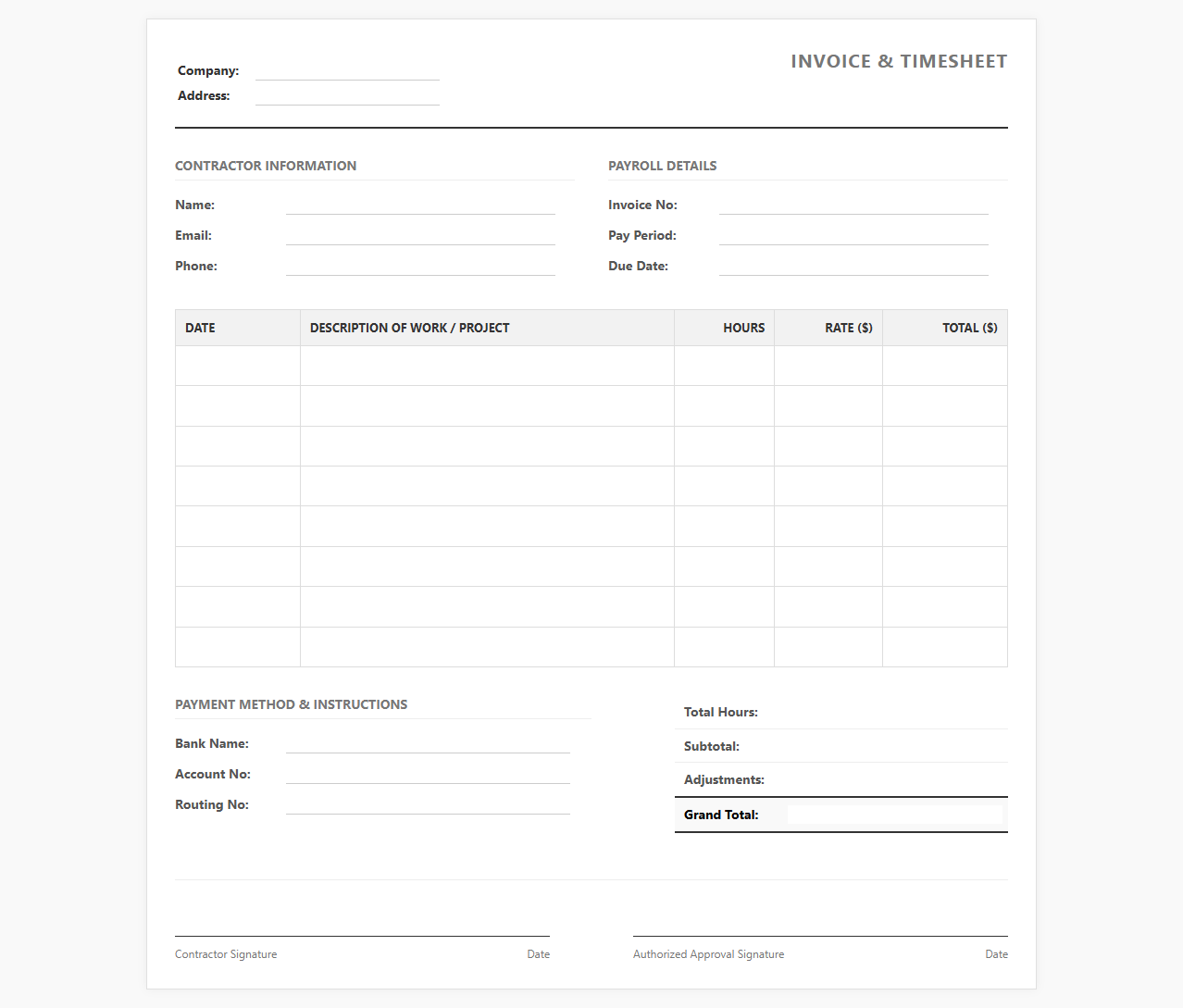 Download: .PDF
Contract Employee Hours Payroll Ledger
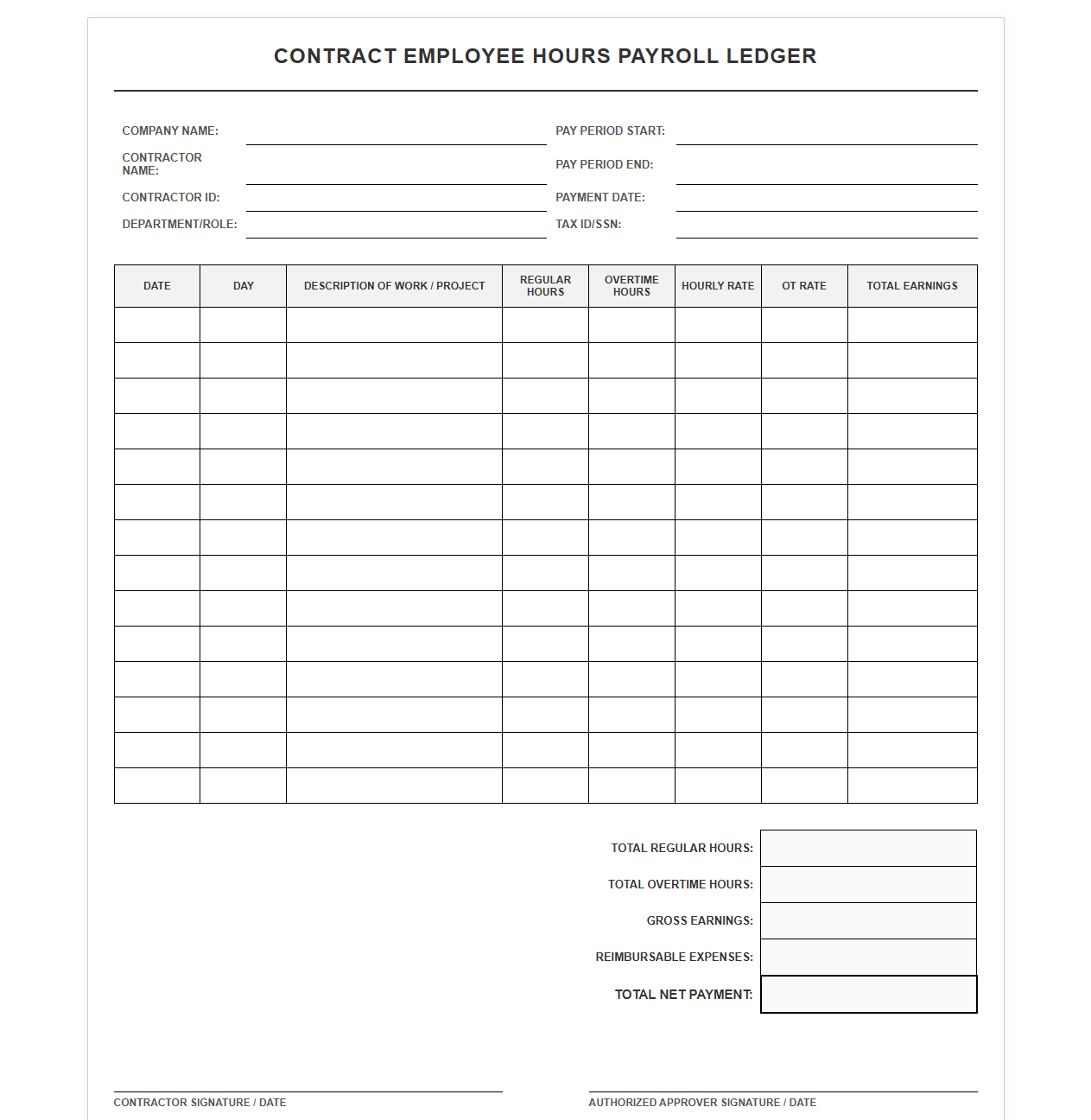 Download: .PDF
External Consultant Hourly Billing Template
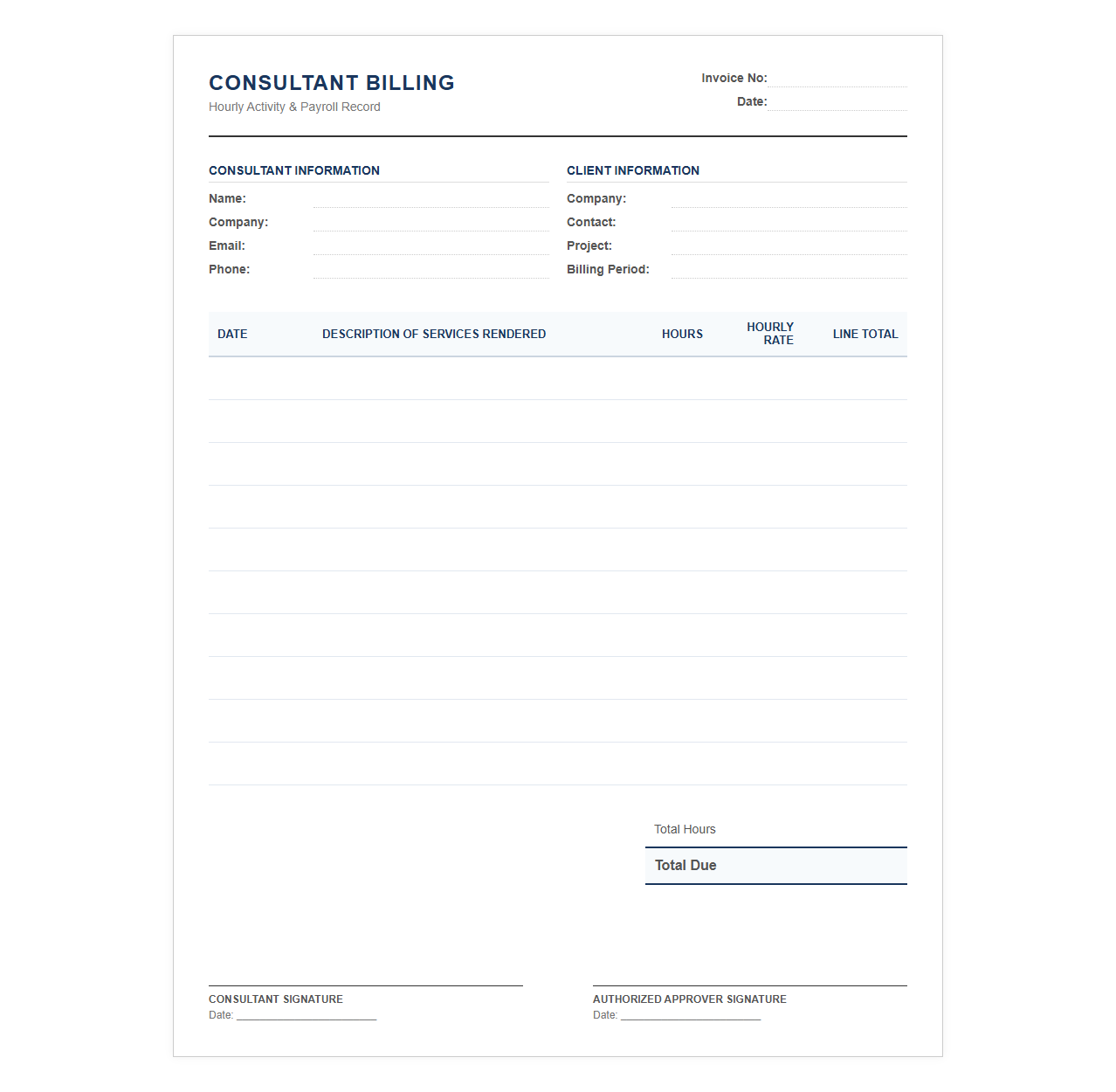 Download: .PDF
Contractor Weekly Time Card and Payroll Sheet
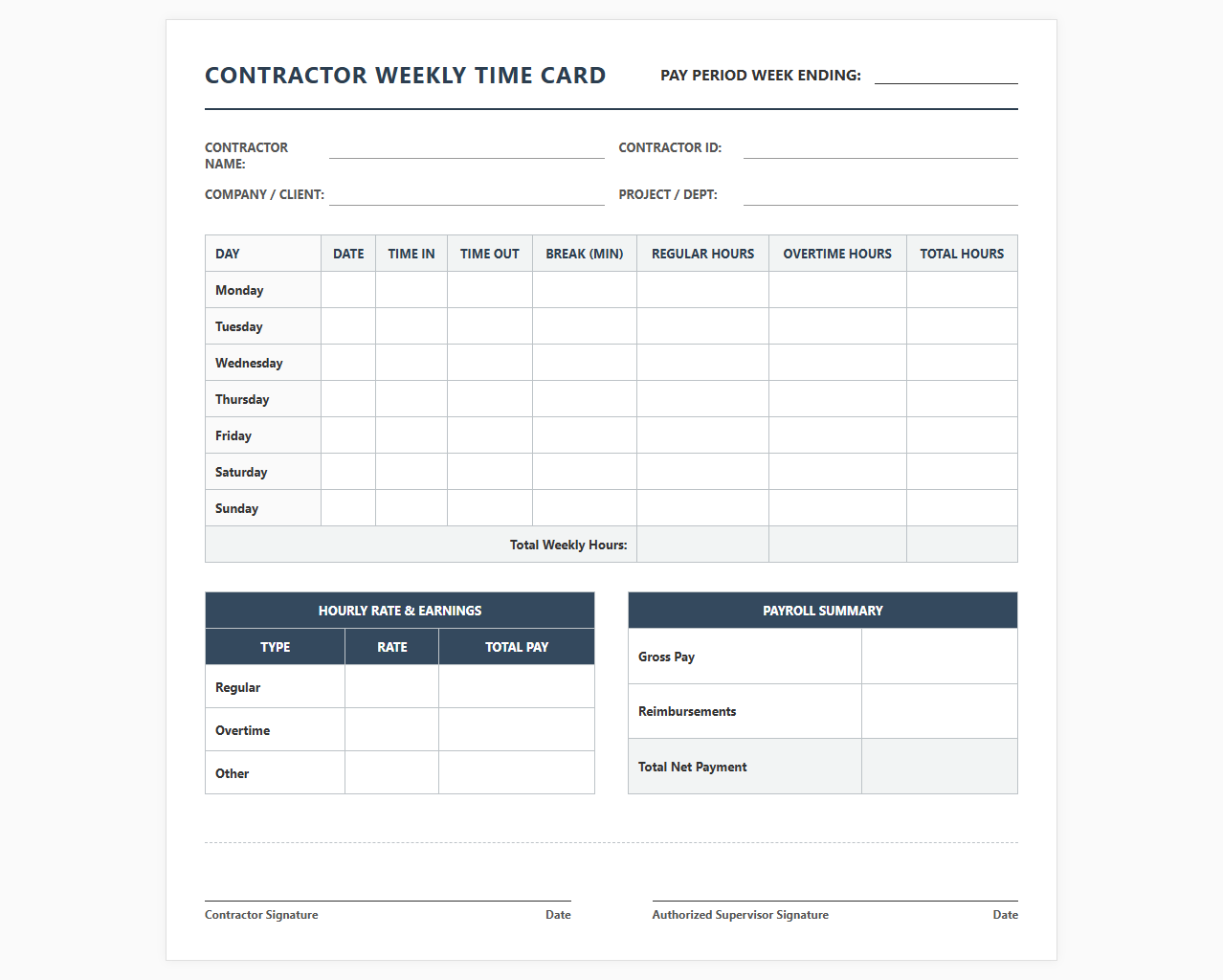 Download: .PDF
Gig Worker Hourly Payroll Calculator
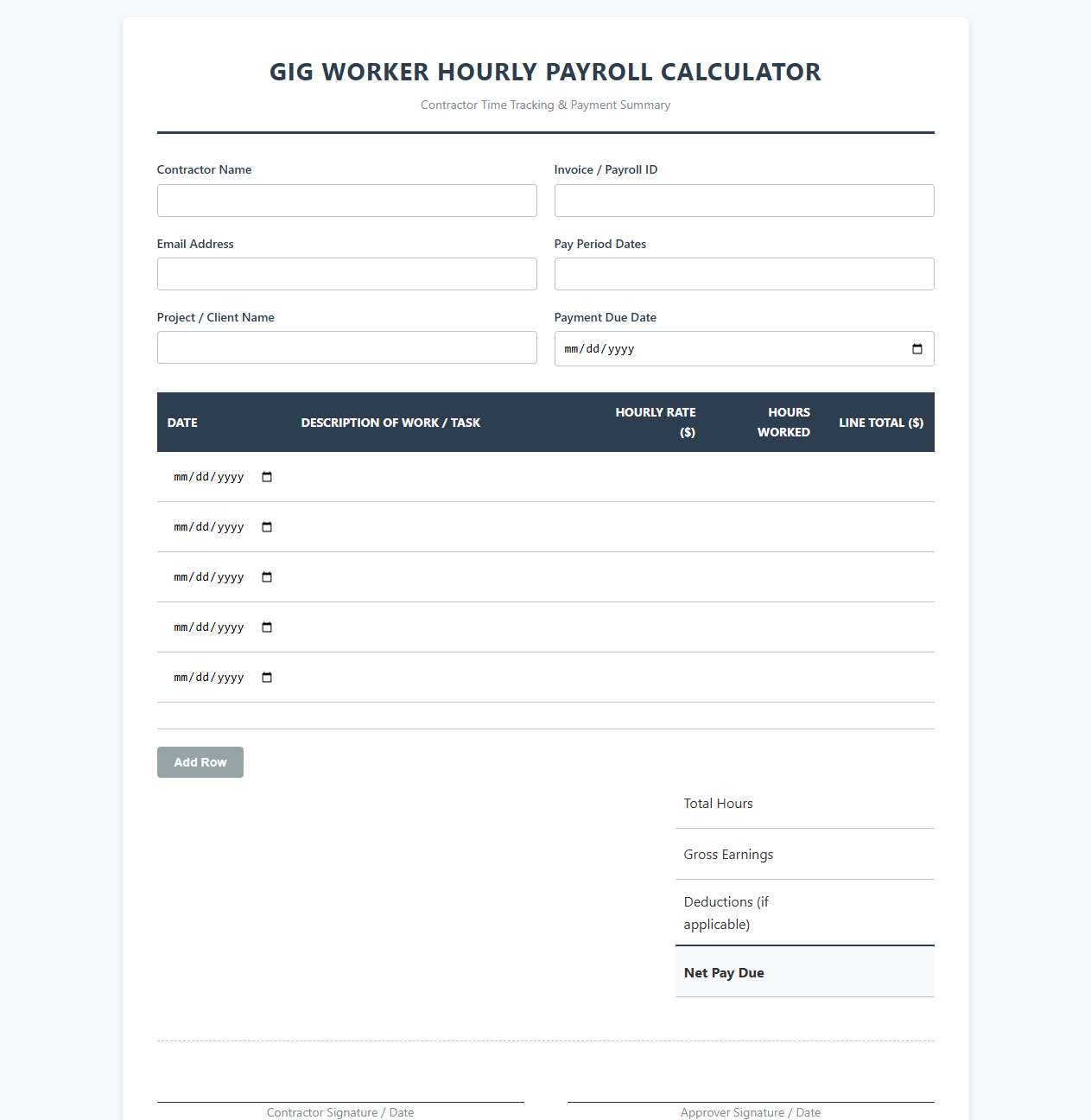 Download: .PDF
Contractor Compensation and Hours Log
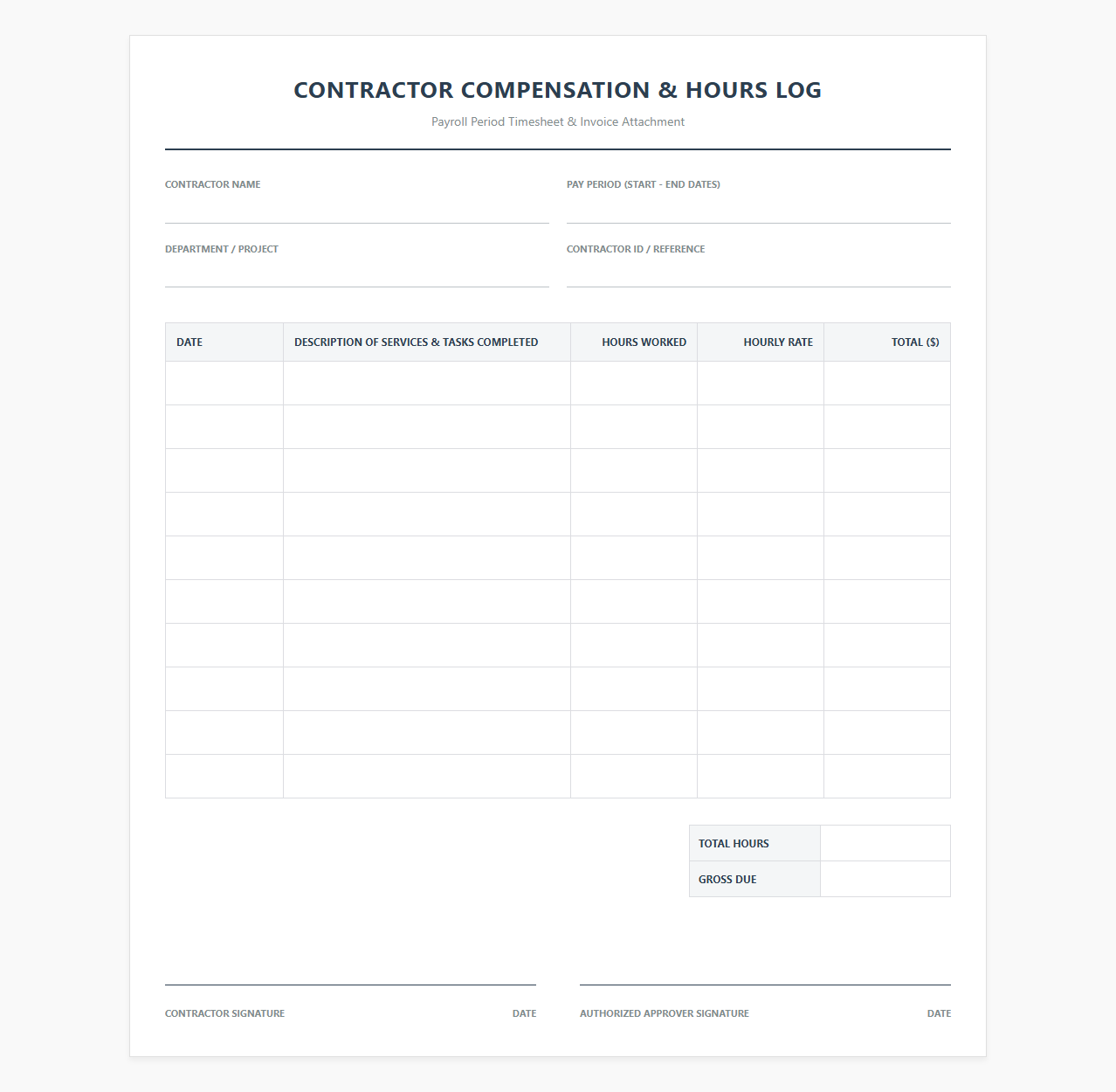 Download: .PDF
Hourly Contractor Pay Run Template
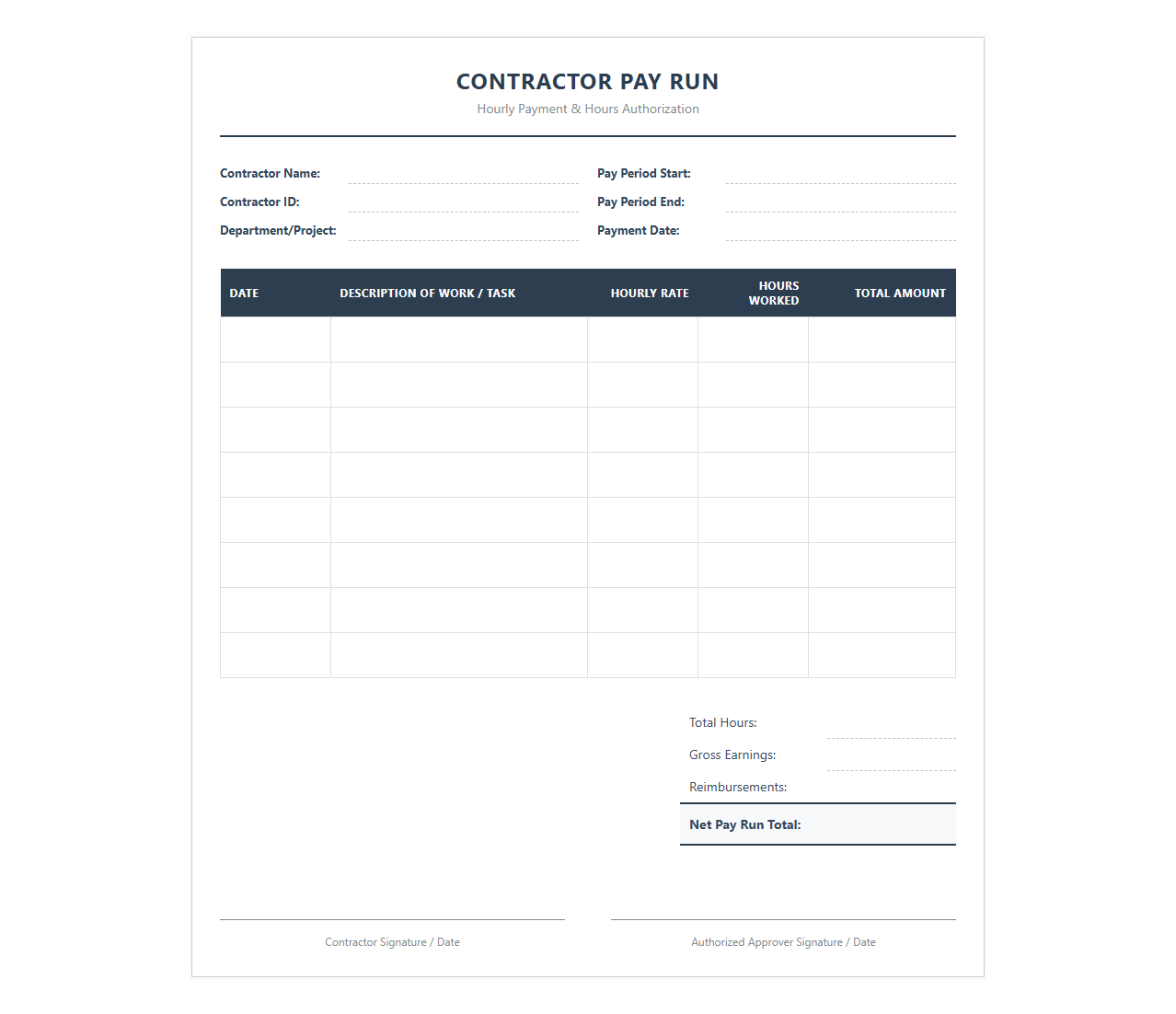 Download: .PDF
Section 1: Introduction to Streamlined Contractor Payroll
Managing hourly contractors presents unique administrative challenges, particularly when relying on fragmented, manual systems. Manual time tracking often leads to administrative bottlenecks, costly calculation mistakes, and compliance vulnerabilities. Implementing standardized templates provides a reliable solution to reduce payroll errors, ensure regulatory alignment, and reclaim valuable administrative hours.
Section 2: The Daily and Weekly Timesheet Template
A robust hourly timesheet template simplifies recording and calculations. It must capture precise working hours and provide clear documentation for both the contractor and the payroll administrator. Every standard template should feature the following essential fields:
- Date of work performed
- Detailed description of specific tasks
- Exact clock-in and clock-out timestamps
- Calculated daily and weekly total hours
Section 3: Project-Based Hours Allocation Template
For contractors balancing multiple assignments, a project-based breakdown ensures accurate client billing and precise internal cost allocation. Utilizing a structured table allows managers to see exactly how much resource allocation each initiative receives.
| Project Name | Task Description | Hours Worked | Billing Rate |
|---|---|---|---|
| Website Redesign | Frontend development | 15.5 | $75.00 |
| Database Migration | Query optimization | 10.0 | $90.00 |
Section 4: The Submission and Approval Workflow Template
Establishing a standardized verification loop prevents processing delays and billing discrepancies. A structured workflow ensures every submitted timesheet undergoes proper review before triggering payroll.
- Contractor logs daily hours and submits the completed timesheet at the end of the billing cycle.
- The project manager reviews the logged tasks against project milestones and deliverables.
- The manager signs off, approving the document for payroll processing.
- The finance team executes payment based on the verified totals.
Section 5: The Hourly Invoice Template
An hourly invoice translates logged timesheet hours into a formal payment request. Standardizing this document ensures professional communication and prompt payment processing.
The billing invoice must clearly display the payment terms, net due dates, and itemized calculations. Below is a structural example of the contractor billing information format:
Contractor: Jane Doe ConsultingEmail: contact@janedoeconsulting.com
Hourly Rate: $85.00/hr
Payment Terms: Net 30
Section 6: Compliance and Tax Documentation Checklist
Hourly tracking must align with regional tax and labor laws to prevent legal issues during audits. Keeping a standardized compliance folder alongside active timesheets is essential for proper record-keeping.
Section 7: Transitioning from Templates to Automation
While static document templates serve as an excellent starting point, growing businesses require scalable solutions. Manual entry eventually hits a ceiling where human error becomes inevitable. Transitioning to automated digital tracking tools allows your team to sync logged hours directly with accounting platforms, ensuring a seamless, touchless payment cycle. Adopting modern software represents a strategic step toward complete operational efficiency. Discover how to optimize your workspace with automated payroll integration tools.

Leave a comment