
Few challenges disrupt logistics operations and damage customer trust as quickly as delivery disputes and costly "not received" claims. As e-commerce volumes surge, maintaining clear visibility from warehouse to doorstep has become increasingly complex, leaving many businesses vulnerable to avoidable revenue loss.
Standardized Proof of Receipt (POR) templates grant businesses immediate financial protection and invaluable operational peace of mind. However, these documents are not a passive cure-all; their success requires strict, standardized field execution to ensure consistency. By capturing concrete verification-such as geotagged, timestamped photos of the delivery location and secure digital customer signatures-companies can establish indisputable proof of transfer.
In this article, we will examine the essential elements of a robust POR template, outline best practices for fleet integration, and demonstrate how to leverage these standardized tools to eliminate delivery friction permanently.
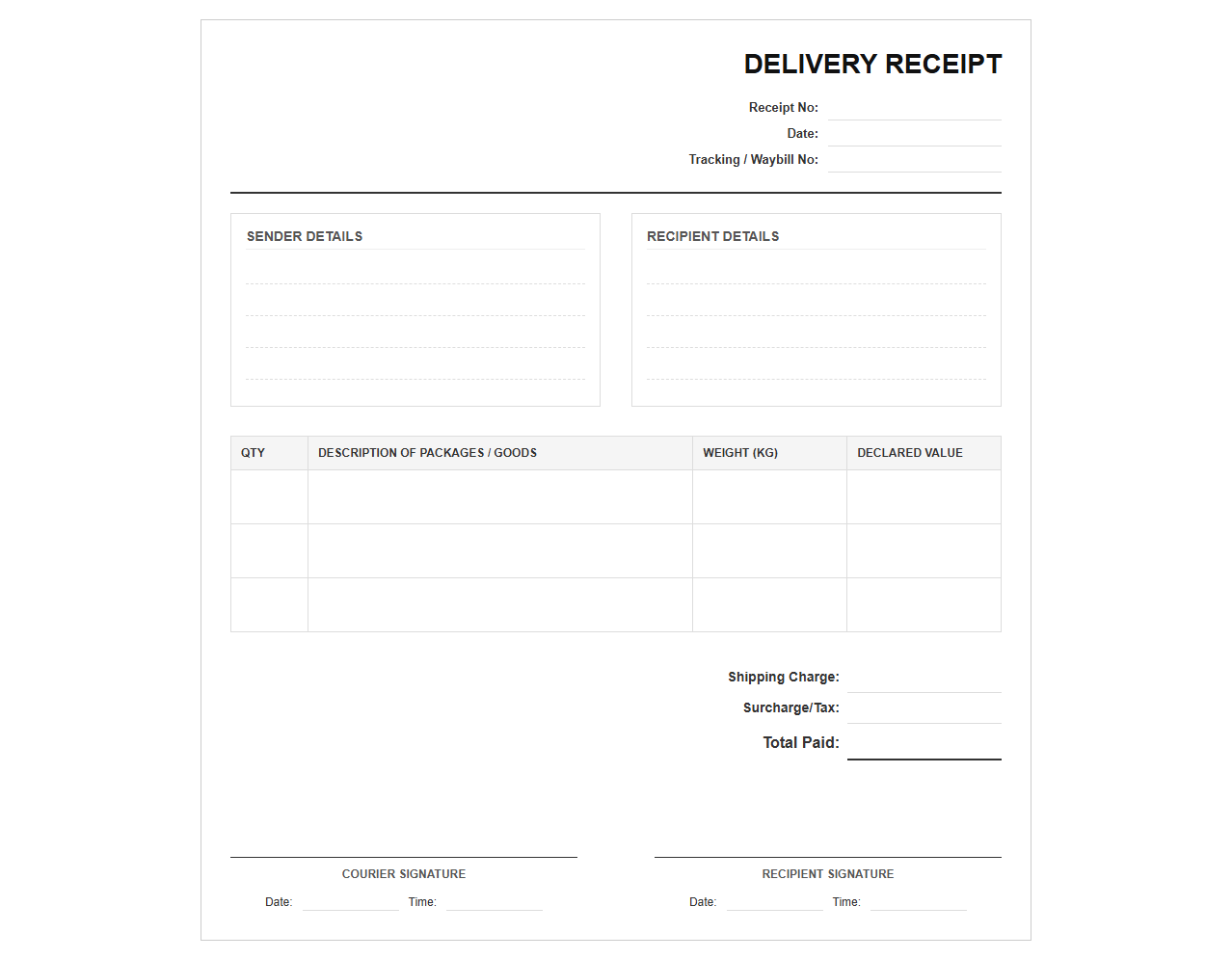
Standard Courier Delivery Receipt Template
 Download: .PDF
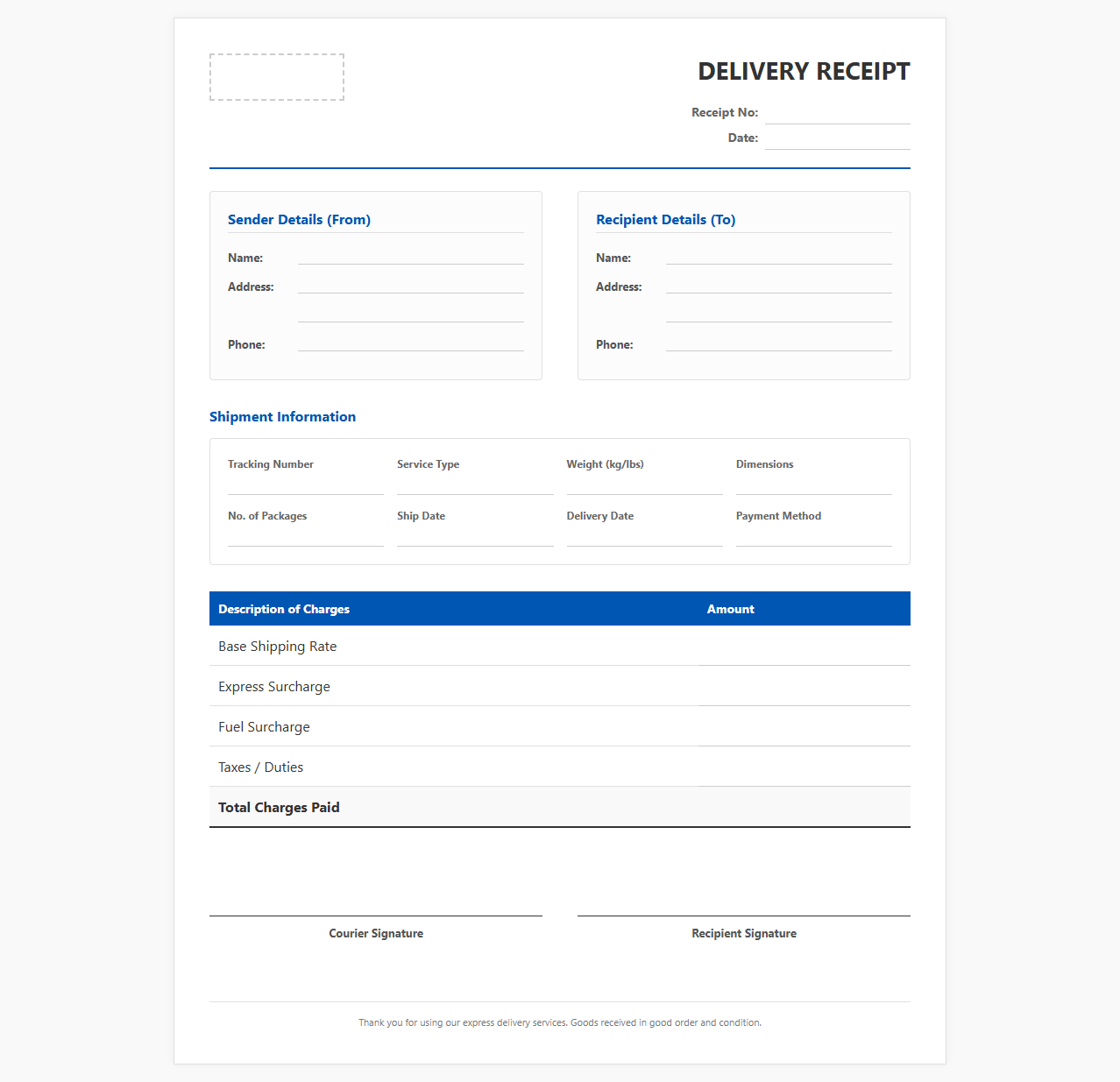
Express Package Delivery Receipt Template
 Download: .PDF
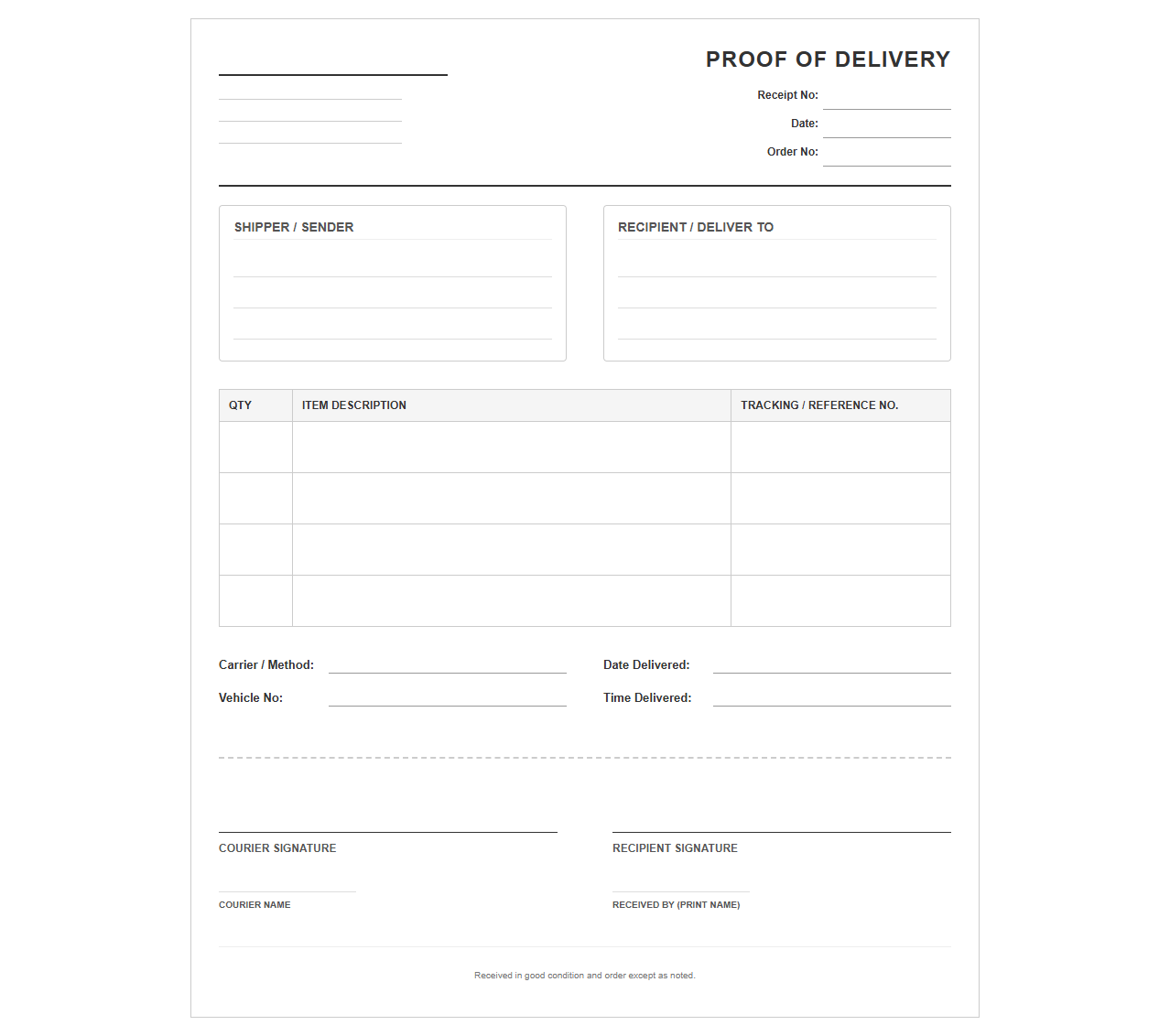
Proof of Delivery Receipt with Signature
 Download: .PDF
E-commerce Shipment Delivery Receipt
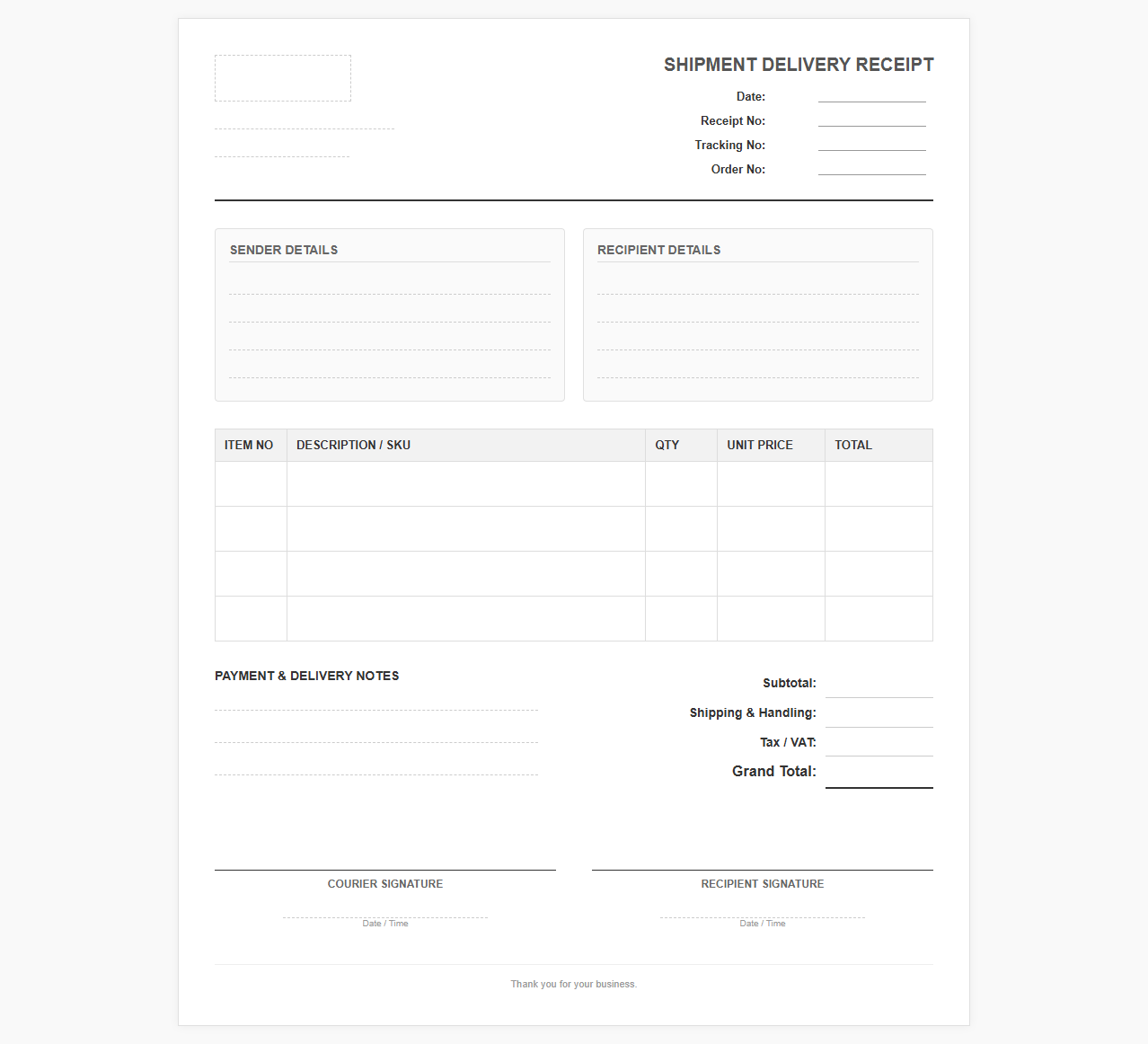 Download: .PDF
Local Courier Service Delivery Receipt
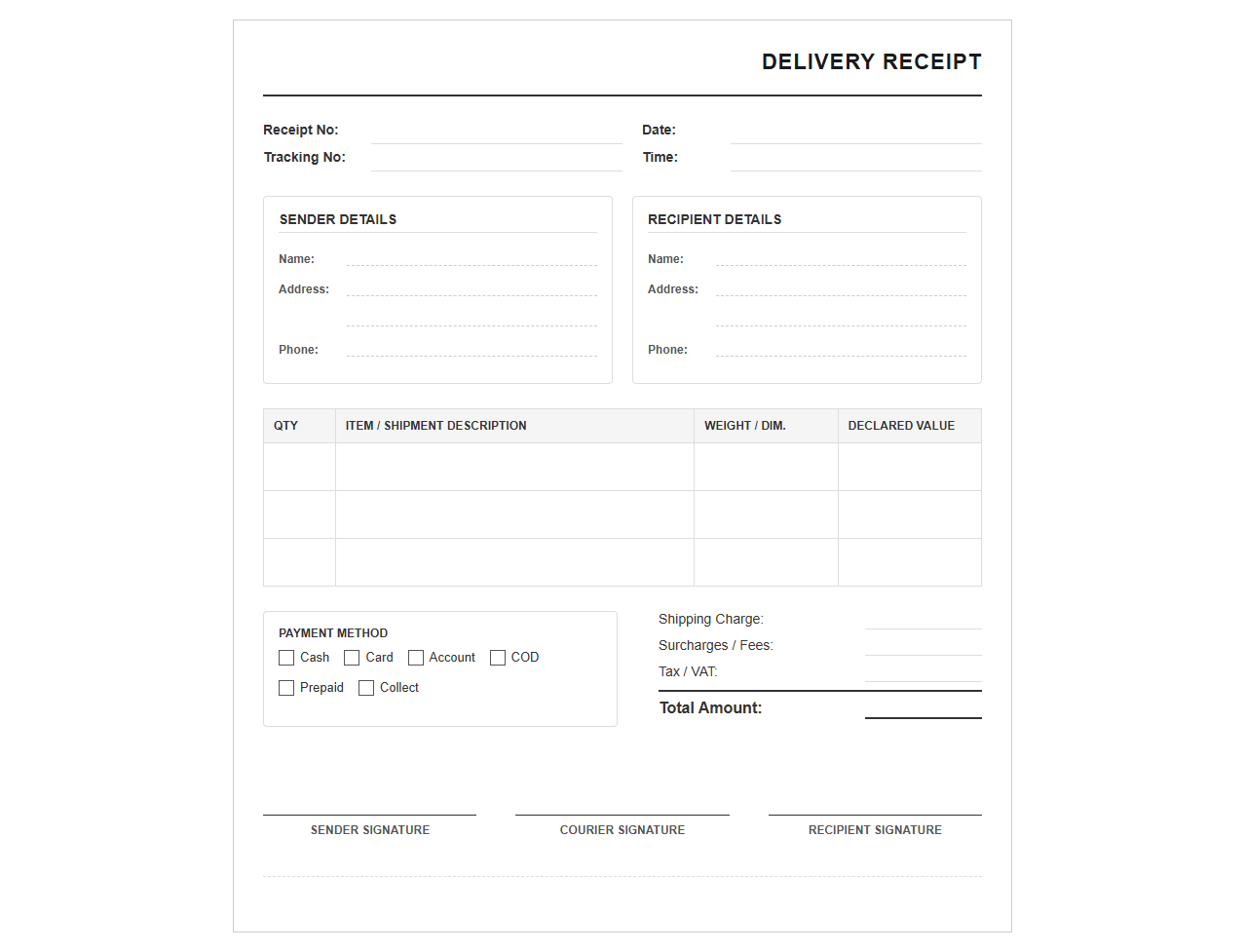 Download: .PDF
Freight and Cargo Shipping Receipt Template
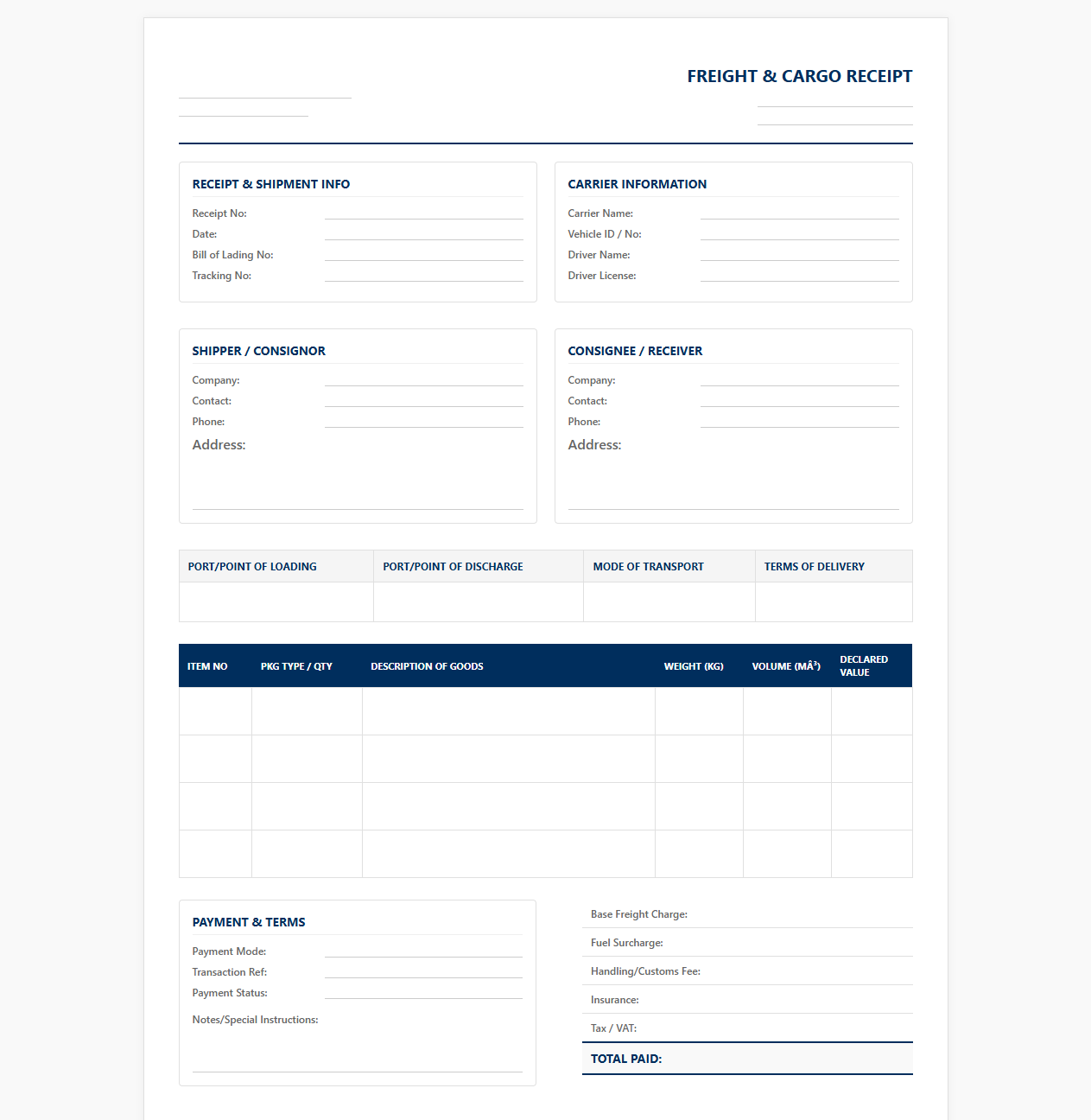 Download: .PDF
Food Delivery Service Receipt Template
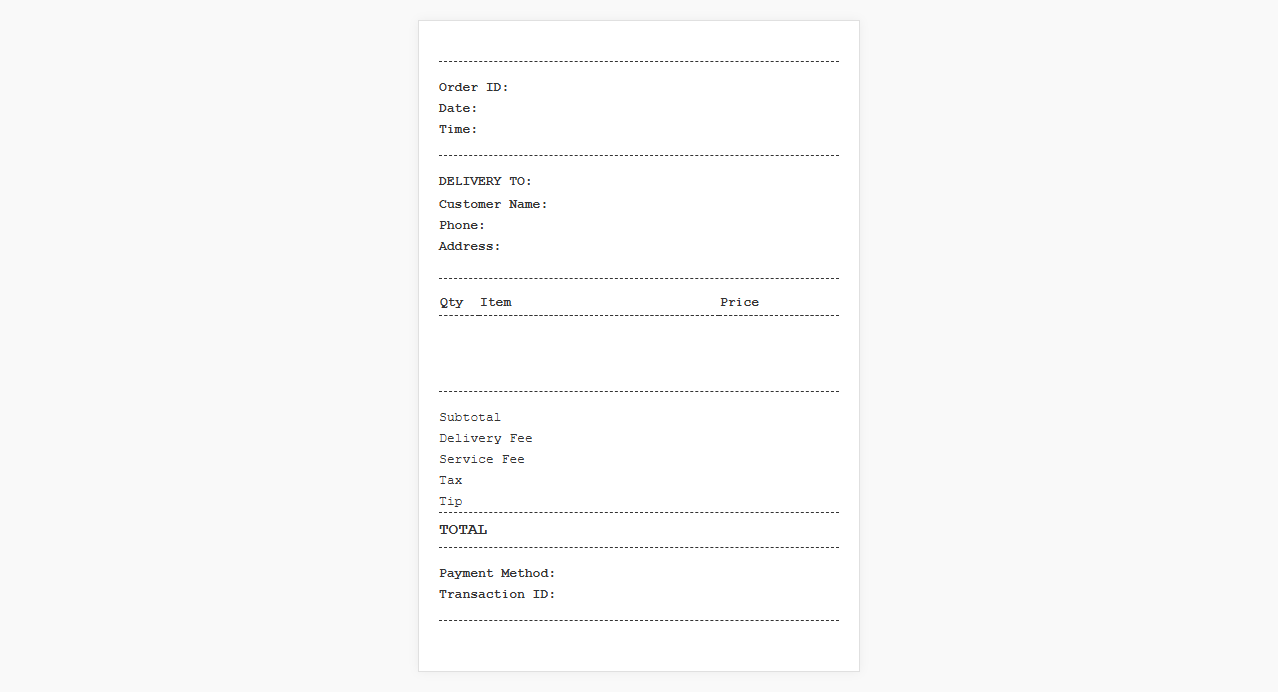 Download: .PDF
On-Demand Delivery Service Receipt
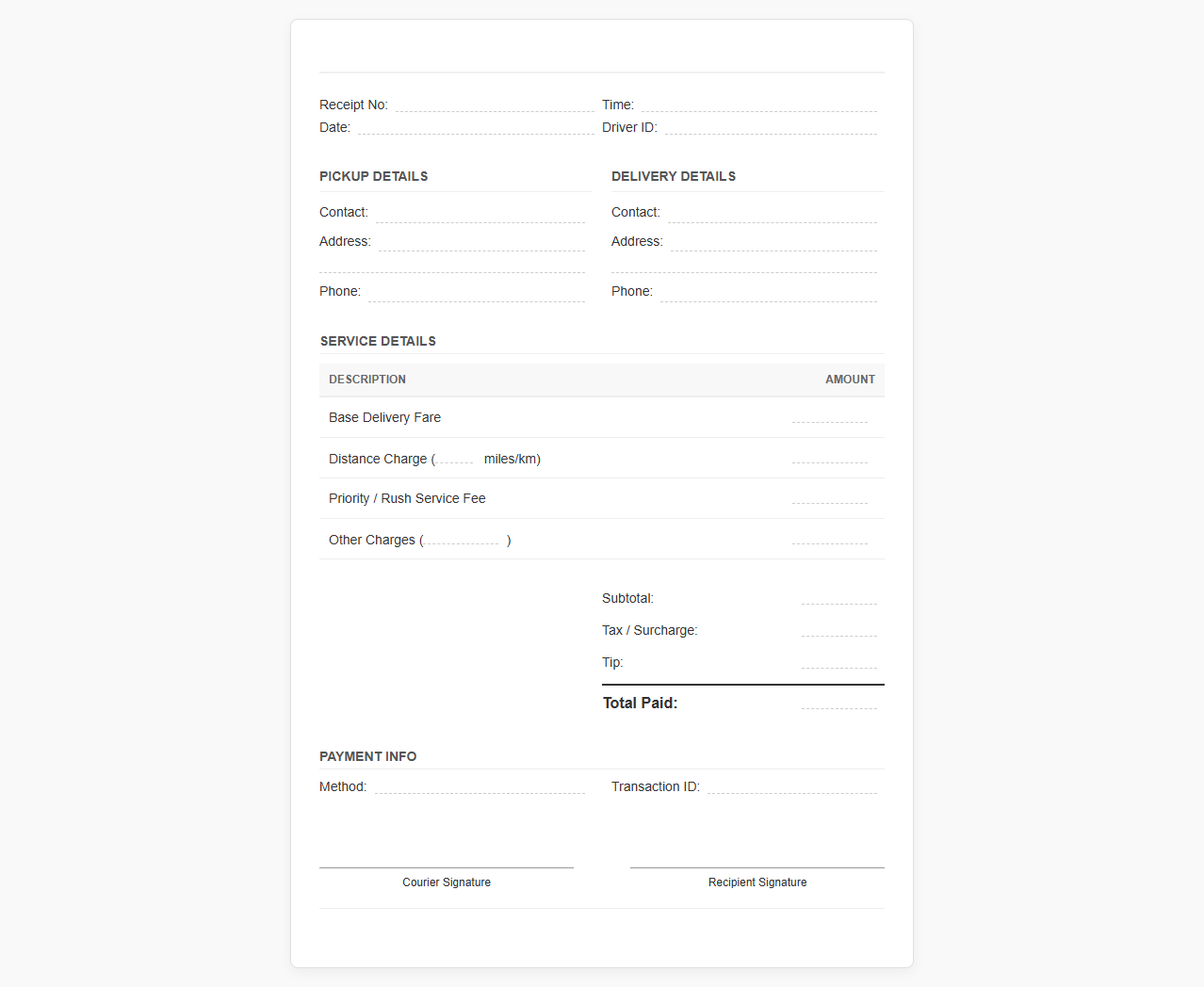 Download: .PDF
Medical Courier Delivery Receipt Template
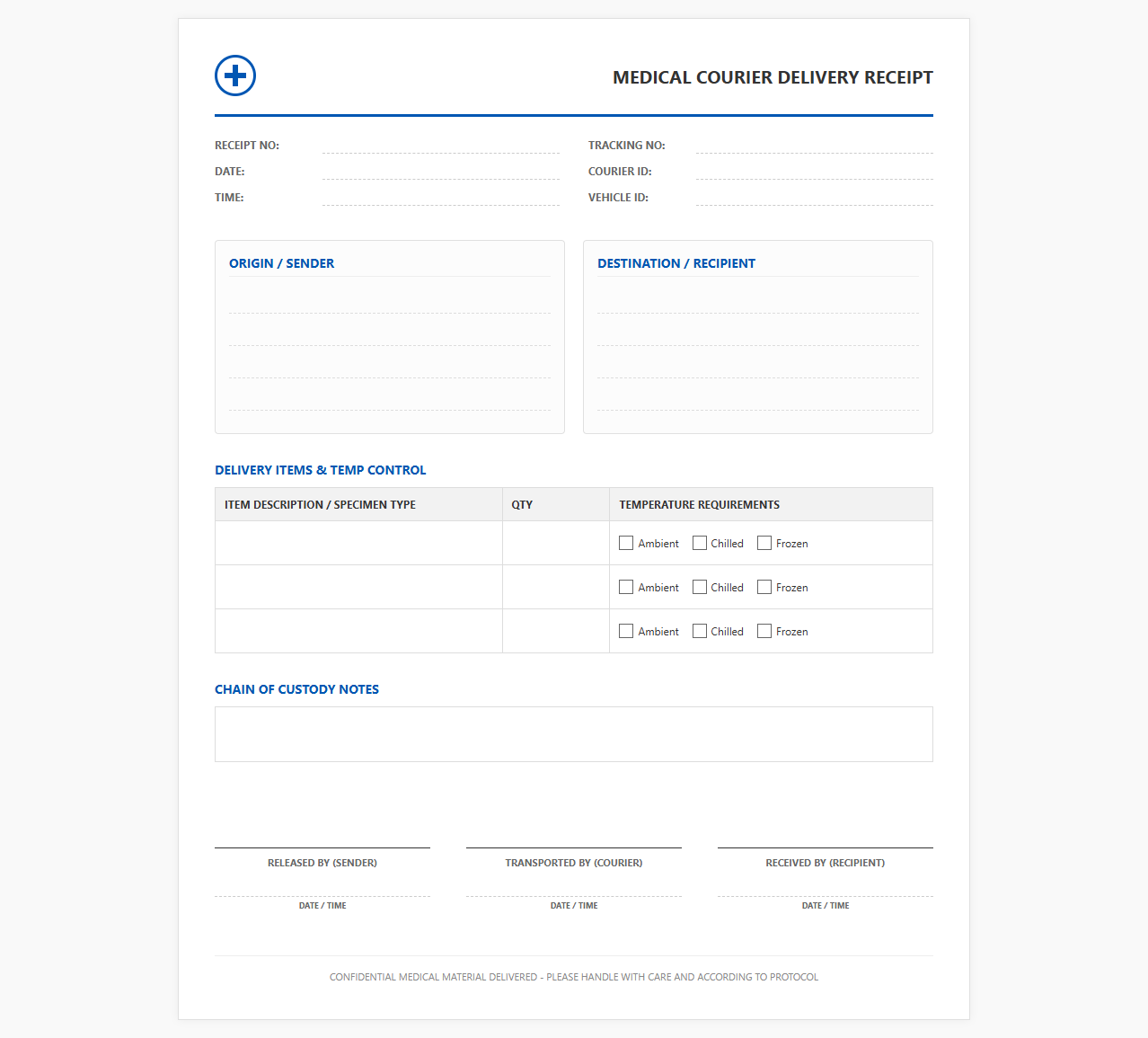 Download: .PDF
Introduction: The Cost of Delivery Disputes in Modern Logistics
In today's fast-paced e-commerce landscape, delivery disputes have become a major headache for logistics providers and merchants alike. Whether due to porch piracy, misdelivered packages, or fraudulent "item not received" claims, these friction points drain corporate resources. The financial impact extends far beyond the cost of the lost goods; businesses must absorb the expenses of customer service labor, expedited replacement shipping, and potential chargeback fees. Implementing a standardized proof of receipt (POR) system provides an indisputable record of transfer, immediately mitigating these costly vulnerabilities and protecting profit margins.
Understanding the Standardized Proof of Receipt
A standardized Proof of Receipt (POR) is a formal document that serves as verified acknowledgement that a shipment has been successfully delivered to and accepted by the designated recipient. Its core purpose is to establish an unbroken chain of custody, removing any ambiguity surrounding the final mile of delivery. By transitioning from informal confirmations-such as verbal agreements, text messages, or unverified drop-off photos-to highly structured templates, businesses can achieve complete operational transparency. This shift ensures that every single delivery is recorded under the exact same parameters, leaving no room for subjective interpretation.
Key Elements of an Effective Proof of Receipt Template
To ensure maximum utility and legally defensible records, a proof of receipt template must capture specific data points at the precise moment of delivery. Every standard POR template should feature these essential components:
- Recipient Signature: A physical or digital signature confirming that the designated individual accepted the cargo.
- Timestamp: The exact date and time the handoff occurred to prevent disputes over delivery delays.
- Geolocational Data: GPS coordinates captured at the moment of validation, confirming the courier was at the correct physical address.
- Item Description: Detailed information regarding the quantity, weight, and condition of the packages delivered.
Going Digital: Paperless vs. Traditional Paper Receipts
Transitioning from traditional paper-based receipting systems to digital validation frameworks significantly enhances operational efficiency. Below is a comparison detailing how modern solutions outclass legacy methods.
| Feature | Traditional Paper Receipts | Digital Proof of Delivery |
|---|---|---|
| Data Entry Speed | Manual and slow | Instantaneous and automated |
| Human Error Rate | High due to illegible handwriting | Negligible due to guided digital fields |
| Storage & Retrieval Costs | High physical filing costs | Zero physical space, instant cloud search |
| Dispute Resolution Time | Days or weeks to locate paperwork | Seconds to pull up digital logs |
Legal Safeguards and Compliance Advantages
Standardized POR templates act as a crucial line of defense for businesses facing merchant chargeback disputes or legal challenges from dissatisfied clients. When a customer claims a package never arrived, a fully completed and signed POR template serves as legally binding documentation that verifies contract fulfillment.
"A standardized proof of receipt serves as a binding shield in commercial disputes, neutralizing chargeback threats by providing verifiable, objective evidence of delivery compliance."
By capturing standardized delivery data, companies can seamlessly meet merchant compliance requirements set by major credit card issuers and payment gateways, preventing costly penalties and preserving merchant accounts.
Best Practices for Implementing POR Templates in Your Workflow
Integrating standardized templates into your existing operations does not need to disrupt daily dispatch flows. Follow these actionable steps to execute a smooth transition:
- Assess your current courier software to ensure compatibility with digital signature capture and GPS integration.
- Train delivery personnel on the absolute necessity of capturing all required template fields for every transaction without exception.
- Configure your system to automatically email a copy of the completed POR template to the customer immediately upon delivery confirmation.
- Establish a centralized database where all digital receipts are securely archived and easily searchable by customer service teams.
Conclusion: Securing Customer Trust and Reducing Friction
Adopting standardized proof of receipt templates is a proactive strategy that secures the interests of both the business and the buyer. These structured records foster customer trust by providing transparent, real-time proof of successful delivery. By eliminating the ambiguity that leads to costly claims, businesses can streamline their backend operations, preserve key client relationships, and eliminate the financial leakage associated with delivery disputes.
Leave a comment