

Verifying non-employment revenue streams often introduces significant administrative friction, leaving compliance officers and financial administrators struggling with inconsistent documentation and processing delays. As regulatory scrutiny intensifies alongside the rise of diverse personal portfolios, relying on informal verification methods is no longer viable. Transitioning to a standardized unearned income statement template grants organizations immediate operational efficiency and robust audit-readiness.
However, as a critical educational stipulation, users must recognize that templates serve as organizational frameworks and must still be paired with official primary sources to satisfy legal standards. When properly executed, these documents streamline the verification of varied streams, including trust fund distributions, alimony, Social Security benefits, and investment dividends.
This article will explore the essential components of a compliant template, examine best practices for verifying non-wage assets, and provide a roadmap for integrating these tools into your existing verification workflows.
Unearned Income Statement Template
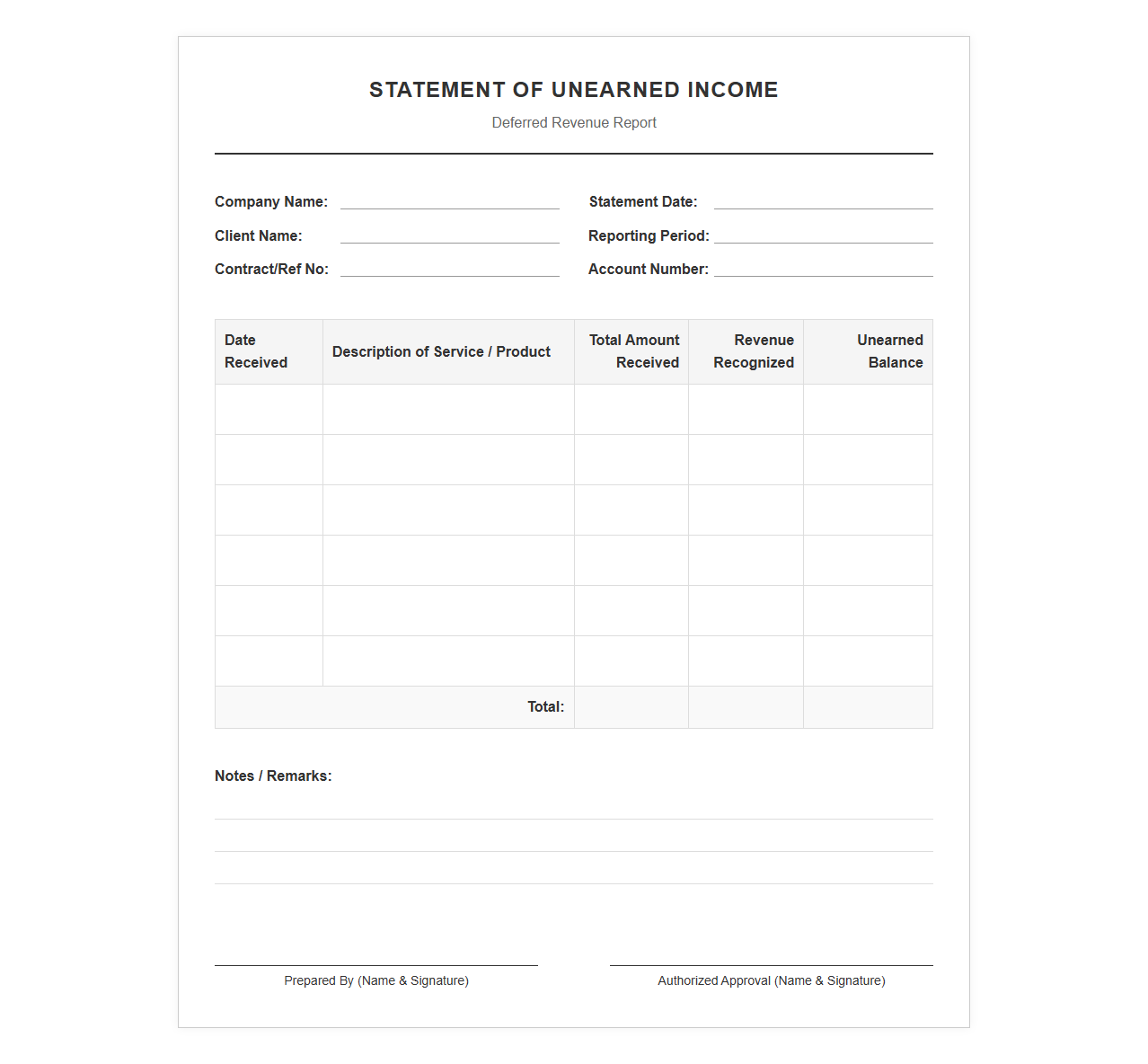 Download: .PDF
Declaration of Unearned Income Form
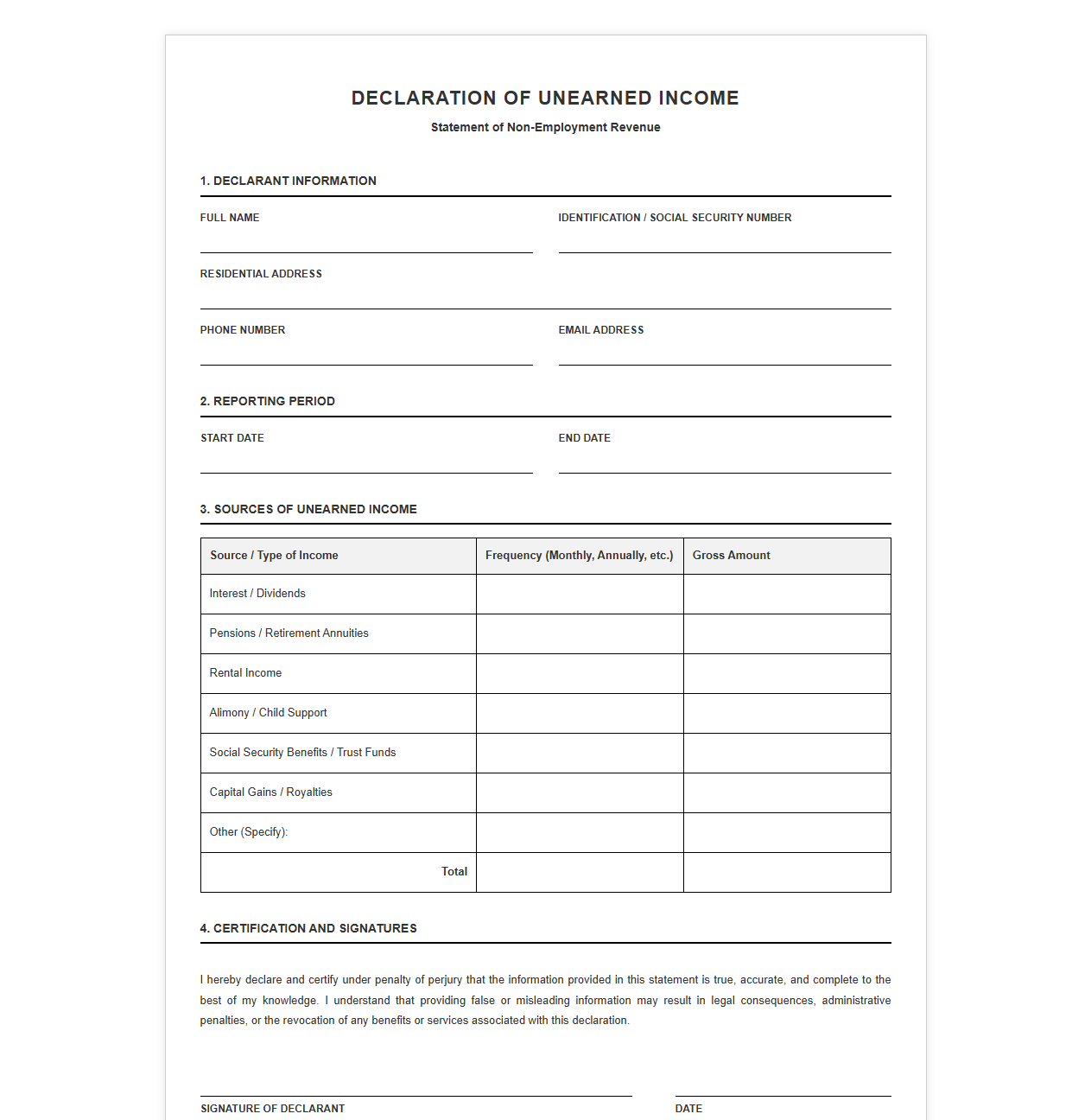 Download: .PDF
Unearned Income Verification Statement
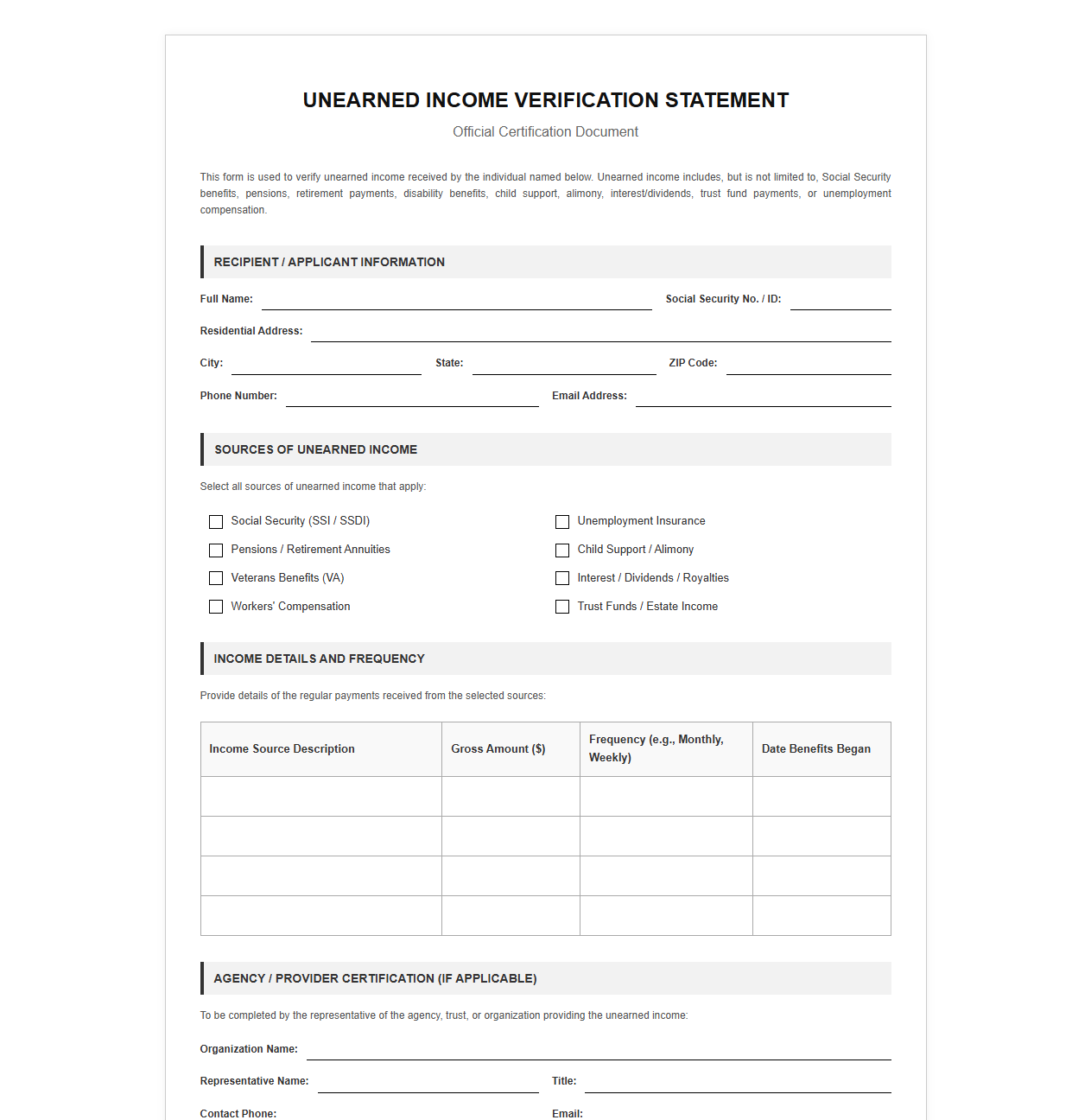 Download: .PDF
Non-Employment Income Statement Template
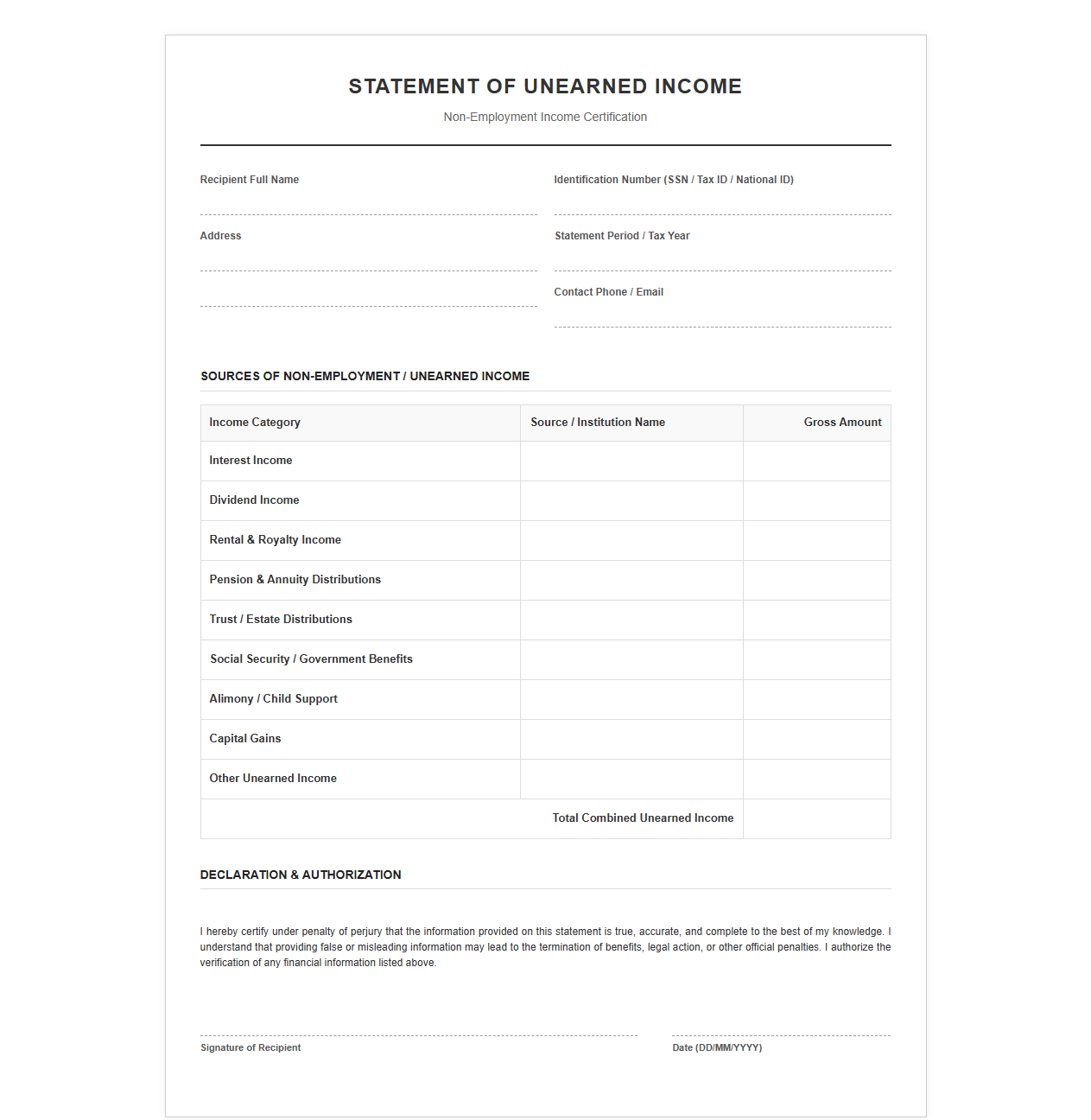 Download: .PDF
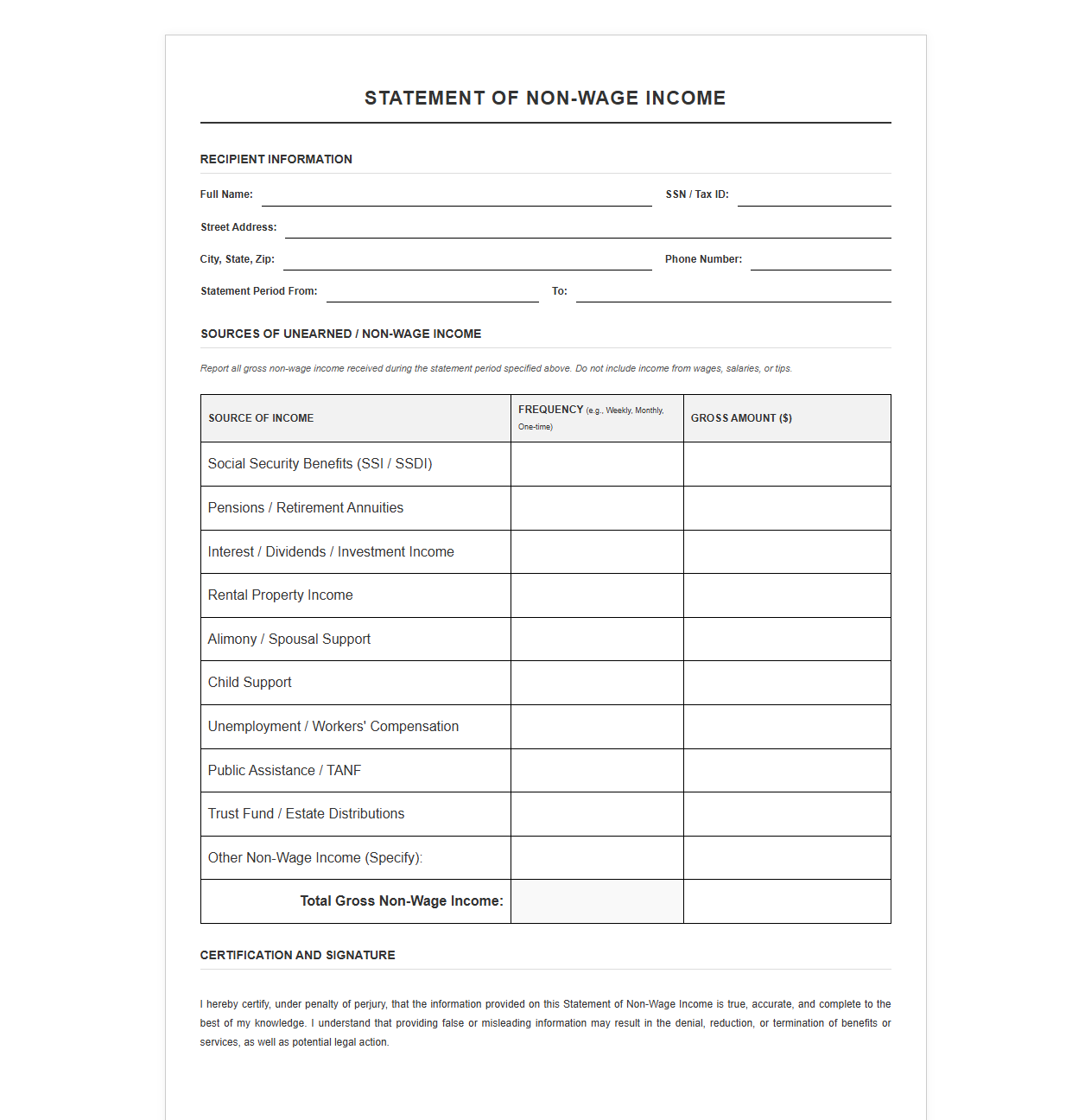
Statement of Non-Wage Income
 Download: .PDF
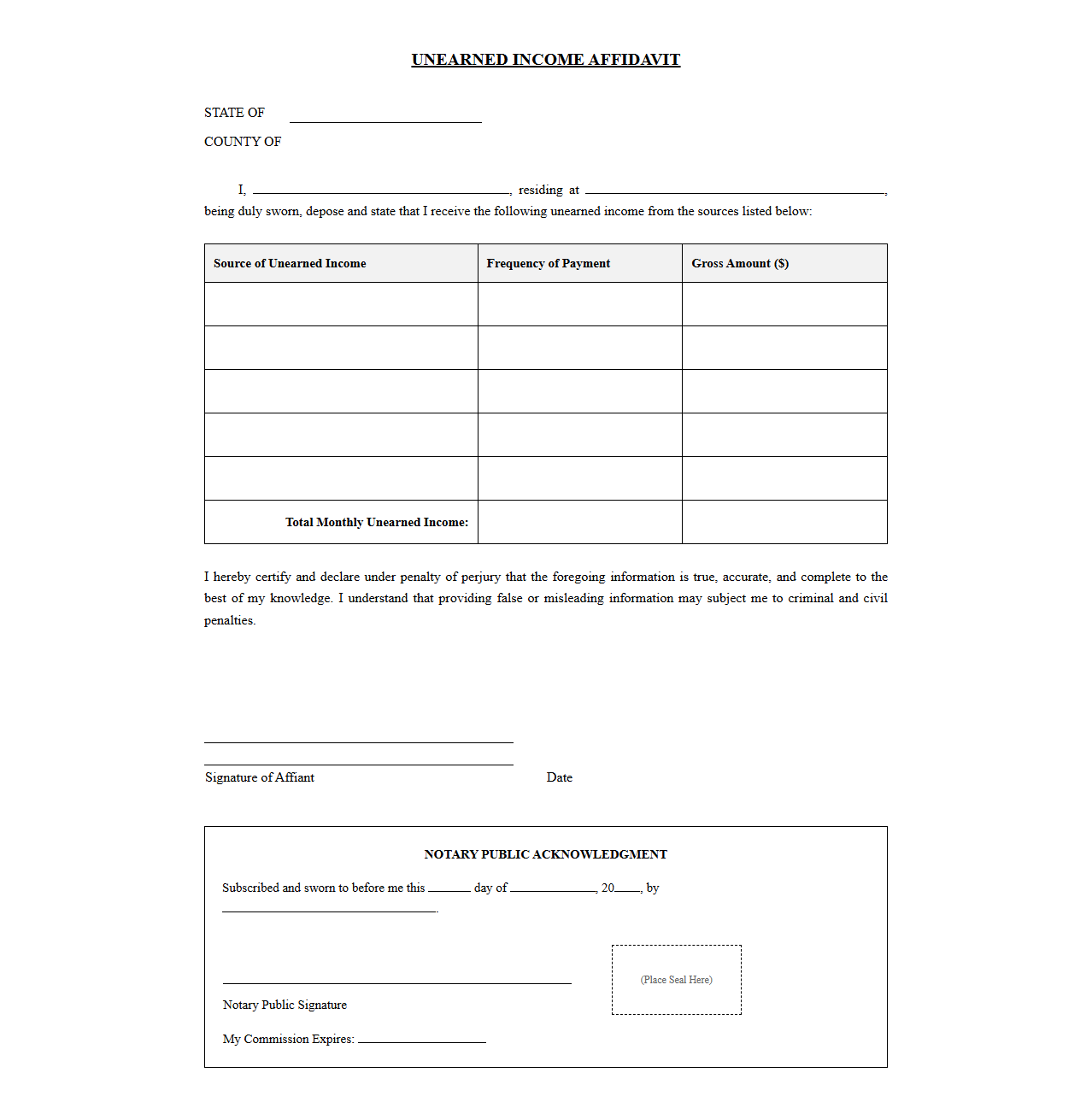
Unearned Income Affidavit Template
 Download: .PDF
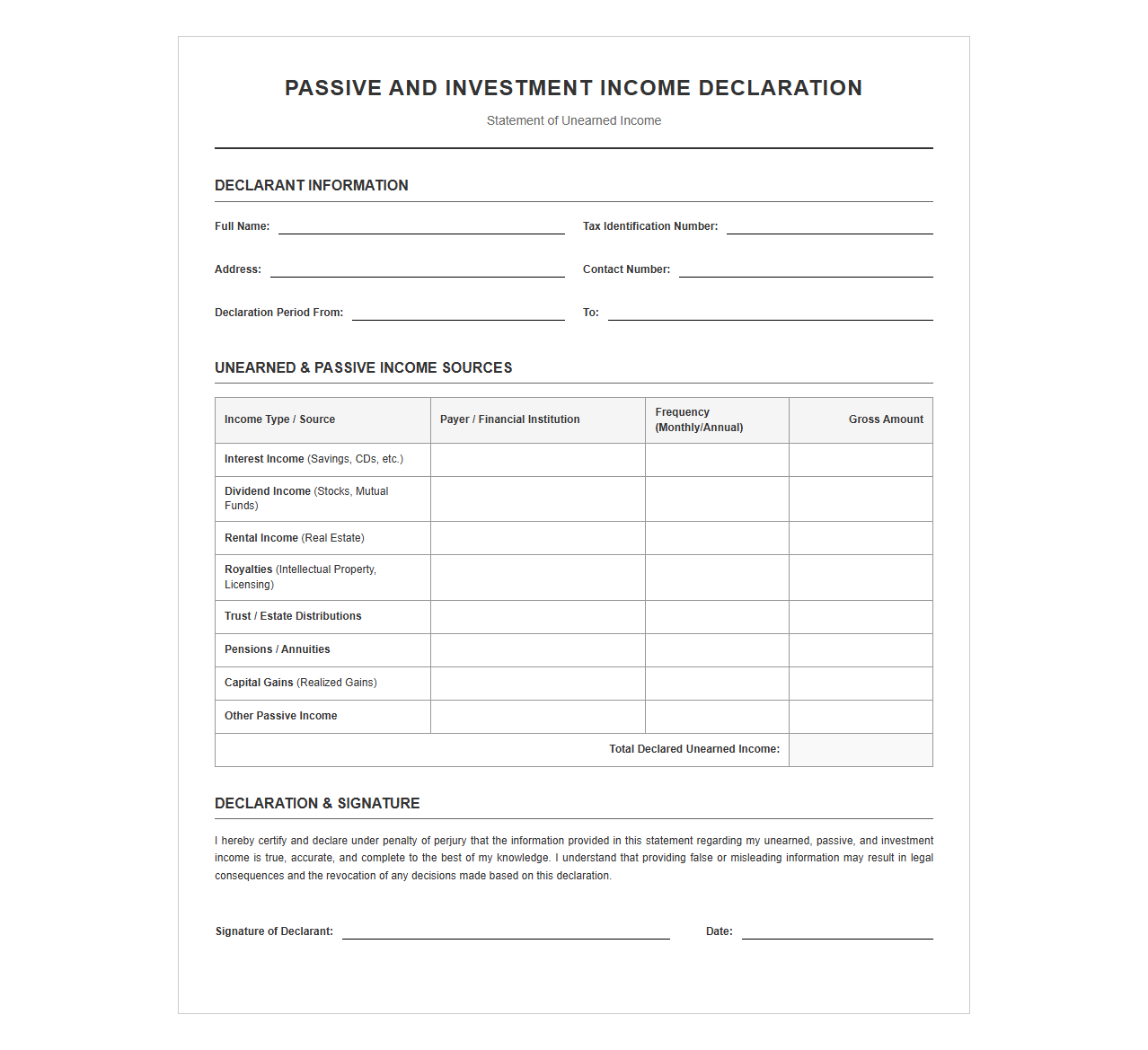
Passive and Investment Income Declaration Template
 Download: .PDF
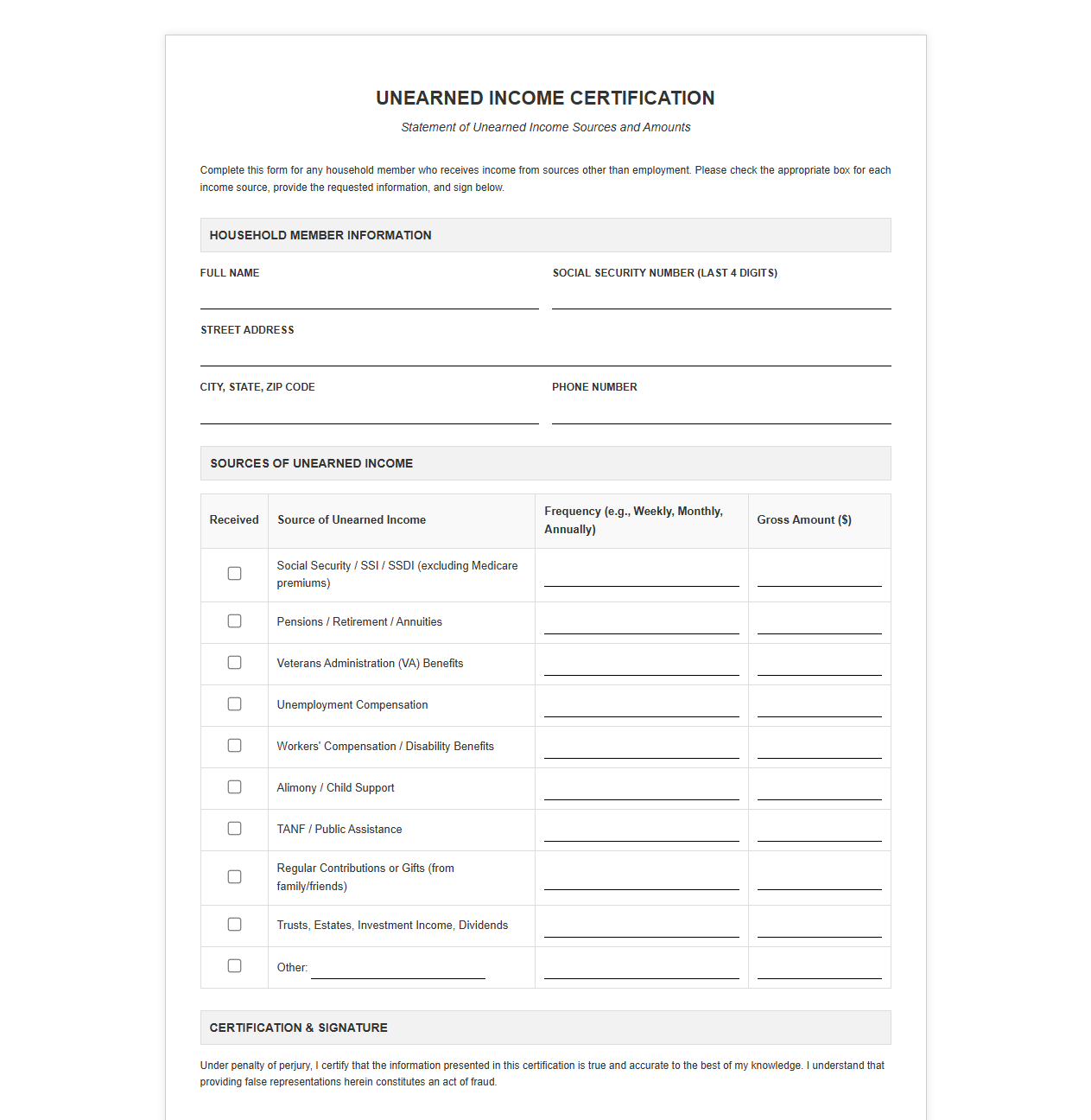
Unearned Income Certification Form
 Download: .PDF
Understanding the Unearned Income Verification Hurdle
Unlike traditional employment wages, unearned income originates from sources not directly tied to active labor. This includes revenue streams such as investment dividends, trust fund distributions, social security benefits, pensions, and capital gains. While these assets represent significant financial stability, verifying them presents a complex challenge for financial institutions, housing agencies, and lenders.
The administrative hurdles stem from the sheer variety and non-standardized nature of unearned income documentation. Without a single, universally accepted proof of earnings, verification officers must manually review disparate, multi-page financial statements, which slows down approvals and increases operational overhead.
Why Traditional Documentation Falls Short
For decades, the financial sector has relied on standardized documents like W-2 forms and bi-weekly paystubs to verify consumer income. However, when applied to unearned income, these traditional methods completely fail to capture the necessary financial realities.
Because investment payouts, trust distributions, and rental yields fluctuate throughout the year, a single static document cannot provide an accurate picture of ongoing financial health. Relying on inadequate documentation leads to severe application delays, a higher probability of human calculation errors, and increased compliance risks under strict modern regulatory frameworks.
The Power of Comprehensive Statement Templates
To overcome the inefficiencies of manual document review, financial institutions are turning to standardized, comprehensive unearned income statement templates. These templates serve as a definitive solution to simplify, speed up, and secure the entire verification pipeline.
"By establishing a uniform structure for reporting non-wage earnings, organizations can transform a highly fragmented review process into a predictable, automated, and secure workflow."
A standardized template ensures that every applicant submits their financial details in the exact same format, removing the guesswork from auditing and enabling faster decision-making.
Essential Elements of an Effective Template
A professional unearned income template must capture granular details to be legally compliant and operationally useful. To ensure maximum utility, every template should include the following critical fields:
- Source Identification: Clear categorization of the income source, such as a specific trust fund, government program, or investment portfolio.
- Frequency of Distribution: Indication of whether payments are distributed weekly, monthly, quarterly, or annually.
- Tax Withholding Details: Accurate records of any federal, state, or local taxes withheld at the source.
- Official Signatures: Legal verification fields for the applicant, trustee, or issuing financial officer.
Streamlining Workflows for Applicants and Verifiers
Implementing standardized templates creates a mutually beneficial ecosystem for both applicants and auditing organizations. For applicants, a pre-structured template reduces the anxiety and friction of searching through years of complex tax filings or contacting multiple bank representatives to find the correct paperwork.
For verifiers, templates dramatically accelerate processing times. Compliance teams can quickly locate key data points in predictable areas of the document, allowing for automated optical character recognition (OCR) processing and swift, error-free approvals.
Best Practices for Implementing Template Solutions
Integrating these digital templates into your existing infrastructure requires a strategic approach to ensure security and user adoption. Organizations should follow these key steps:
- Embed the templates directly into secure client portals as fillable digital forms.
- Integrate the templates with your existing Document Management Systems (DMS) for automatic indexing.
- Implement strict end-to-end encryption to protect sensitive financial data during transmission.
- Provide clear, step-by-step instructions and tooltips within the digital portal to guide applicants.
Embracing Standardization for Future-Proof Verification
As the gig economy, remote investing, and diverse asset classes continue to redefine personal wealth, the volume of non-traditional income applications will only increase. Organizations that continue to rely on manual, outdated verification methods risk falling behind their competitors and exposing themselves to unnecessary compliance risks.
By adopting standardized unearned income templates, forward-thinking institutions can secure long-term operational efficiency. Embracing this digital standardization ensures a resilient, scalable, and secure verification workflow capable of adapting to any future economic shift.

Leave a comment