
For corporate counsel and operations managers, keeping up with annual report filing deadlines across multiple jurisdictions is a constant, high-stakes struggle. A single administrative oversight can result in severe financial penalties, reputational damage, or the loss of corporate good standing. To mitigate these operational risks, organizations must first establish a robust legal foundation governing their relationships with third-party filing partners. Implementing standardized service agreement templates grants businesses immediate risk-mitigation, operational consistency, and legal peace of mind.
Crucially, these templates must stipulate precise service-level expectations and data handling responsibilities to ensure regulatory compliance. For example, incorporating specific indemnification clauses for filing delays and defining clear liability caps serves as concrete proof of a secure vendor management strategy. Below, we examine the essential clauses these templates must contain and how to leverage them to secure your corporate standing.
Annual Report Filing Services Agreement
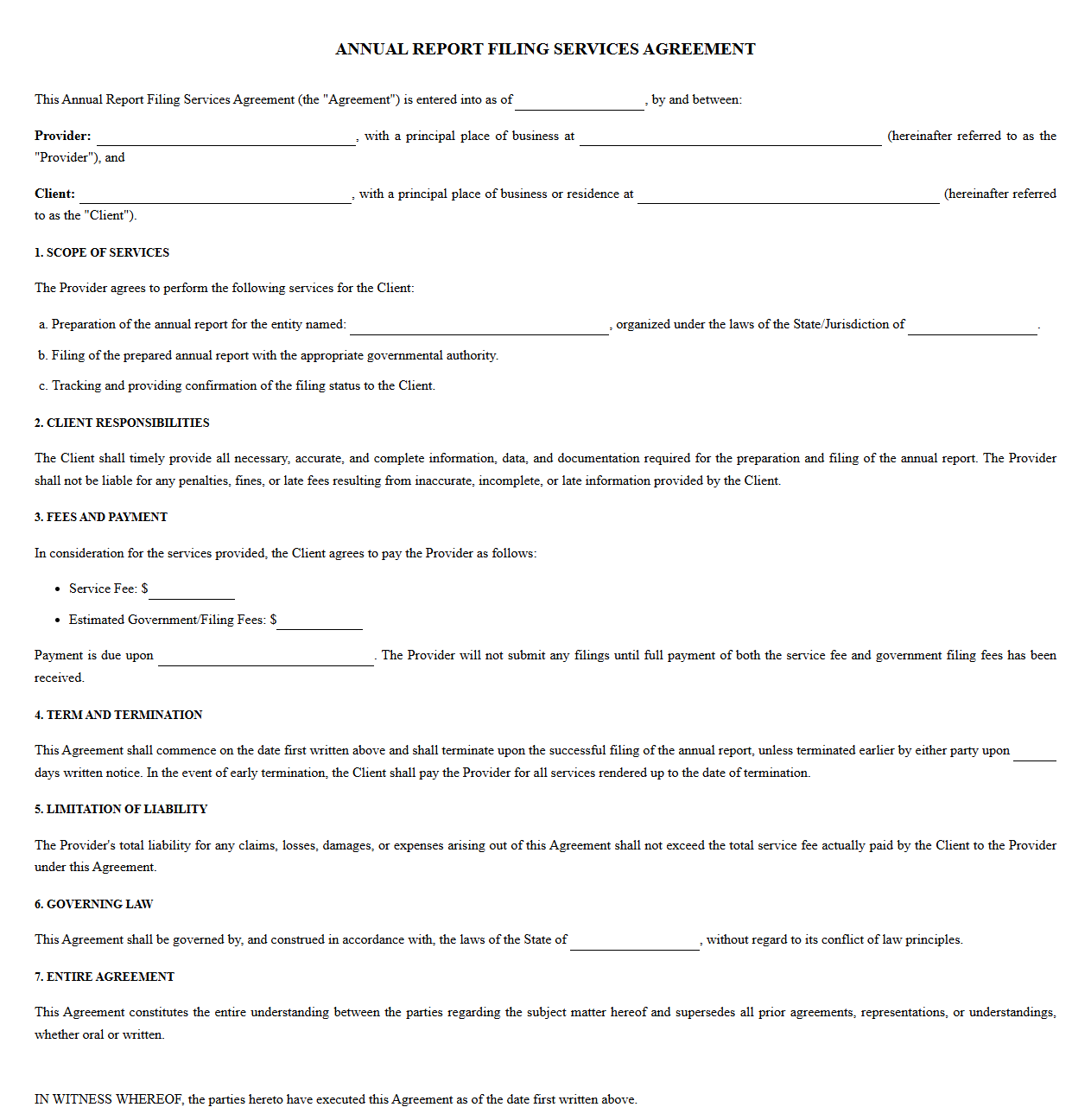 Download: .PDF
Annual Corporate Filing Service Contract
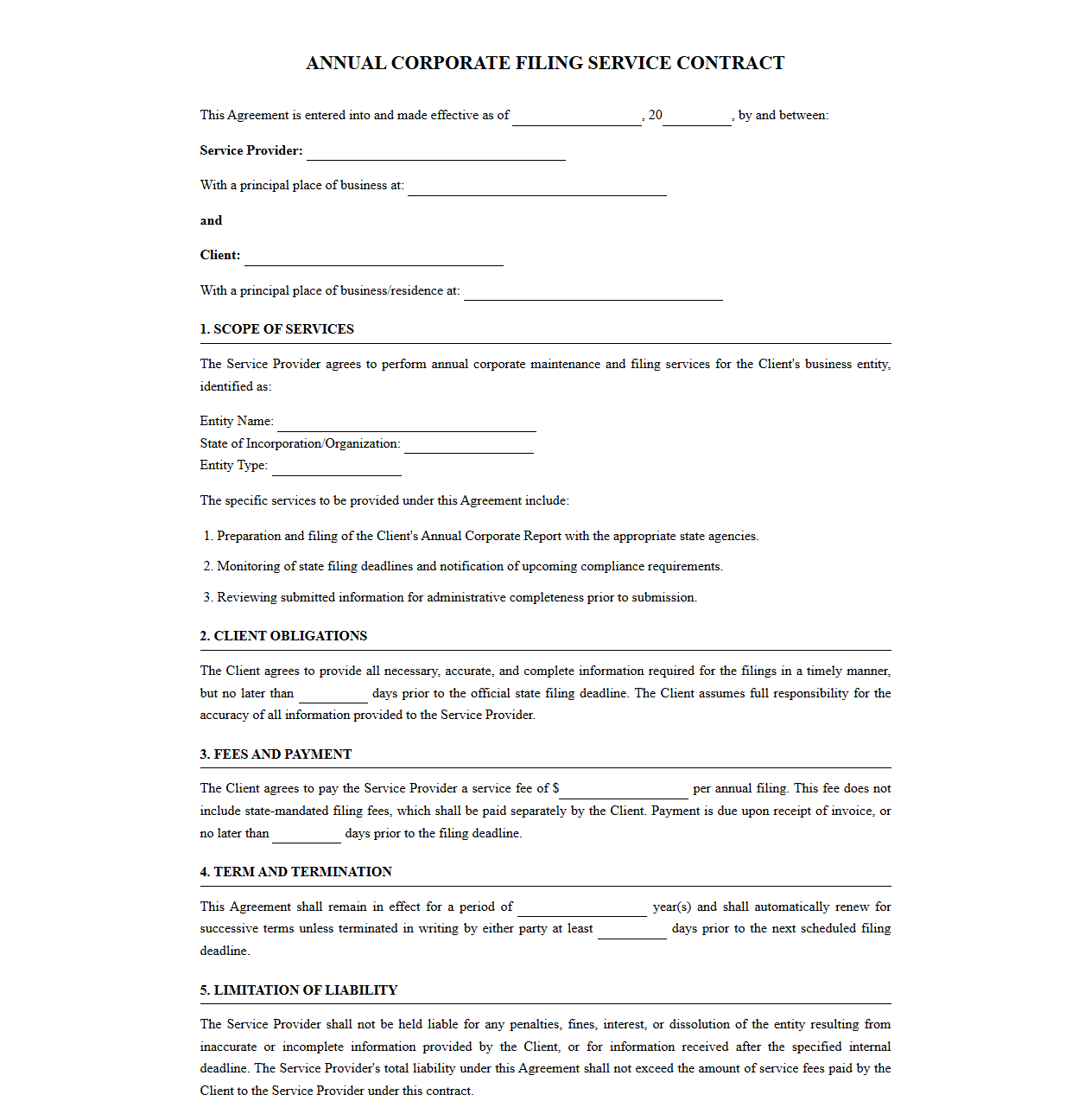 Download: .PDF
Agreement for Annual Report Filing Support
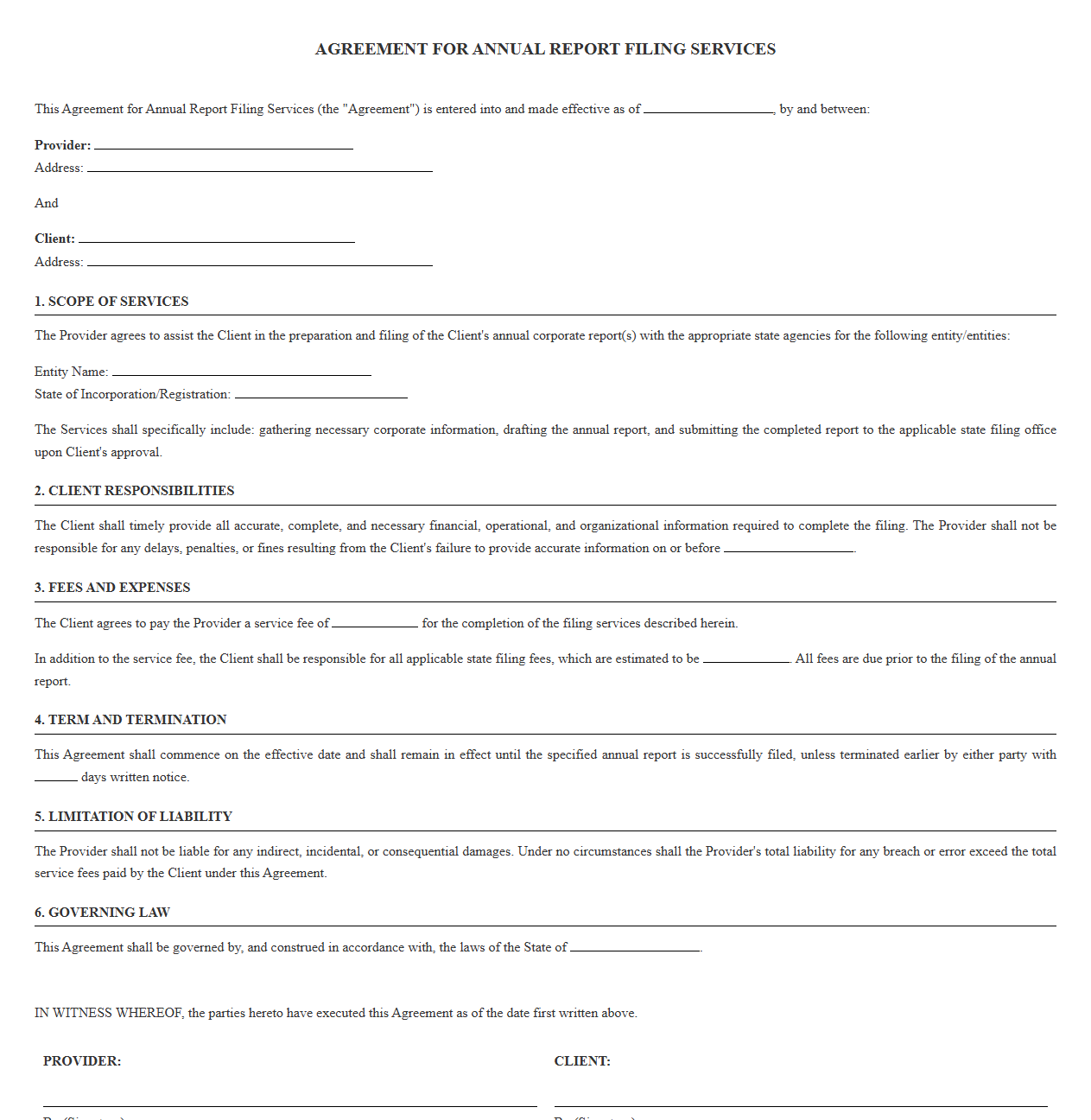 Download: .PDF
Annual Report Filing Service Level Agreement
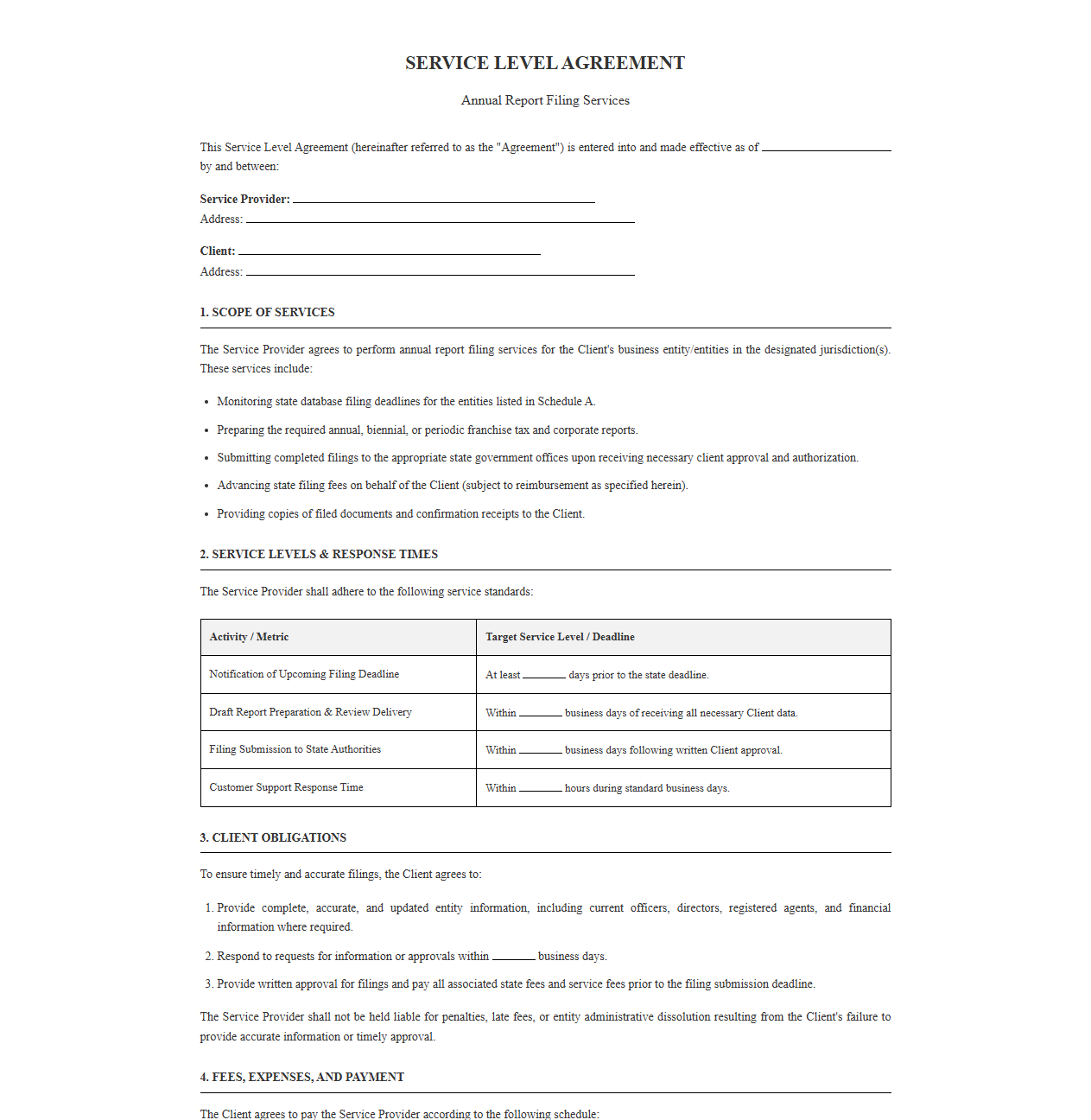 Download: .PDF
Corporate Annual Report Filing Agreement
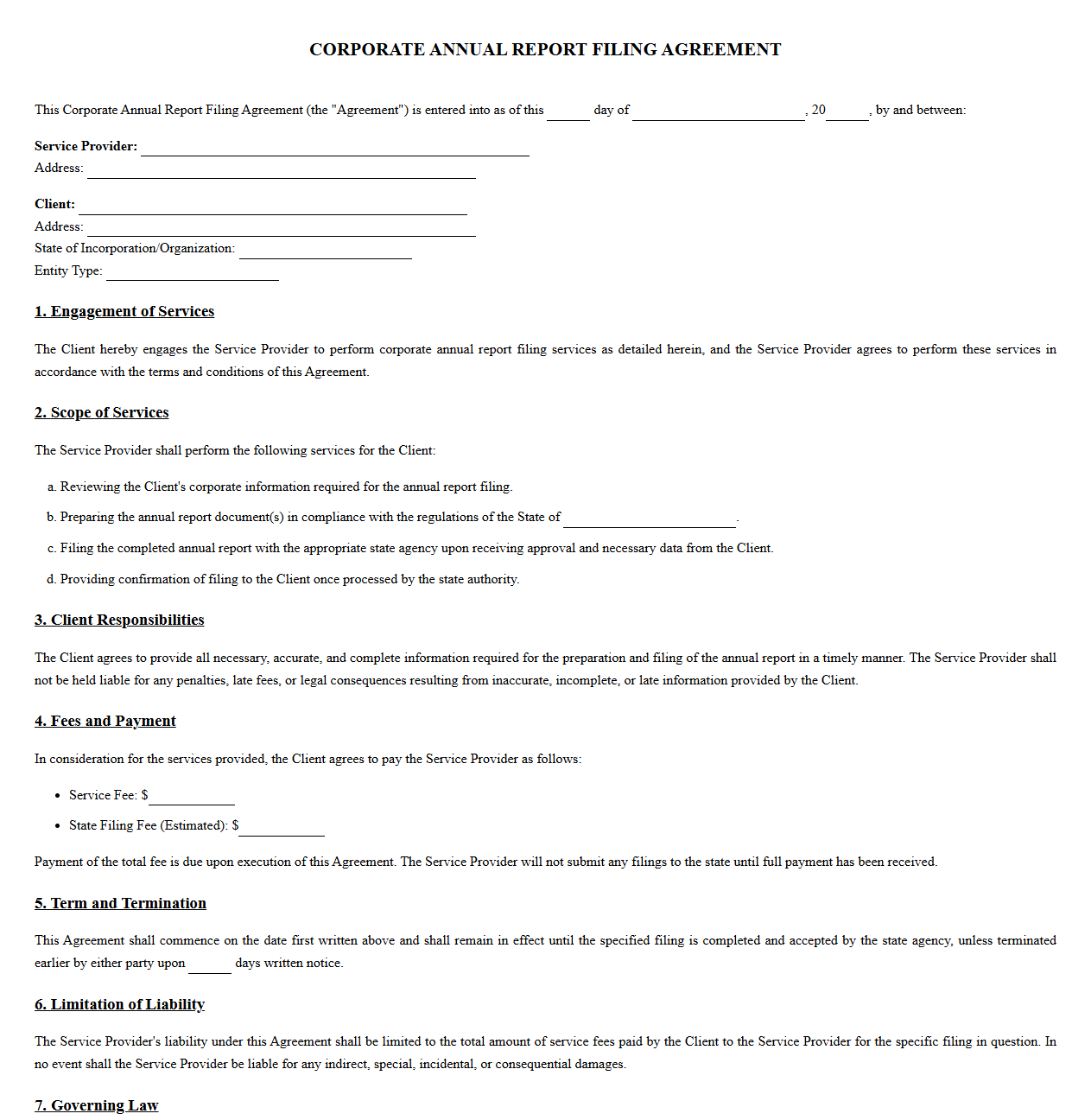 Download: .PDF
Annual Report Preparation and Filing Contract
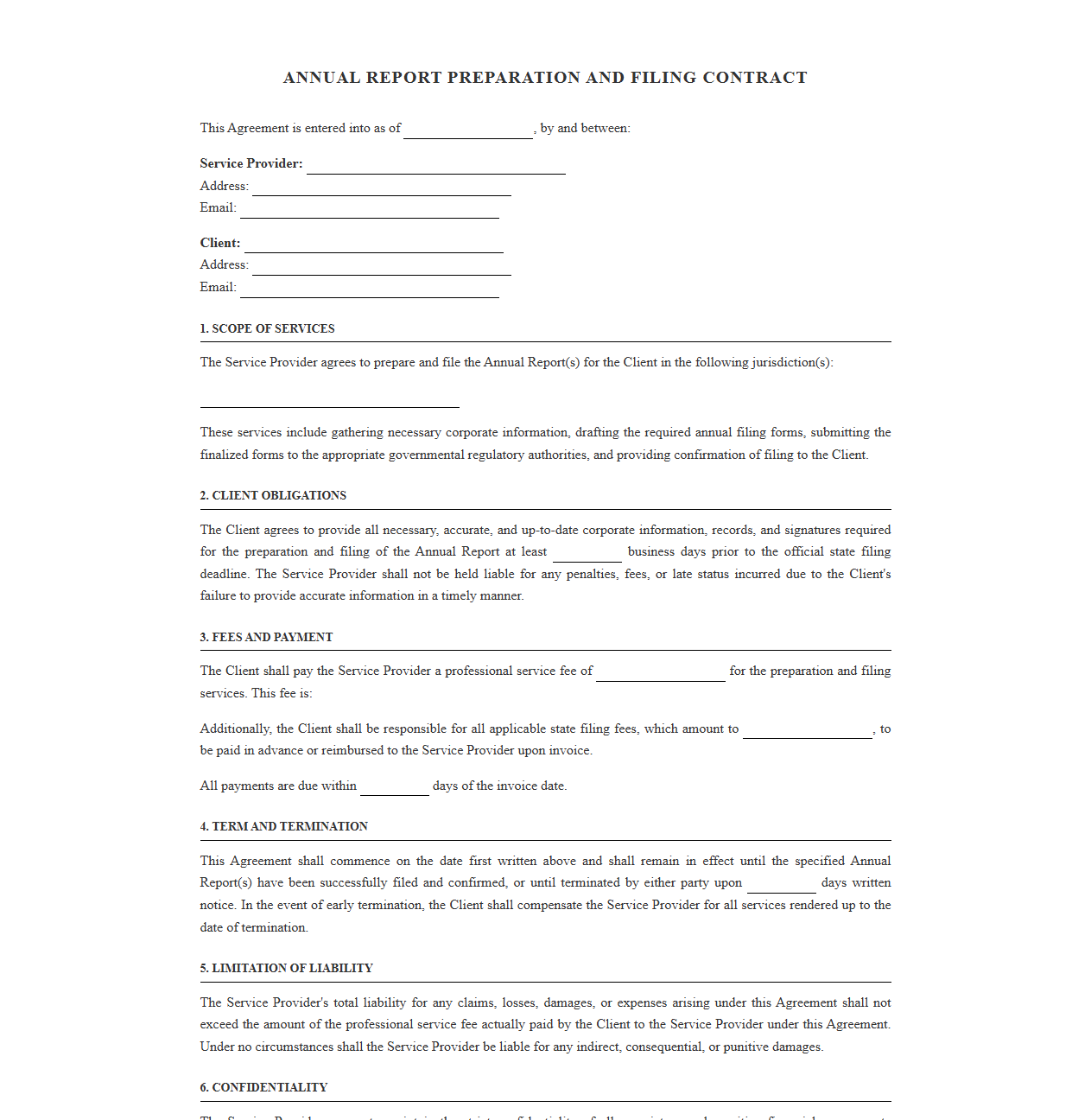 Download: .PDF
Standard Agreement for Annual Report Filing
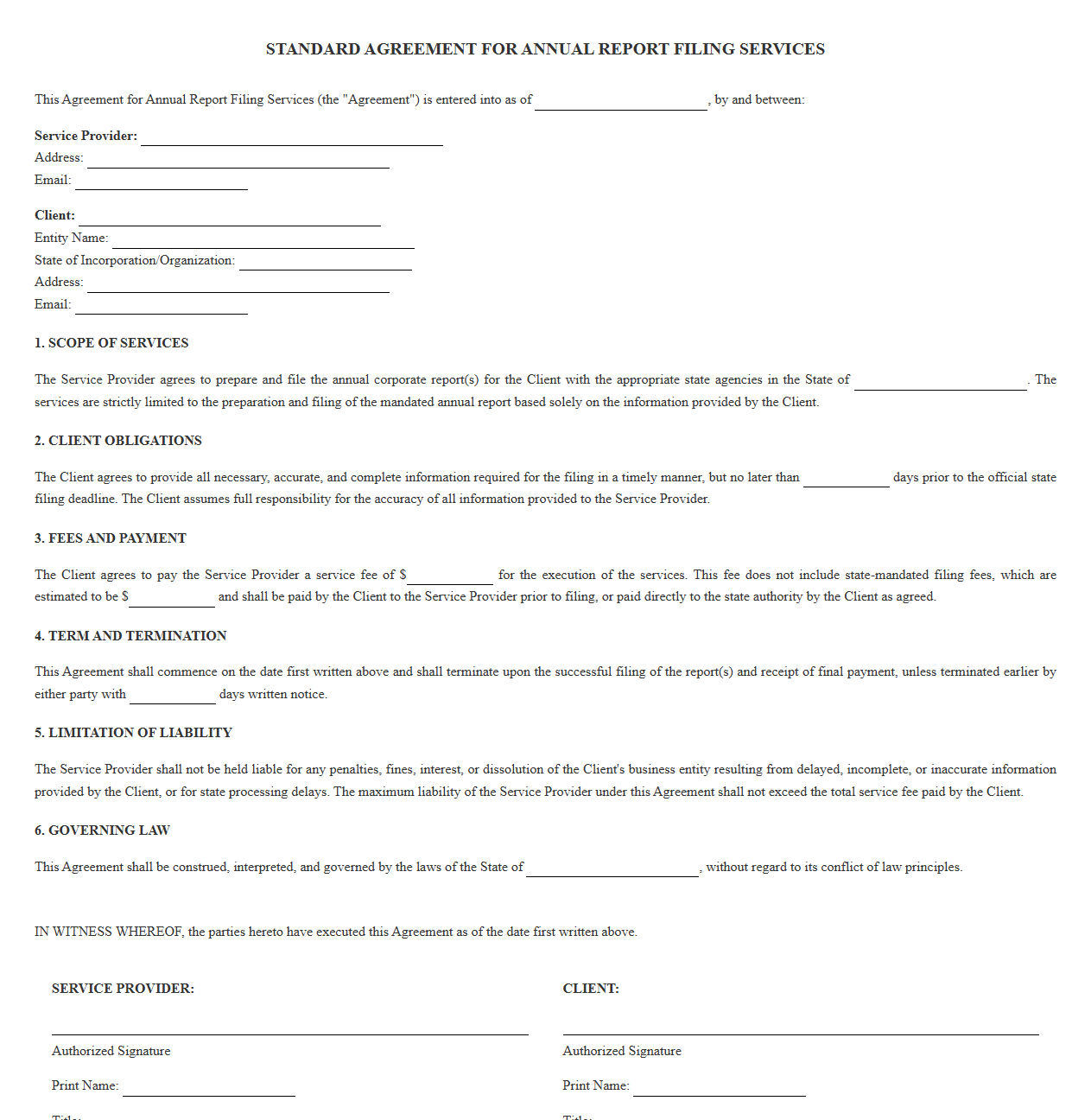 Download: .PDF
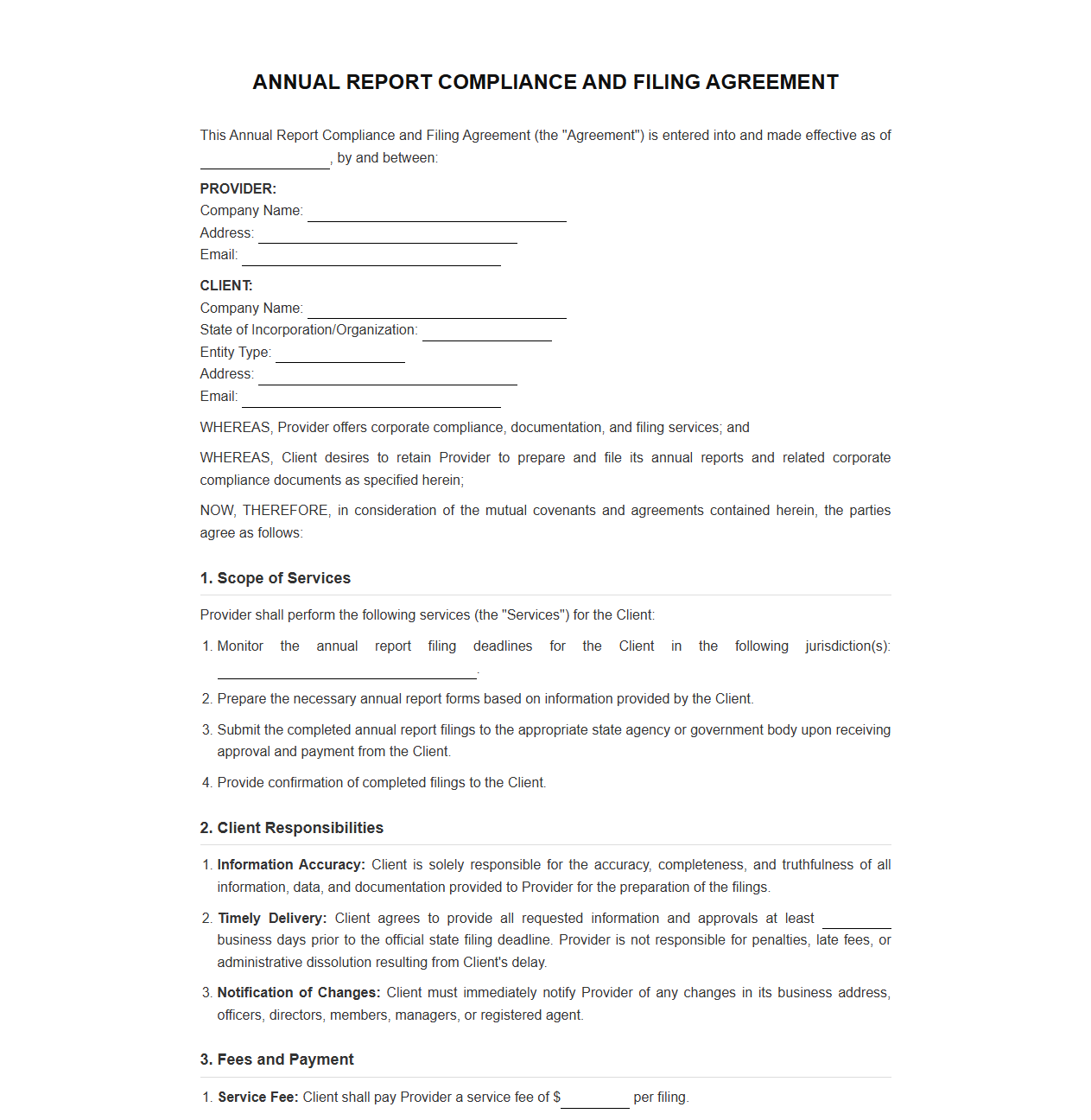
Annual Report Compliance and Filing Agreement
 Download: .PDF
The Critical Nature of Corporate Annual Report Filing
Maintaining a corporation's active status requires strict adherence to state regulatory timelines. Every year, businesses must submit updated operational and structural details to preserve their corporate good standing. Failing to meet these deadlines can jeopardize a company's legal status, making outsourcing this operational burden to professional filing services a highly strategic decision for modern enterprises looking to secure continuous compliance.
Consequences of Non-Compliance and Delinquency
Neglecting state-mandated filing timelines introduces severe operational hazards that can disrupt daily business activities. When a corporation falls out of compliance, it immediately exposes itself to preventable vulnerabilities:
- Accumulation of steep financial penalties and compounding late fees.
- Loss of corporate good standing, preventing the acquisition of loans or corporate financing.
- Administrative dissolution by the state, which forcibly terminates the business entity.
- Piercing of the corporate veil, which strips owners and shareholders of personal liability protection.
Streamlining the Outsourcing Process with Standardized Agreements
Partnering with external compliance specialists ensures administrative accuracy, but it requires a formal structure to prevent operational gaps. Utilizing standardized service agreement templates establishes clear operational benchmarks from the very beginning. These pre-structured documents mitigate operational risks, align expectations, and drastically reduce administrative friction during onboarding.
Essential Clauses in a Filing Service Agreement
To ensure a reliable working relationship, the service agreement must clearly define the operational boundaries and core obligations of the third-party provider.
Scope of Services
The agreement must explicitly detail which jurisdictions the service provider will cover, ensuring no regional filing is overlooked.
Performance Indicators and Accuracy Guarantees
- Defined timelines specifying when documents must be submitted to state offices.
- Guarantees of data accuracy to prevent filing rejections.
- Explicit responsibilities regarding the monitoring of state deadline changes.
Safeguarding Sensitive Corporate Data
Annual report filings require the disclosure of highly sensitive corporate details, including proprietary financial metrics, executive addresses, and internal structural organizations. It is critical that any third-party agreement contains robust data protection mandates. Establishing strict data security parameters prevents unauthorized exposure and maintains regulatory privacy alignment.
Defining Liability and Indemnification Limits
Even with experienced professionals, filing errors or system delays can occur. A balanced contract must pre-emptively address these scenarios by outlining financial accountability and corrective protocols. Clearly defining liability limits protects the business from devastating regulatory fines while ensuring the filing service remains accountable for its performance.
Achieving Long-Term Peace of Mind through Legal Readiness
Proactive compliance management is a cornerstone of corporate longevity. By leveraging structured, standardized agreement templates, organizations build a secure framework that protects their legal standing and streamlines yearly administrative workflows. Investing in formal legal readiness today fosters resilient partnerships, eliminates administrative surprises, and ensures uninterrupted business growth.
Leave a comment