

Bringing a new partner into an established firm is a major milestone, yet many businesses struggle with the operational friction and legal risks of shifting equity. Before celebrating this expansion, founders must first navigate the complex reality of dilution and liability; a handshake agreement during this transitional phase often invites future litigation.
Utilizing a standardized legal admission template grants founders immediate peace of mind and structured legal protection. While these documents require customization to align with specific state statutes-a vital stipulation for ensuring local compliance-they offer a reliable baseline that minimizes negotiation bottlenecks.
For example, pre-defined clauses outlining capital contribution deadlines and voting power adjustments provide concrete proof of how structured templates mitigate disputes. In this guide, we will explore the essential components of these admission agreements, how to customize them for your industry, and best practices for protecting your existing entity during growth.
Partnership Admission Agreement Template
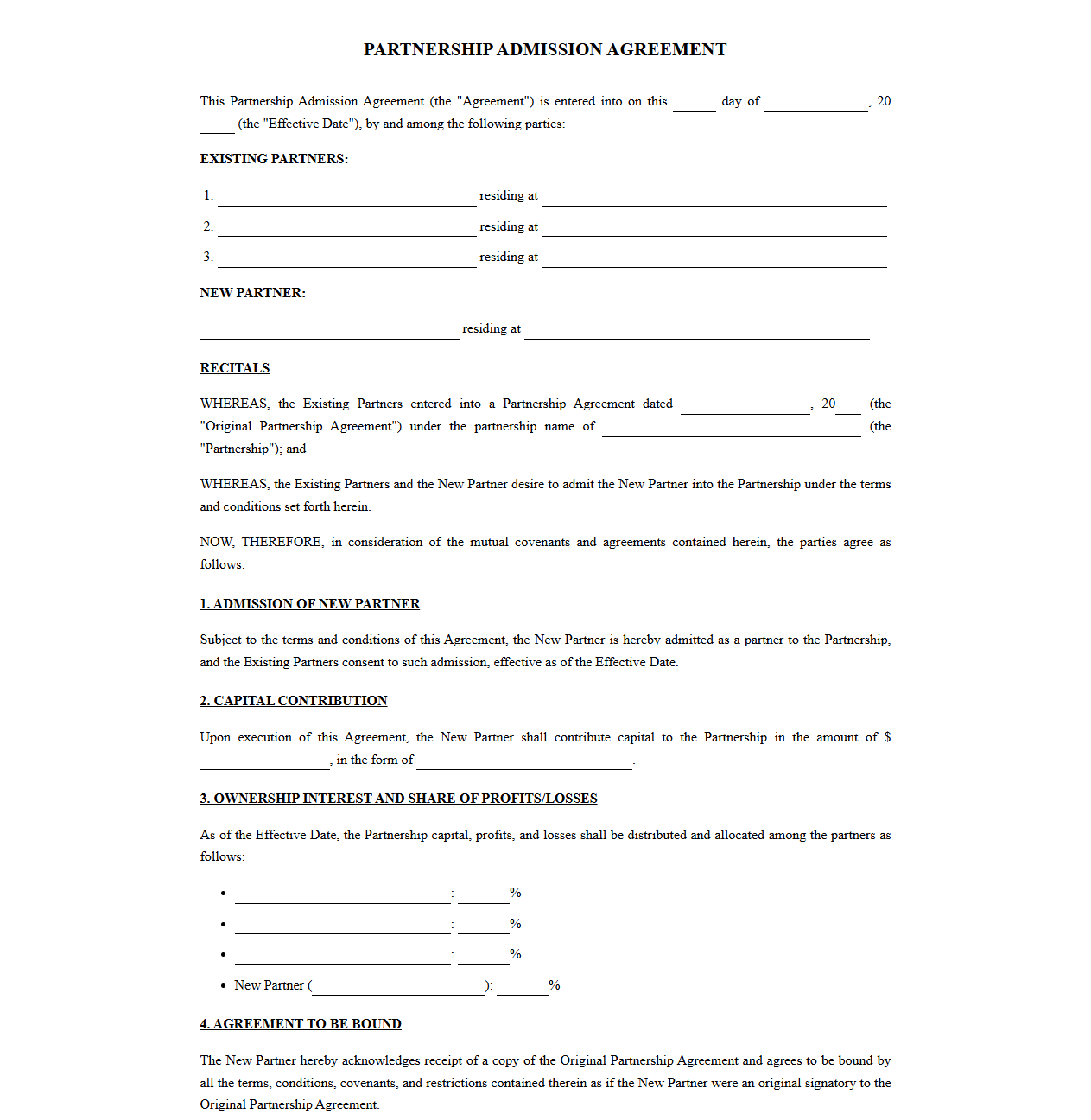 Download: .PDF
New Partner Joinder Agreement
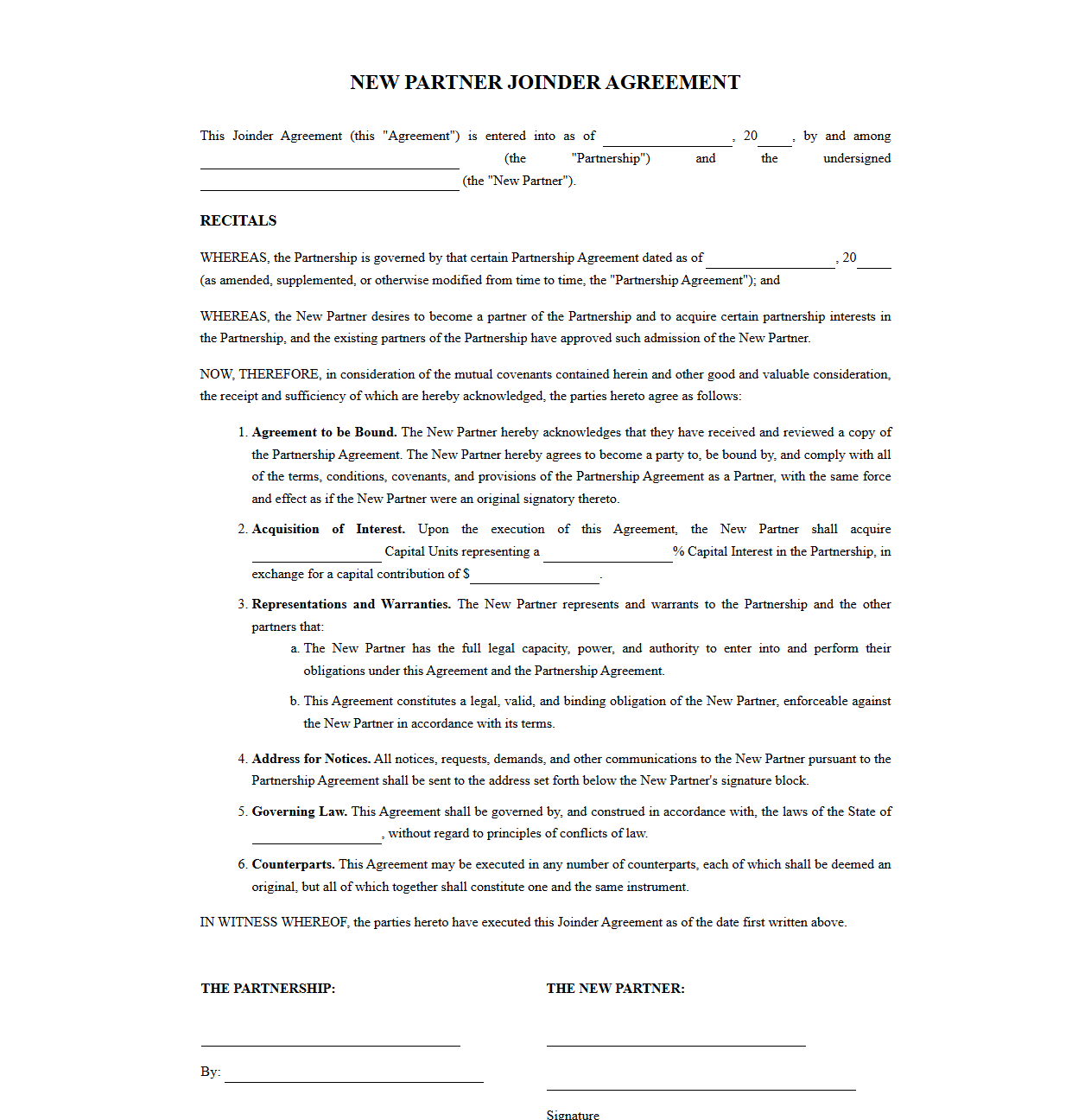 Download: .PDF
Deed of Adherence for New Partners
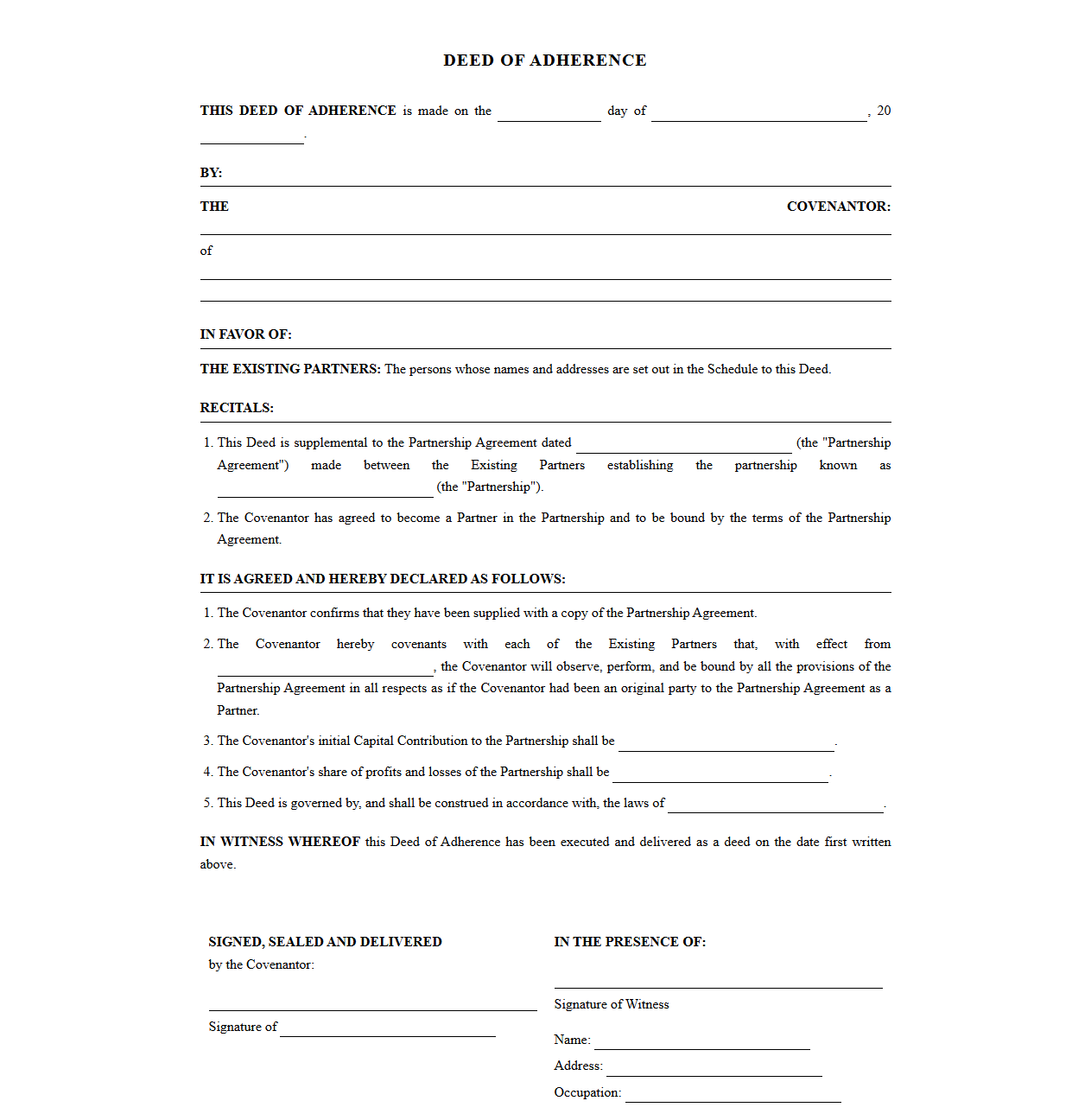 Download: .PDF
Partnership Accession Agreement Template
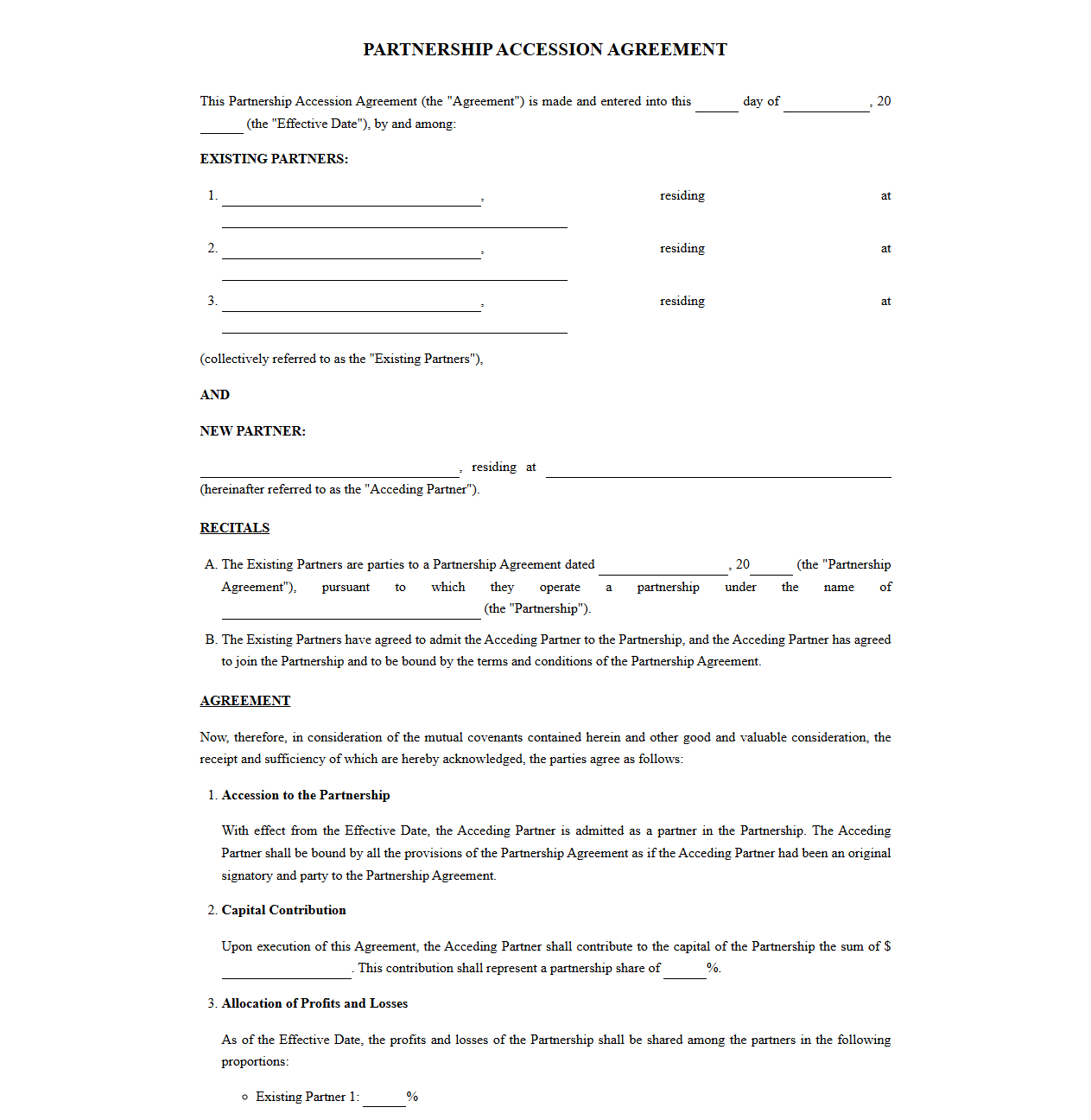 Download: .PDF
Agreement for Admission of Additional Partner
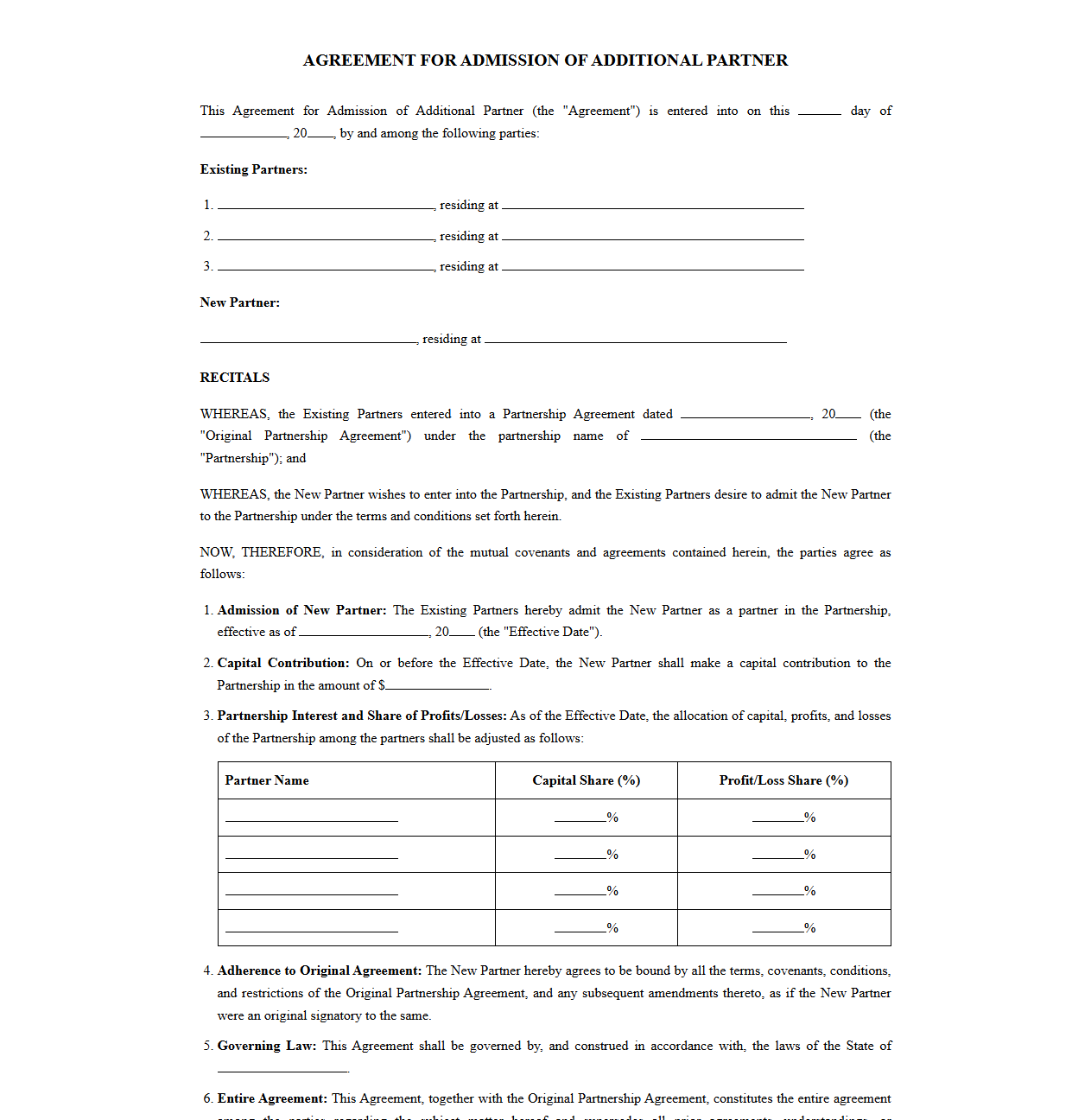 Download: .PDF
Amendment to Partnership Agreement for New Partner
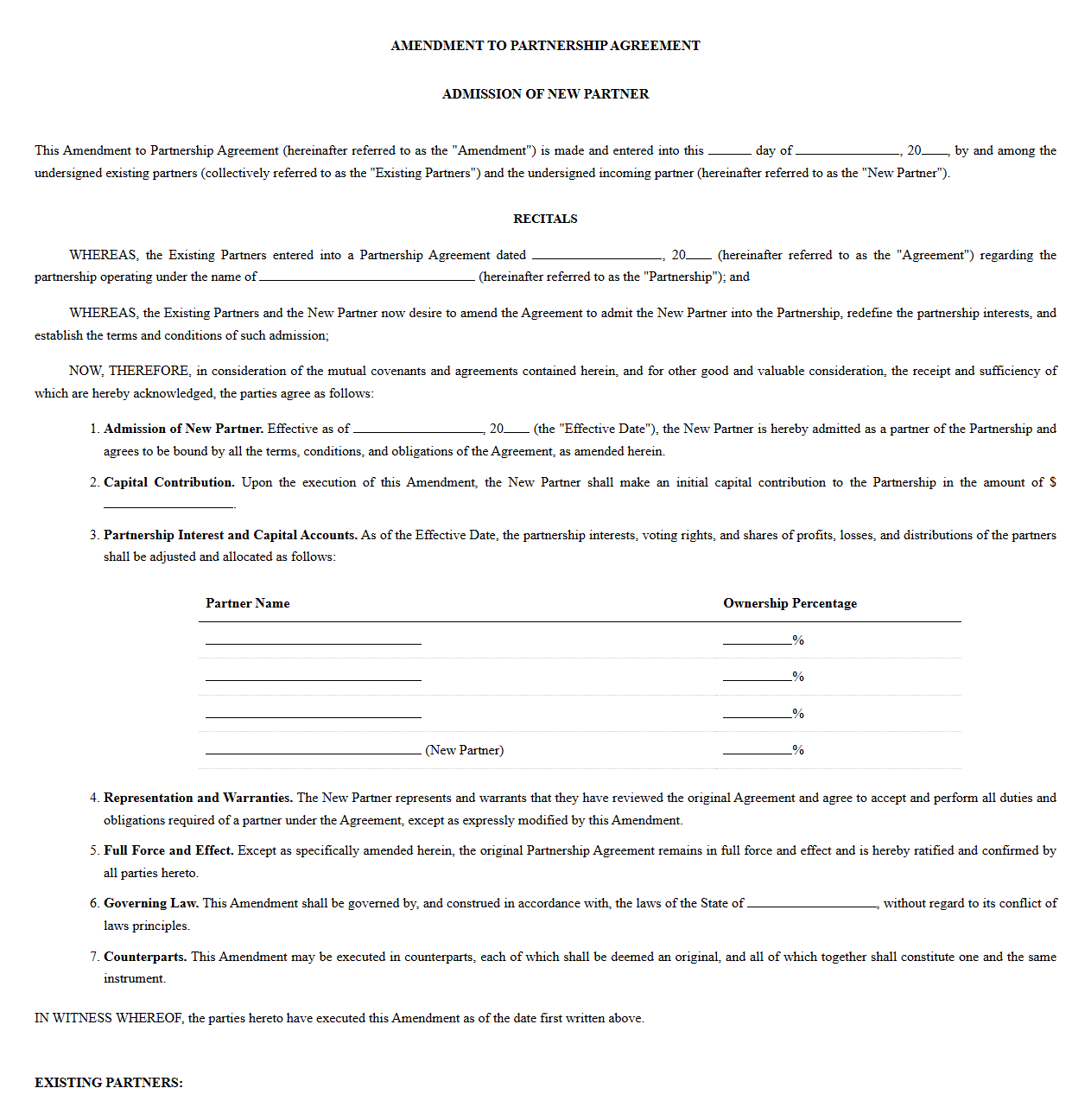 Download: .PDF
New Partner Consent and Admission Agreement
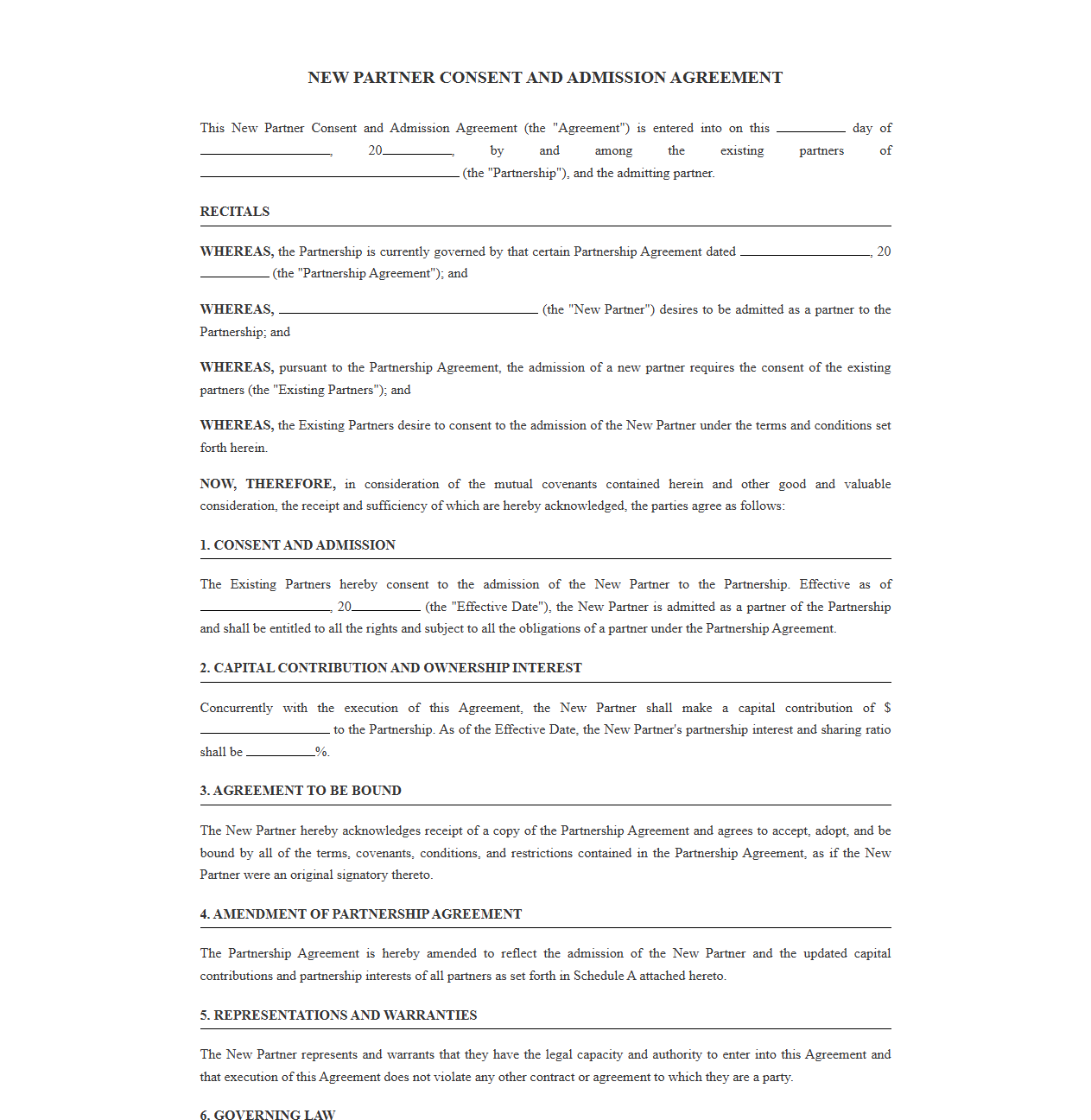 Download: .PDF
Partnership Expansion and New Partner Agreement
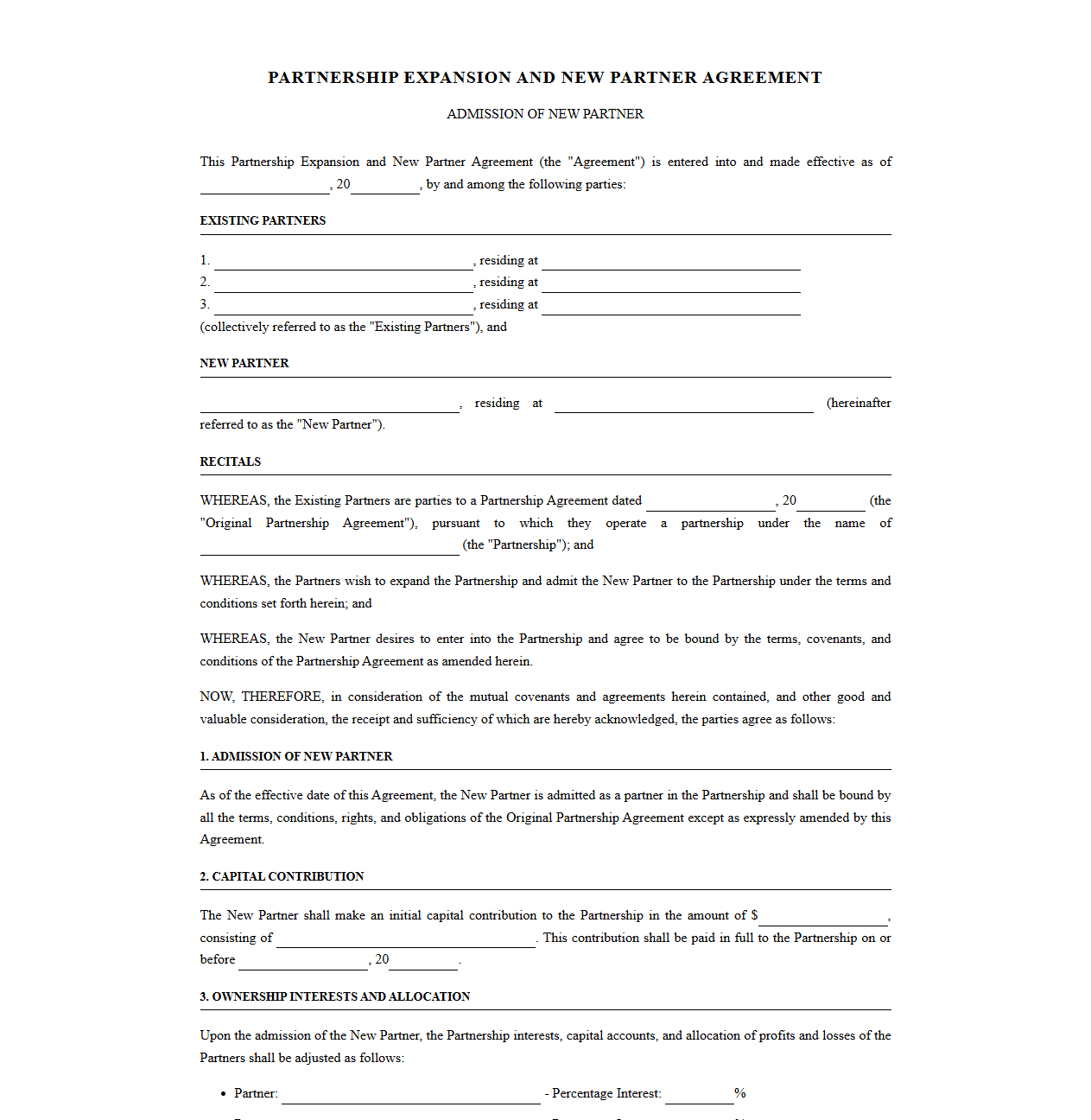 Download: .PDF
Navigating the Growth Pains of Partnership Expansion
Expanding a partnership is a major milestone, yet it frequently introduces unexpected operational and structural friction. As new partners enter the fold, the original dynamics shift, exposing legal vulnerabilities that may have remained hidden during quieter periods of operation. Without a highly structured integration process, firms risk internal misalignment, disputes over equity, and operational paralysis.
Growth demands more than just mutual consent; it requires rigorous legal foresight. Ensuring that the transition protects existing assets while welcoming new talent is the key to maintaining business continuity and securing long-term success.
The Role of a Legal Admission Agreement
A partnership admission agreement acts as the official legal bridge that transitions an incoming individual into the existing business entity. This critical document binds the new partner to the firm's established rules, obligations, and culture while formally granting them their new ownership rights.
Customization ensures that the specific nuances of your existing partnership agreement are respected, preventing contradictions that could lead to costly litigation down the road.
Essential Clauses for a Robust Admission Template
To ensure a seamless transition, your admission template must contain specific legal safeguards that define the parameters of the new arrangement from day one.
- Effective Date: Clearly establishes the exact moment the incoming partner assumes their rights and responsibilities.
- Representations and Warranties: Mutual assurances verifying that the new partner has the legal capacity to join and that the firm is in good standing.
- Adoption of the Existing Agreement: A clause binding the new partner to all terms of the original partnership agreement.
Aligning Capital Contributions and Financial Terms
Introducing a new partner alters the financial landscape of the firm. It is critical to clearly define what the incoming partner must contribute financially and how future distributions will be managed.
| Financial Element | Description | Impact on Partnership |
|---|---|---|
| Capital Contribution | The initial funds or assets the new partner must deposit. | Establishes the partner's equity base. |
| Profit & Loss Distribution | Adjusted percentage allocation of the firm's net earnings. | Rebalances financial rewards among all members. |
| Tax Obligations | Treatment of capital accounts and individual tax liabilities. | Prevents unexpected tax burdens for existing partners. |
Redefining Governance and Voting Rights
Adding another voice to executive decisions requires a careful rebalancing of voting power and management responsibilities to prevent gridlock.
- Recalculate Voting Power: Determine if voting rights are based on capital contribution percentages or if each partner receives an equal vote.
- Define Management Roles: Clarify the day-to-day operational authority and specific departments the new partner will oversee.
- Establish Consent Thresholds: Set clear rules for which major decisions require unanimous consent versus a simple majority.
Safeguarding the Firm: Liability and Dispute Clauses
Mitigating risk is a primary objective when expanding. The admission agreement must insulate the partnership from personal liabilities and outline a clear path for conflict resolution.
"The parties agree that any disputes arising from this agreement shall first be submitted to confidential mediation before pursuing formal litigation, protecting both the firm's reputation and financial health."
Furthermore, robust indemnification clauses ensure that the incoming partner cannot hold the partnership liable for actions taken prior to their admission, just as the new partner is protected from historical liabilities of the firm.
Implementing Your Custom Admission Template
Once the legal draft is complete, following a structured execution process ensures the agreement is legally binding and seamlessly integrated.

Leave a comment