

For many business owners and self-employed professionals, tax season brings the daunting and time-consuming challenge of reconciling a year's worth of vehicle expenses. Before attempting to claim these valuable write-offs, it is crucial to recognize that the IRS scrutinizes the actual expense method far more rigorously than the simplified standard mileage deduction.
Fortunately, utilizing standardized document templates grants you the precise organizational framework needed to unlock maximum deductions while ensuring regulatory compliance. As a stipulation, however, these templates are only as reliable as your diligence; they require consistent, real-time upkeep to successfully withstand an audit.
By systematically archiving concrete records-such as fuel receipts, maintenance invoices, leasing agreements, and depreciation schedules-you build an bulletproof paper trail. In this article, we will outline the essential document templates required for tracking actual car expenses and guide you through best practices for optimizing your annual vehicle tax deductions.
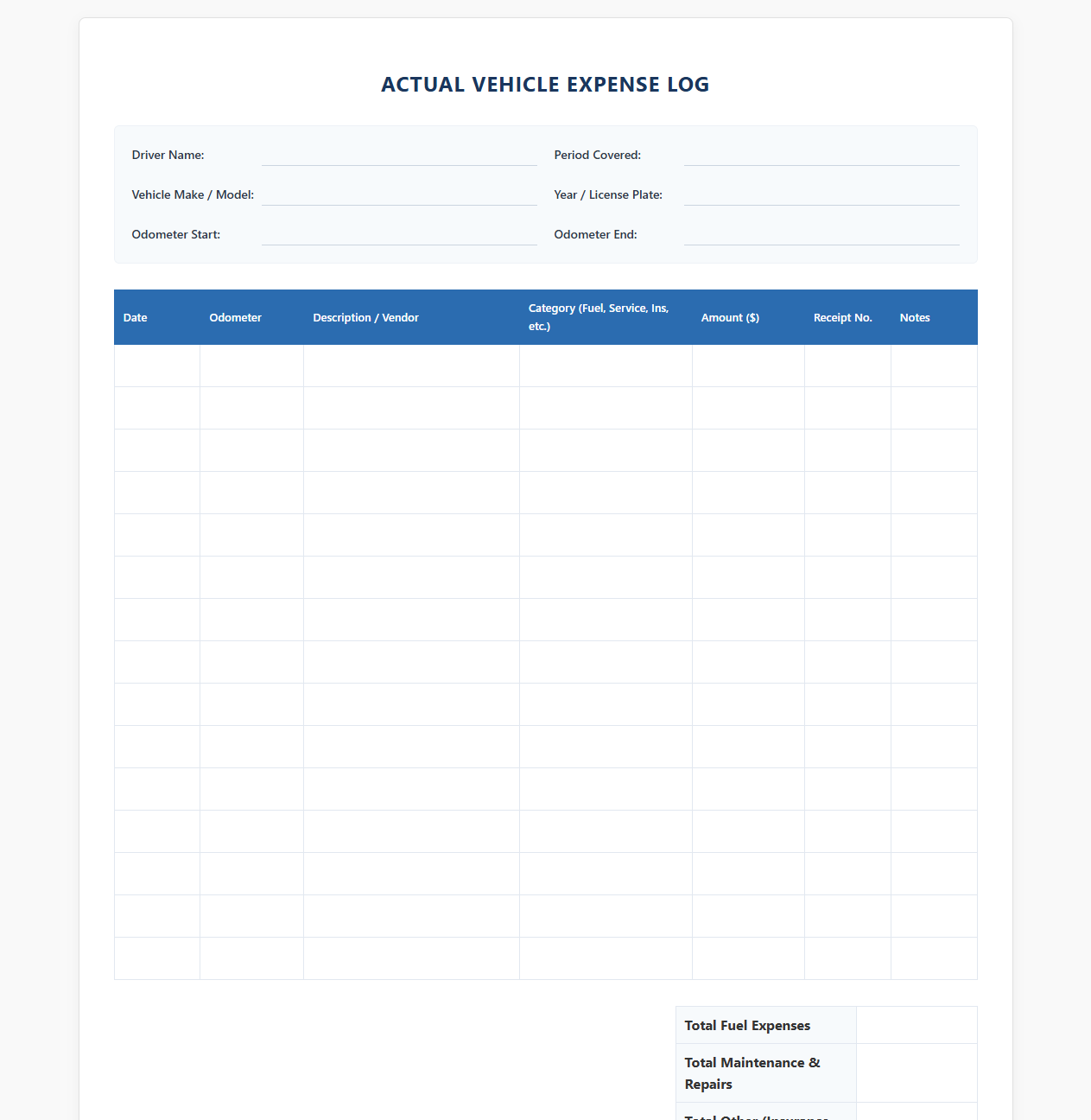
Actual Vehicle Expense Log
 Download: .PDF
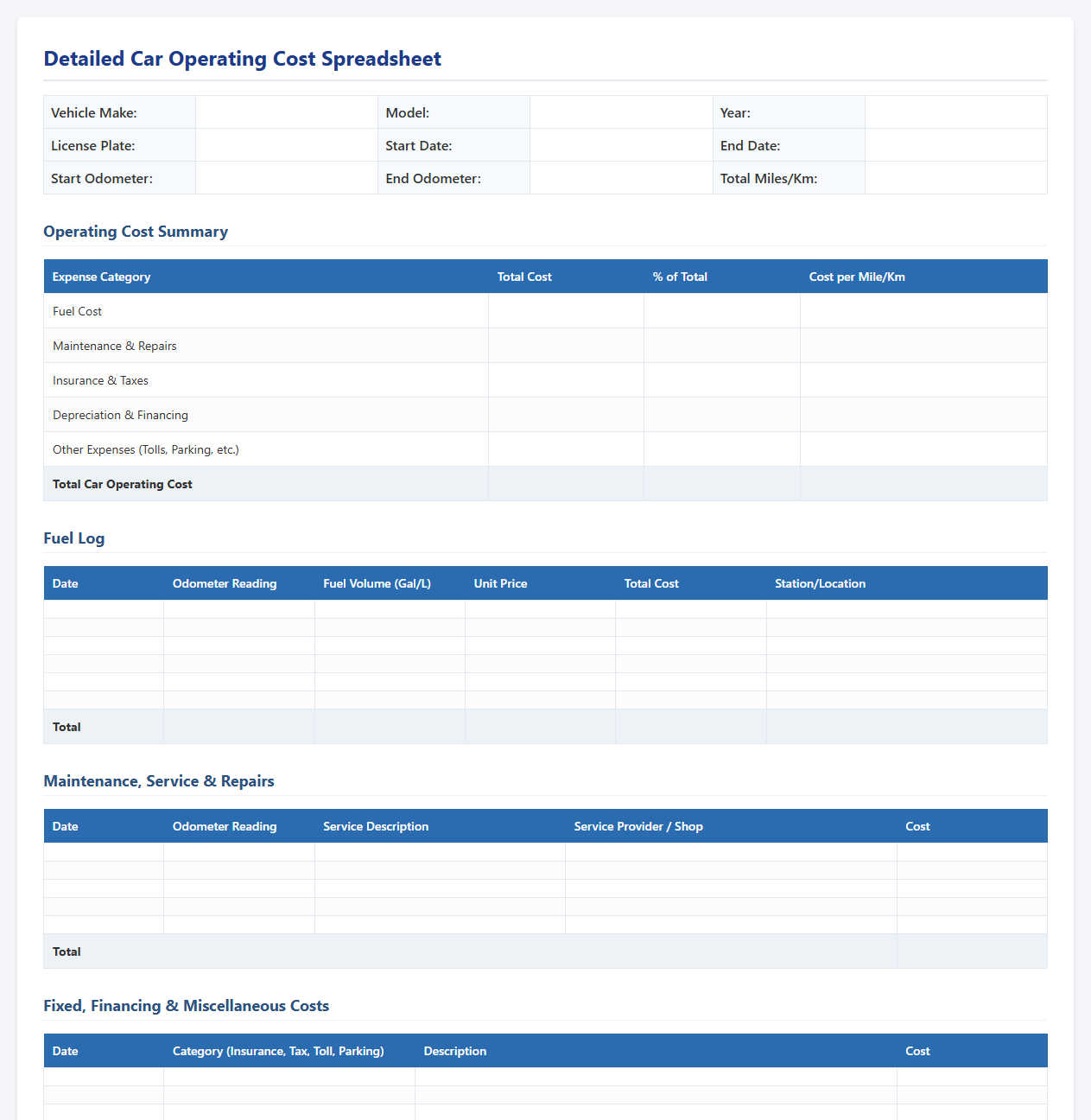
Detailed Car Operating Cost Spreadsheet
 Download: .PDF
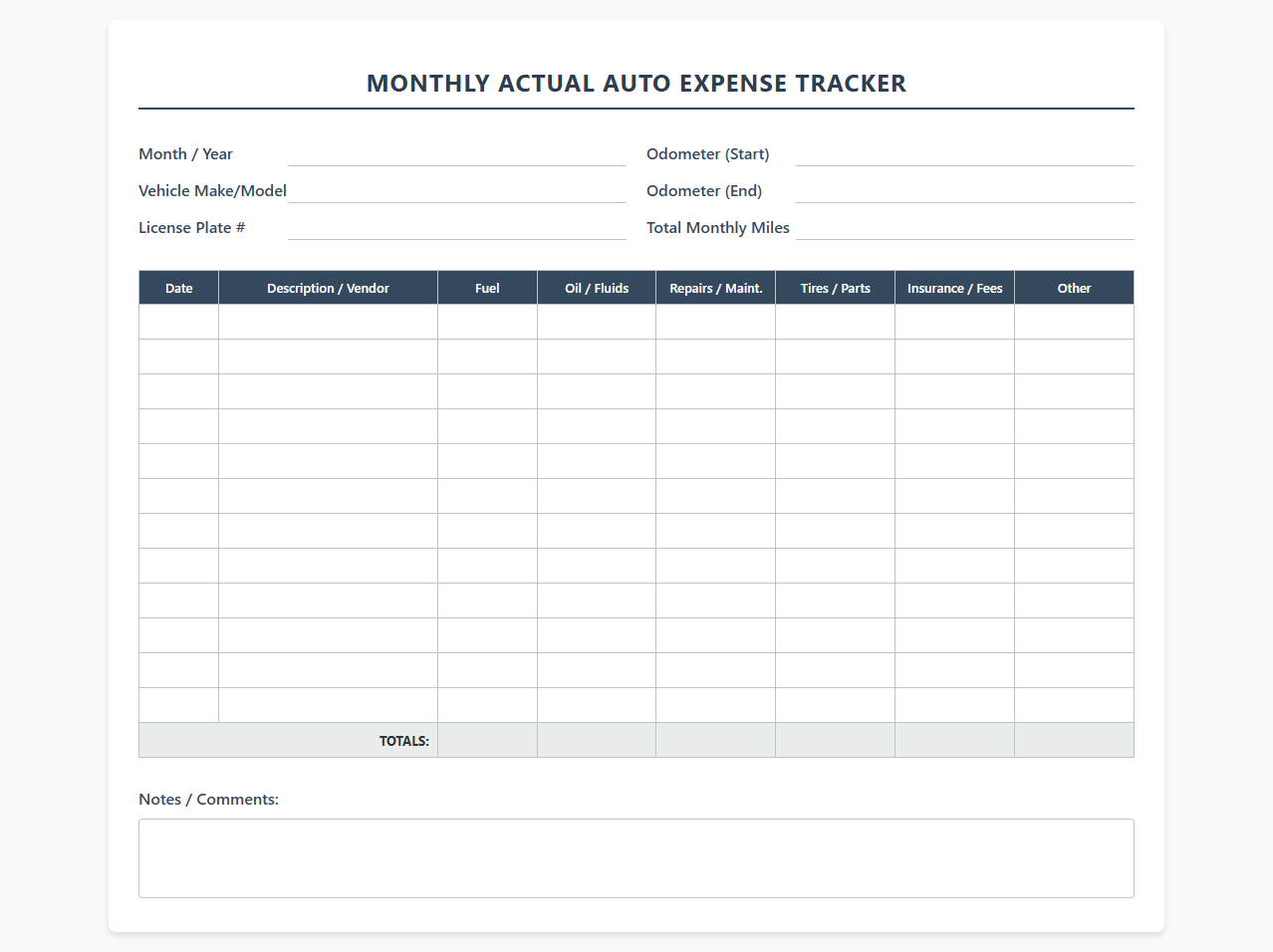
Monthly Actual Auto Expense Tracker
 Download: .PDF
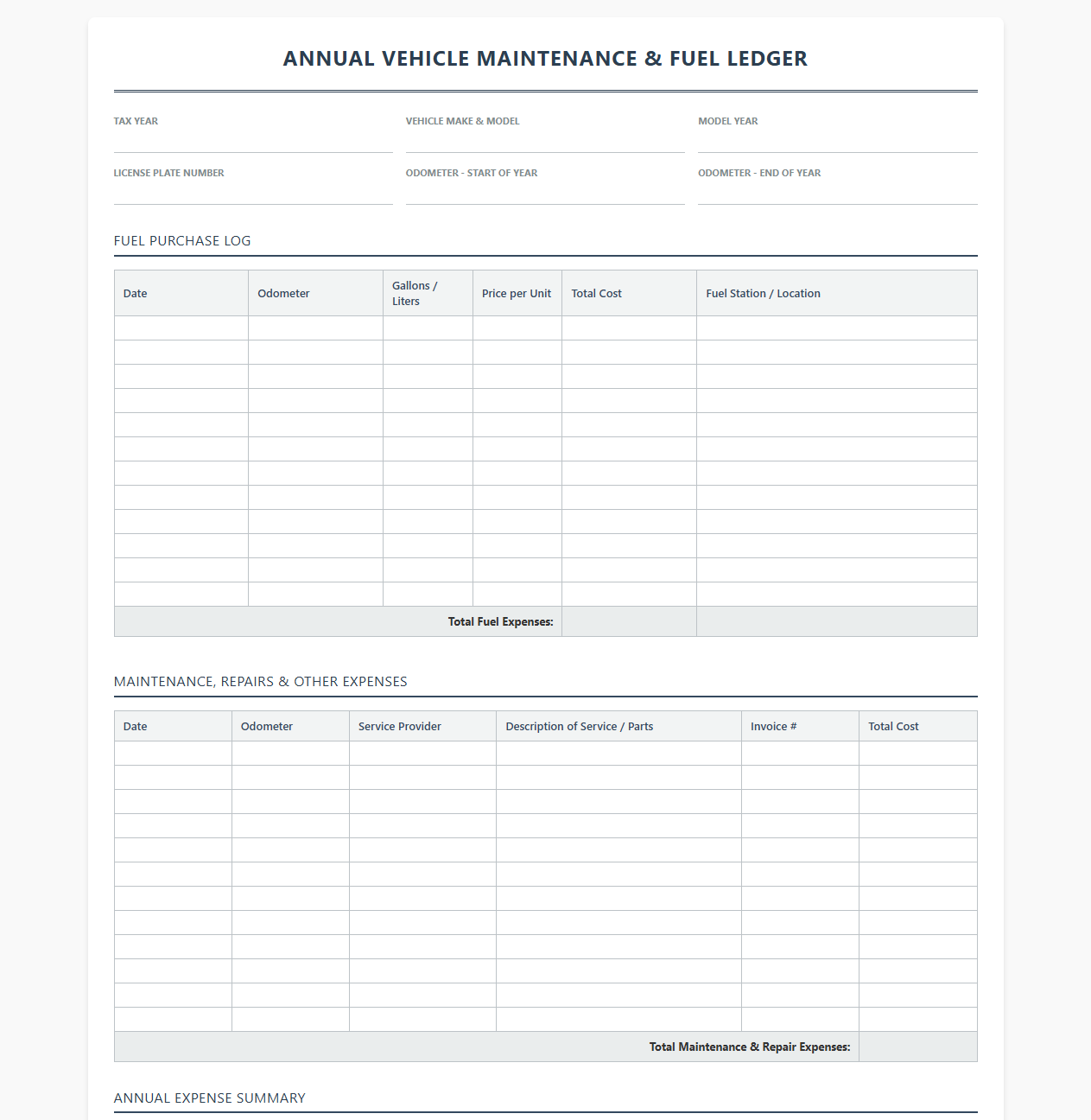
Annual Vehicle Maintenance and Fuel Ledger
 Download: .PDF
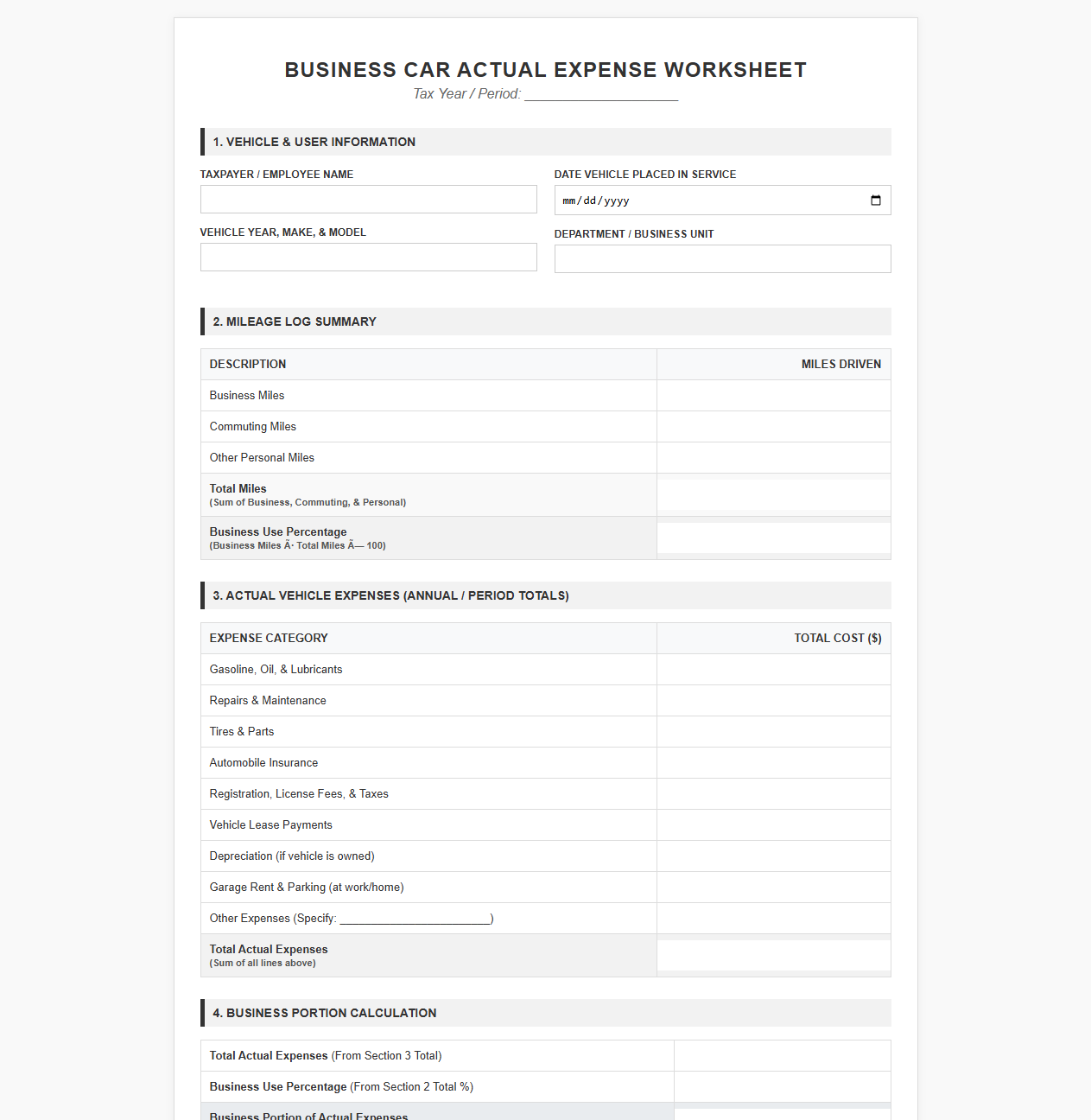
Business Car Actual Expense Worksheet
 Download: .PDF
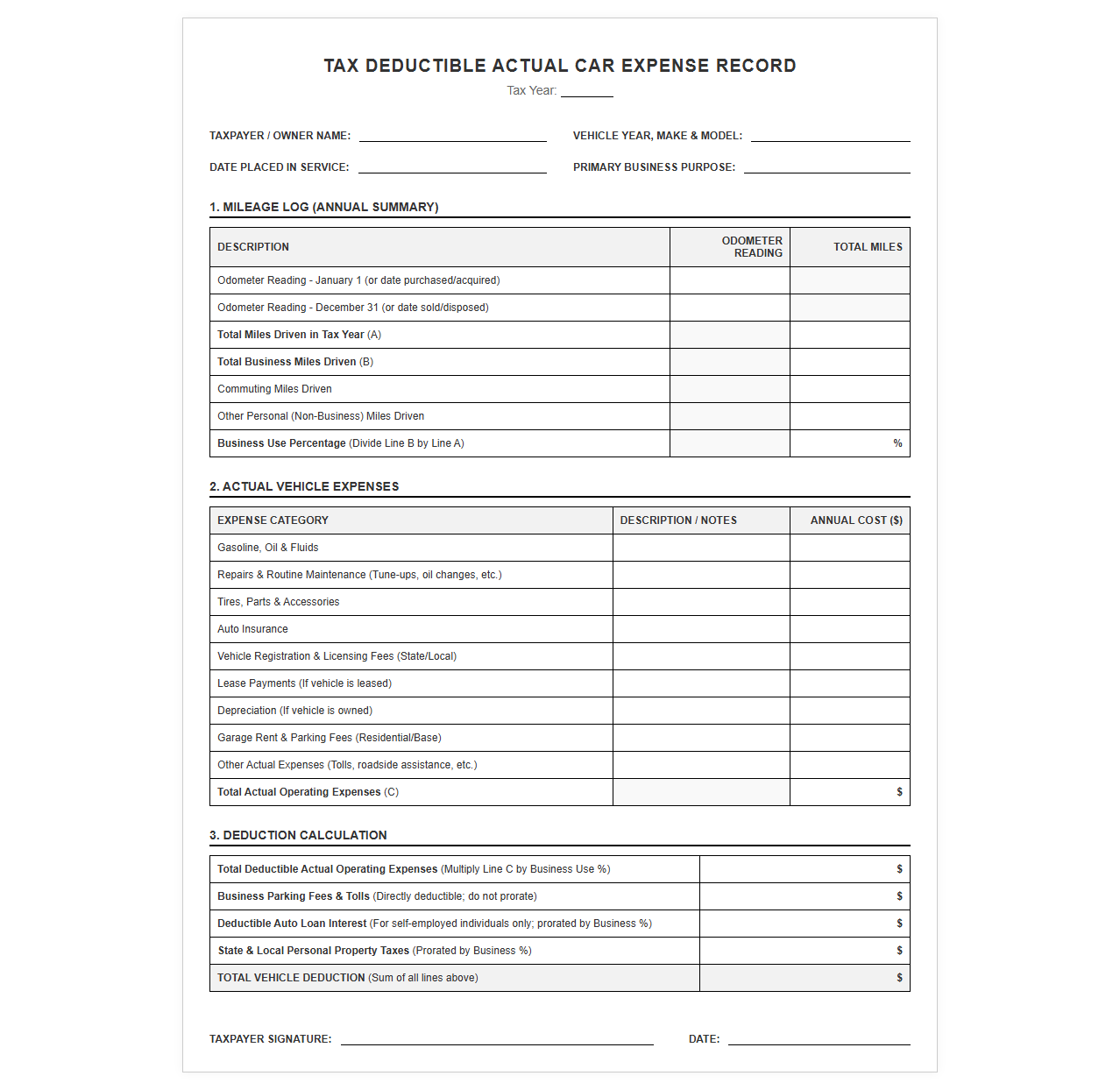
Tax Deductible Actual Car Expense Record
 Download: .PDF
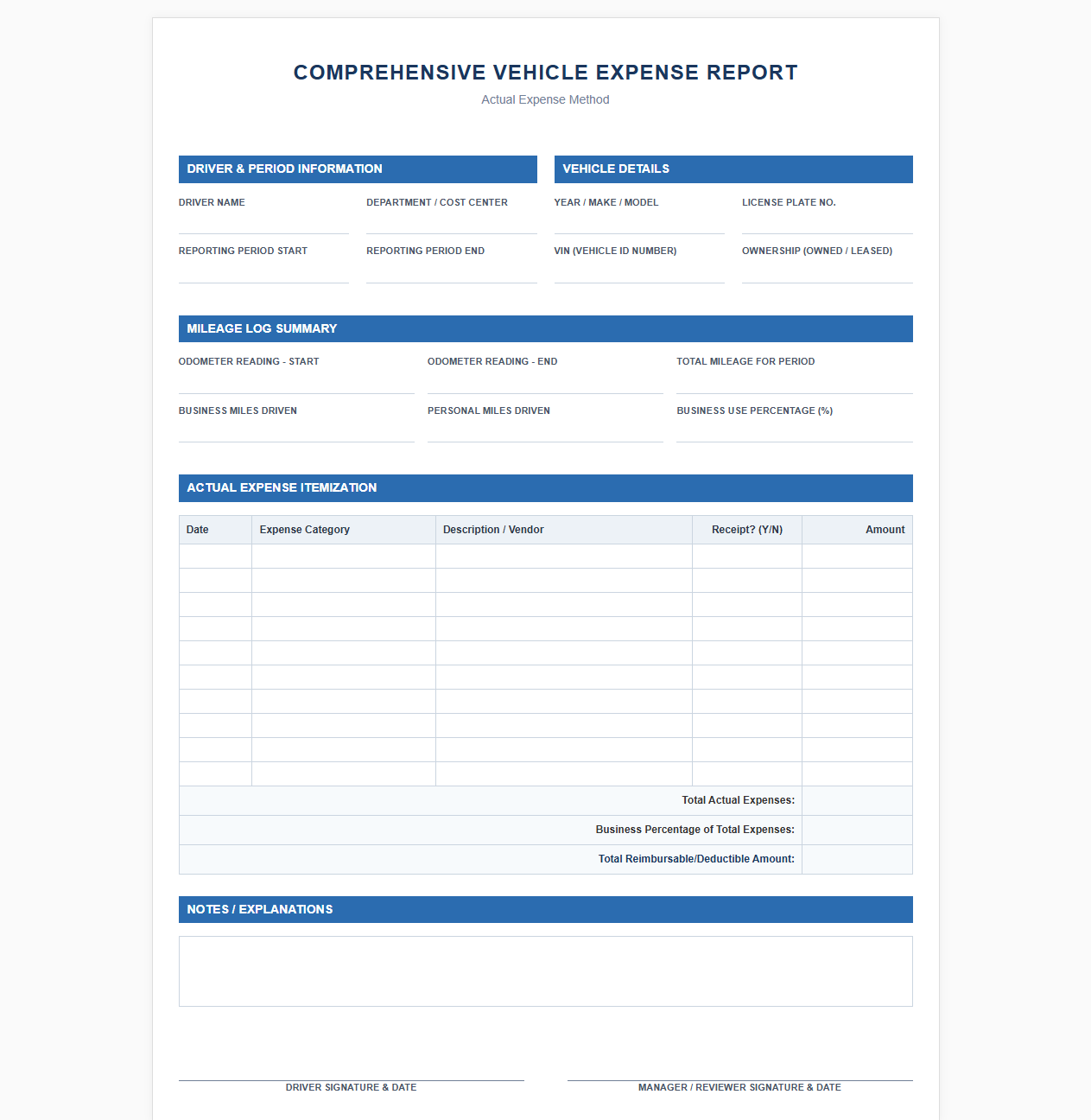
Comprehensive Vehicle Expense Report Template
 Download: .PDF
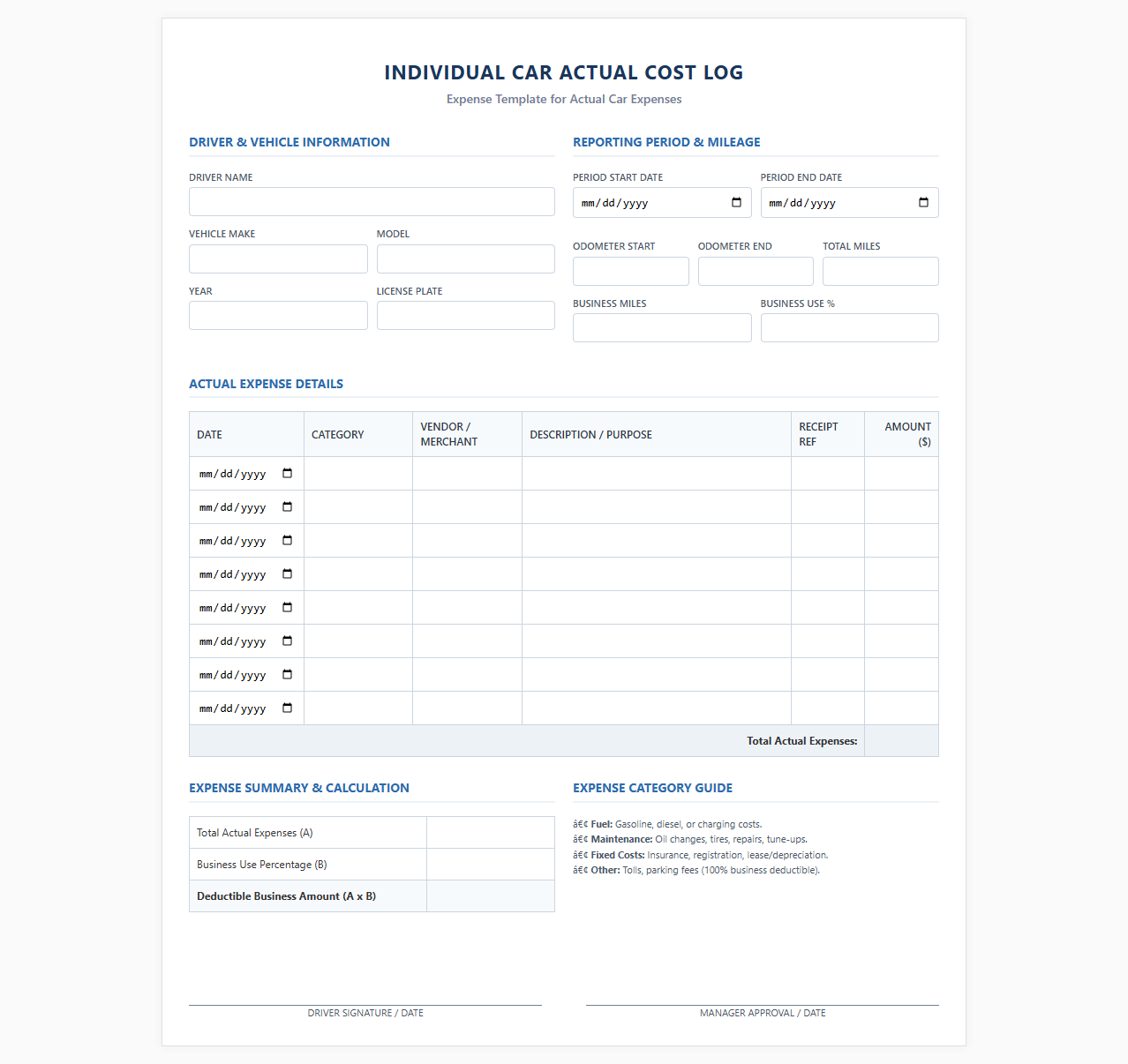
Individual Car Actual Cost Log
 Download: .PDF
Introduction: Why Actual Car Expenses Beat the Standard Mileage Rate
For many business owners, independent contractors, and mobile professionals, utilizing the Actual Expense Method yields a significantly higher tax deduction than the standard mileage rate. While the standard rate offers simplicity, it fails to account for the heavy real-world costs of operating a vehicle. If you drive a heavy SUV, maintain a luxury vehicle, or face steep local fuel prices and repair bills, tracking your actual outlays can save you thousands of dollars annually.
To maximize this deduction, you must keep meticulous records. Transitioning to this method means documenting every dollar spent on your vehicle. Those who invest the time to track these costs often find that their actual operational write-offs far exceed the flat-rate mileage allowance.
Template 1: The IRS-Compliant Mileage Log
Even when deducting actual expenses, you must establish your business-use percentage. The IRS requires a record of your total mileage driven for the year, categorized into business, commuting, and personal miles.
| Date | Destination & Purpose | Start Odometer | End Odometer | Business Miles | Personal/Commute Miles |
|---|---|---|---|---|---|
| 04/12/2024 | Client Meeting - Acme Corp | 12,450 | 12,485 | 35 | 0 |
| 04/13/2024 | Grocery Store (Personal) | 12,485 | 12,497 | 0 | 12 |
Template 2: Fuel and Maintenance Receipt Organizer
To withstand an IRS audit, you cannot rely on bank statements alone; you must preserve detailed receipts. Categorizing these costs properly ensures you capture every penny of your variable operating expenses.
- Fuel Purchases: Save all pump receipts, noting the specific vehicle if you manage a multi-car fleet.
- Oil Changes & Fluids: Track regular fluid top-offs and routine preventive maintenance cycles.
- Tires & Alignments: Keep records of seasonal tire changes, replacements, and wheel balancing.
- Repairs & Parts: Document major mechanical repairs, brake replacements, and unexpected part fixes.
Template 3: Depreciation and Lease Agreement Logs
For owned vehicles, depreciation represents one of the largest available tax write-offs, while leased vehicles allow for the deduction of monthly payments adjusted by the IRS inclusion amount.
"Taxpayers claiming the actual expense method for a leased vehicle must use the lease payments as their baseline, adjusted annually by the IRS Lease Inclusion Table to ensure fair value representation." - Internal Revenue Service Publication 463
To secure these deductions, ensure you archive your original purchase agreement, financing contracts, or your comprehensive lease agreement alongside annual valuation statements.
Template 4: Fixed Operating Costs Ledger (Insurance & Fees)
Fixed annual costs run constantly in the background, regardless of how many miles you drive. Recording these expenses provides a solid baseline for your overall deduction calculation.
| Annual Auto Insurance Premiums | $1,850.00 |
| State Vehicle Registration & Title Fees | $220.00 |
| Auto Loan Interest (Business Portion Only) | $450.00 |
| Garage Rent & Parking Permits | $300.00 |
Template 5: The Actual Expense Calculation Worksheet
Once you have compiled your annual expenses and mileage totals, you must calculate your final tax-deductible amount. This is determined by multiplying your total vehicle expenses by your business-use percentage.
Step 1: Calculate Business-Use Percentage
  Business Miles / Total Miles = Business-Use %
  Example: 15,000 / 20,000 = 75%
Step 2: Sum Total Expenses
  Fuel ($3,000) + Maintenance ($1,200) + Insurance ($1,800) + Depreciation ($4,000) = $10,000
Step 3: Calculate Deductible Amount
  Total Expenses * Business-Use % = Tax Deduction
  $10,000 * 75% = $7,500 Deductible Expense
Using this math, you can easily compare your actual expense deduction to what you would have received under the standard mileage rate.
Best Practices: Organizing and Archiving Your Tax Documents
Managing physical receipts can quickly become overwhelming. Transitioning to a digital workflow keeps your records safe from fading ink and physical loss, creating a clean audit trail.
- Utilize dedicated receipt scanning applications to capture digital copies instantly at the pump or repair shop.
- Store your mileage logs and expense ledgers in secure cloud storage, organized by tax year.
- Link your digital logs to your financial software to automatically categorize transactions as they occur.
Keep in mind that the IRS requires you to maintain these records for a minimum of three years from the date you filed your original return. For more detailed rules on record retention, visit the official IRS Tax Information Website. Taking these proactive steps protects your business against future audits while securing your hard-earned savings.

Leave a comment