

Fuel distributors and fleet managers frequently struggle with the administrative chaos of tracking diverse heating oil deliveries. Before addressing how to streamline this process, we must recognize that fuel accounting is rarely uniform; fluctuating regional tariffs, varying delivery volumes, and seasonal surcharges naturally complicate standard billing.
Introducing standardized expense templates grants finance teams immediate administrative relief and drastically reduces reconciliation errors. While these templates offer a powerful organizing framework, they should be treated as adaptable baselines rather than rigid solutions, as local tax compliance and regulatory variances must still be factored in.
By standardizing variables such as split-delivery fees, bulk discounts, and regional surcharges, operations can achieve consistent, audit-ready reporting. This article will outline the core components of these standardized templates, demonstrate how to implement them across diverse delivery types, and provide actionable steps to optimize your seasonal fuel bookkeeping.
Heating Oil Delivery Agreement
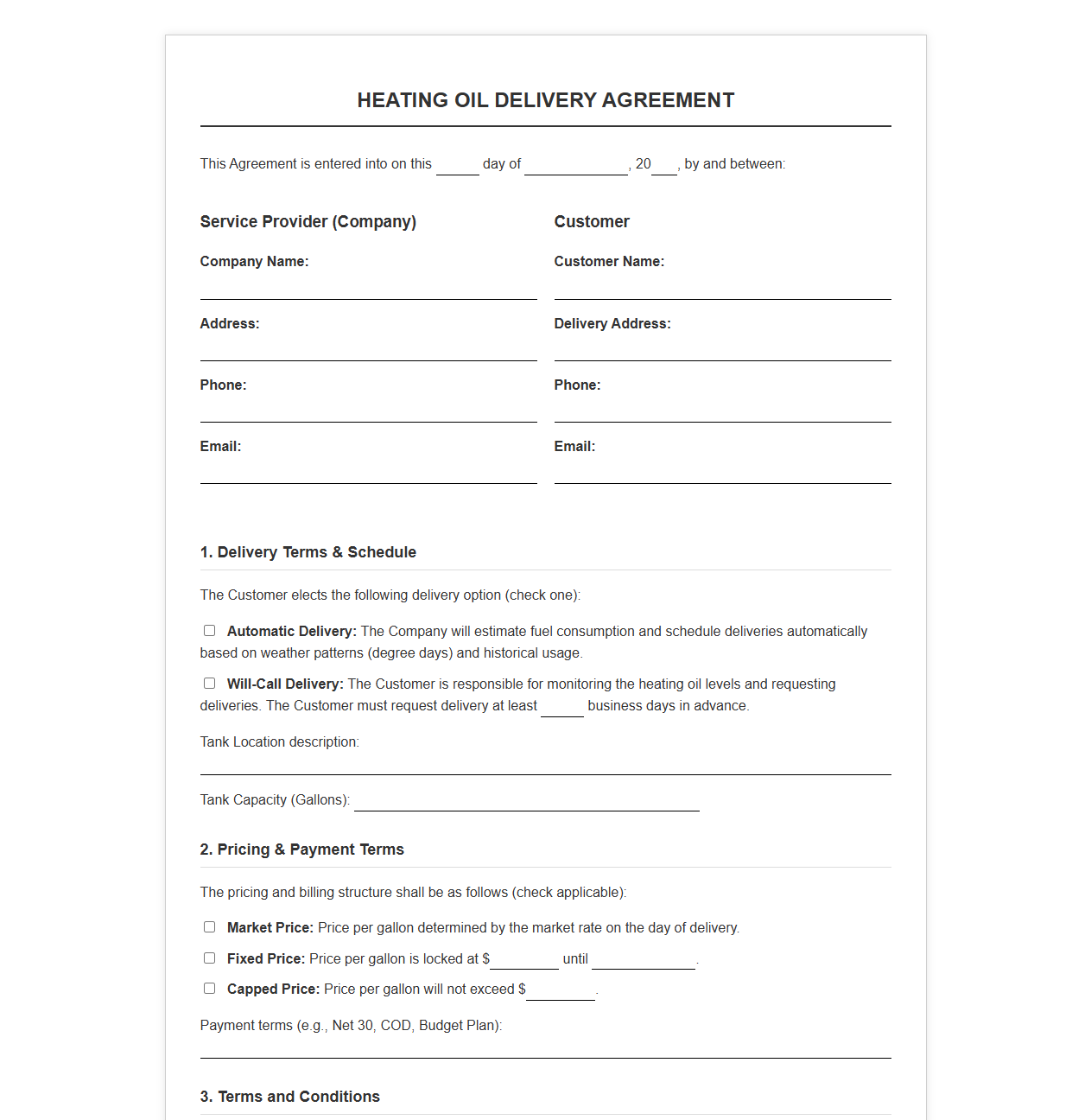 Download: .PDF
Heating Oil Budget Payment Plan Contract
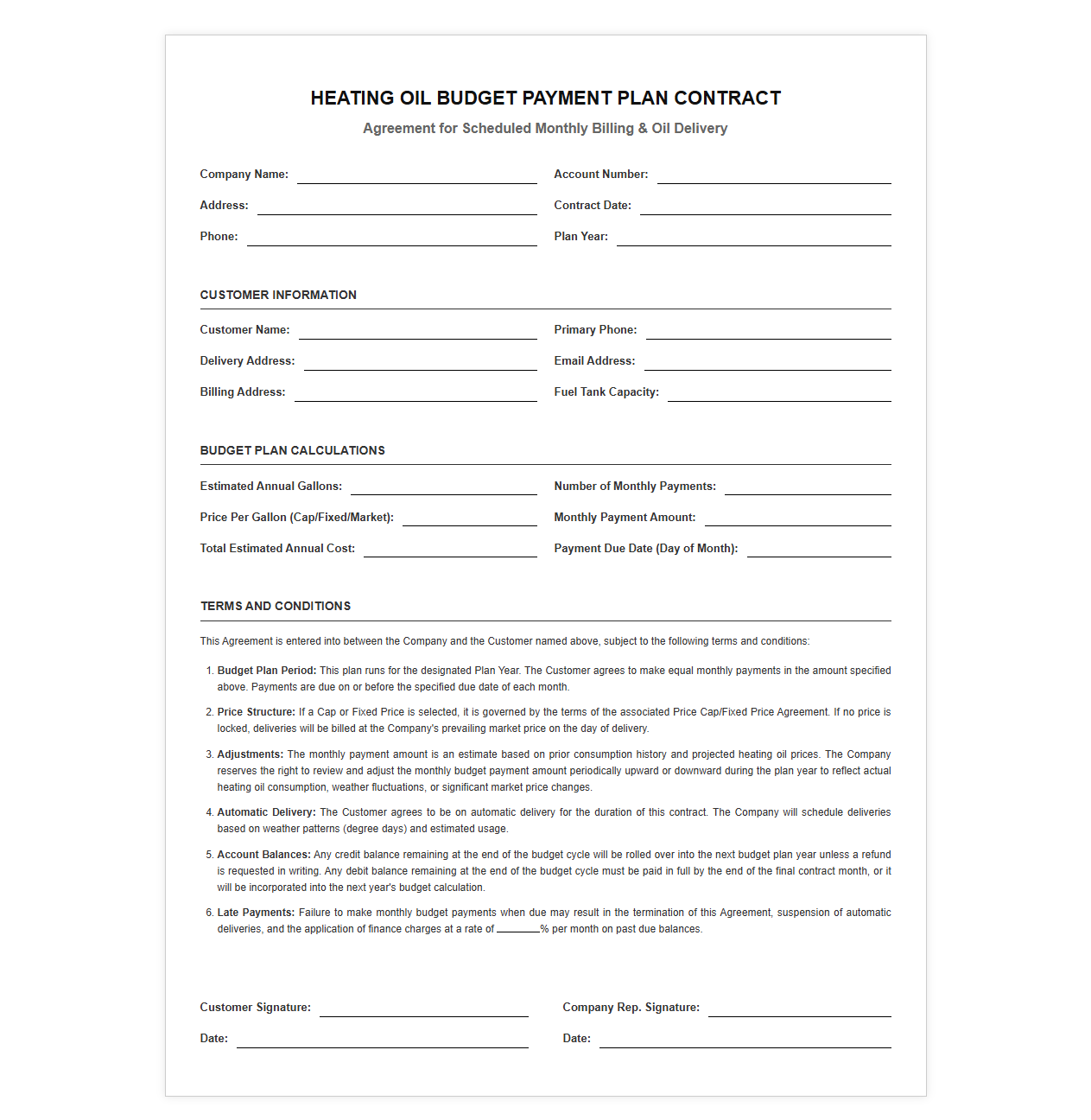 Download: .PDF
Residential Heating Oil Service Contract
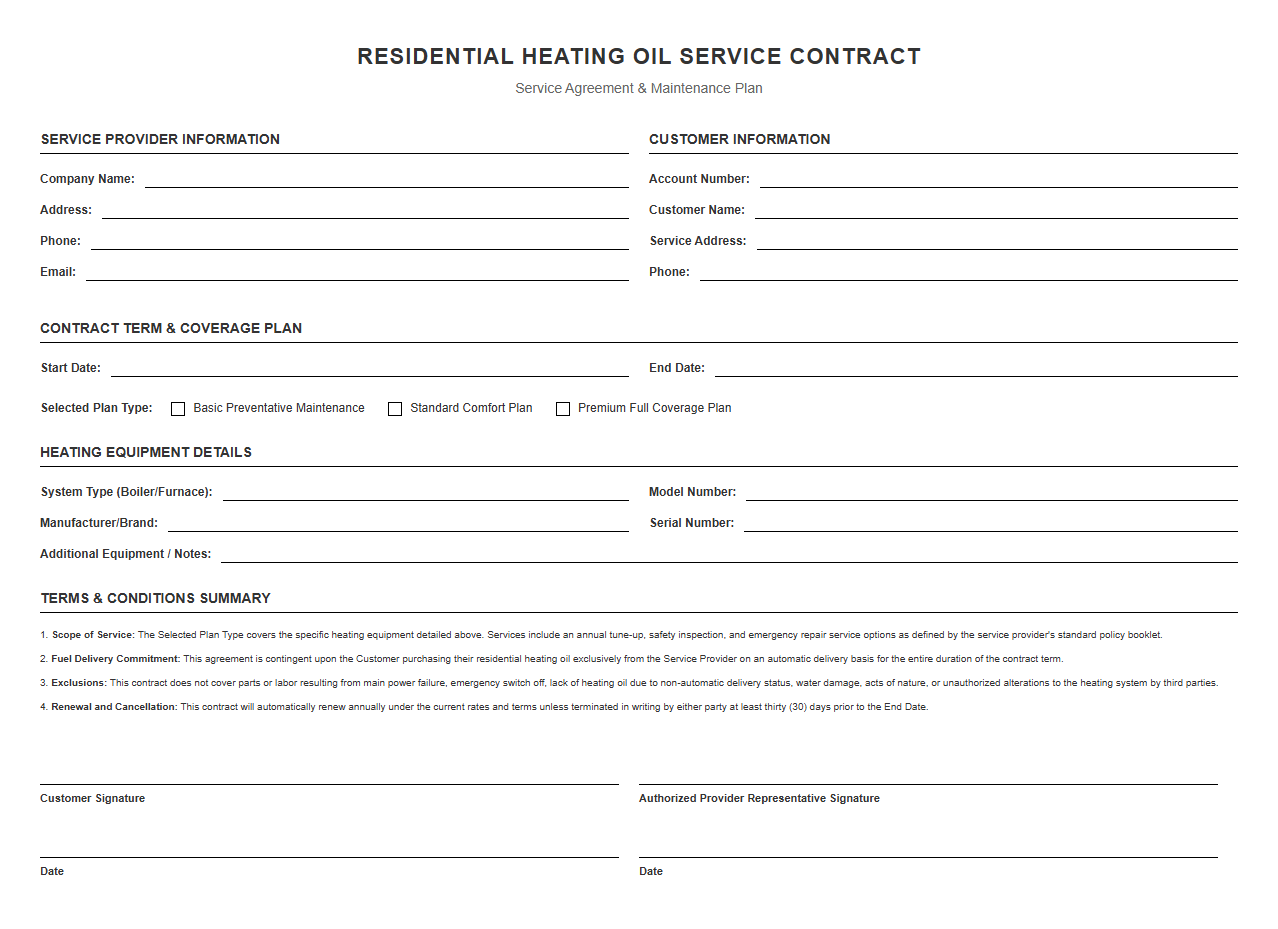 Download: .PDF
Heating Oil Order and Invoice Template
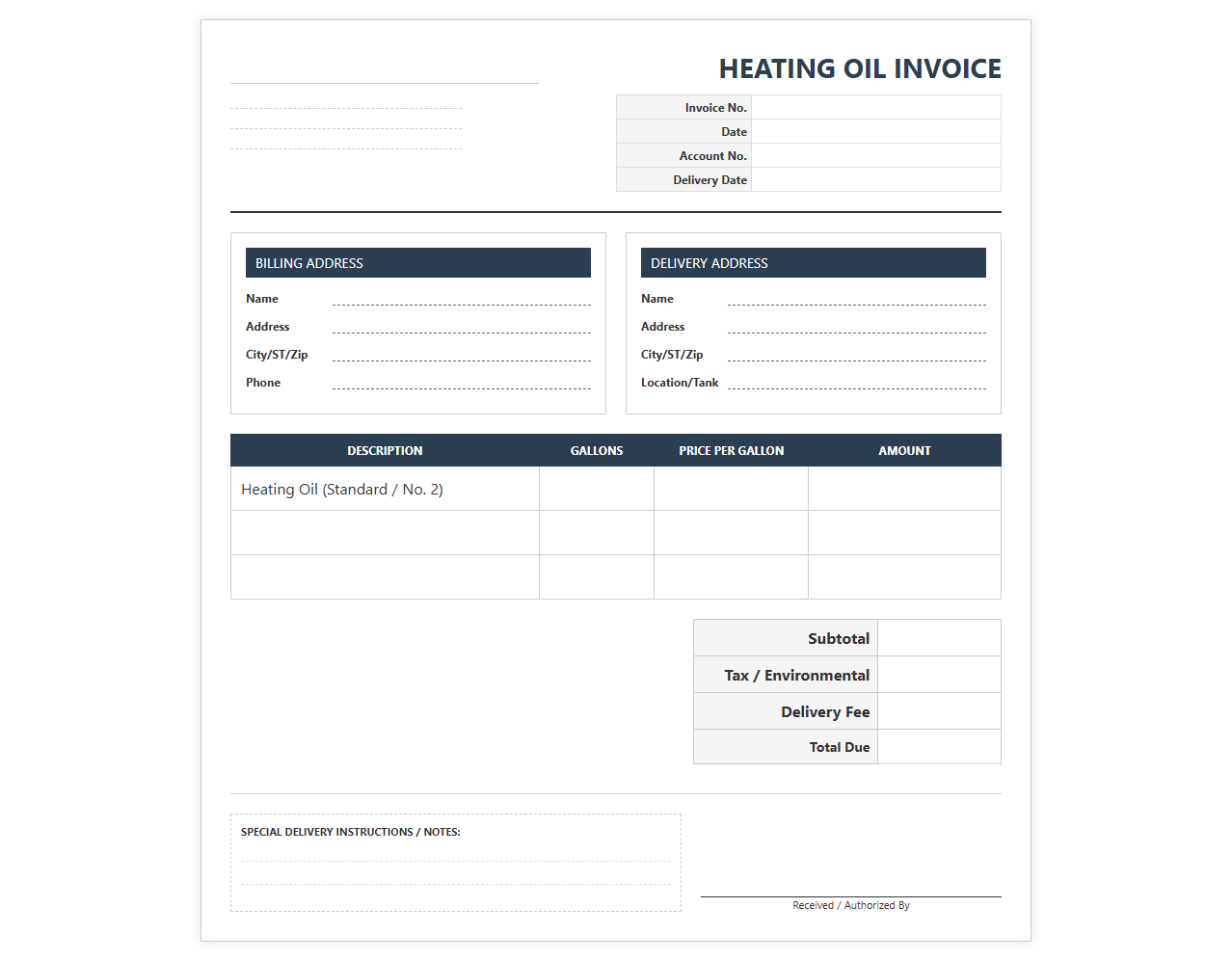 Download: .PDF
Commercial Heating Oil Supply Agreement
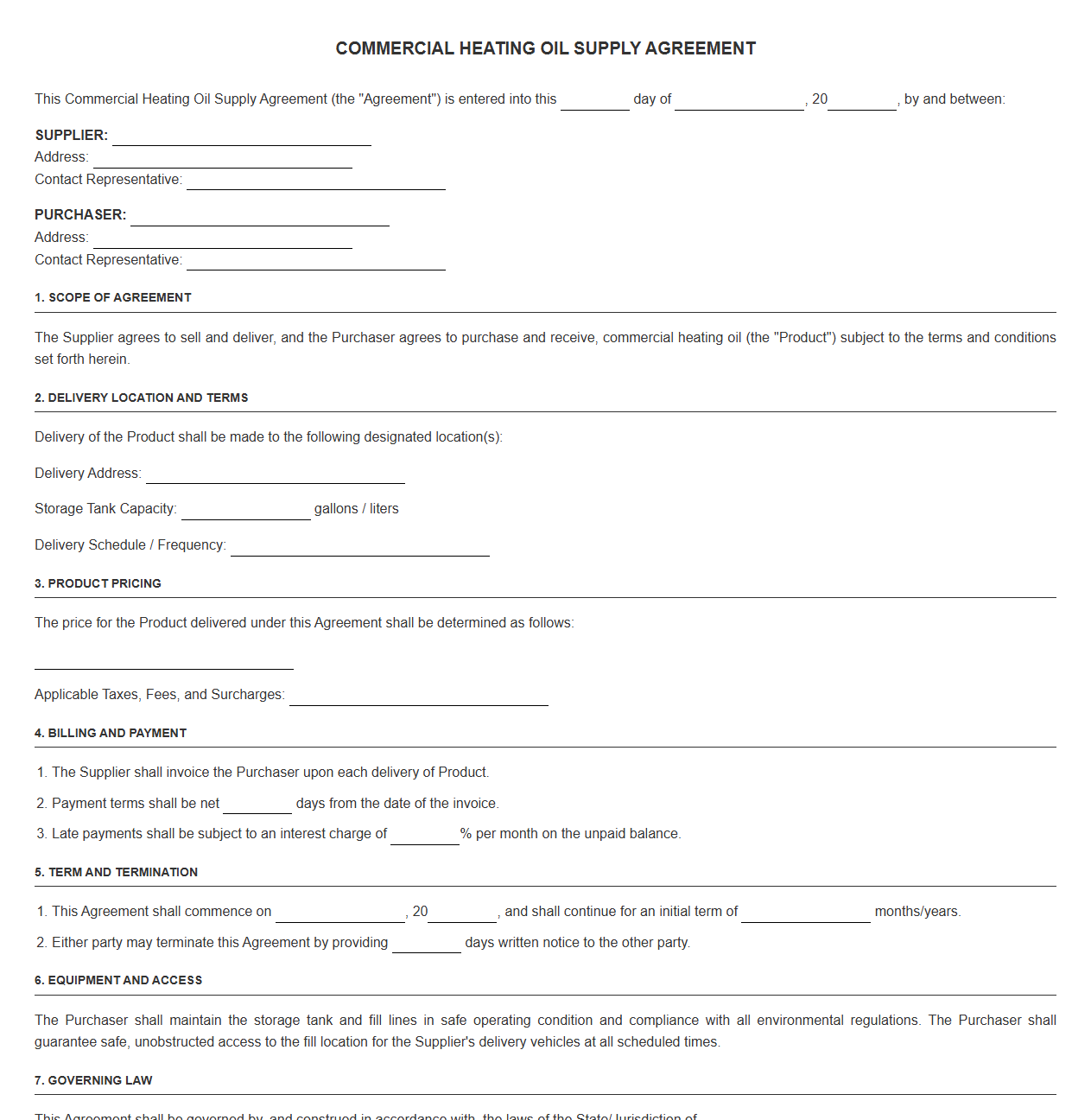 Download: .PDF
Heating Oil Tank Inspection Checklist
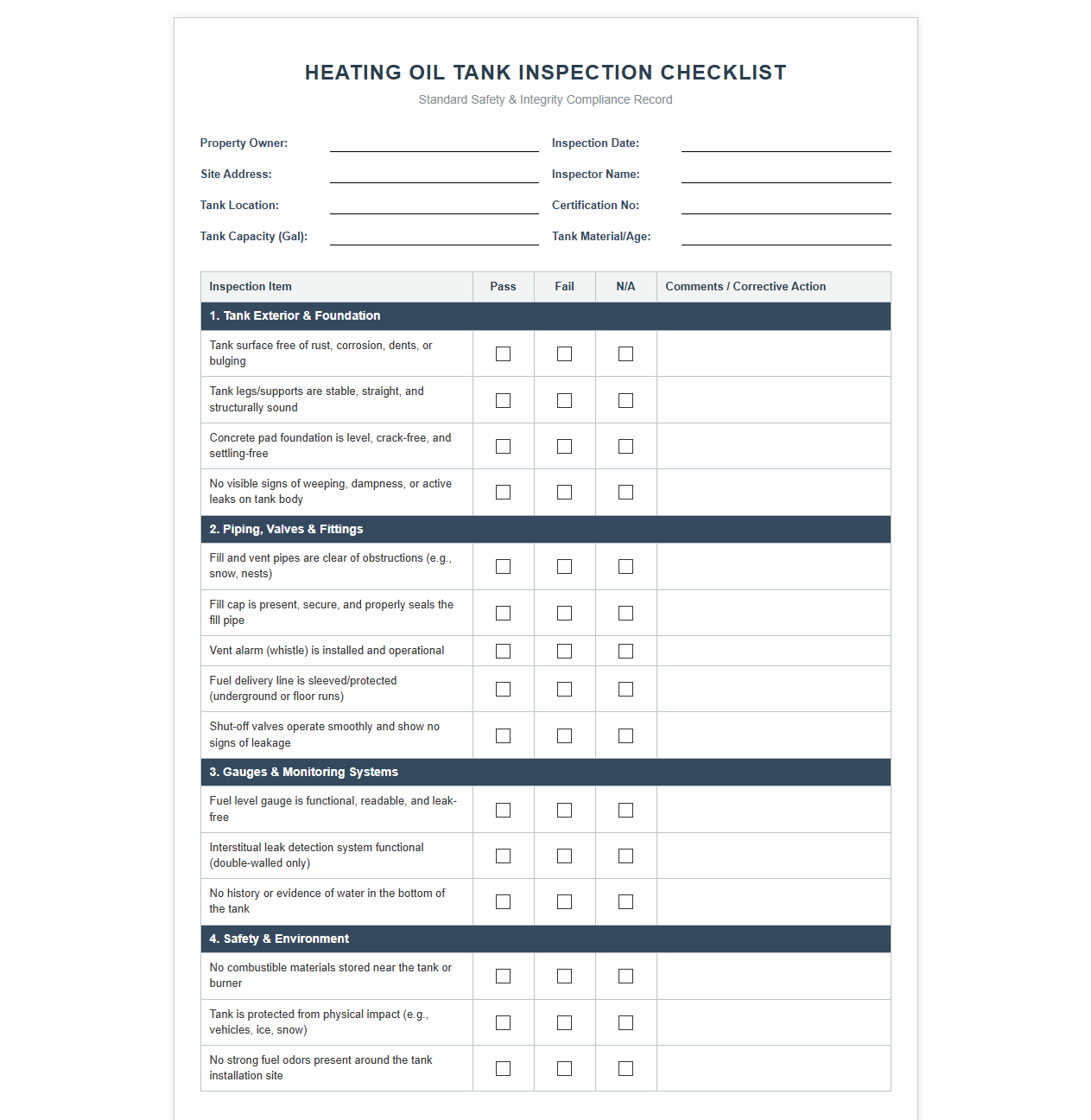 Download: .PDF
Heating Oil Automatic Delivery Authorization Form
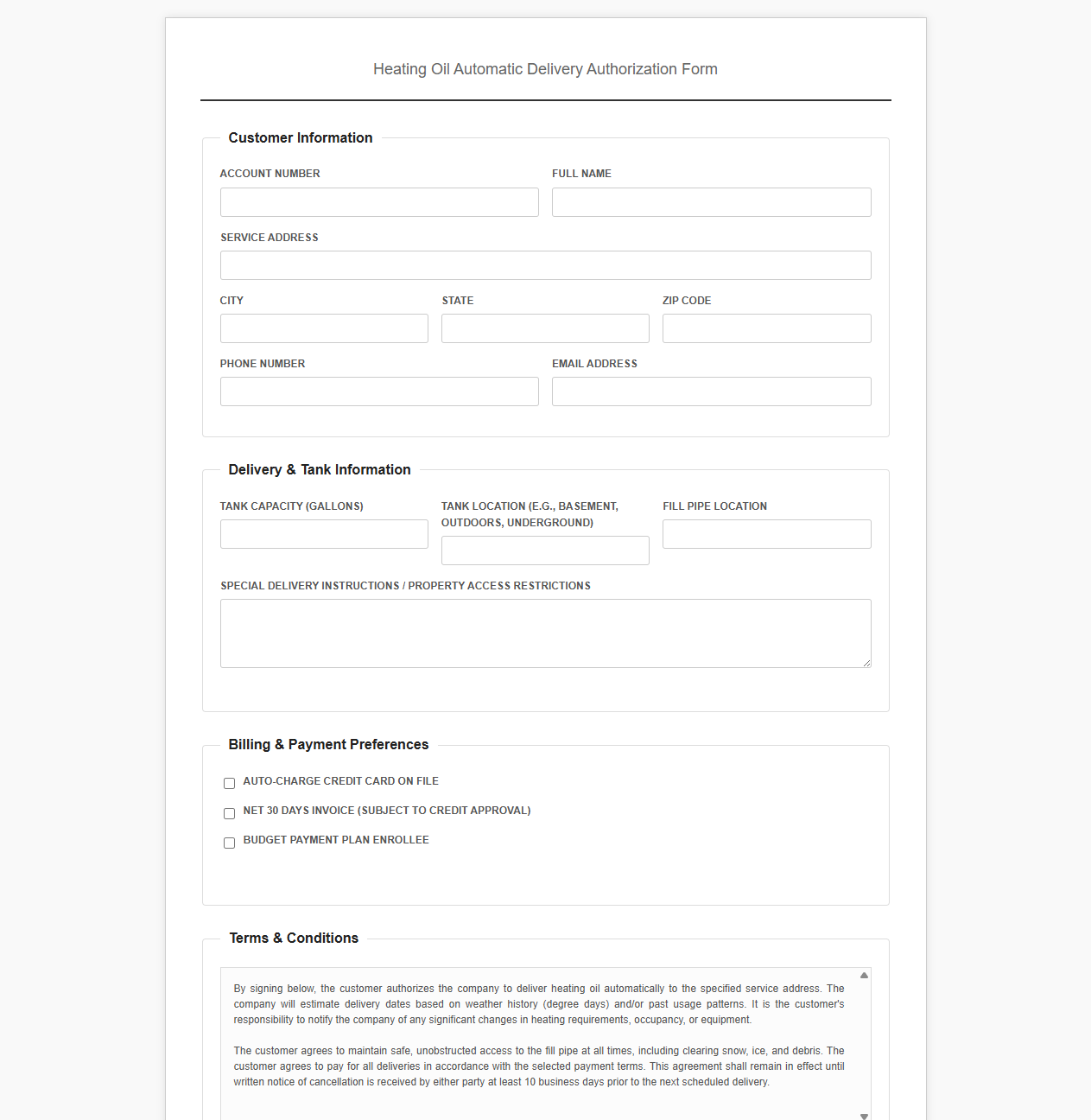 Download: .PDF
Heating Oil Equipment Maintenance Agreement
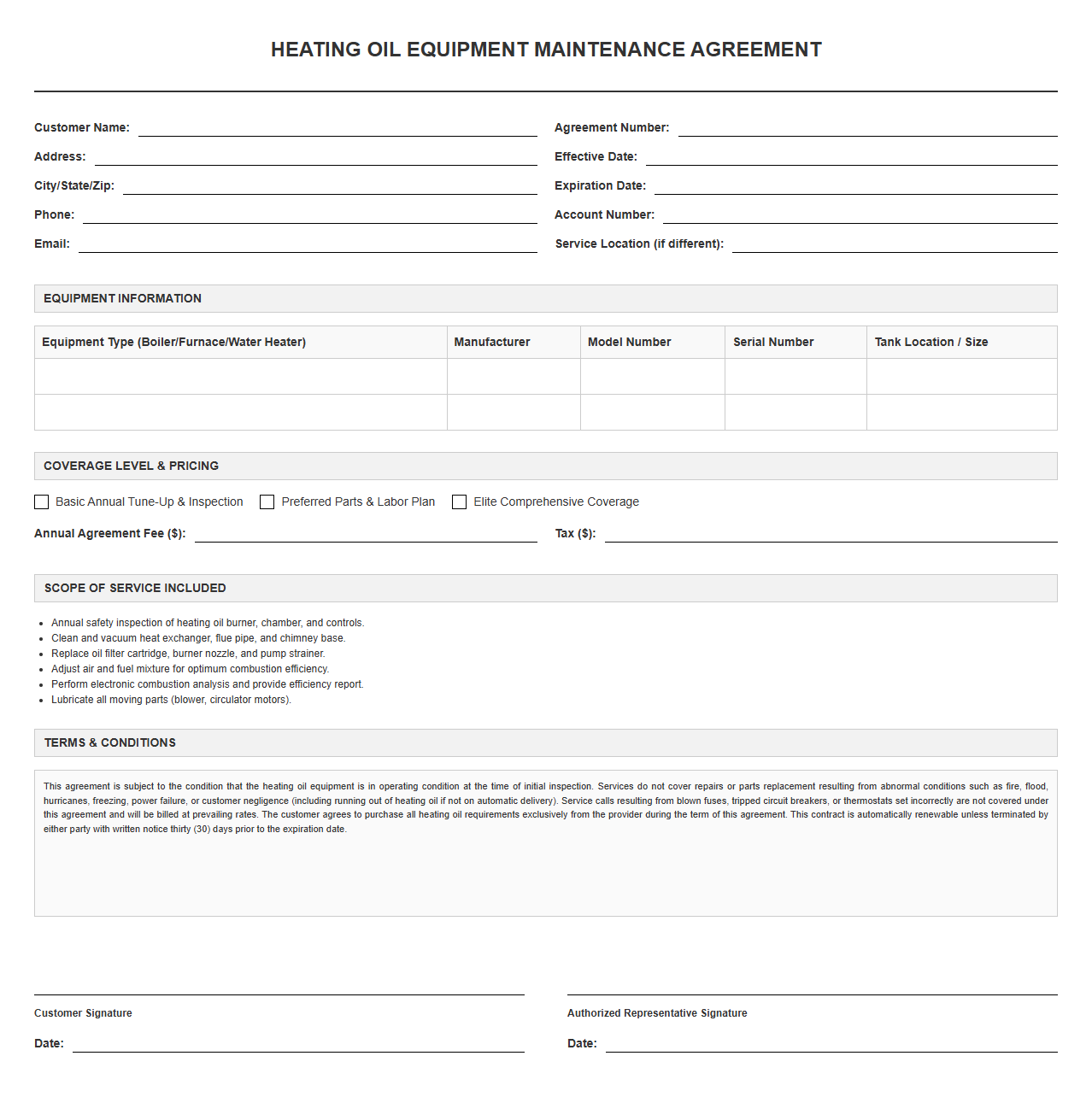 Download: .PDF
The Complexity of Heating Oil Expense Tracking
Managing commercial heating fuel expenses presents unique financial challenges for businesses with multi-site operations. Unlike fixed utility bills, heating oil procurement involves constantly shifting market rates, sudden delivery fees, and complex split-billing arrangements. When multiple departments share a single bulk delivery, distributing these costs manually becomes a administrative bottleneck. Without a centralized system, companies risk overpaying due to overlooked invoice discrepancies, duplicate charges, and unverified fuel drop quantities.
Why Standardized Templates Are Essential
Implementing a standardized template for tracking fuel expenses bridges the gap between field operations and corporate finance. By defining uniform fields for every transaction, organizations experience immediate error reduction and significantly faster internal audits. This structure ensures that administrative staff across different regional offices enter data in the exact same format, building a reliable historical archive that makes seasonal budget forecasting far more accurate.
Core Elements of an Effective Fuel Template
To capture the full scope of heating oil transactions, an accounting template must include specific granular data points. A basic spreadsheet is insufficient; instead, the tracking sheet must record key operational variables to ensure accurate reconciliation:
- Delivery Date: The exact date the fuel was discharged into the tank.
- Gallons Delivered: The volume measured by the truck's meter, verified against the delivery ticket.
- Unit Price: The cost per gallon, excluding taxes and ancillary fees.
- Location Codes: Unique identifiers for the specific facility or tank receiving the fuel.
- Ancillary Fees: Explicit columns for delivery surcharges, emergency fees, or hose run charges.
Adapting to Diverse Delivery Models
A robust tracking template must accommodate different supply arrangements, as heating oil logistics are rarely uniform. Facilities might rely on automatic keep-fill agreements where the vendor determines delivery timing based on degree-day calculations, or they may utilize on-demand will-call orders to capitalize on dips in market pricing.
Regardless of whether a delivery is an automatic fill, a scheduled will-call, or a high-tariff emergency bulk delivery, the template structure must tag the delivery type to allow management to evaluate the cost-efficiency of each procurement method.
Simplifying Tax and Regulatory Compliance
Fuel accounting is heavily impacted by regional tax codes and environmental regulations. Standardized sheets must isolate these variables to prevent compliance errors during tax filings. Separating local sales taxes from environmental taxes and regional fuel levies ensures that businesses can easily claim eligible tax exemptions or rebates for non-highway fuel use, depending on local jurisdiction guidelines.
Integrating Templates with Accounting Software
The manual transfer of tracking data into corporate accounting platforms is highly susceptible to human error. To automate this workflow, templates should be formatted to export directly as a clean .csv file. By aligning the template columns with the import schema of popular ERP and accounting software systems, companies can instantly map fields like GL_Account_Code and Vendor_ID, reducing invoice processing times from hours to seconds.
The Long-Term Value of Streamlined Fuel Accounting
Establishing control over heating oil expenses pays dividends far beyond simple data entry. By maintaining clean, structured historical records, businesses gain the transparency needed to negotiate better bulk rates with distributors and predict seasonal cash flow requirements with high precision. Investing the time to standardize these accounting workflows transforms a volatile operating expense into a predictable, manageable asset.

Leave a comment