
Managing commercial waste disposal costs is a persistent headache for operations managers, who are frequently plagued by hidden fees and unpredictable service hikes. Before addressing these expenditures directly, organizations must first navigate the complex labyrinth of municipal waste regulations and multi-tiered vendor agreements.
Fortunately, implementing standardized document templates grants decision-makers immediate financial visibility, unlocking significant cost-reduction opportunities. While these tools provide a robust framework, it is important to stipulate that they require customization to align with your specific local compliance laws and regional volume needs.
Utilizing concrete tools such as structured Waste Audit Sheets and standardized RFP templates serves as verifiable proof of where operational leaks occur. In this article, we will outline the essential templates required to audit your current spend, negotiate favorable vendor terms, and establish permanent cost control.
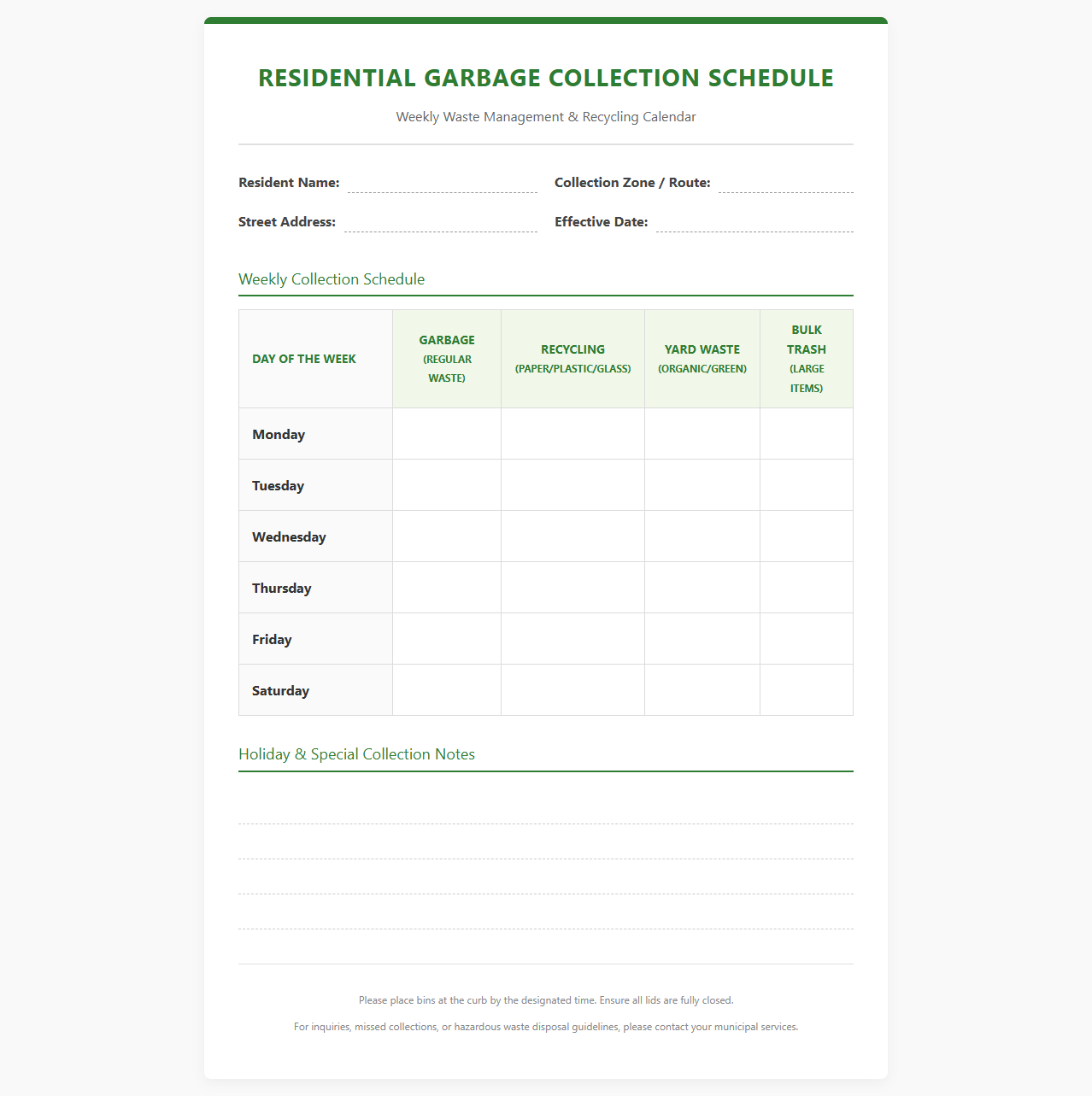
Residential Garbage Collection Schedule Template
 Download: .PDF
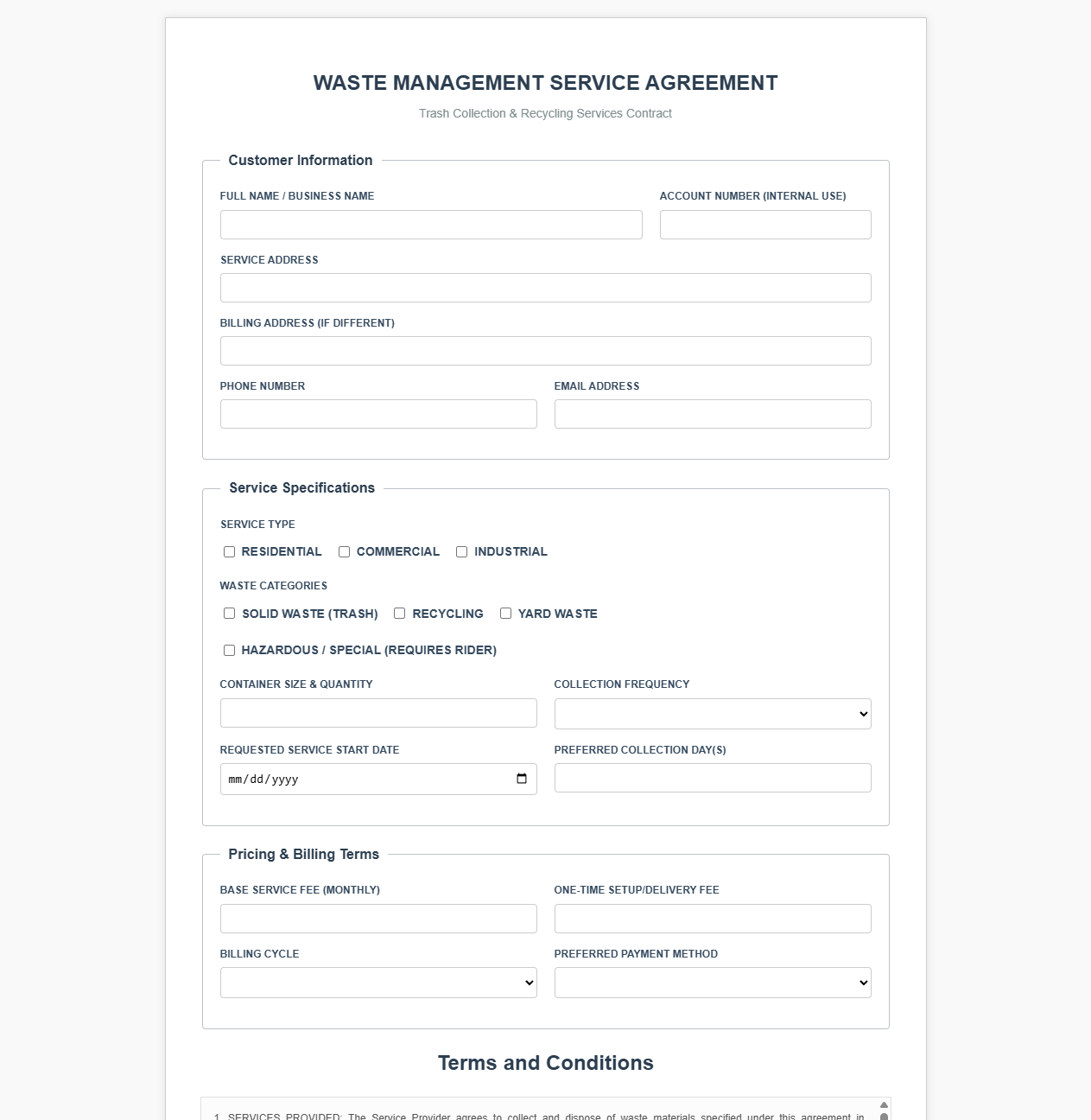
Waste Management Service Agreement Form
 Download: .PDF
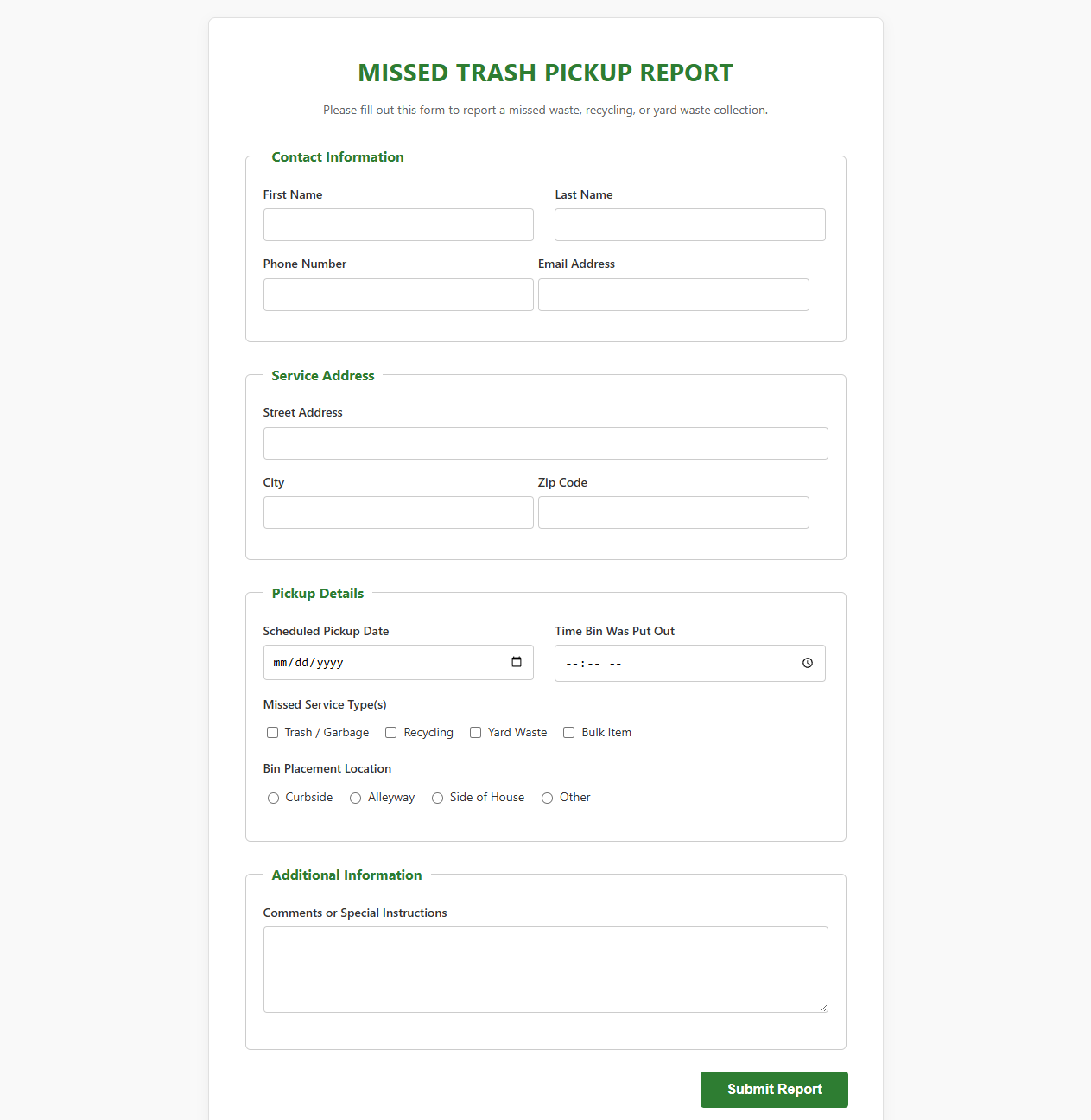
Missed Trash Pickup Report Template
 Download: .PDF
Bulk Waste Removal Request Form
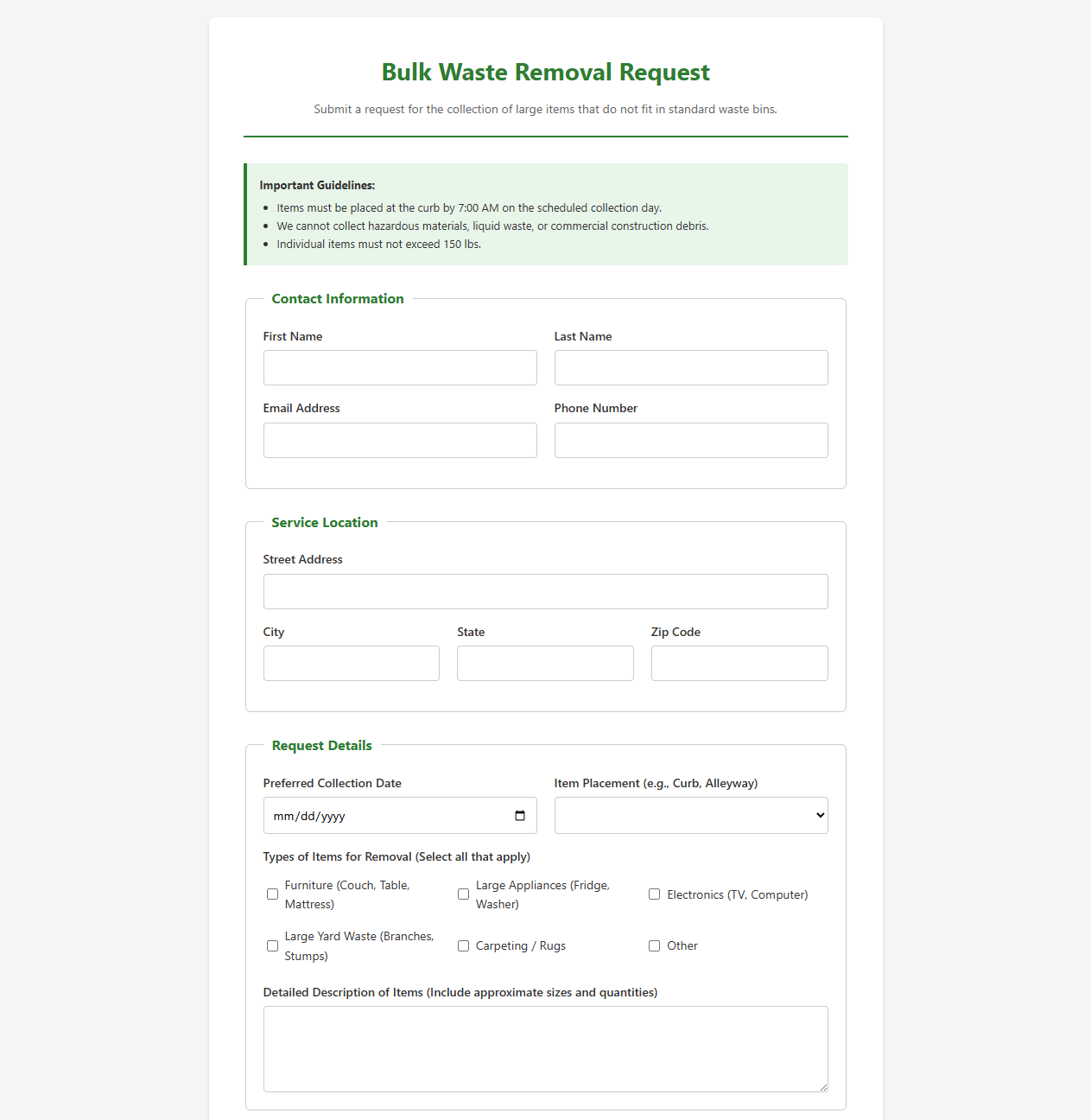 Download: .PDF
Hazardous Waste Disposal Policy Guidelines
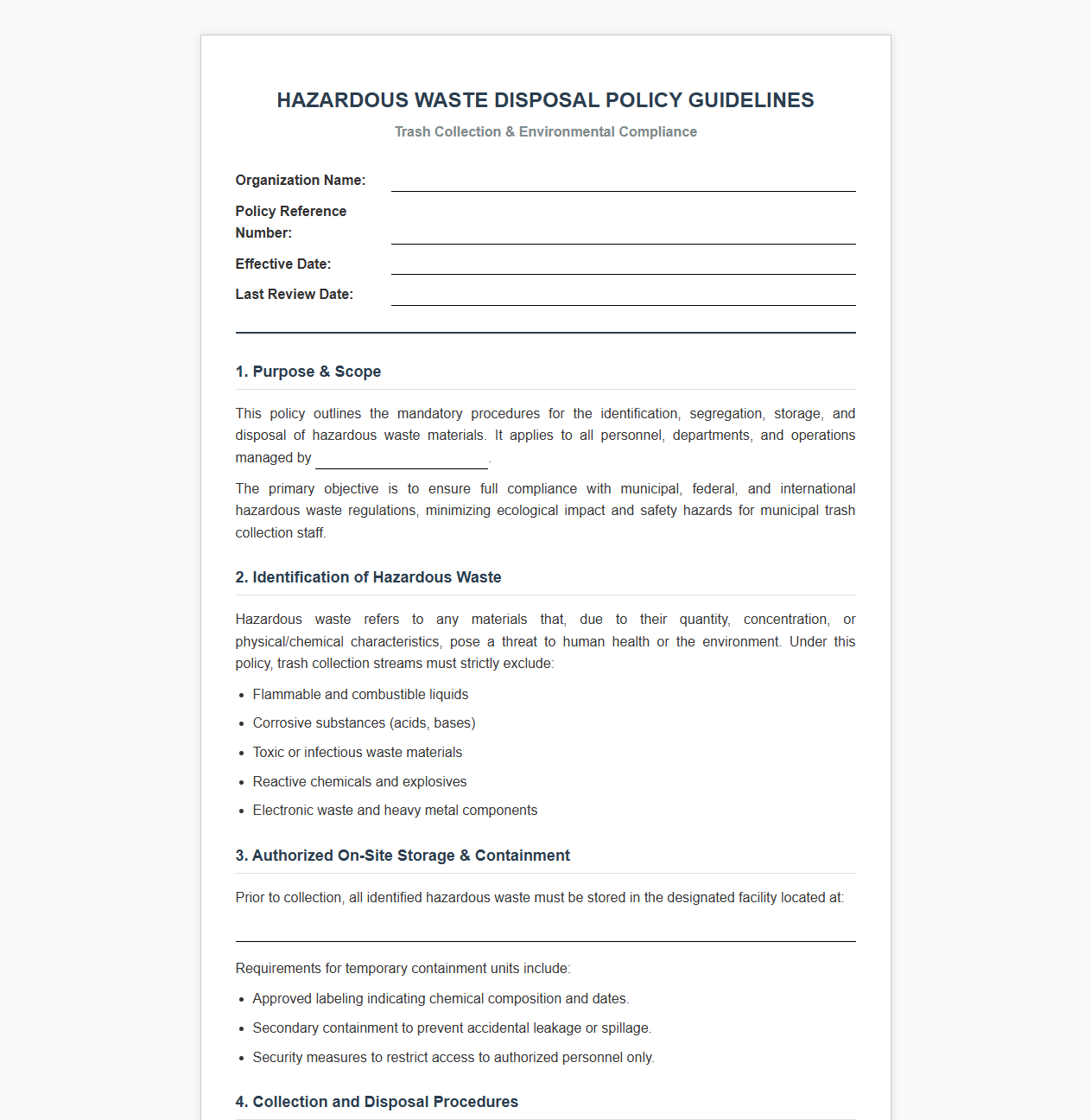 Download: .PDF
Holiday Trash Collection Notice Template
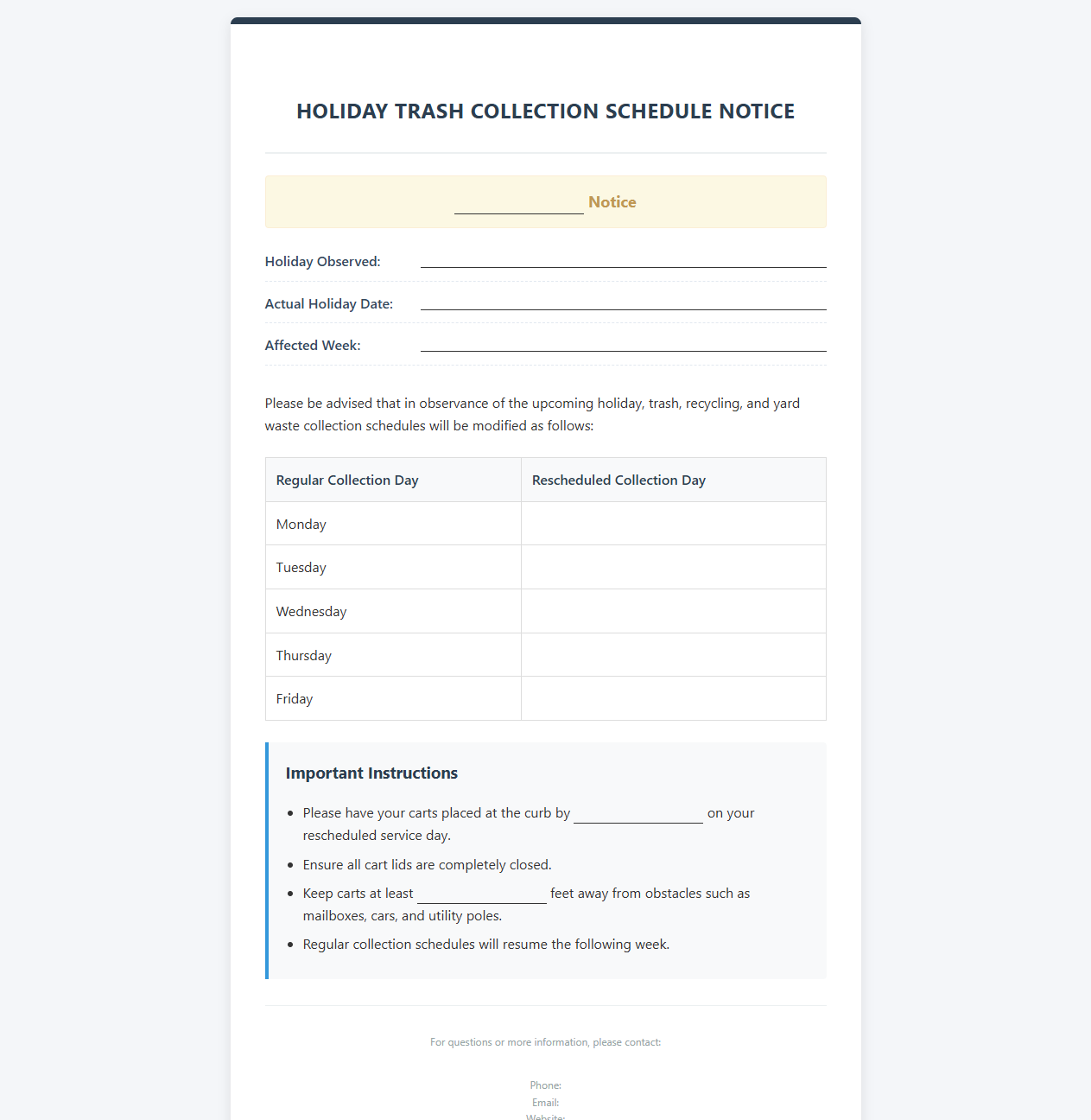 Download: .PDF
Commercial Waste Bin Rental Agreement
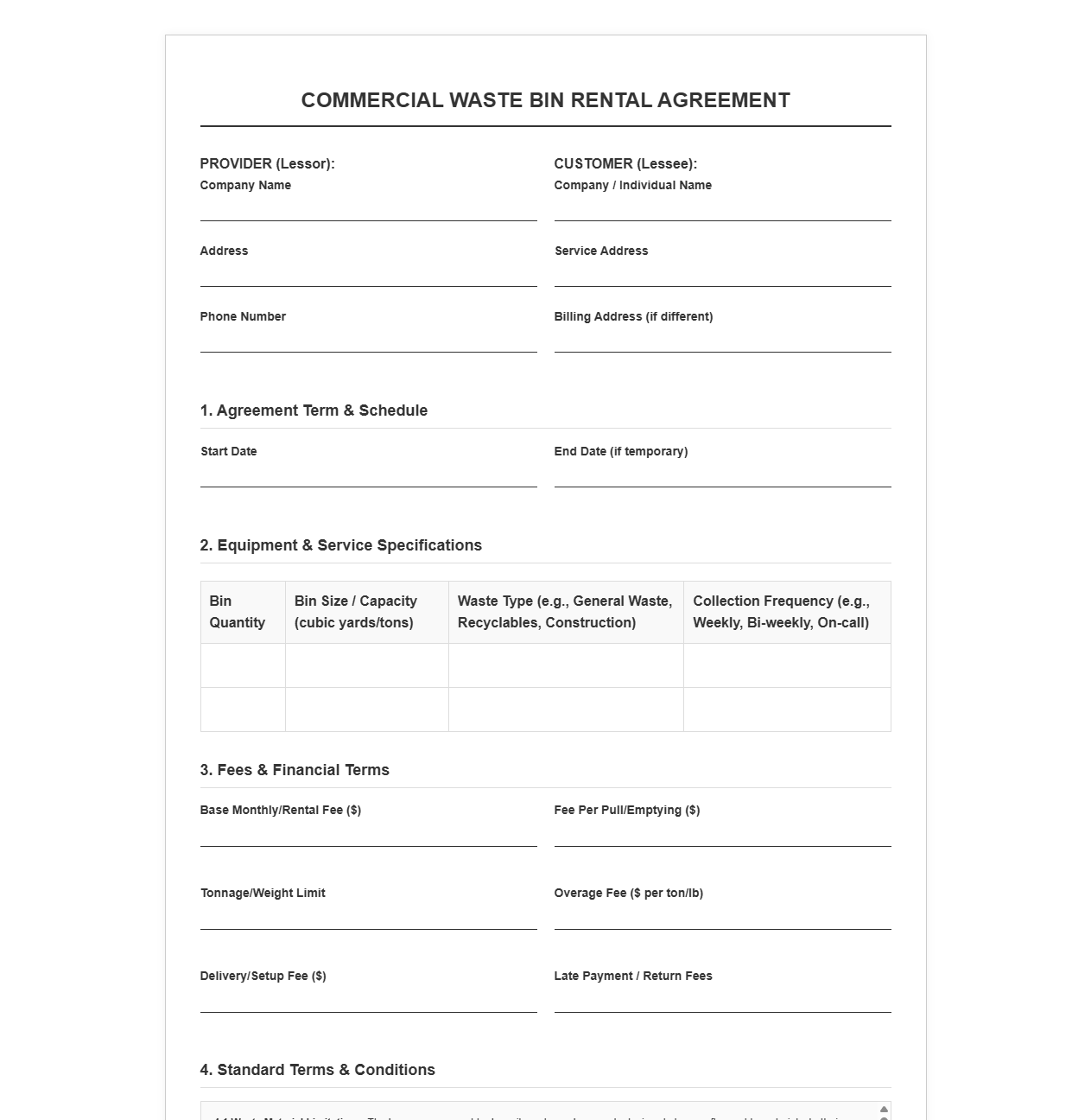 Download: .PDF
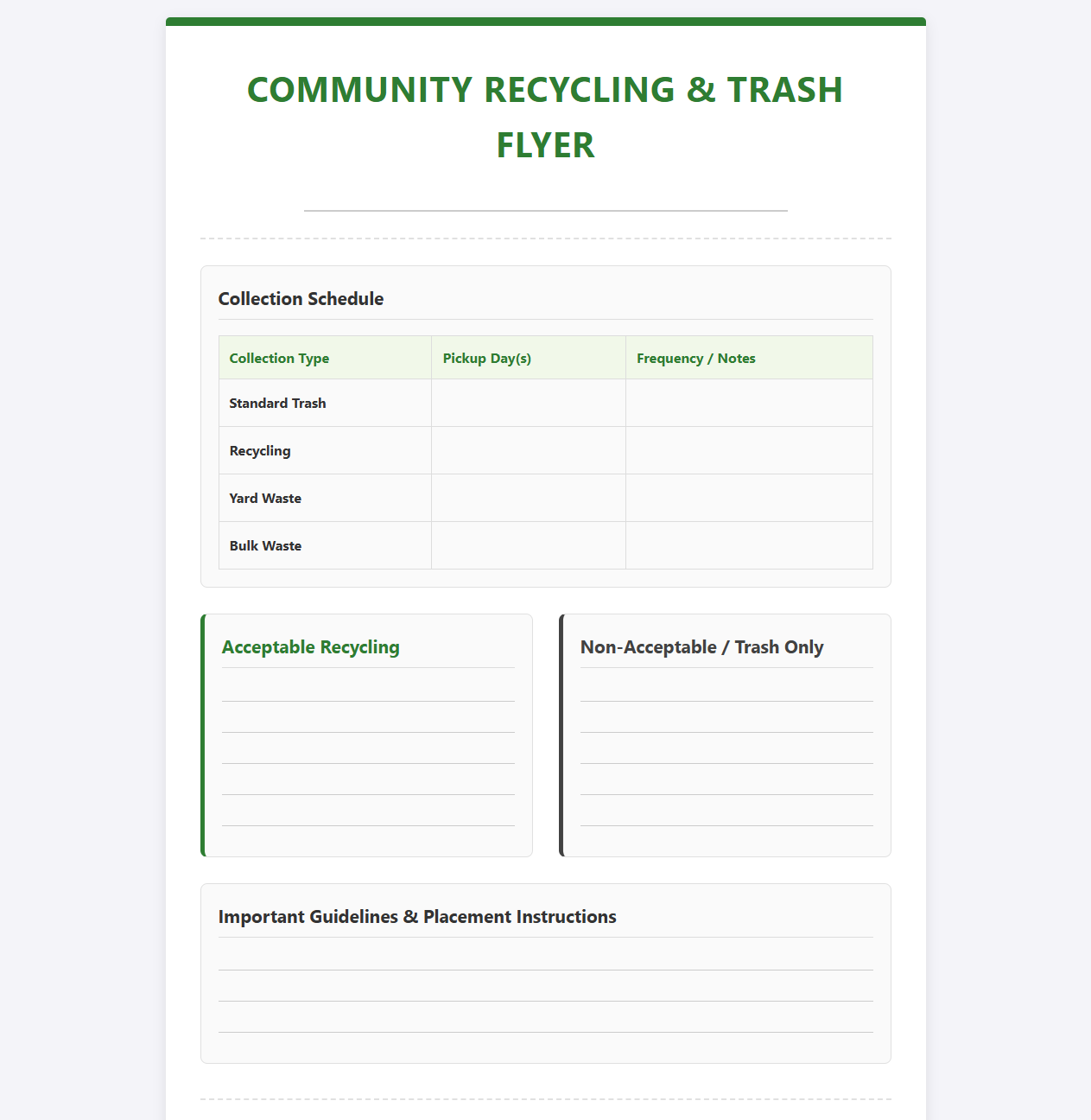
Community Recycling and Trash Flyer
 Download: .PDF
Assessing Current Waste Management Expenses
Managing operational costs requires a meticulous examination of utility and service expenses. Among these, waste disposal often remains an overlooked budget category. Businesses frequently accept rising invoices without examining the underlying metrics, leading to significant overspending. To regain control over these operational expenses, organizations must implement a rigorous audit of their current waste management contracts and monthly statements.
To identify where capital is being wasted, managers must carefully analyze key metrics on their statements. Tracking cost per cubic yard and the frequency of pick-ups allows businesses to determine if they are paying for air. Additionally, close attention must be paid to ancillary fees, such as fuel surcharges, environmental fees, and overage penalties. These line items are often negotiable or avoidable with proactive service adjustments.
The Waste Audit and Inventory Template
Daily Waste Production Log
Before renegotiating agreements or signing new contracts, you must establish an accurate baseline of your actual waste output. This template serves as a guide for operations teams to record the volume and type of waste generated daily. By monitoring these metrics, you can determine if your current container sizes and collection schedules match your actual business needs, preventing costly over-servicing.
| Date | Container Type | Capacity (Yards) | Fill Rate (%) | Primary Material |
|---|---|---|---|---|
| Monday | Front-Load Dumpster | 6 | 40% | Cardboard & Paper |
| Wednesday | Front-Load Dumpster | 6 | 50% | Mixed Waste |
| Friday | Front-Load Dumpster | 6 | 95% | Mixed Waste |
Standardized RFP Template for Waste Haulers
RFP Contextual Guidelines
When searching for a new waste management provider, relying on informal quotes often leads to inconsistent pricing and unfavorable contract terms. Utilizing a standardized Request for Proposal (RFP) ensures all participating haulers bid on identical parameters, making comparison straightforward and transparent. Use the checklist below to verify that your RFP document contains the necessary legal and operational clauses to protect your budget.
- Fixed Pricing Commitments: A clause restricting rate increases to a predetermined percentage or capping them to the Consumer Price Index (CPI).
- Detailed Ancillary Fee Breakdown: A requirement that the vendor explicitly state all potential surcharges, administrative fees, and environmental assessments.
- Right to Minimize Service: Provisions allowing the client to decrease container sizes or pickup frequencies without penalty during the contract term.
- Auto-Renewal Opt-Out: A clause eliminating automatic contract renewals, requiring written consent from both parties to extend the service agreement.
Waste Service Level Agreement (SLA) Framework
SLA Key Terms
A Service Level Agreement (SLA) establishes clear performance standards for your waste vendor, converting verbal agreements into enforceable operational mandates. If a provider fails to meet these obligations, the SLA provides a clear path for remediation or financial compensation. The following framework outlines the critical sequential terms and enforcement steps to include in your agreements.
- Pickup Schedule Compliance: The provider must execute collections within a specific four-hour window on scheduled days, maintaining a 98% on-time rate.
- Container Maintenance: The hauler is responsible for repairing or replacing damaged lids, wheels, and structural components within 48 hours of notification.
- Missed Collection Penalties: If a scheduled pickup is missed without prior notice, the provider must issue a credit equal to twice the cost of the missed service.
Monthly Expense and Ancillary Fee Tracker
Ancillary Fee Log
Haulers frequently add variable charges to monthly invoices that can quickly inflate overall expenditures. This tracking template is designed to help accounting teams monitor these micro-transactions over time. By inputting monthly invoice figures into a centralized format, you can spot spikes in non-base fees and address them directly with your account representative.
| Billing Month | Base Service Cost | Fuel Surcharges | Environmental Fees | Overage Fees | Total Invoiced |
|---|---|---|---|---|---|
| January | $450.00 | $45.00 | $22.00 | $0.00 | $517.00 |
| February | $450.00 | $48.50 | $22.00 | $75.00 | $595.50 |
| March | $450.00 | $42.00 | $22.00 | $0.00 | $514.00 |
Employee Waste Reduction and Recycling Policy Template
Internal Policy
Minimizing waste disposal costs requires more than just contract negotiation; it demands a reduction in the volume of waste destined for landfills. Implementing a clear, company-wide recycling and composting initiative can dramatically decrease pull-charges and contamination penalties. The template below can be adopted and distributed to establish these practices as standard workplace policy.
Workplace Zero-Waste Initiative Policy Statement: We are committed to reducing our environmental impact and operational waste expenses. All employees are required to segregate clean cardboard, paper, aluminum, and clean plastics into designated blue recycling bins. Organic waste and food scraps must be placed in the green composting receptacles located in break areas. Under no circumstances should non-recyclable materials be disposed of in recycling bins, as this leads to contamination penalties from our service providers.
Implementing Cost Control Templates for Long-Term Savings
Achieving sustained reductions in waste management expenditures requires converting these templates into continuous operational habits. Organizations should assign ownership of the monthly expense tracker to the accounting department and task facility managers with conducting the waste audit twice per year. Consistent application of these protocols ensures that services adapt to changing production levels, protecting your bottom line from unnecessary fees.
To begin auditing your current vendor relationships and monitoring your facilities' waste output, you can download the complete suite of resources. Access our Waste Cost Control Template Bundle to streamline your audit, track monthly fees, and standardize your future RFPs.
Leave a comment