

Commercial contractors and subcontractors constantly battle delayed payments and choked cash flow, often waiting 60 to 90 days to resolve a single billing cycle. This financial friction rarely stems from a lack of project funding; rather, it is rooted in the complex, highly scrutinized documentation required by developers and institutional lenders.
Optimizing this administrative bottleneck through specialized billing templates-specifically those featuring integrated Schedules of Values (SOV) and conditional lien waivers-grants finance teams the leverage to drastically reduce invoice rejection rates and accelerate approvals. However, utilizing these templates requires a critical caveat: document structures must align precisely with underlying contract retainage terms and local statutory compliance rules to remain effective.
This article will examine how to design these high-performing invoice templates, integrate critical compliance checkpoints, and establish billing workflows that predictably unlock working capital.
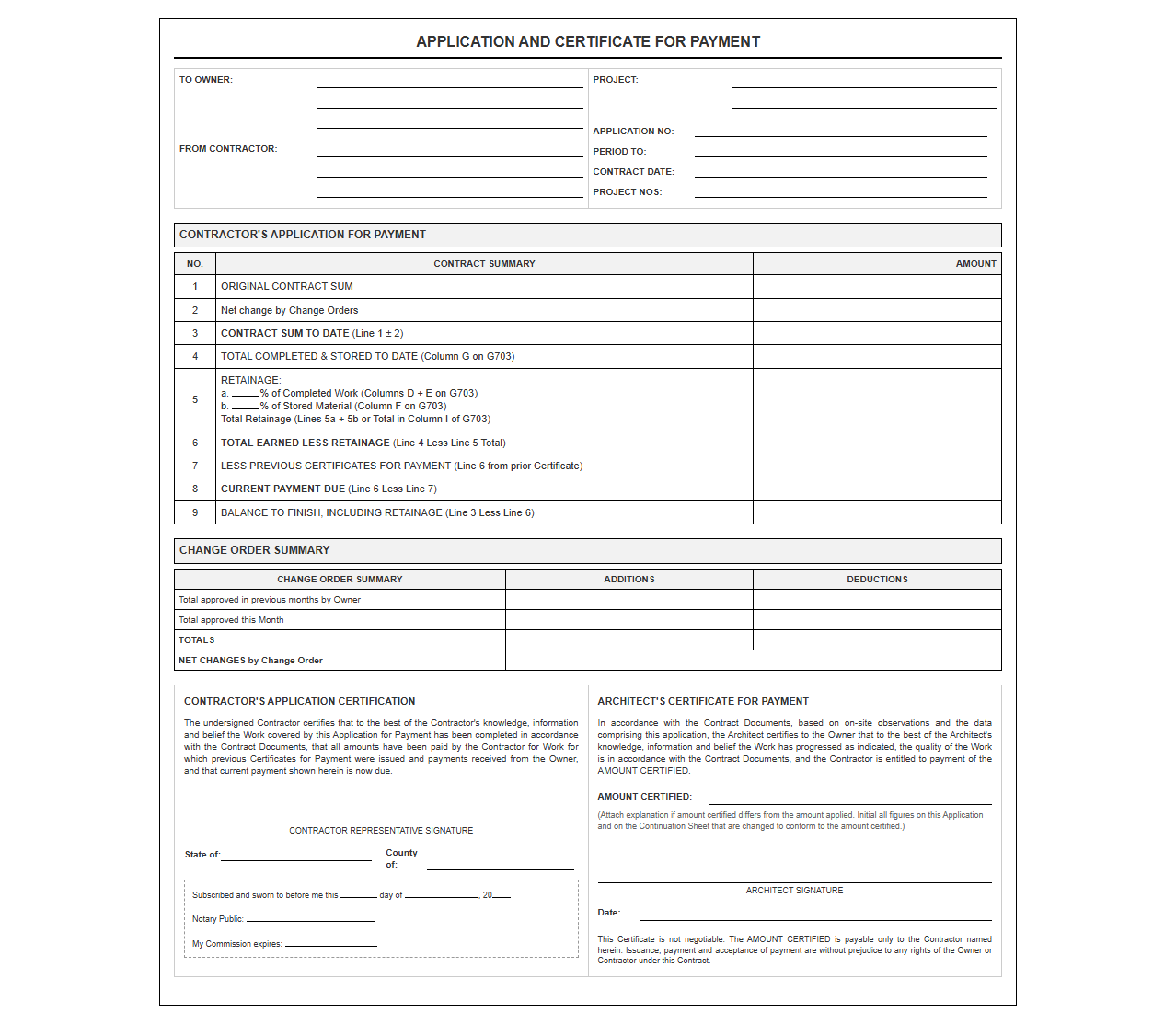
AIA Style Commercial Construction Progress Billing Invoice
 Download: .PDF
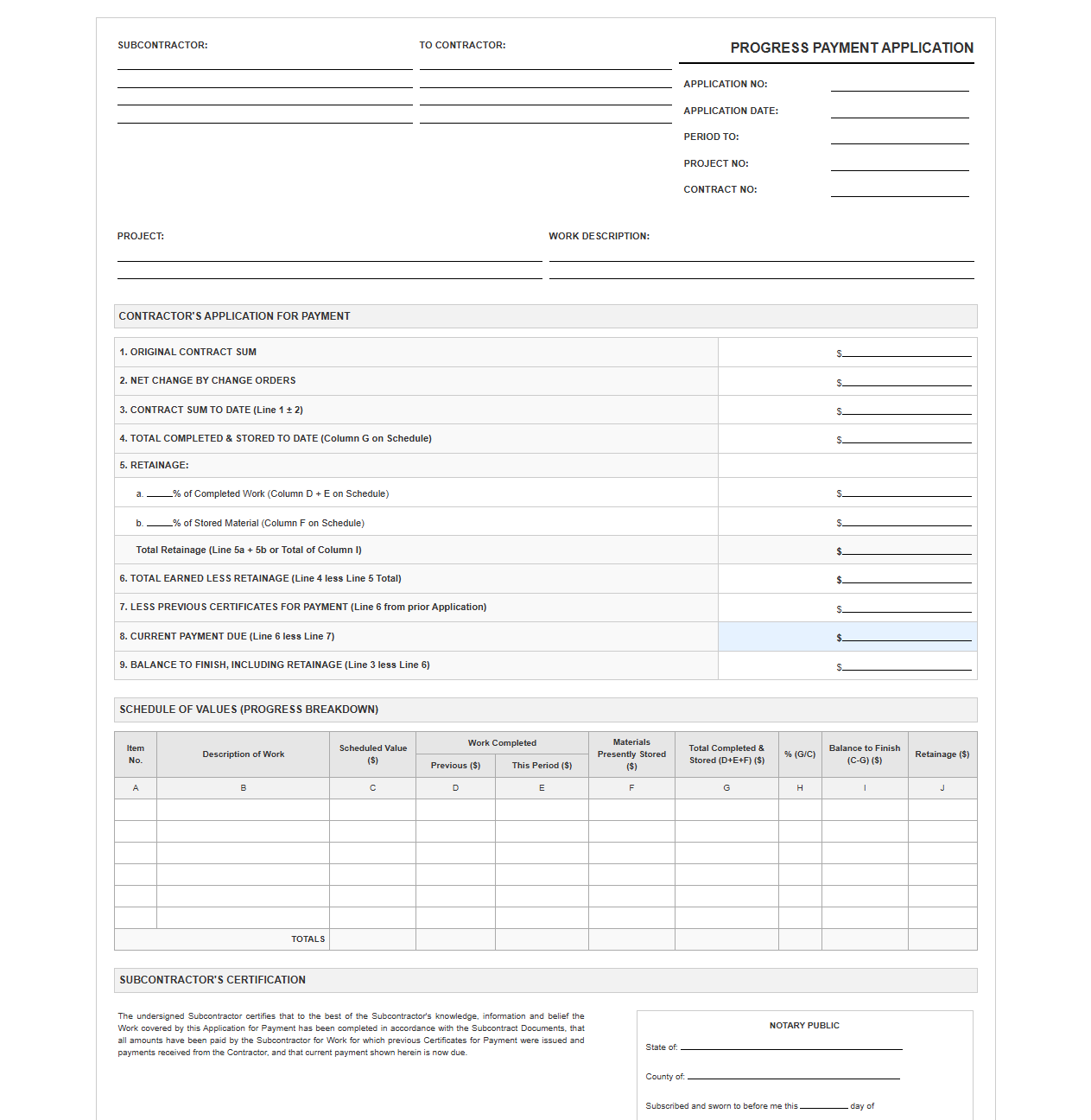
Commercial Subcontractor Progress Payment Invoice Template
 Download: .PDF
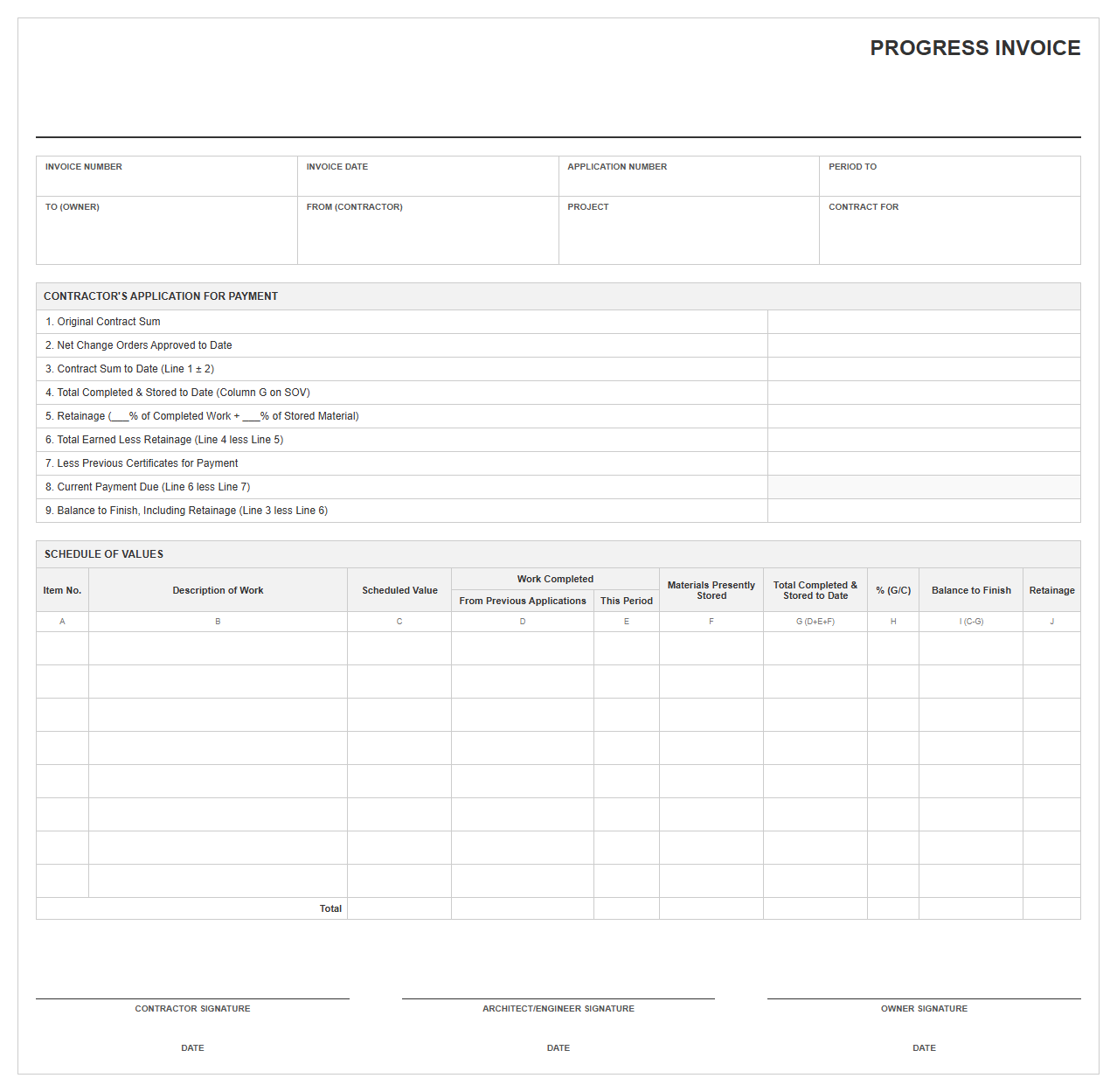
Schedule of Values Commercial Construction Invoice
 Download: .PDF
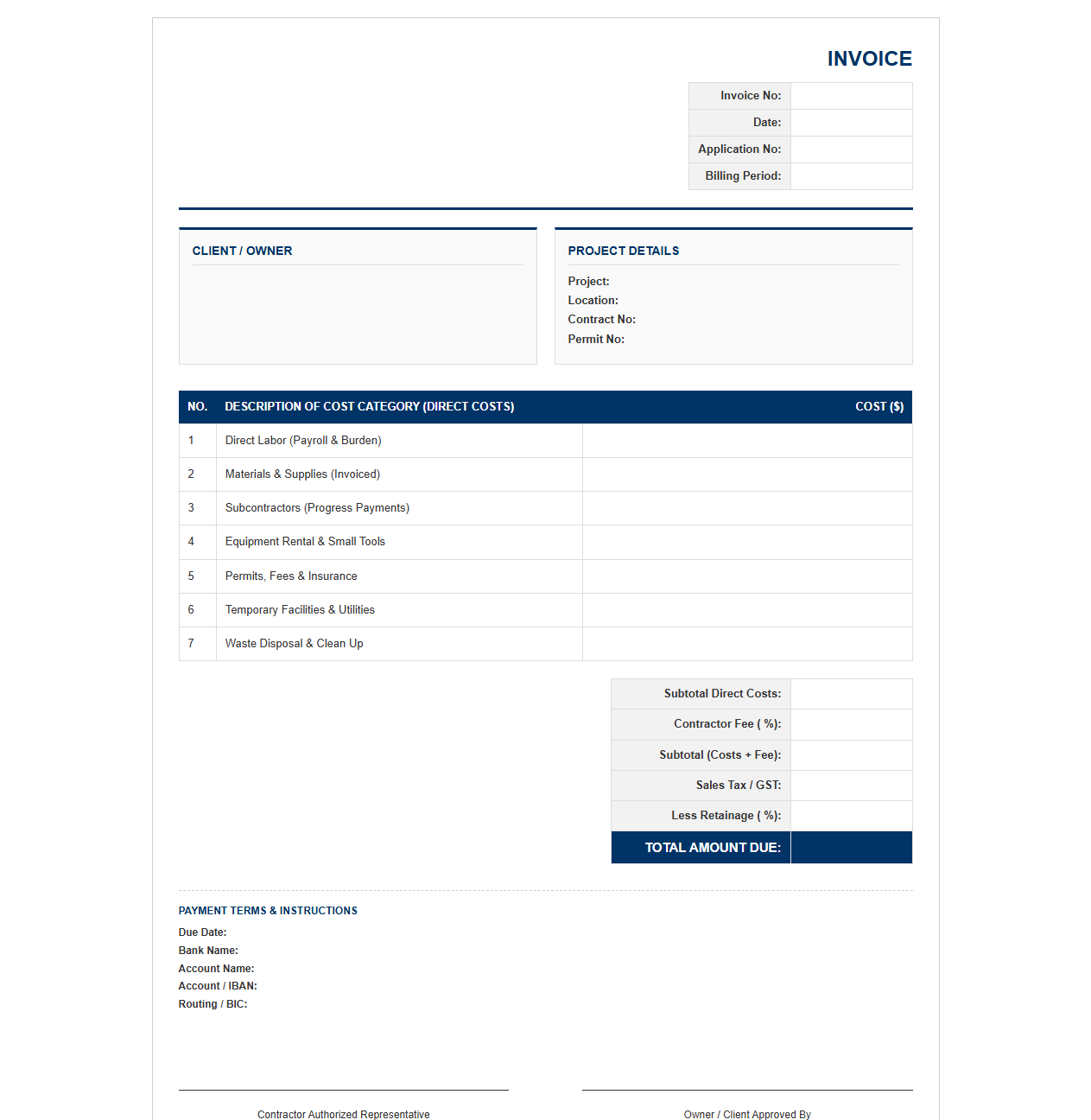
Commercial Construction Cost Plus Fee Invoice Template
 Download: .PDF
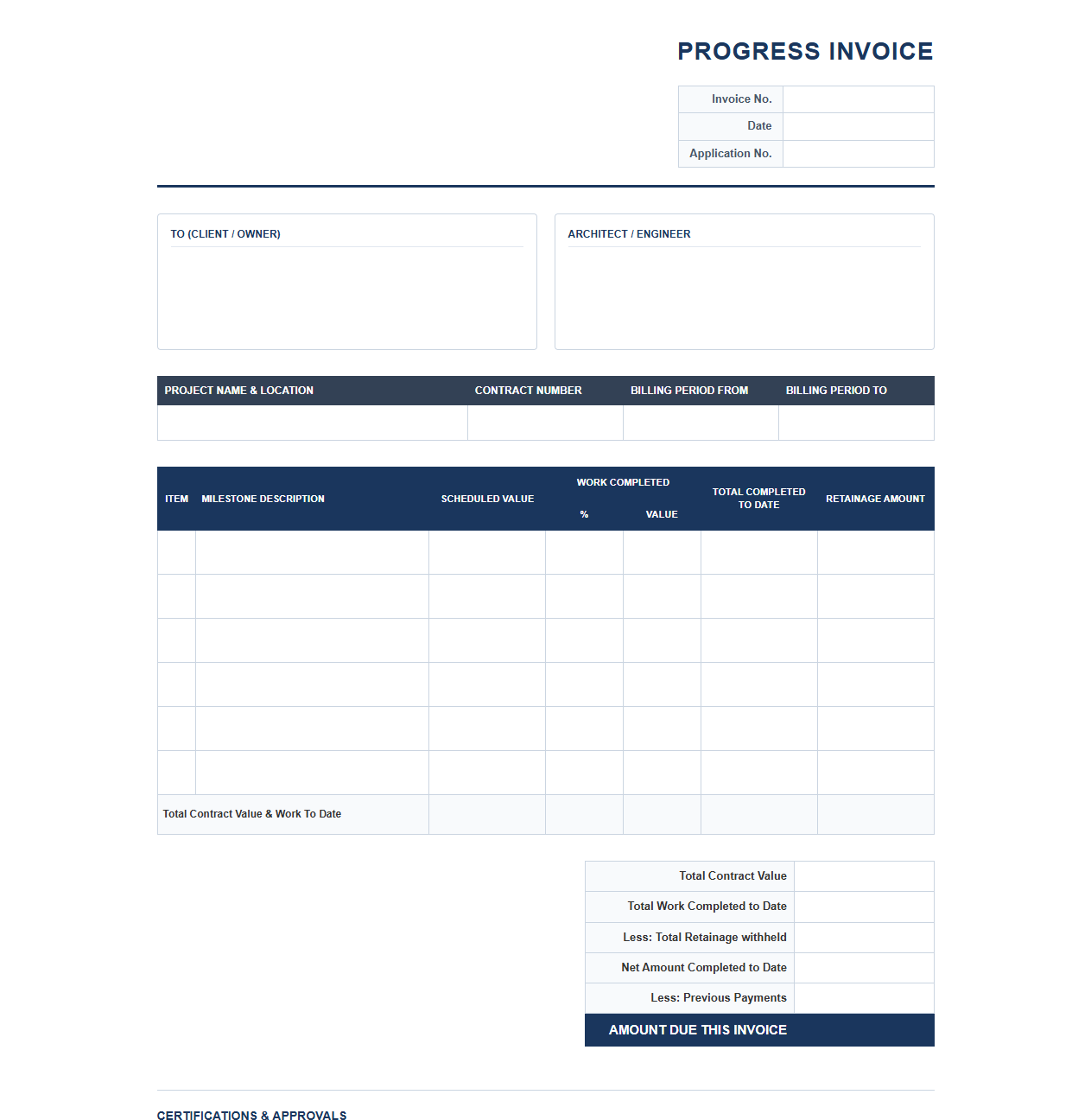
Commercial Construction Milestone Billing Invoice Template
 Download: .PDF
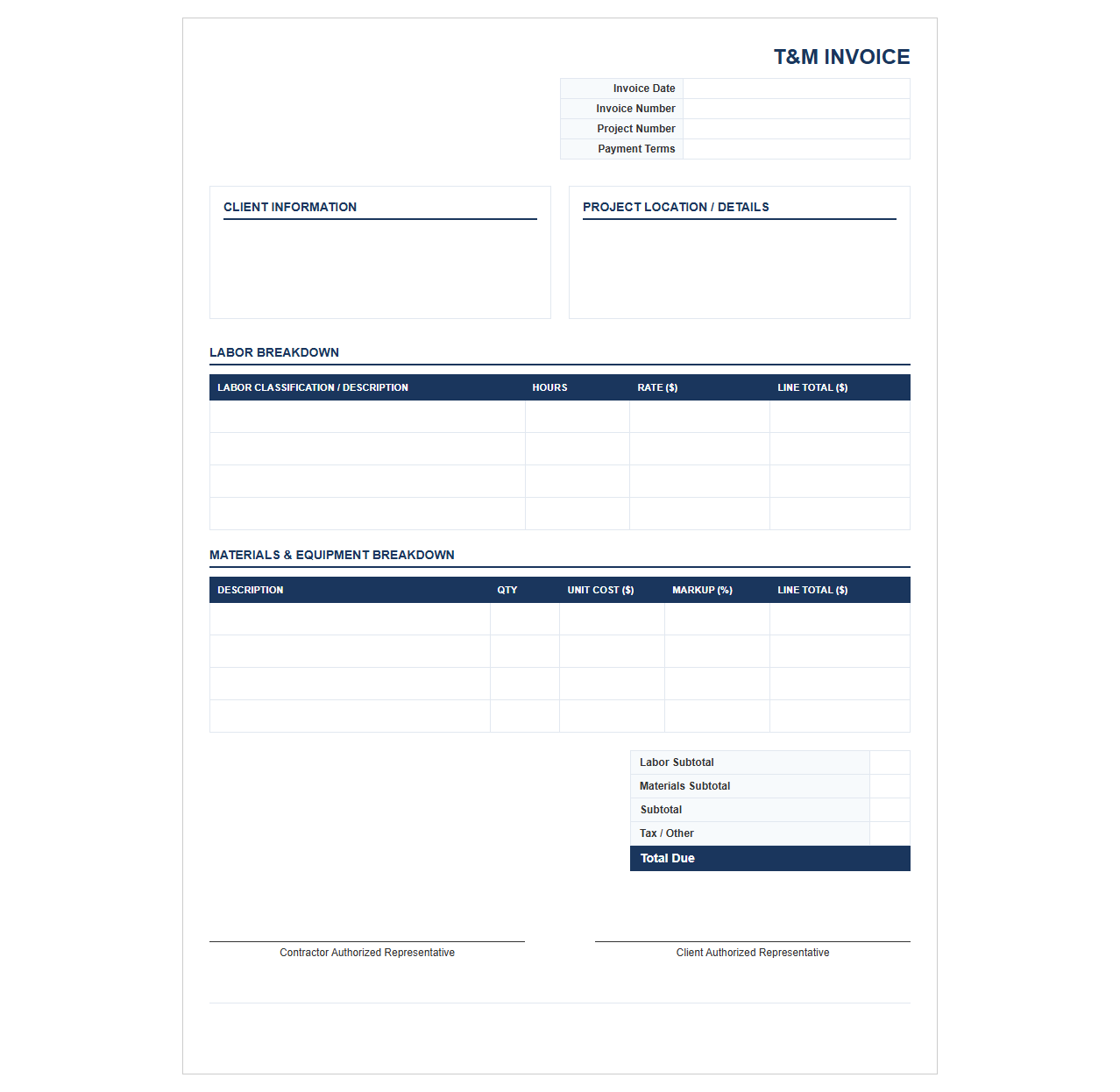
Time and Materials Commercial Construction Invoice
 Download: .PDF
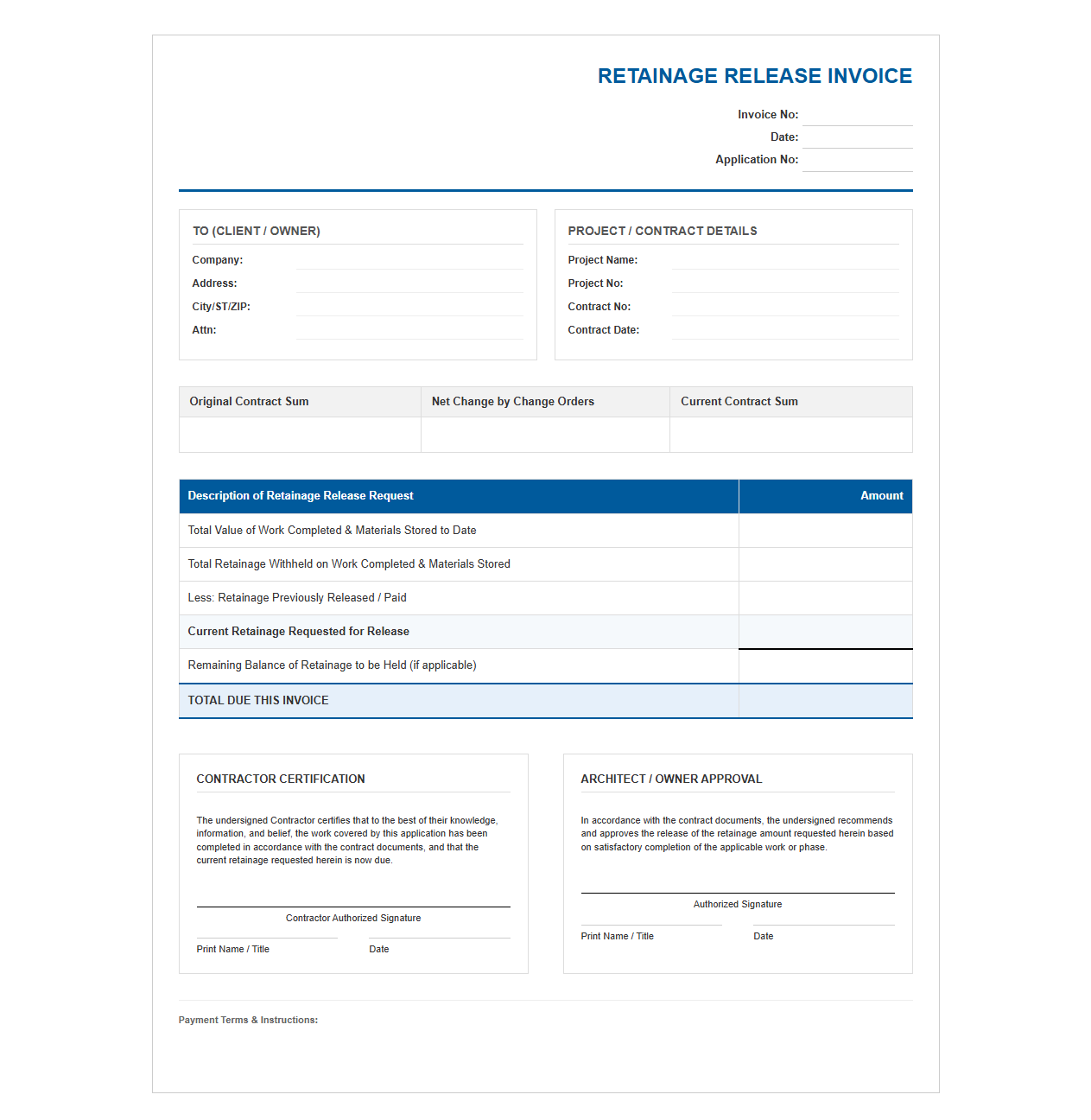
Commercial Construction Retainage Release Invoice Template
 Download: .PDF
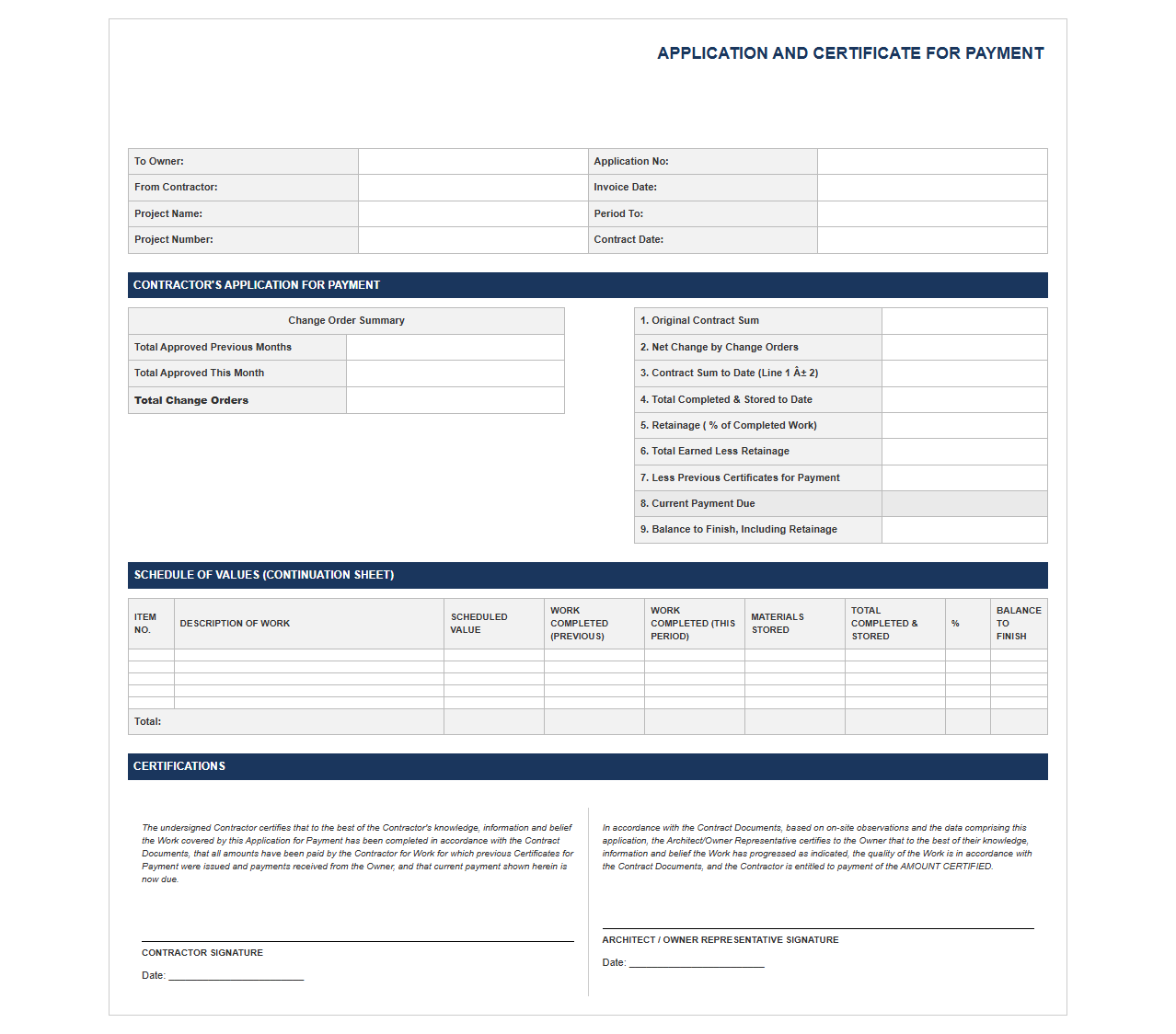
General Contractor Commercial Project Billing Invoice
 Download: .PDF
Introduction: The Critical Role of Cash Flow in Commercial Construction
In the commercial construction sector, managing cash flow is a constant balancing act. Subcontractors and general contractors frequently face high upfront costs for materials, specialized equipment, and skilled labor long before the first payment arrives. Coupled with industry-standard payment cycles that often stretch from 60 to 90 days, cash flow bottlenecks can stall project momentum and threaten business viability. To bridge this gap, construction firms must move away from generic billing practices and adopt specialized invoicing. Tailored construction templates serve as a critical mechanism to communicate progress clearly, satisfy complex contractual requirements, and secure the steady capital flow needed to keep jobsites moving.
Why Standard Invoices Fail in Commercial Subcontracting
Generic, off-the-shelf invoice templates simply cannot support the intricacies of commercial construction accounting. Standard billing tools assume a straightforward exchange of goods or services for a flat fee. However, construction projects rely on multi-layered financial frameworks. Standard invoices fail because they lack built-in mechanisms to track retainage-the percentage of payments withheld until final project completion. Furthermore, they cannot easily integrate a Schedule of Values (SOV), leaving project managers and developers without the detailed breakdown of work phases required to verify billing accuracy. When subcontractors use basic invoices, they risk delayed approvals, payment disputes, and administrative friction that stalls funding.
Essential Anatomy of a High-Performing Construction Invoice Template
A highly functional construction invoice must serve as a comprehensive financial snapshot of the project's current status. To ensure prompt processing by general contractors and owners, the invoice template should systematically include several industry-specific data points:
- Unique Project and Phase Codes: Clearly aligning each billed item with specific job numbers and cost codes to facilitate easy tracking.
- Detailed Change Order Log: Documenting approved modifications to the original contract scope, preventing confusion over updated totals.
- Retainage Calculations: Explicitly showing the current retention percentage withheld, cumulative retained amounts, and net payments due.
- Lien Waiver Status: Indicating whether conditional or unconditional lien waivers are attached to release funds for the current billing cycle.
Aligning Invoice Templates with Progress Billing and AIA Standards
Commercial construction frequently utilizes progress billing, where contractors invoice based on the percentage of work completed during a specific timeframe. To maintain consistency across the industry, invoicing templates should align with standard American Institute of Architects (AIA) formats, specifically the G702 and G703 documents. This structured alignment ensures that both the architect and the owner can quickly cross-reference the claimed progress with physical site milestones.
Progress billing, particularly when structured around AIA standards, requires a continuous reconciliation of the total contract sum, previous applications, work completed this period, materials presently stored on-site, and the remaining balance to finish the project.
Streamlining the Approval Process: Supporting Documentation and Lien Waivers
The primary cause of delayed payments in commercial construction is incomplete or unverified billing packages. When a client receives an invoice, they must verify that the work has actually been performed to the specified standards before releasing funds. By embedding supporting documentation-such as updated Schedule of Values sheets, daily progress logs, photo verification, and conditional lien waivers-directly into your invoice package, you eliminate the back-and-forth communication that drags down approval timelines.
Digital Transformation: Automating Templates for Faster Payouts
Relying on static PDF or manual Excel templates introduces human error and administrative lag. Modern construction firms are transitioning to dynamic, cloud-based invoicing software that integrates directly with their project management and accounting systems. This digital transformation allows for real-time data syncing, automatically pulling figures from the field to populate complex billing fields without manual entry. For example, instead of manually calculating retention, smart systems utilize predefined data fields like {retainage_rate_percent} and {cumulative_completed_work} to generate mathematically precise, error-free applications in seconds.
Actionable Steps to Optimize Your Invoicing Workflow Today
Optimizing your billing process does not require a complete overhaul of your accounting department overnight. Implementing targeted, incremental upgrades to your templates and workflow will yield immediate improvements in processing speed and cash flow health. Follow this practical checklist to refine your invoicing system:
- Audit your current invoice templates to ensure they include dedicated fields for project codes, change orders, and retainage.
- Standardize your Schedule of Values (SOV) format to match the line items in your primary commercial contracts.
- Establish a firm policy requiring conditional lien waivers to be generated and attached automatically with every progress invoice submission.
- Review your software stack and identify opportunities to sync site progress data directly with your billing platform to eliminate double data entry.
- Train your project managers and billing administrators on AIA standards to ensure consistent formatting and reduce external rejection rates.

Leave a comment