
Dispute resolution practitioners and mediation firms frequently struggle with administrative friction, particularly when navigating inconsistent billing formats that lead to delayed client payments and protracted disputes over fees. Before investing in expensive billing software, practice managers must first establish a unified structural baseline for their financial communications. Implementing a standardized invoice format grants firms immediate transparency, drastically reducing billing inquiries and accelerating the path to collection.
To manage expectations, we must stipulate that standardization is not a substitute for detailed narrative descriptions, especially in complex, multi-party disputes. For instance, clearly segregating "pre-mediation document review" from "joint session facilitation hours" provides the precise evidentiary proof clients require for prompt approval. Below, we examine the core components of standardized mediation invoicing, outline best practices for implementation, and provide customizable templates to optimize your firm's revenue cycle.
Mediation Services Billing Invoice Template
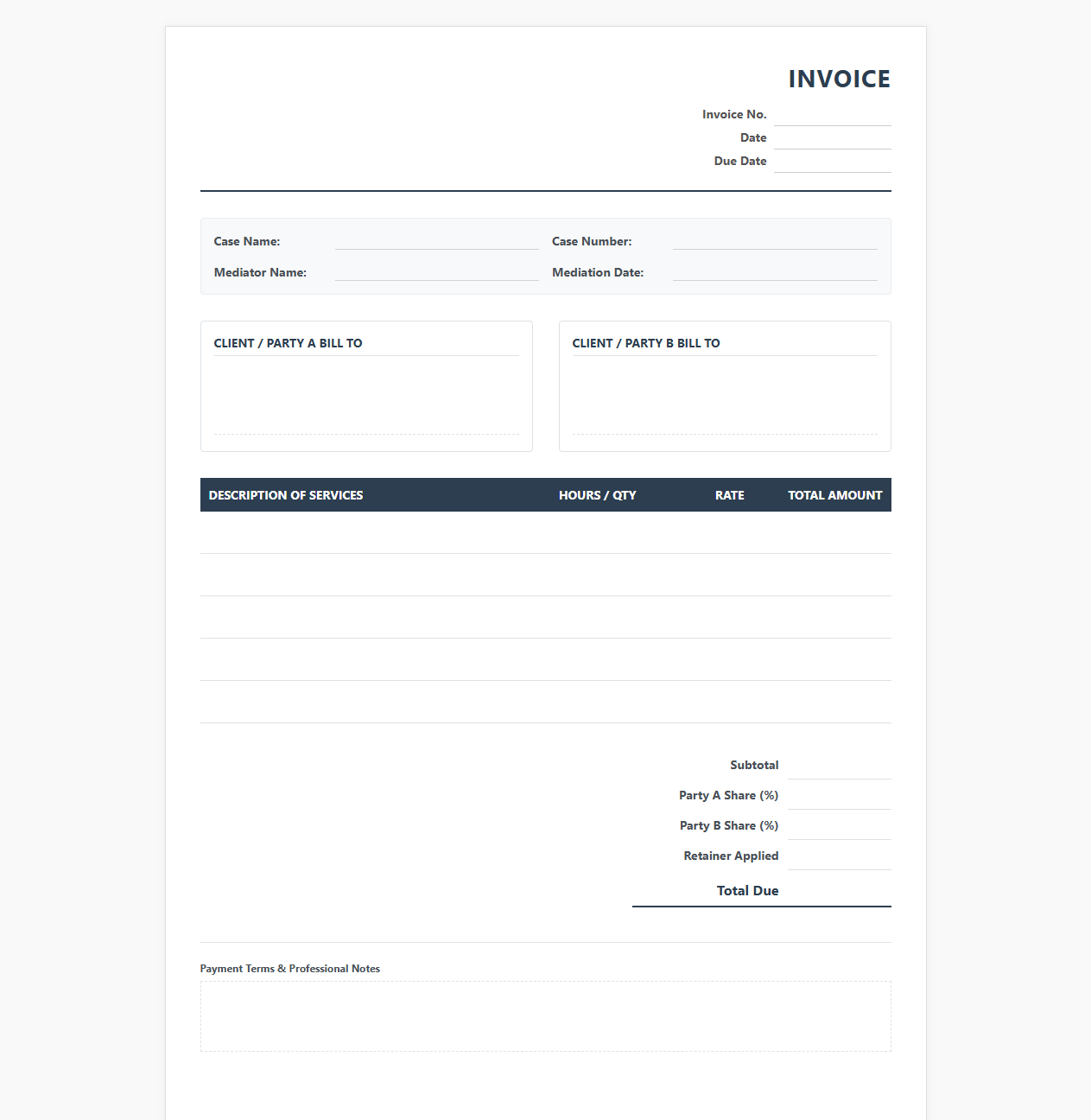 Download: .PDF
Professional Mediator Hourly Rate Invoice Form
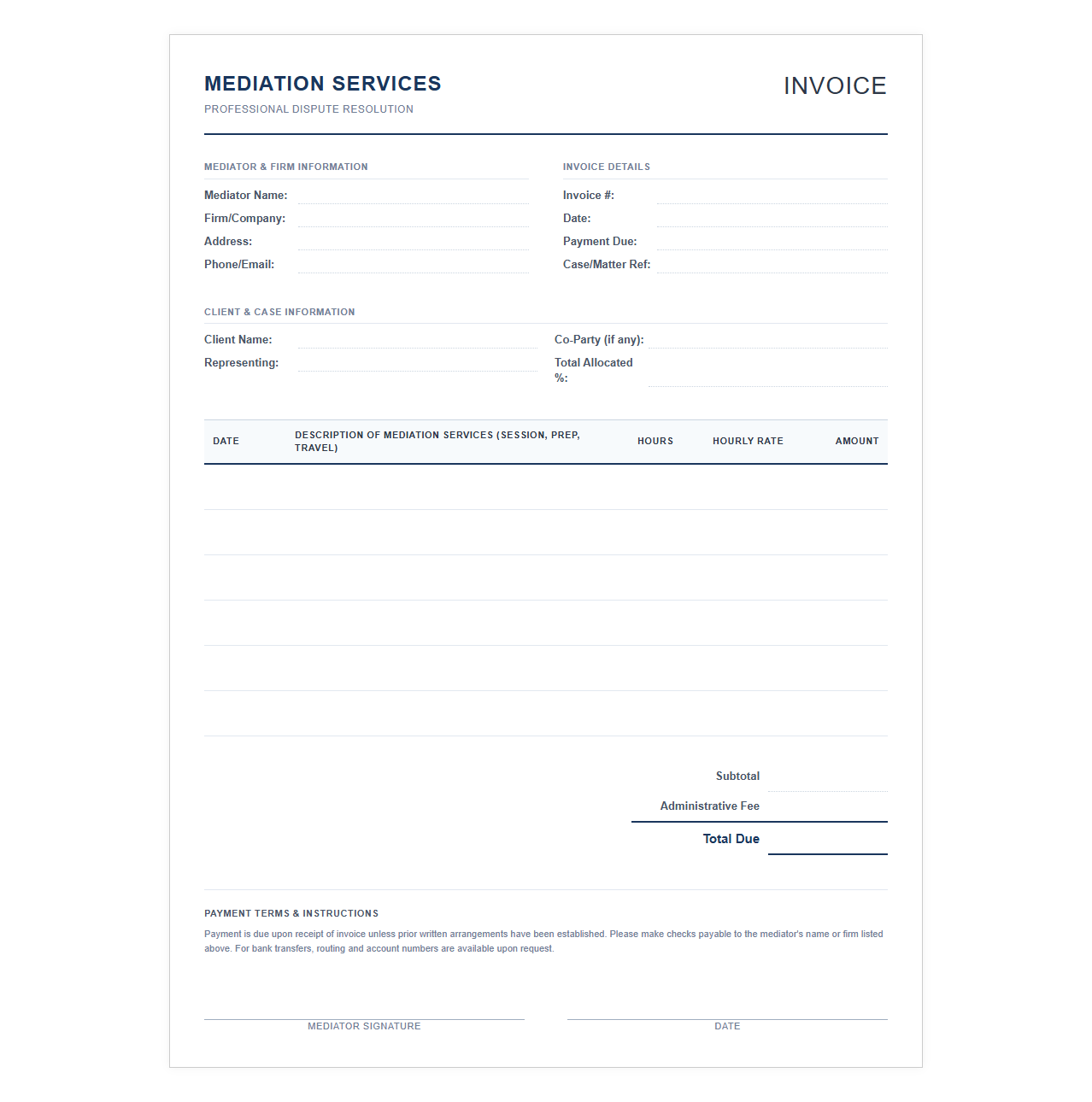 Download: .PDF
Dispute Resolution Session Billing Statement
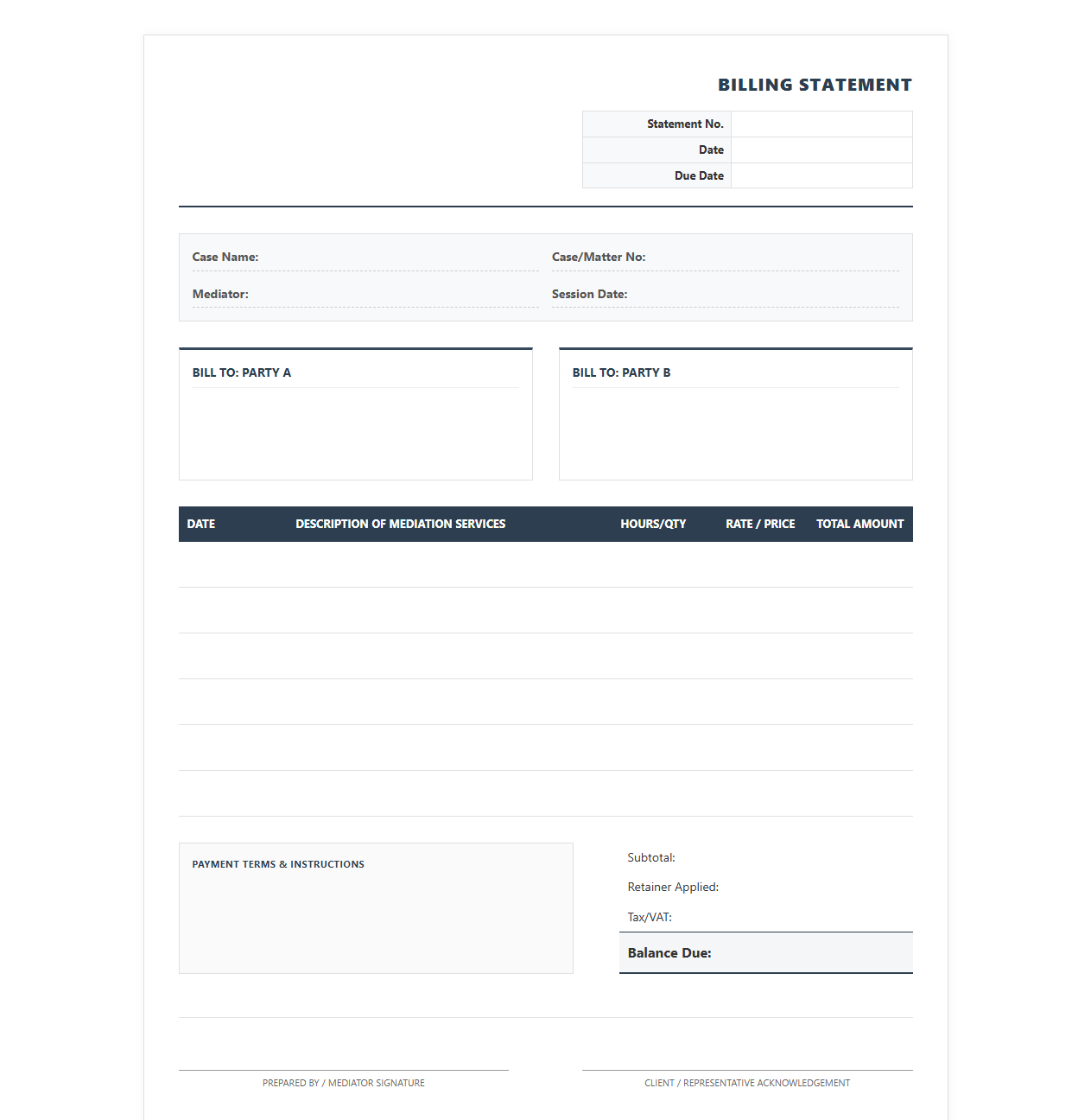 Download: .PDF
Family Mediation Services Invoice Template
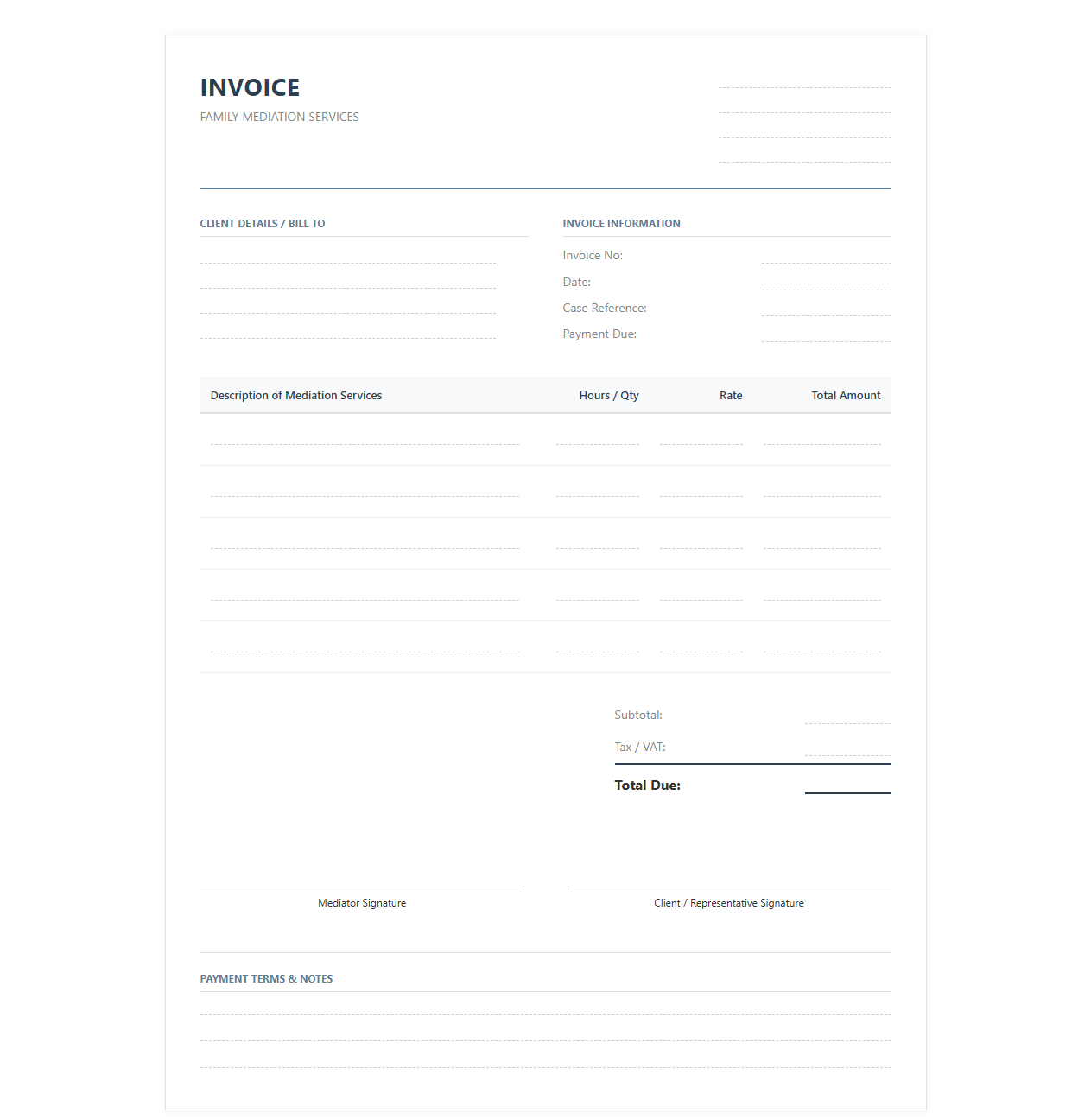 Download: .PDF
Corporate Mediation and Arbitration Invoice Document
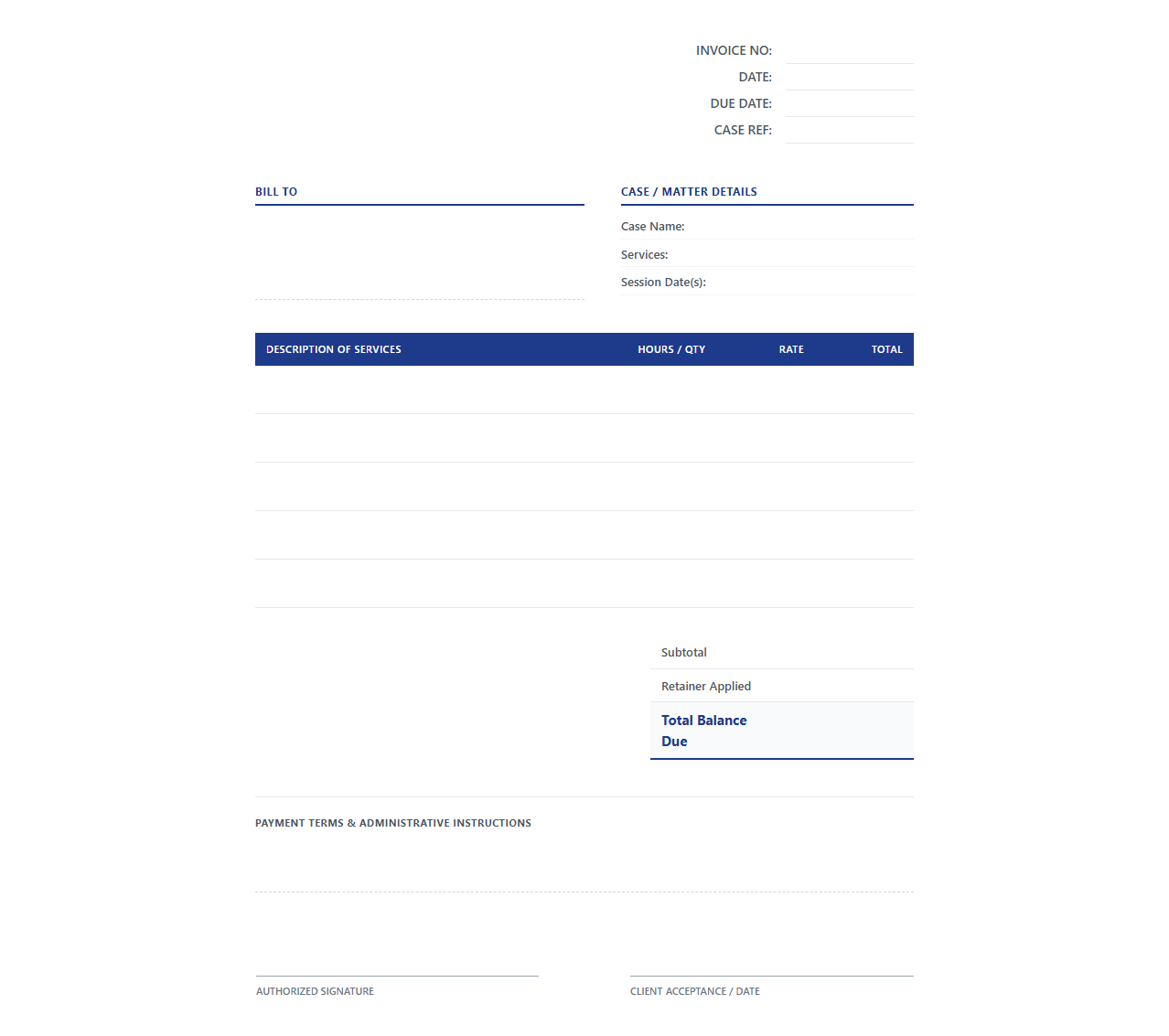 Download: .PDF
Legal Mediation Consultant Fee Invoice
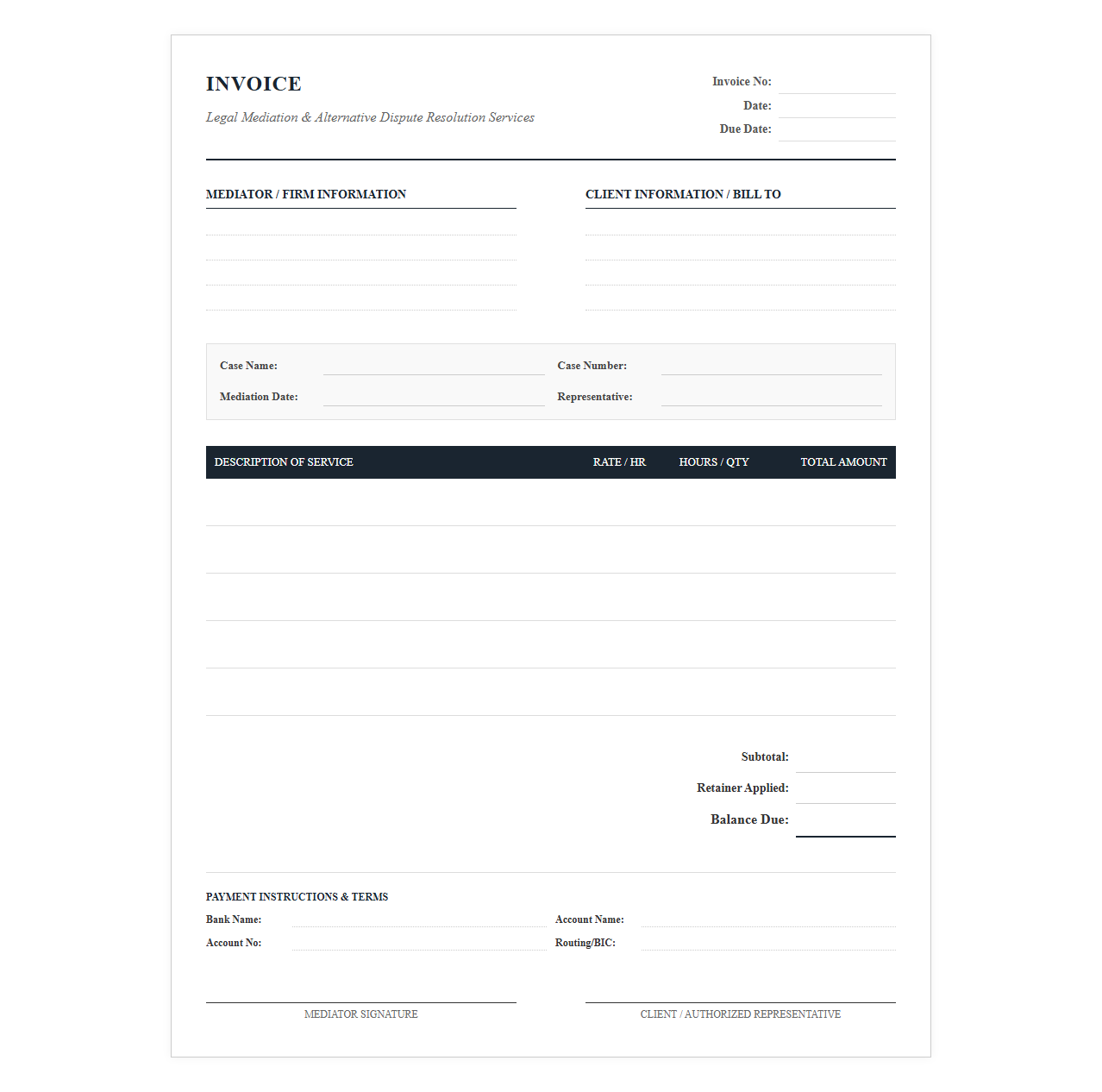 Download: .PDF
Conflict Resolution Services Invoice Template
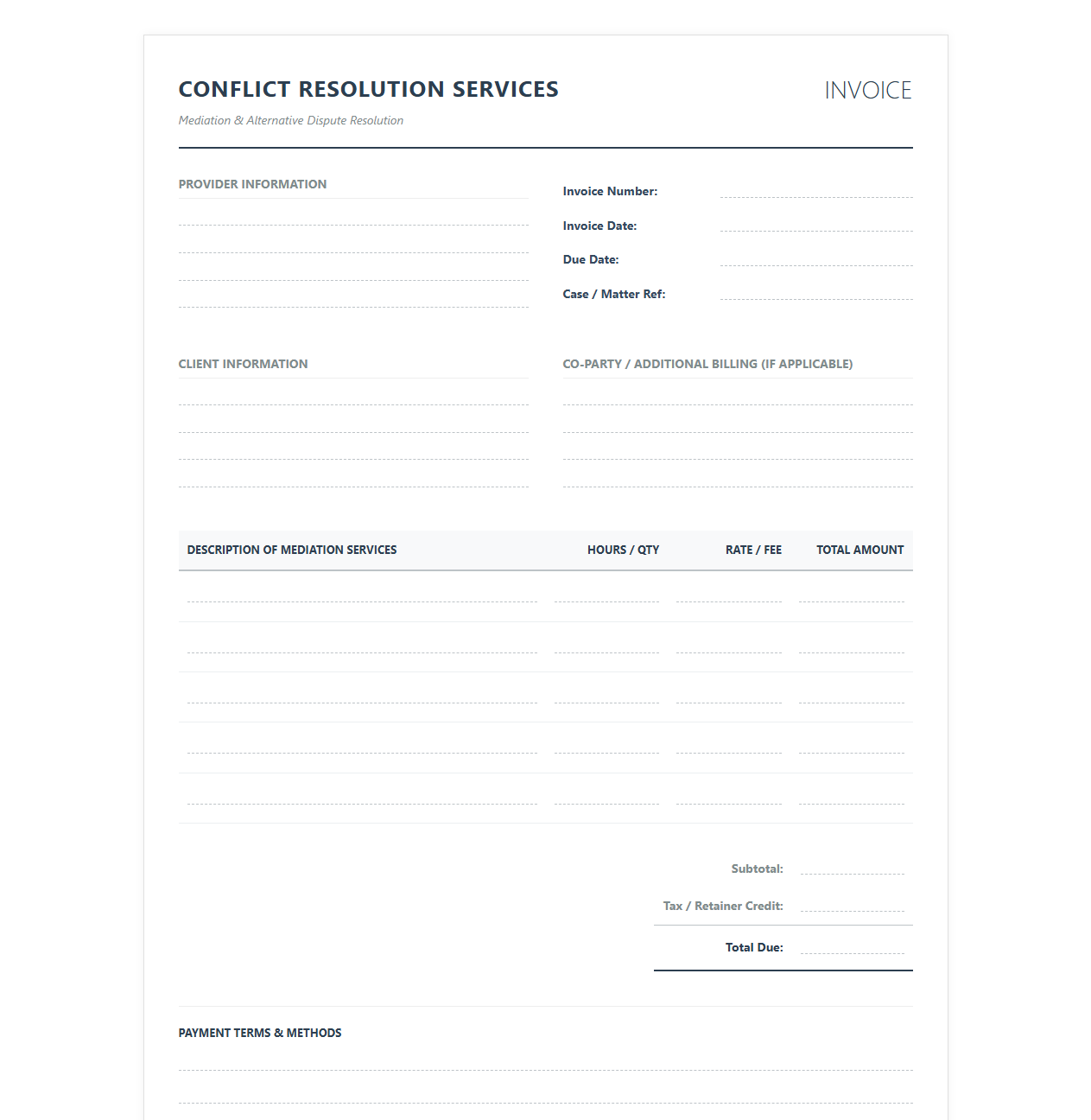 Download: .PDF
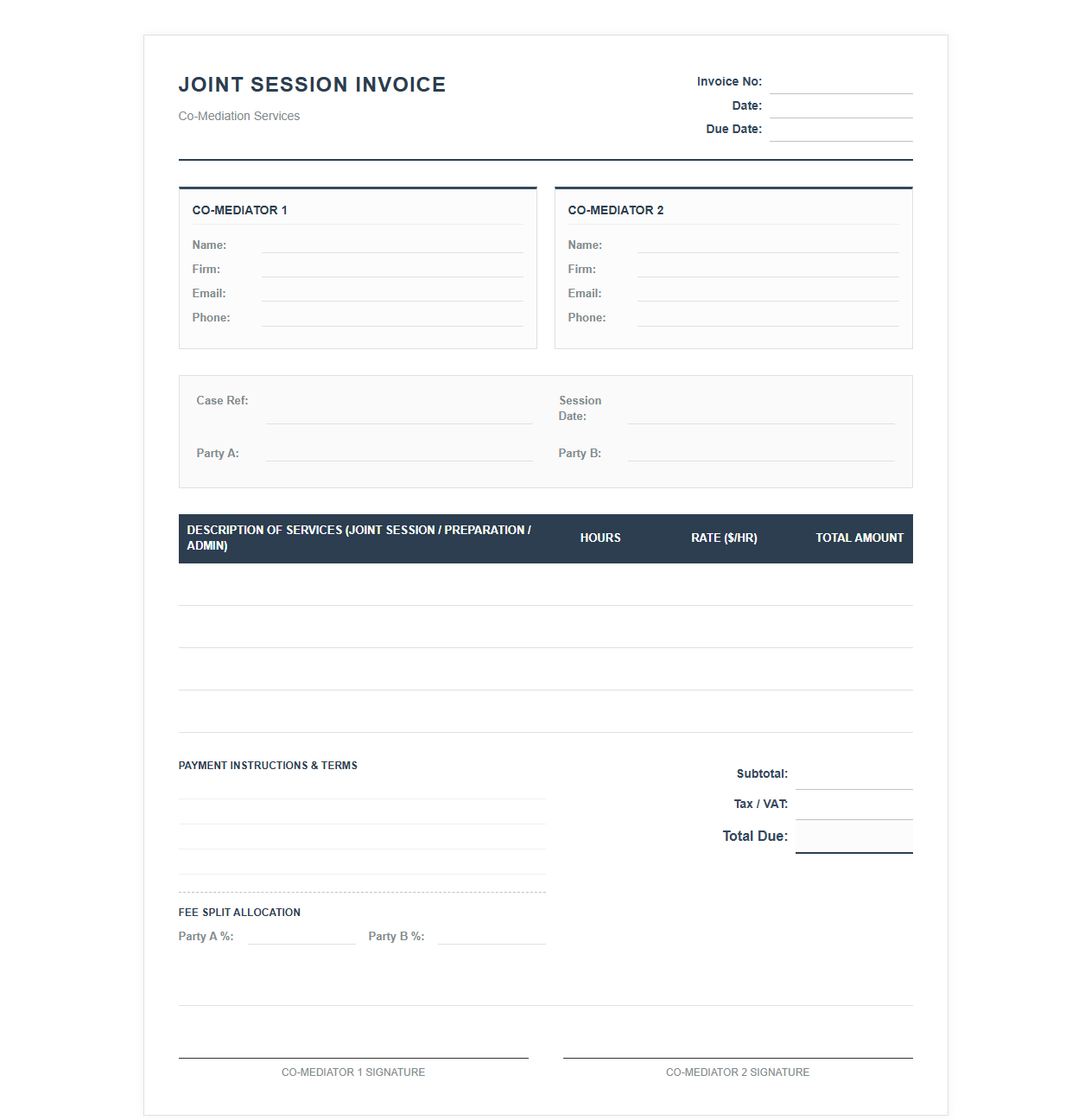
Co-Mediation Joint Session Billing Invoice
 Download: .PDF
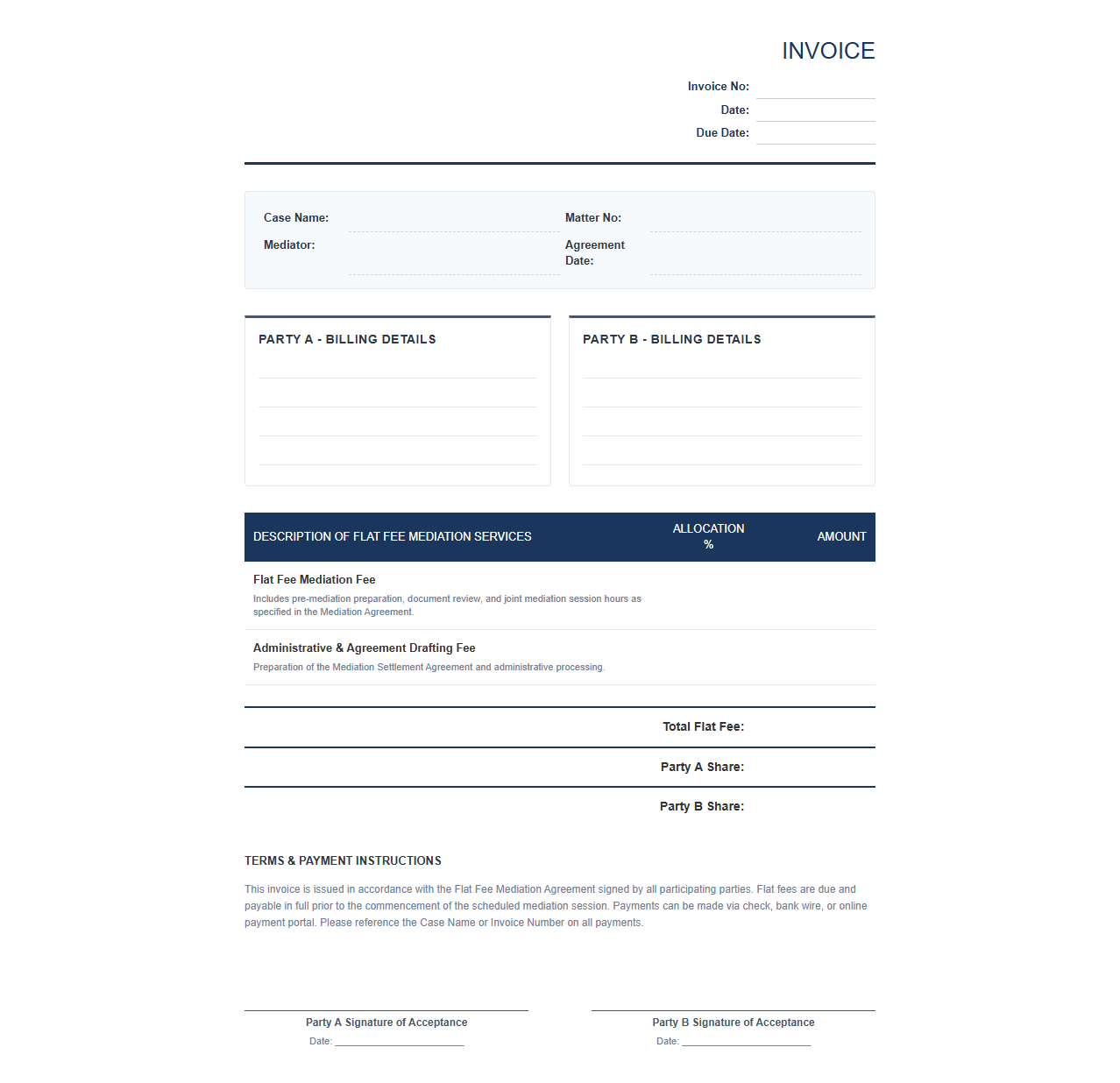
Flat Fee Mediation Agreement Invoice
 Download: .PDF
The Cost of Conflict: Addressing Billing Chaos in Mediation
Dispute resolution is designed to end conflict, yet financial ambiguity often introduces new friction. Invoicing discrepancies, vague line items, and unexpected fees can quickly erode the trust built during mediation. To prevent secondary disputes over costs, establishing a standardized billing framework is essential for maintaining professional integrity and ensuring financial transparency.
Why Standardized Invoice Formats Matter for Neutrals
For mediators and arbitrators, a structured invoice is more than a request for payment; it is an extension of their neutral role. Consistent formatting eliminates confusion, allowing parties to focus on the resolution itself. By presenting clear, predictable invoices, neutrals reinforce their professional credibility and foster long-term trust with clients who value administrative precision.
Essential Elements of a Dispute Resolution Invoice
A comprehensive mediation invoice must leave no room for interpretation. To ensure complete clarity, every financial statement should clearly document the key components of the service provided:
- Hourly rates for all participating neutrals
- Preparation time spent reviewing briefs and case files
- Actual session duration documented with precise time stamps
- Administrative fees and scheduling costs
Structuring Fees: From Pre-Mediation to Multi-Party Sessions
Different phases of alternative dispute resolution require distinct pricing structures. Standardized billing must categorize these phases clearly to reflect the actual work performed. Separate lines should distinguish the initial intake sessions, where ground rules are established, from the intensive joint sessions and private caucuses.
By clearly dividing these stages, clients can easily track where resources are being allocated throughout the lifecycle of the dispute.
Transparent Tracking of Ancillary Expenses
In addition to professional fees, dispute resolution often incurs various operational costs. Neutrals should meticulously itemize these out-of-pocket expenses to prevent billing pushback. Best practices dictate listing these items in a chronological or categorized format:
- Venue rentals for physical neutral grounds
- Travel, mileage, and accommodation costs
- Secure technology platforms utilized for remote sessions
- Catering and hospitality services provided during long sessions
Leveraging Billing Software for Dispute Resolution Standard Tools
Adopting digital billing tools simplifies the entire invoicing process for modern neutrals. By utilizing specialized software, mediators can automate tracking and instantly generate clean, professional invoices. These digital solutions reduce manual errors and ensure consistent compliance with industry standards. To learn more about optimizing your practice, explore our mediation billing templates designed to streamline your administrative workflow.
Embracing Clarity: The Future of ADR Financial Operations
Clear financial practices are fundamental to the evolution of alternative dispute resolution. Standardizing invoices minimizes administrative disputes, strengthens client relations, and elevates the professional standing of neutrals. Adopting standardized billing formats is a proactive step that every dispute resolution professional should take to ensure seamless operations and foster widespread trust in ADR systems.

Leave a comment