

Managing subcontractor billing and cash flow often feels like a logistical nightmare, with delayed approvals and disorganized paperwork stalling project momentum. Before investing in complex accounting software, project managers must first establish a standardized system for documenting financial exchanges at every major milestone. Implementing structured receipt templates grants stakeholders instant financial clarity, accelerating payment cycles while protecting project margins.
While these templates do not replace binding legal contracts, they serve as essential administrative tools to verify work completion and fund distribution. Specifically, utilizing dedicated formats for mobilization deposits, progress payments, and final lien waivers ensures complete transparency for future audits. In this guide, we will break down the essential construction receipt templates required for every project phase, providing you with a clear roadmap to streamline your payment workflows from groundbreaking to final closeout.
Construction Project Progress Payment Receipt Template
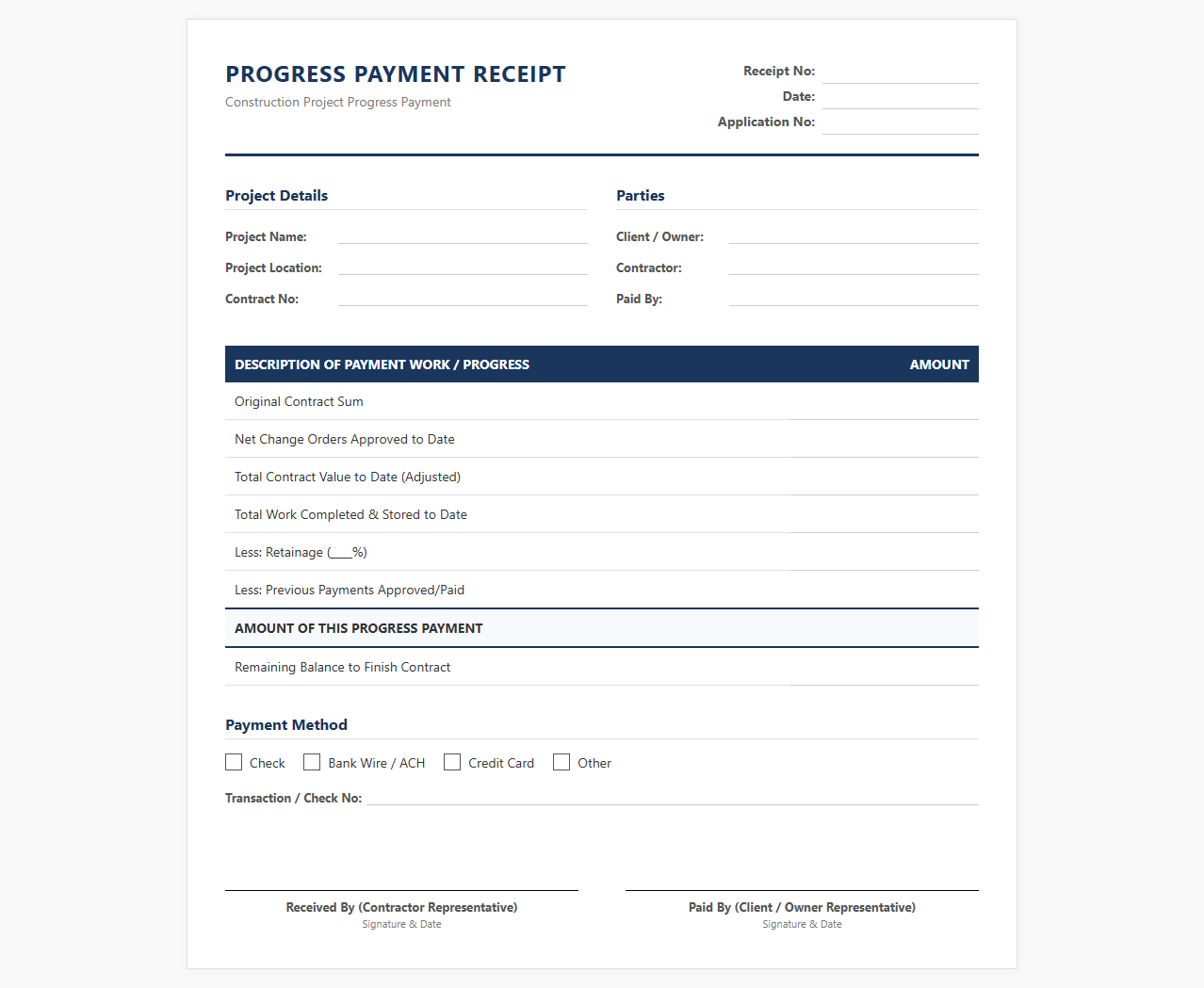 Download: .PDF
Contractor Services Rendered Receipt Template
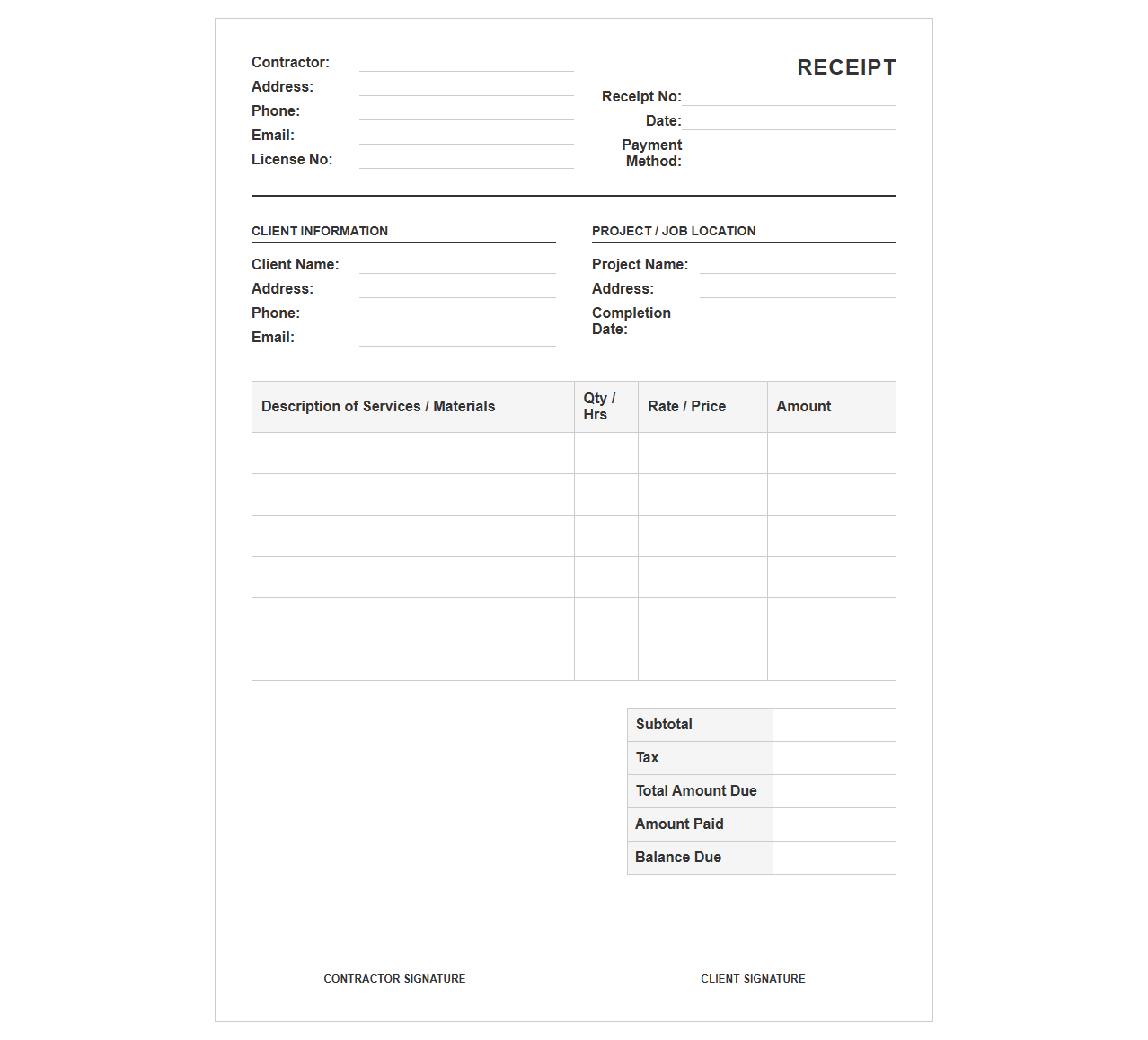 Download: .PDF
Residential Building Renovation Receipt Template
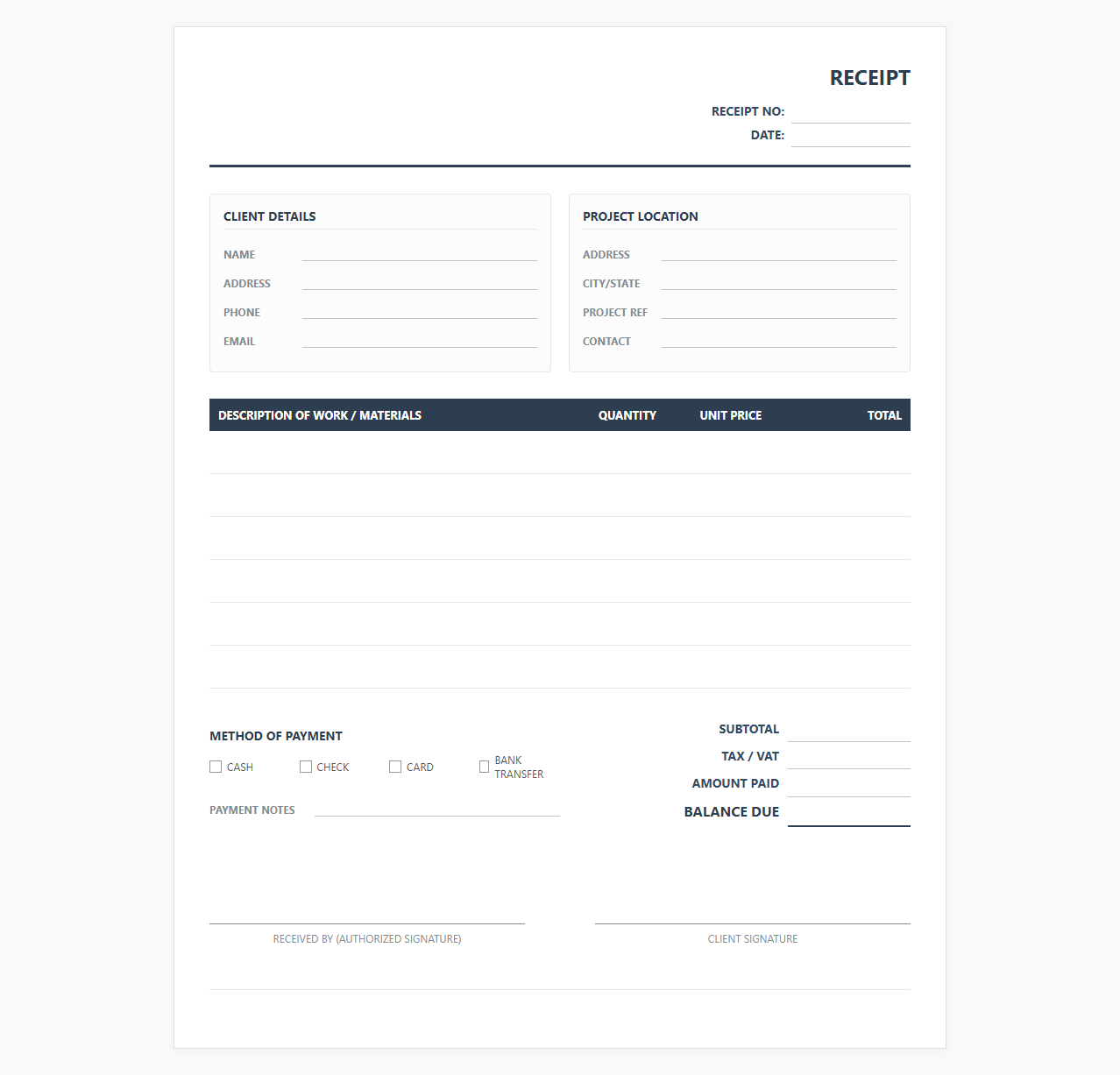 Download: .PDF
Subcontractor Labor and Materials Receipt Template
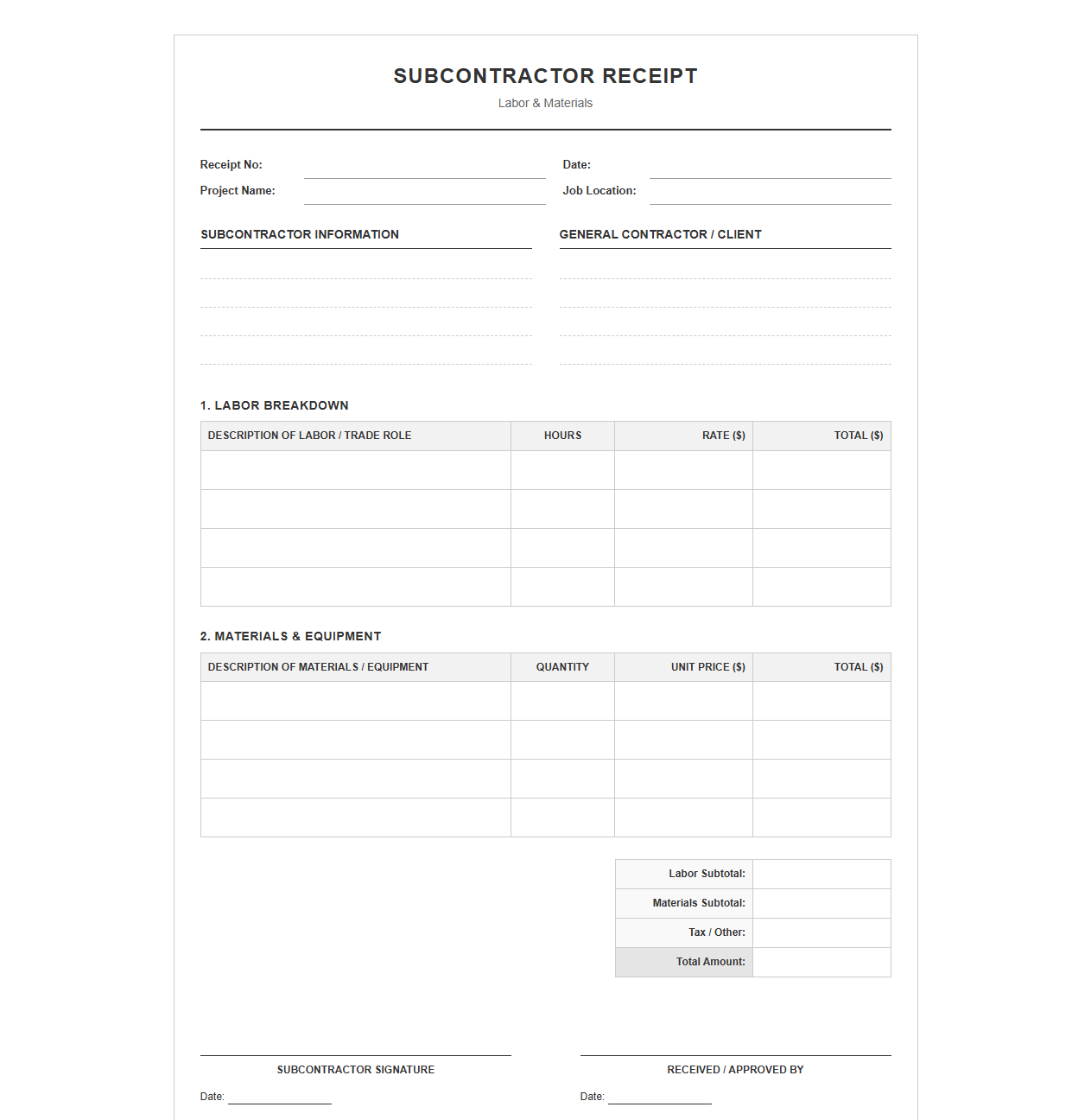 Download: .PDF
Commercial Construction Invoice and Receipt Template
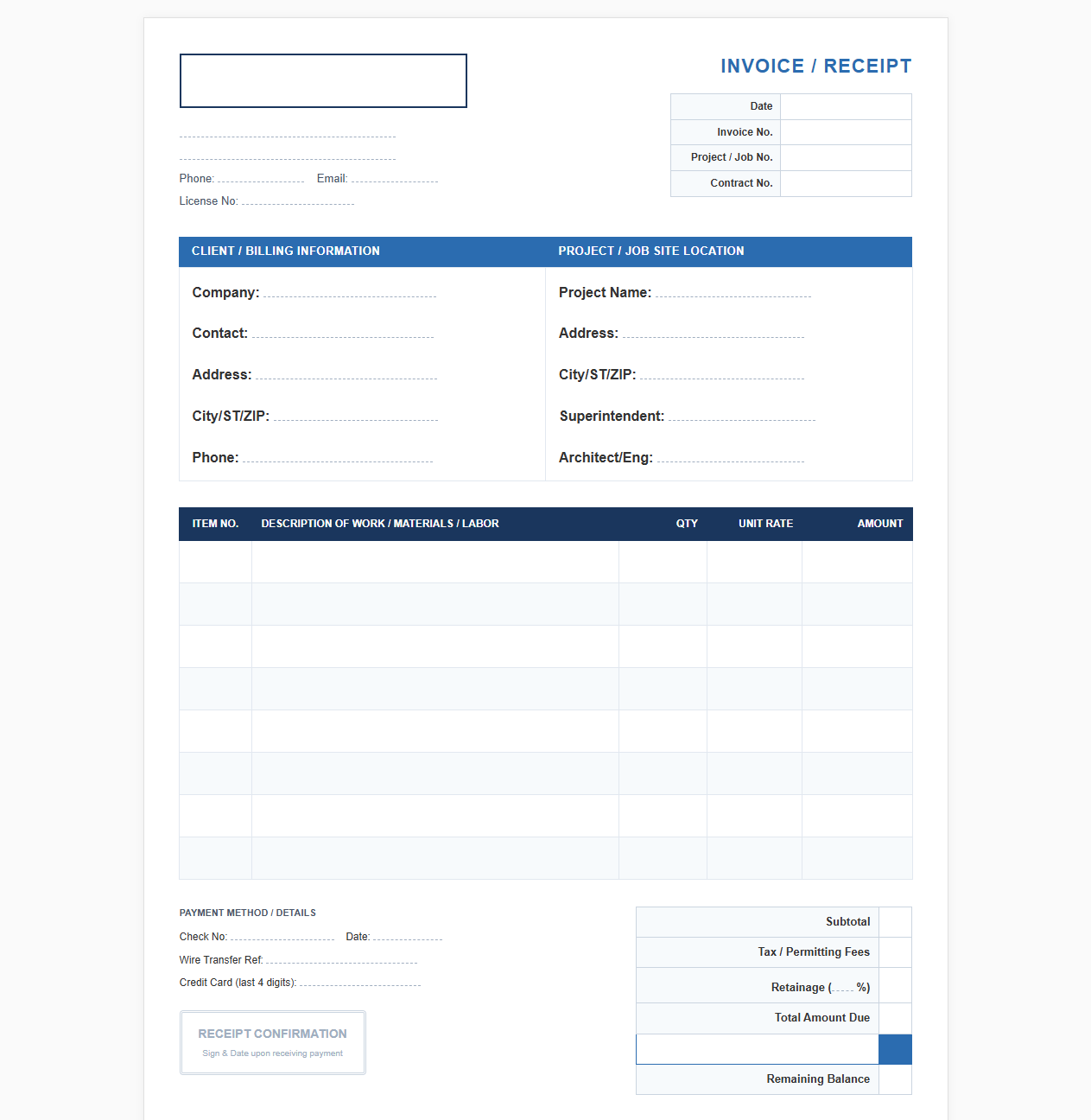 Download: .PDF
General Contractor Payment Acknowledgment Template
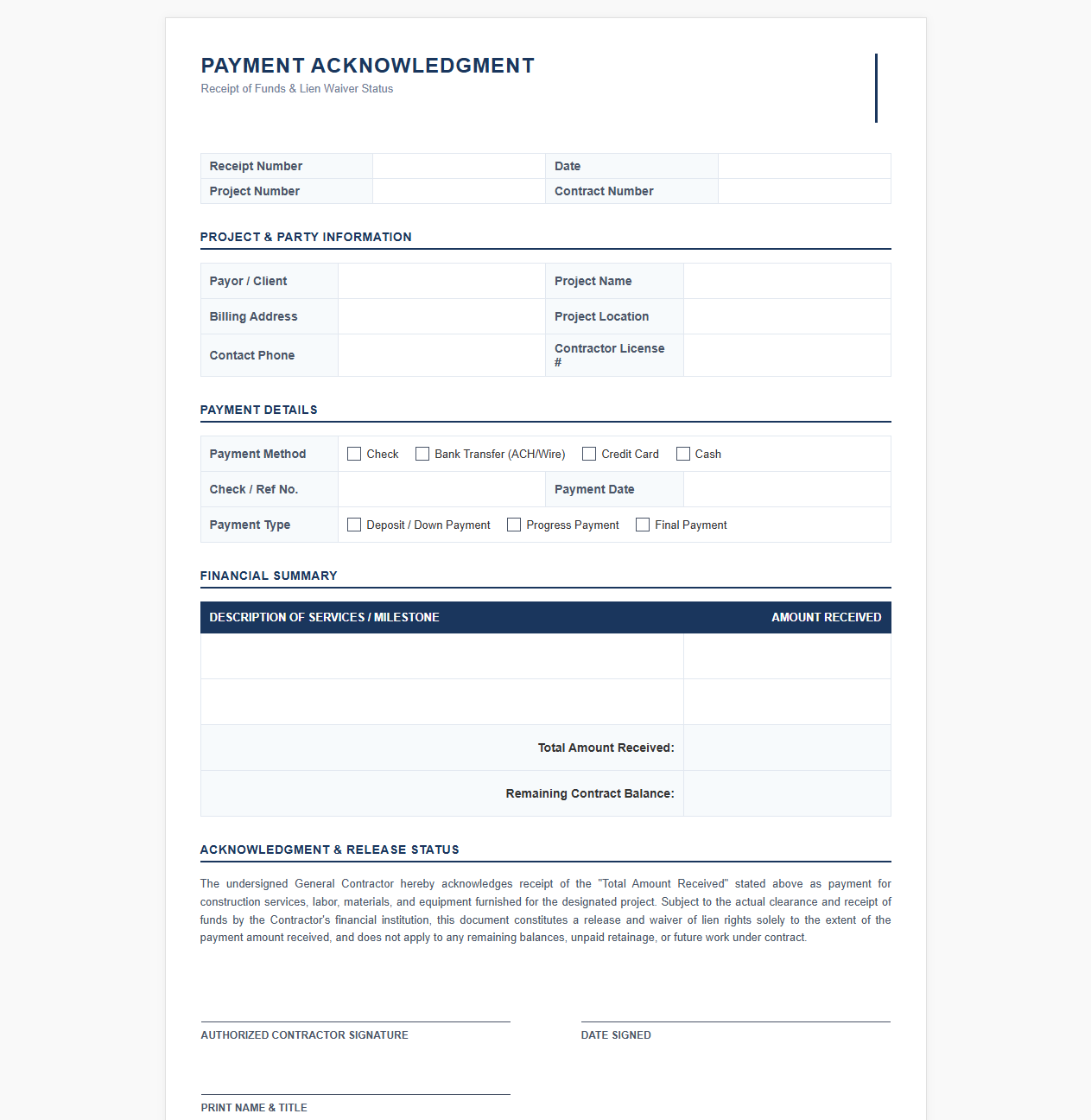 Download: .PDF
Home Improvement Service Receipt Template
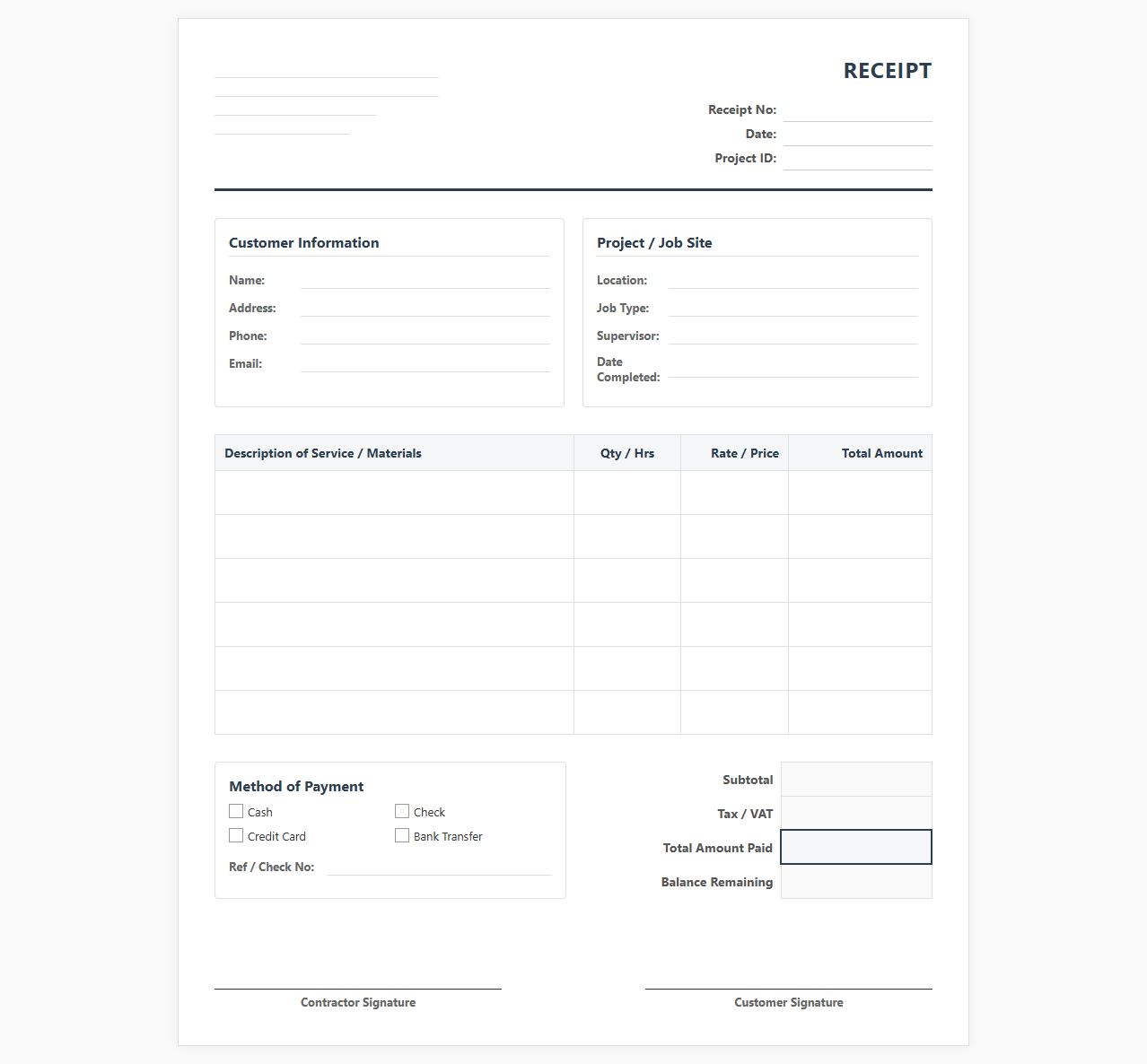 Download: .PDF
Construction Material and Labor Receipt Template
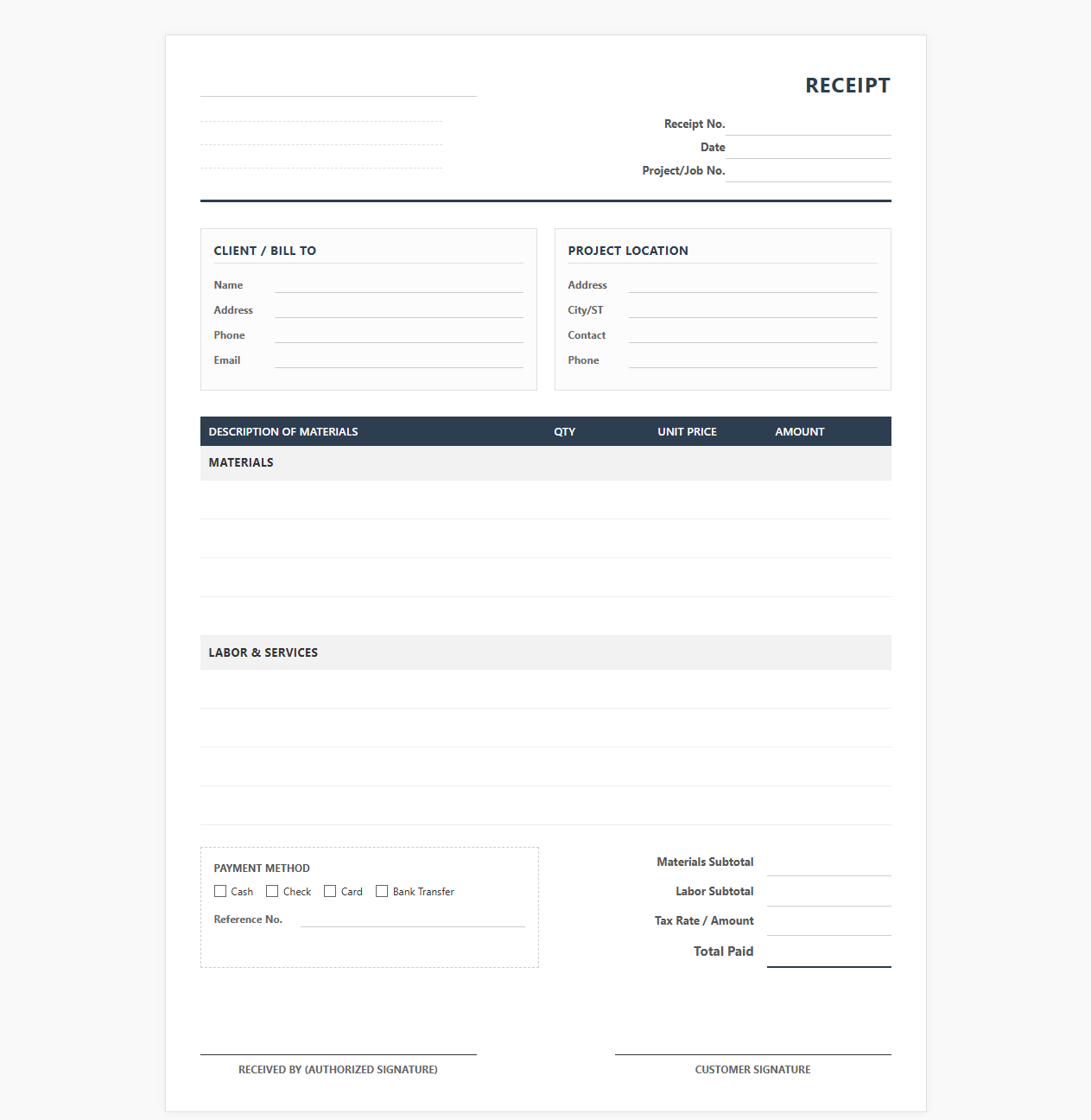 Download: .PDF
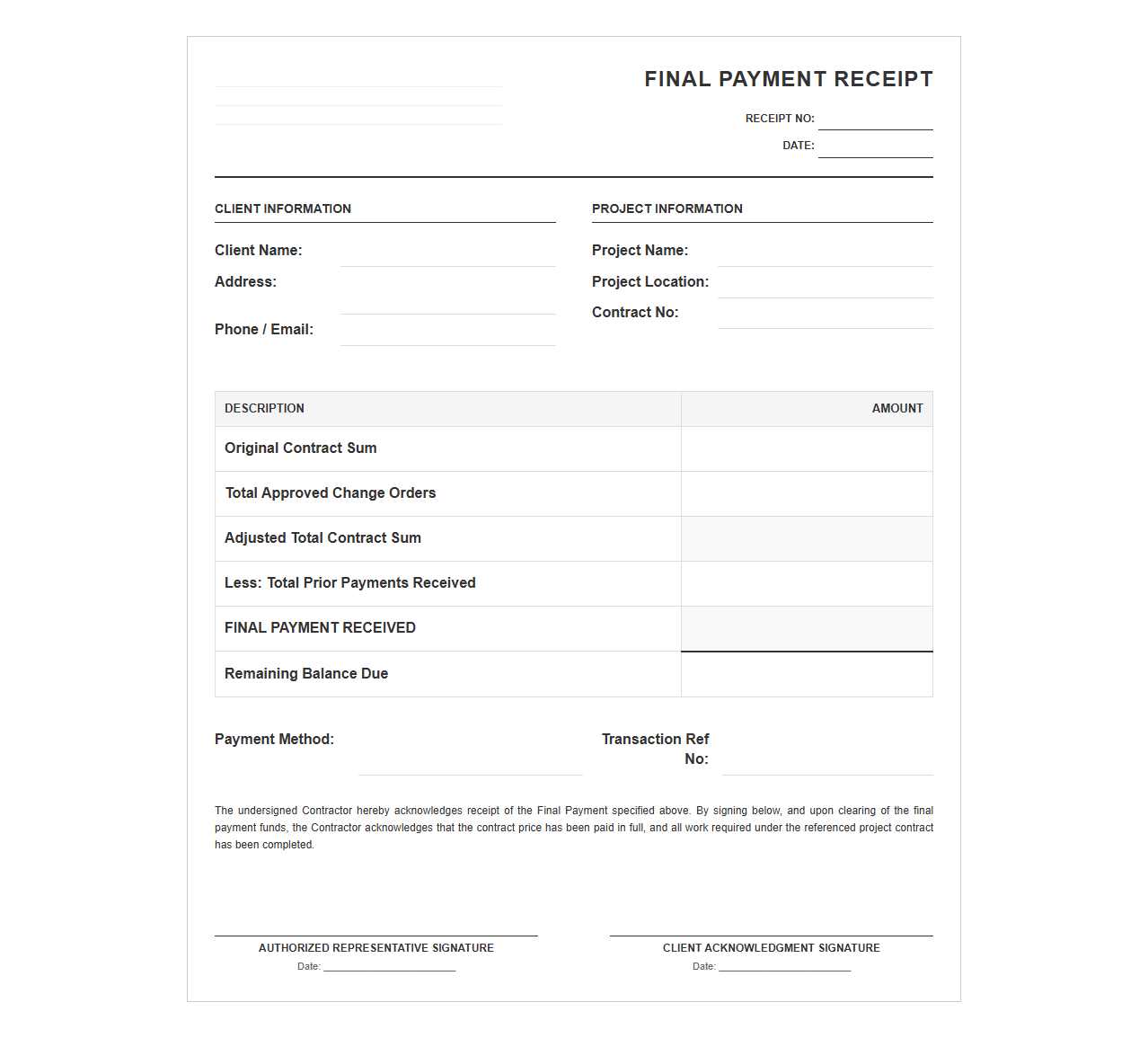
Final Construction Project Payment Receipt Template
 Download: .PDF
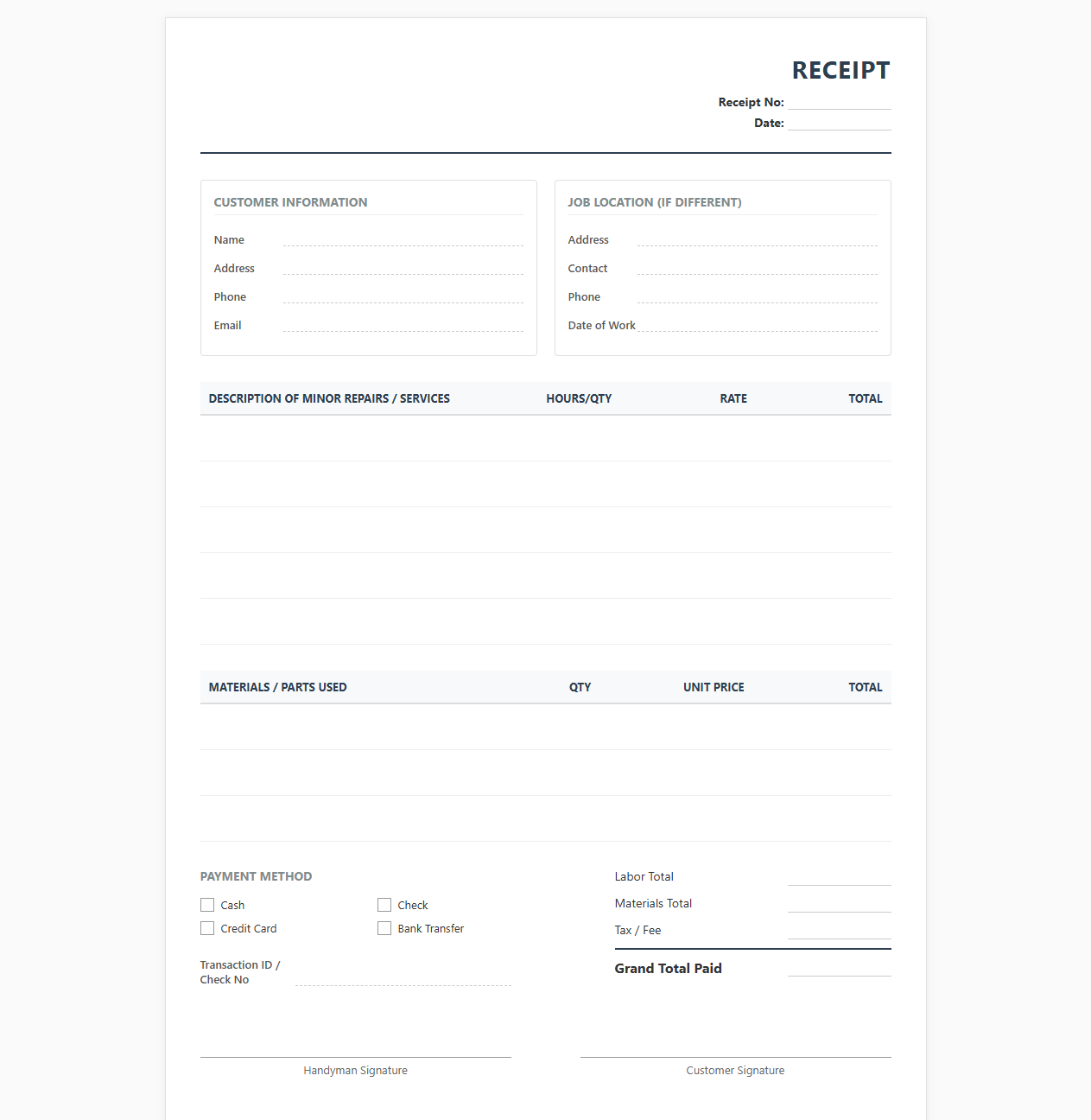
Handyman and Minor Repairs Receipt Template
 Download: .PDF
Introduction to Streamlining Payments
In the construction and contracting industries, maintaining a steady cash flow and clear communication is the foundation of every successful project. Establishing structured contractor payments ensures that both clients and service providers remain aligned on financial expectations from day one. By utilizing standardized receipts, businesses can prevent misunderstandings, avoid costly legal disputes, and keep project timelines moving forward without administrative delays.
Phase 1: Mobilization and Deposit Receipts
The initial phase of any major project requires securing commitment and capital before physical labor begins. A mobilization deposit is essential for purchasing raw materials, securing subcontractor schedules, and transporting heavy equipment to the job site. Issuing a formal deposit receipt protects both parties by documenting this initial financial transfer.
- Deposit Percentage: Typically ranging from 10% to 33% of the total contract value.
- Project Start Date: The agreed-upon calendar day when physical work or site preparation commences.
- Scope of Mobilization: A brief description of the initial materials purchased and prepared with the funds.
Phase 2: Progress and Milestone Payments
For mid-to-large-scale projects, waiting until final completion for payment is impractical. Progress payments allow contractors to receive incremental funds as specific project phases are completed, ensuring continuous cash flow to keep the job site active.
| Milestone Achieved | Percentage Completed | Payment Due |
|---|---|---|
| Foundation & Framing | 25% | Quarterly Allocation |
| Rough-in Plumbing & Electrical | 50% | Mid-Project Installment |
| Drywall & Interior Trim | 75% | Substantial Milestone |
Phase 3: Handling Change Orders Smoothly
Construction projects are dynamic, and modifications to the original plan are common. When a client requests an upgrade or unexpected site conditions require extra labor, a change order must be documented immediately. A change order receipt confirms that both parties agree to the adjusted budget and timeline shifts before the extra work begins.
"Any deviation from the original contract scope must be authorized in writing to preserve budget transparency and prevent end-of-project billing surprises." Construction Standards Association
Phase 4: Final Retainage and Project Closeout
The final payment phase involves releasing the retainage-a small percentage of the contract price withheld by the client until the very end. This phase ensures all finishing touches meet the agreed-upon standards before the relationship concludes.
- Punch List Verification: Confirming that all minor repairs, paint touch-ups, and cosmetic details are complete.
- Handover Documentation: Providing operation manuals, warranties, and official keys to the property owner.
- Final Retainage Release: Disbursing the final 5% to 10% holding fee to mark the official closeout of the project.
Legally Protecting Your Business with Lien Waivers
The exchange of the final receipt should always be accompanied by a signed lien waiver. A lien waiver is a legal document where the contractor relinquishes their right to place a mechanics lien on the property in exchange for payment. This process is absolutely critical for protecting clients from unexpected claims and ensuring contractors receive their hard-earned funds. You can learn more about standard construction payment practices by visiting the American Bar Association resources on construction law.
Digital Tools for Automated Receipt Management
Manually tracking paper receipts across multiple job sites is inefficient and prone to human error. Transitioning to digital invoice and receipt systems streamlines financial tracking and ensures record compliance.
- Select cloud-based accounting software tailored for contractors to easily generate on-site receipts.
- Automate payment reminders and receipts to send immediately upon transaction clearance.
- Store digital copies of signed lien waivers and milestone approvals in a centralized secure database.

Leave a comment