
S Corporation shareholders and tax preparers often struggle with the complex, manual process of tracking individual basis and distributing accurate year-end returns. As IRS scrutiny on pass-through entities intensifies, relying on fragmented spreadsheets or outdated tracking methods poses a severe compliance risk.
Implementing standardized shareholder return templates grants tax professionals an immediate efficiency boost, delivering a repeatable framework to streamline Schedule K-1 preparation and protect data integrity. However, while these tools dramatically reduce calculation errors, they should be viewed as structured guides rather than a substitute for certified CPA review of complex tax positions.
By utilizing proven templates for Schedule K-1 reconciliation, Form 1120-S itemization, and shareholder stock basis tracking, you can systematically eliminate filing discrepancies. In this guide, we will break down how to deploy these templates to optimize your tax workflow, satisfy regulatory requirements, and ensure bulletproof compliance this filing season.
S Corporation Shareholder Tax Return Template
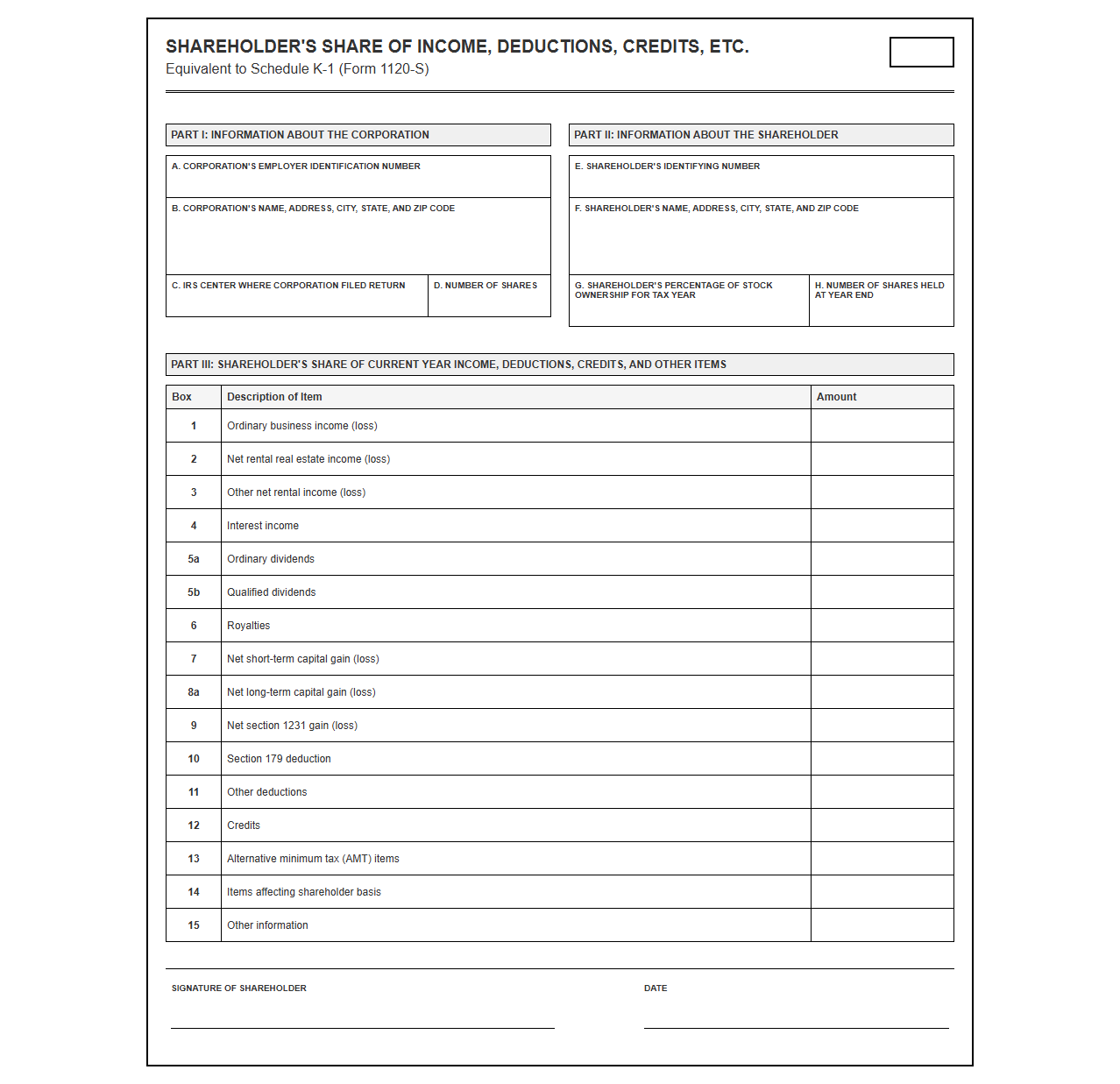 Download: .PDF
S Corp Shareholder Schedule K-1 Tax Template
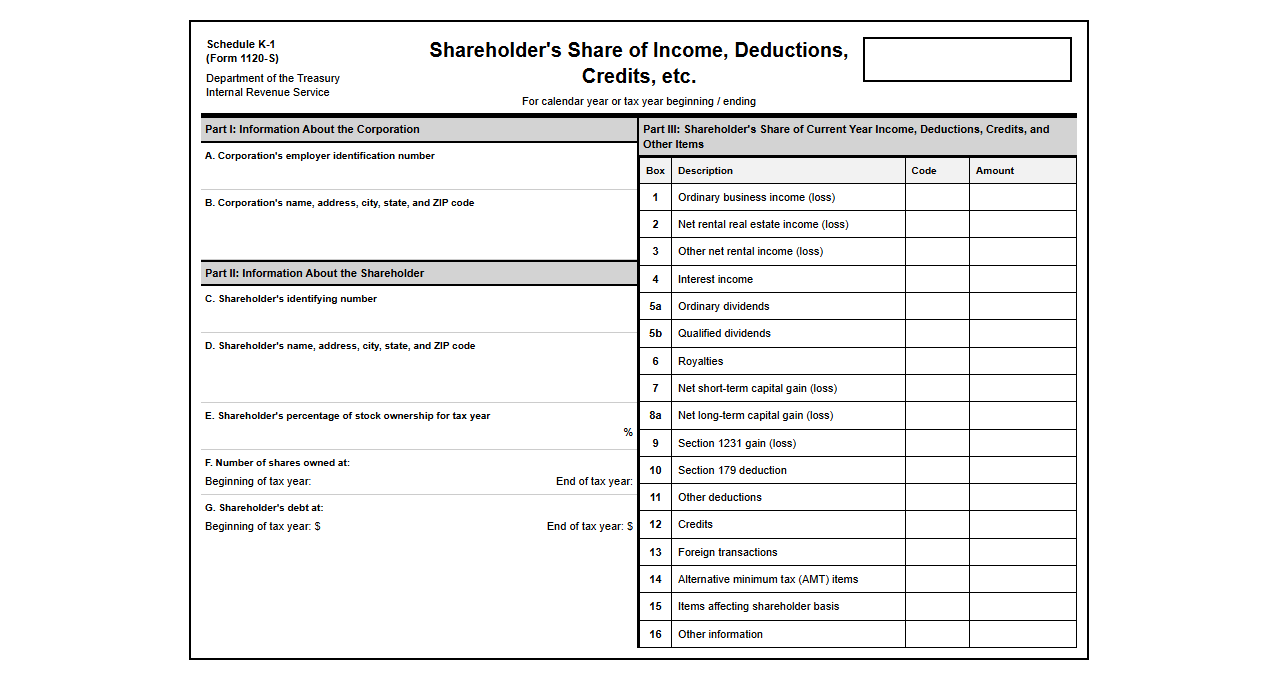 Download: .PDF
S Corporation Shareholder Basis Calculation Template
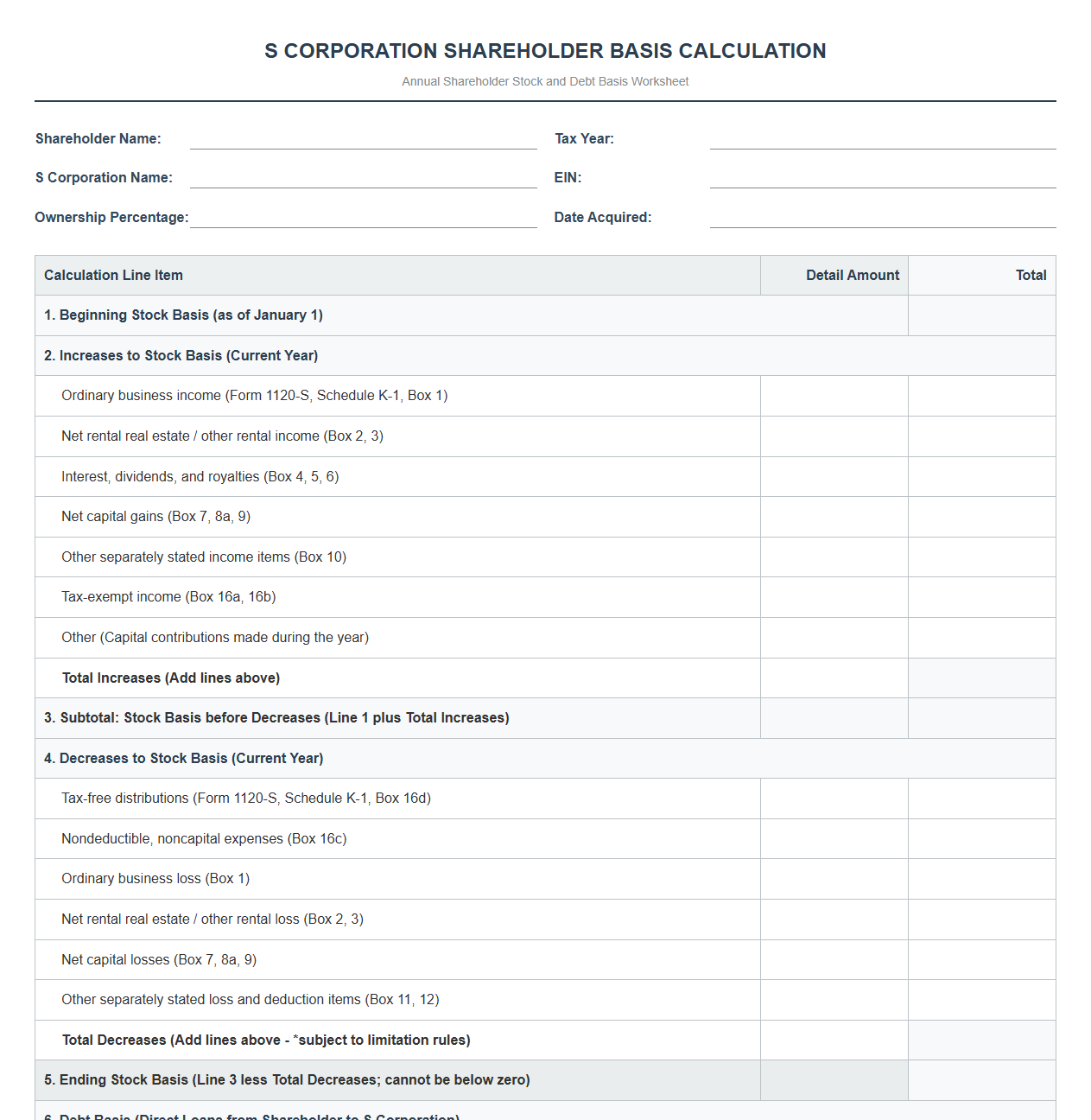 Download: .PDF
Form 1120S Shareholder Tax Return Worksheet
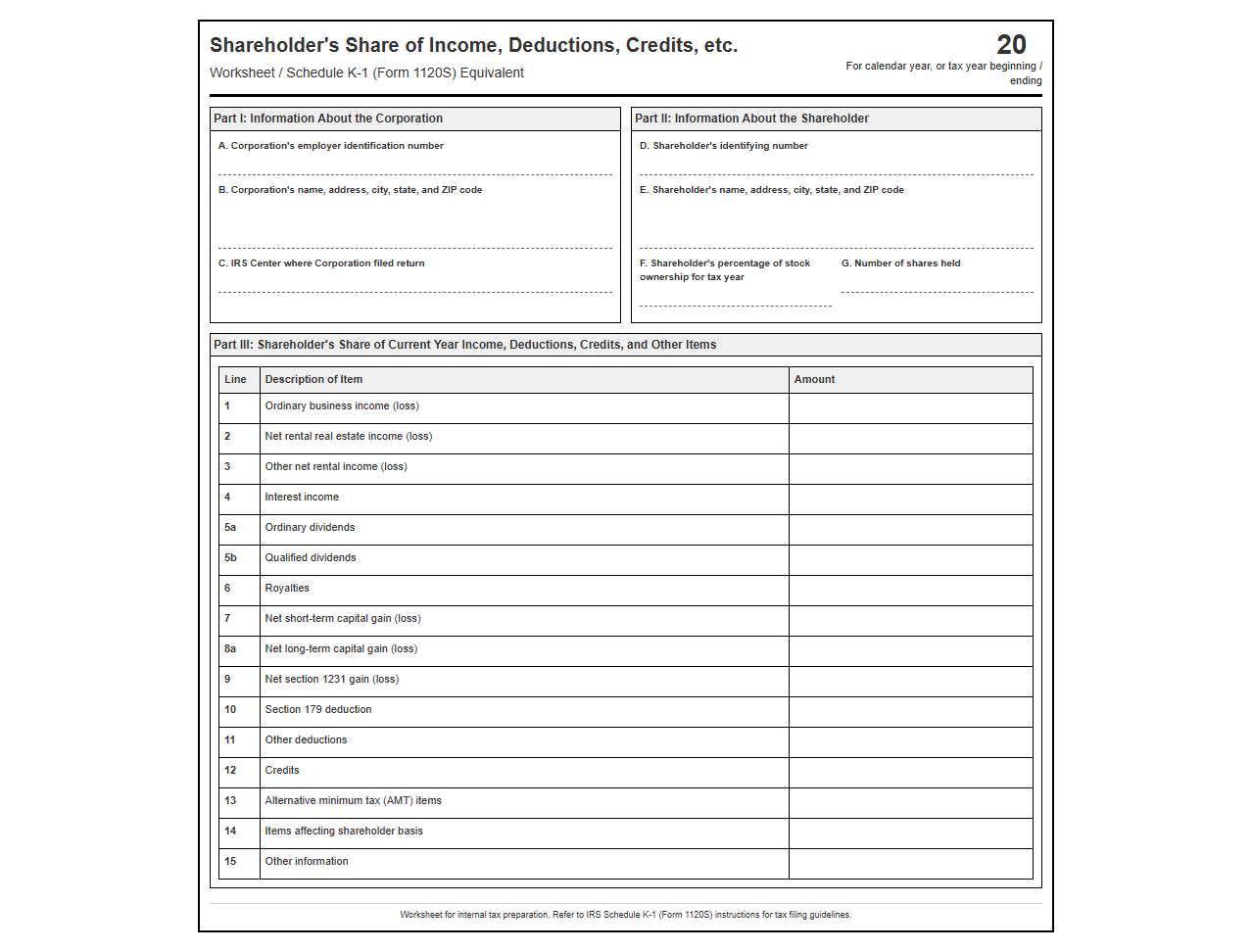 Download: .PDF
S Corporation Shareholder Distribution Tax Template
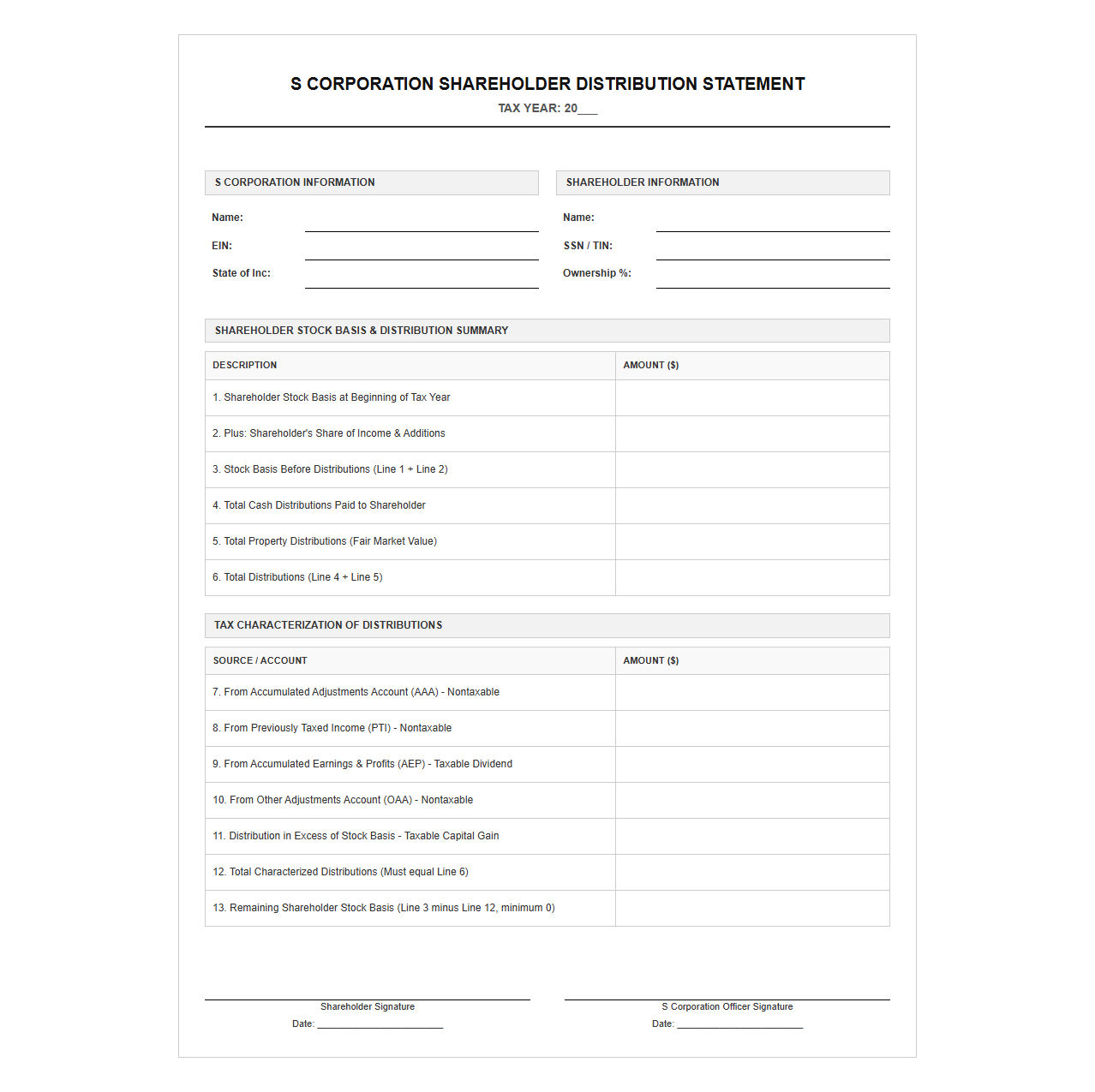 Download: .PDF
S Corp Shareholder Annual Tax Reporting Template
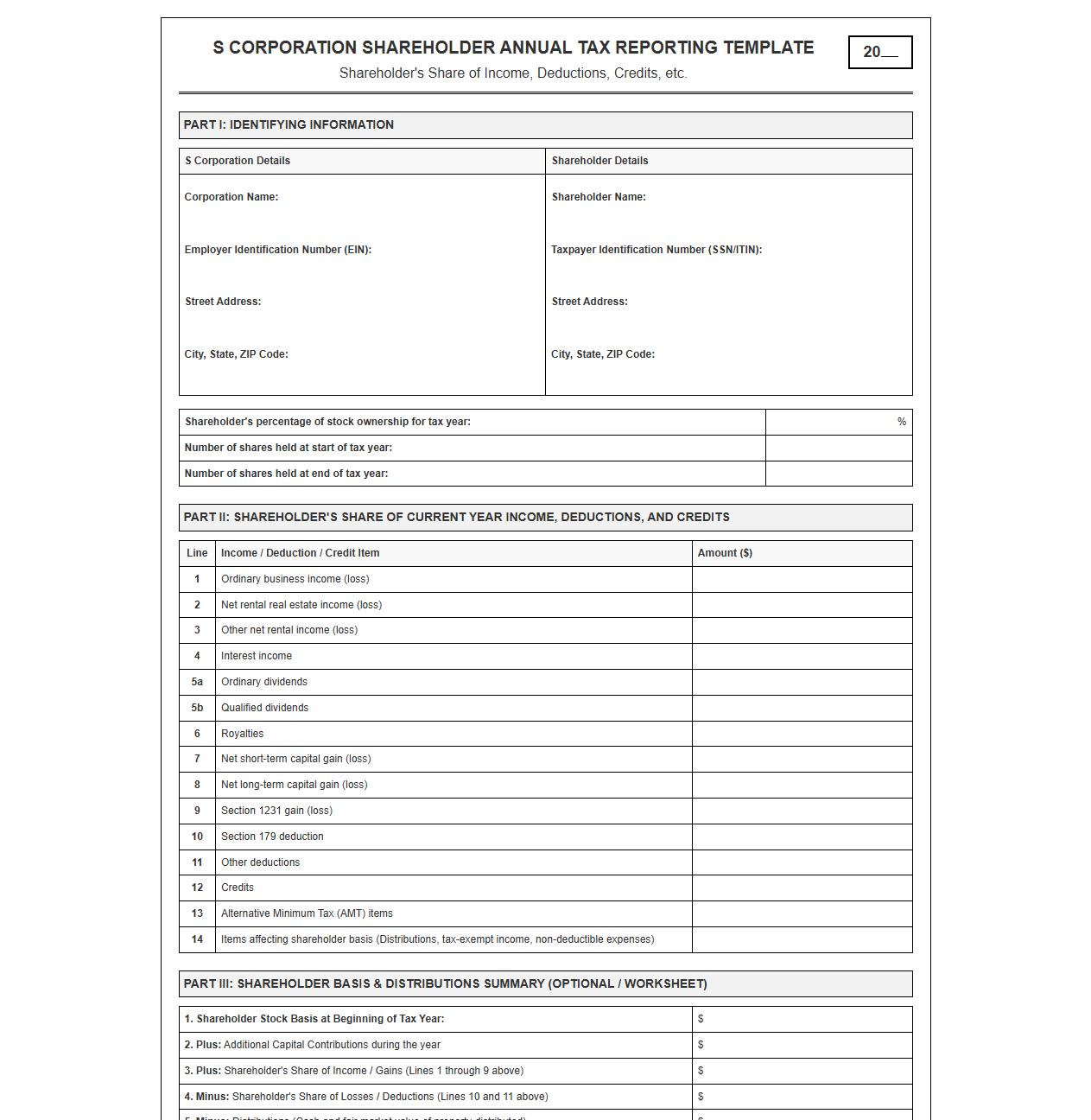 Download: .PDF
S Corporation Shareholder Capital Account Worksheet
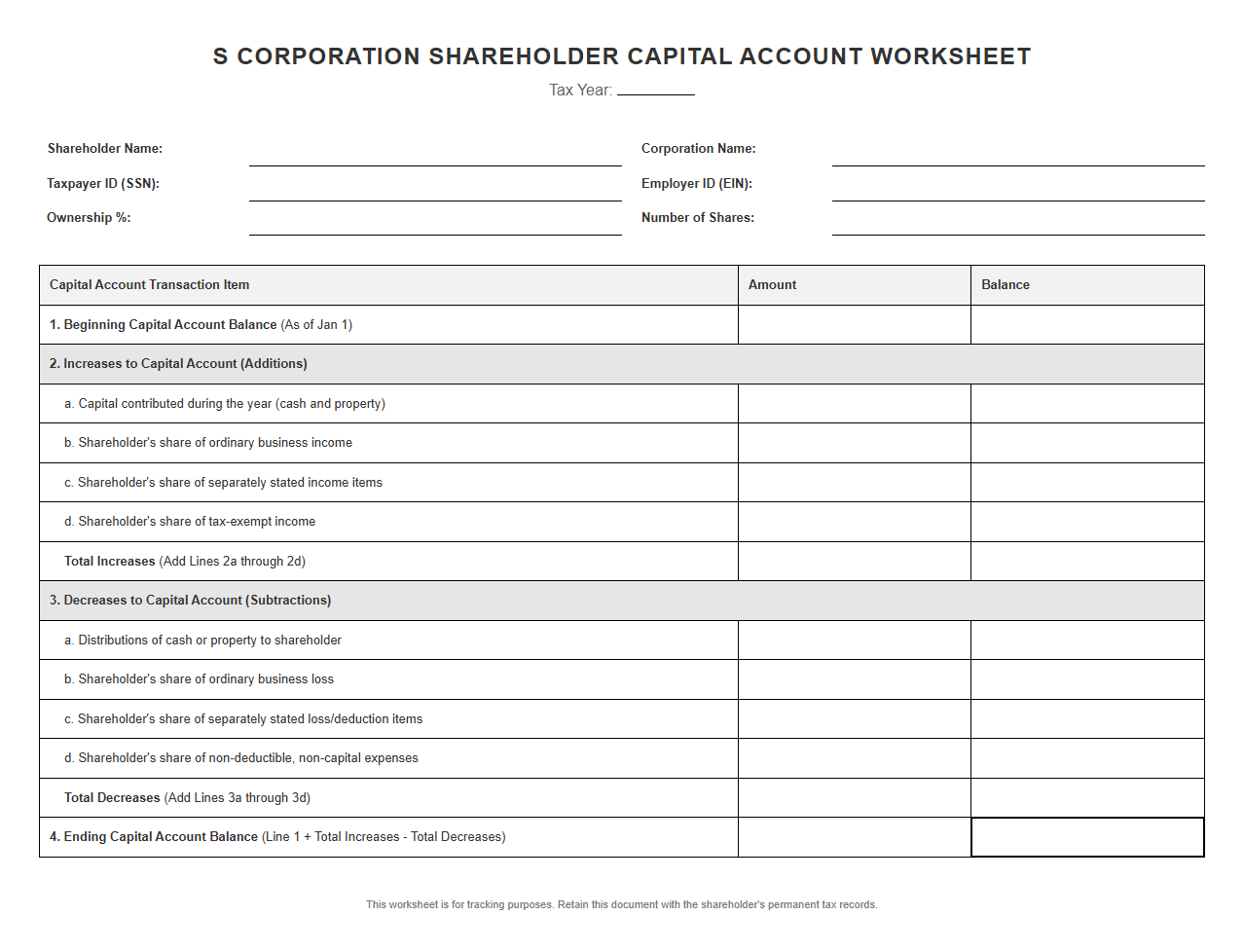 Download: .PDF
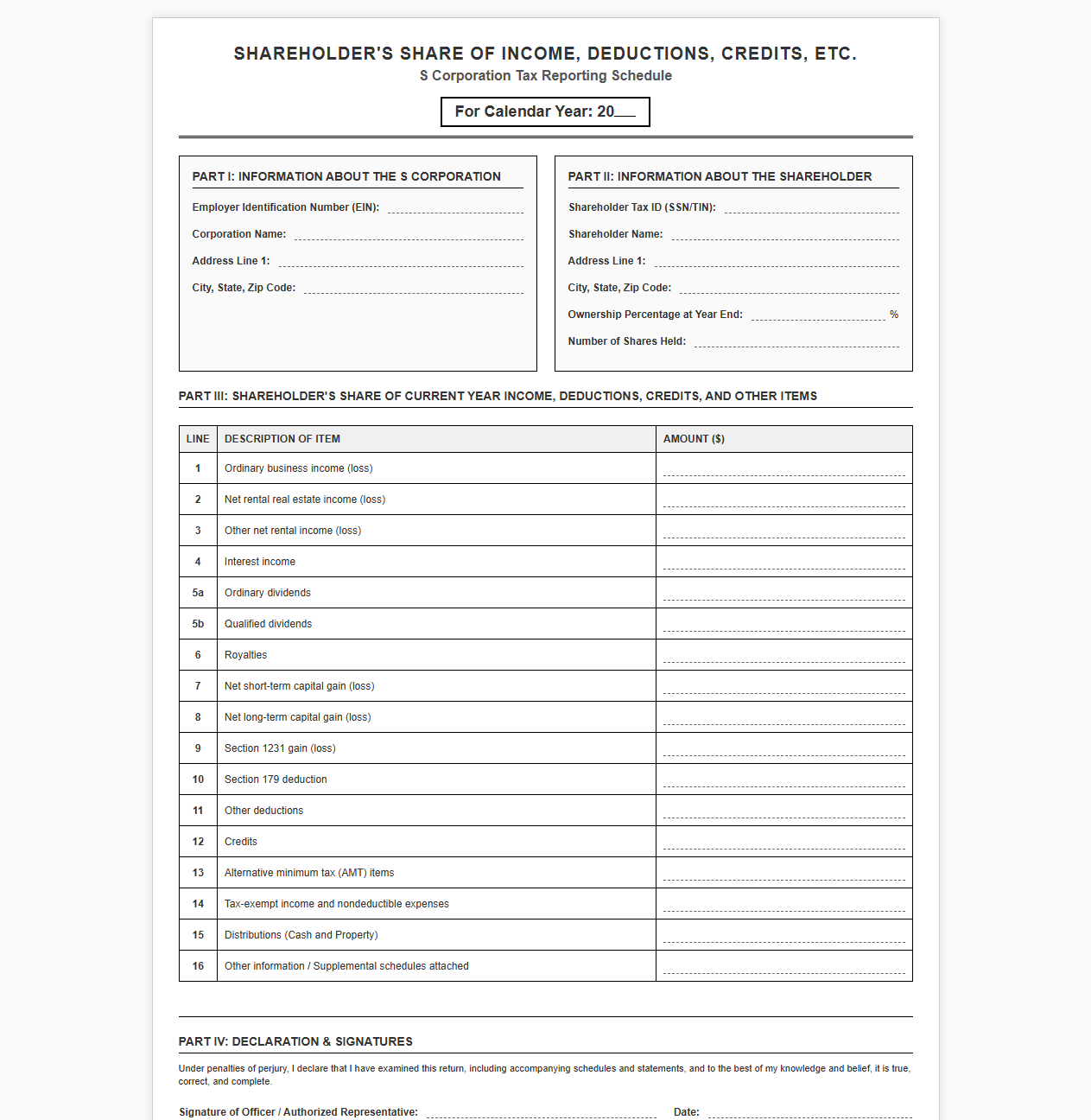
Shareholder Income Tax Return Template for S Corporations
 Download: .PDF
Navigating S Corporation Tax Compliance Hurdles
Operating as an S Corporation offers significant financial advantages, but it also introduces a maze of unique tax filing challenges. Unlike traditional corporations, S Corporations utilize pass-through taxation, meaning profits and losses flow directly to shareholders' individual tax returns. Navigating these waters requires strict adherence to IRS regulations. Because the IRS closely scrutinizes these entities, ensuring absolute accuracy in reporting is the only way to avoid red flags and costly tax audits.
Demystifying Schedule K-1 and Shareholder Allocations
At the heart of S Corporation tax reporting is IRS Schedule K-1 (Form 1120-S). This document reports each shareholder's share of the corporation's income, losses, deductions, and credits. Because these allocations are based on ownership percentages, manual calculation errors frequently occur, leading to major discrepancies between the corporate return and individual filings. Accurate tracking is critical for the following items:
- Ordinary business income or loss
- Net rental real estate income
- Interest and dividend income
- Section 179 deductions
- Charitable contributions
- Tax credits
The Critical Challenge of Tracking Shareholder Basis
Maintaining an accurate record of stock basis is one of the most complex tasks in S Corp administration. Shareholders cannot deduct losses beyond their adjusted basis, nor can they receive tax-free distributions that exceed this threshold. When calculations are incorrect, it frequently leads to unauthorized loss deductions and unexpected, fully taxable distributions.
The Nuances of Debt Basis
In addition to stock basis, shareholders can establish debt basis through direct loans made to the S Corporation. Tracking this separately is critical, as repayments on reduced-basis debt can trigger unexpected capital gains or ordinary income tax liabilities for the lending shareholder.
Streamlining the Process with S Corp Return Templates
To mitigate the risks of manual calculation errors and ensure absolute consistency across all shareholder filings, tax professionals rely heavily on S Corp return templates. These pre-built frameworks standardize the data collection process, automatically align allocations with ownership percentages, and dramatically accelerate the overall tax preparation timeline.
According to industry benchmarks, accounting firms using standardized tax preparation templates reduce manual entry errors by up to 40% and cut return processing times in half.
Essential Features of a Robust Shareholder Template
Not all templates are created equal. To safeguard compliance and streamline workflows, a high-quality S Corp template must integrate advanced calculation features and automated validation safeguards.
| Feature | Purpose & Benefit |
|---|---|
| Automated Basis Calculators | Dynamically updates stock and debt basis based on annual income and distributions. |
| Schedule K-1 Mapping | Ensures seamless flow of allocated items directly to individual shareholder schedules. |
| Distribution Tracking | Monitors cash and property distributions against individual basis thresholds to prevent taxable events. |
| Built-In Error Validation | Flags imbalances between total corporate allocations and individual shareholder totals automatically. |
Step-by-Step Guide to Implementing Your Tax Template
Implementing a template-driven workflow simplifies the complex steps of S Corporation tax season. Follow this systematic approach to ensure maximum accuracy and efficiency:
- Gather Financial Records: Collect the year-end balance sheet, income statement, and existing basis logs.
- Input Corporate Data: Populate the master template with total ordinary business income, deductions, and credits.
- Verify Ownership Percentages: Enter precise shareholder allocation ratios to ensure perfect fractional distributions.
- Run Basis Calculations: Allow the template to compute adjusted stock and debt basis for each shareholder.
- Reconcile and Validate: Review built-in error checks to confirm that total allocations equal the sums reported on Form 1120-S.
- Generate Schedule K-1s & E-File: Export the validated schedules and proceed with final review and electronic filing.
Long-Term Best Practices for S Corp Compliance
Maintaining standardized templates on a year-round basis shifts tax preparation from an annual crisis to a seamless operational routine. Regular updates foster proactive financial planning, enabling shareholders to understand the tax implications of distributions before they occur. Additionally, having organized, template-backed records greatly simplifies the process of defending against potential IRS audits and ensures seamless transitions when buying out or adding new shareholders. Establishing these structured habits secures the financial integrity of the corporation for years to come.
Leave a comment