

Tracking equity changes across multiple partners often leads to administrative headaches and costly accounting errors. Before addressing these capital shifts, businesses must establish robust internal reporting systems that satisfy both stakeholders and tax authorities.
Utilizing standardized templates streamlines this process, granting founders immediate clarity over ownership percentages and capital contributions. However, users must understand that equity tracking requires continuous alignment with operating agreements and state-specific regulations to remain legally compliant.
Whether managing a multi-member LLC, a family partnership, or a growing S-Corporation, tailored templates ensure accurate tracking of net income distributions and capital withdrawals. In this guide, we will explore customizable templates designed for various business structures, outlining how to implement them to maintain precise, audit-ready financial records.
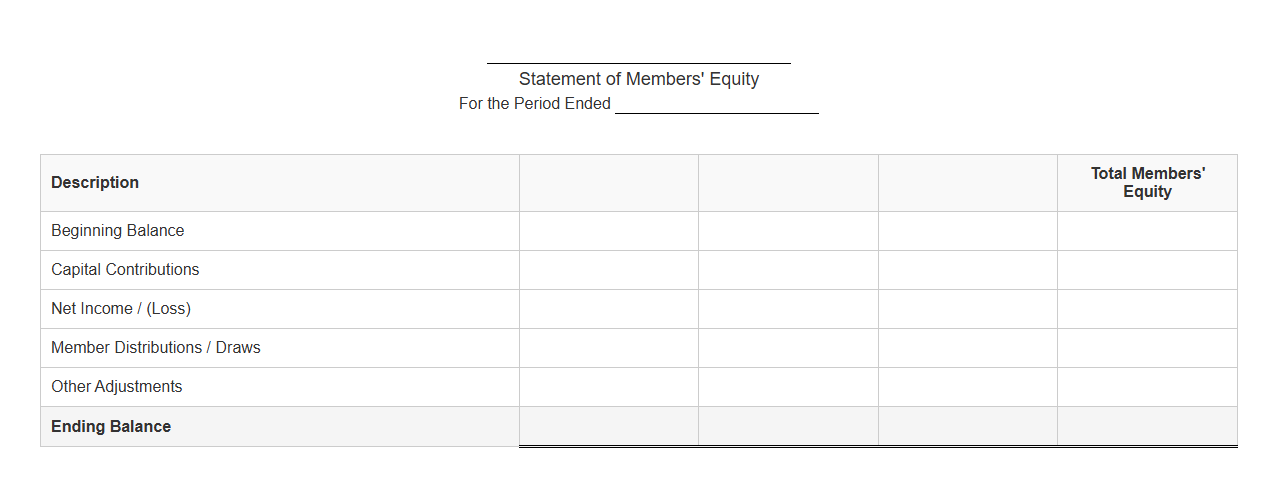
Statement of Members Equity Template
 Download: .PDF
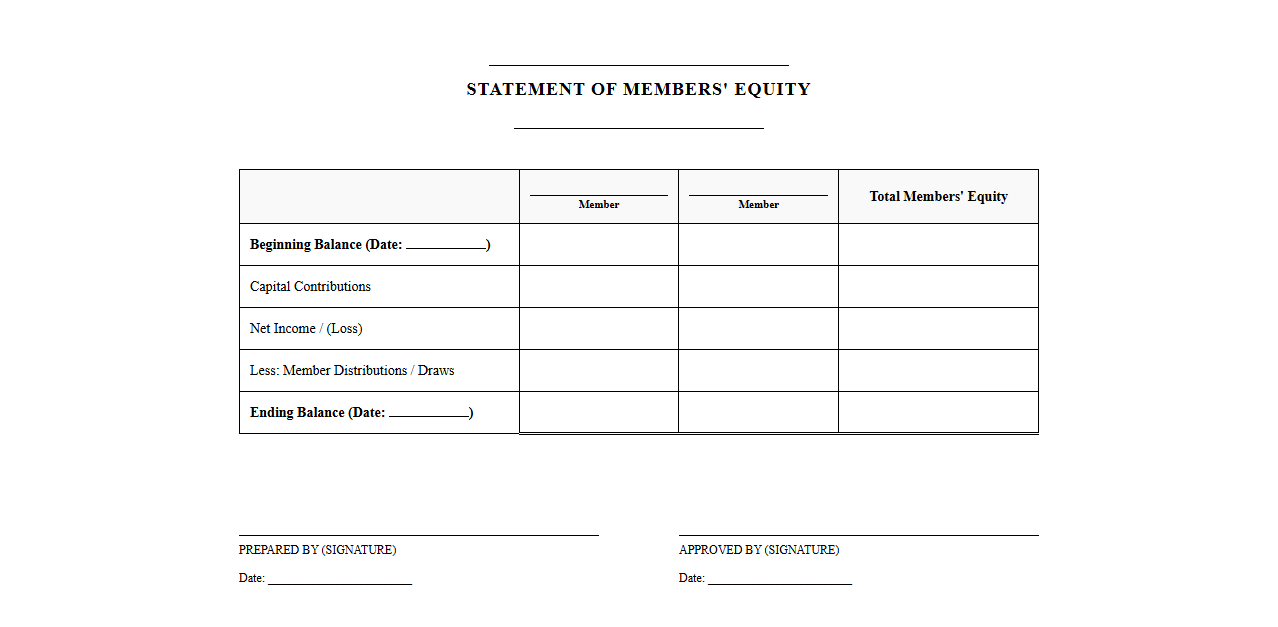
LLC Statement of Members Equity Form
 Download: .PDF
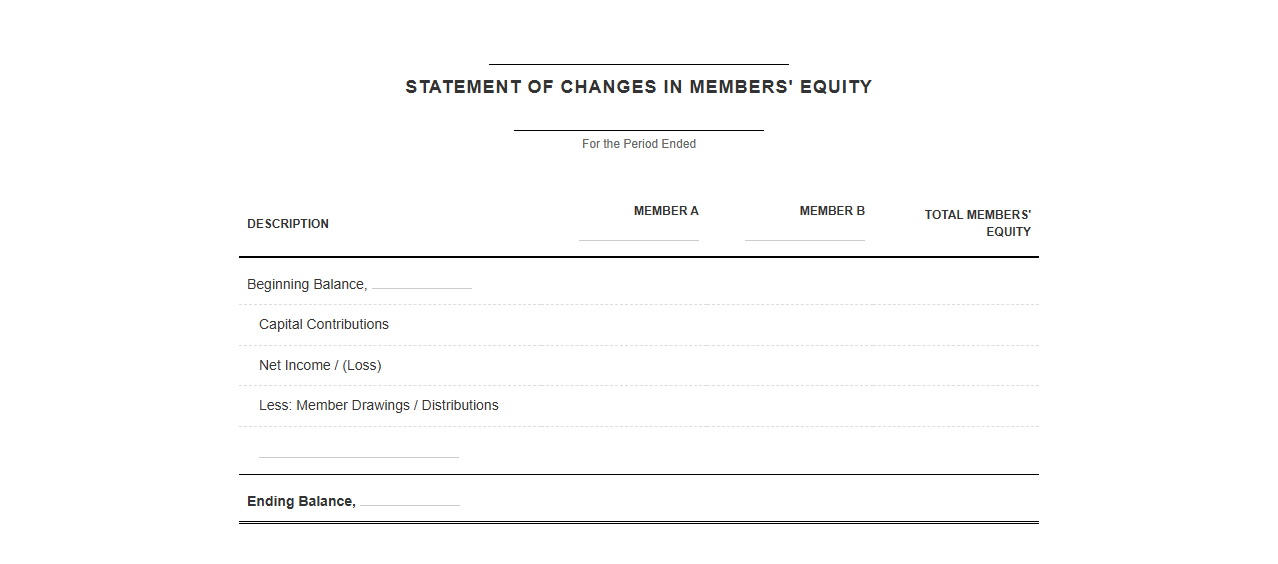
Statement of Changes in Members Equity Template
 Download: .PDF
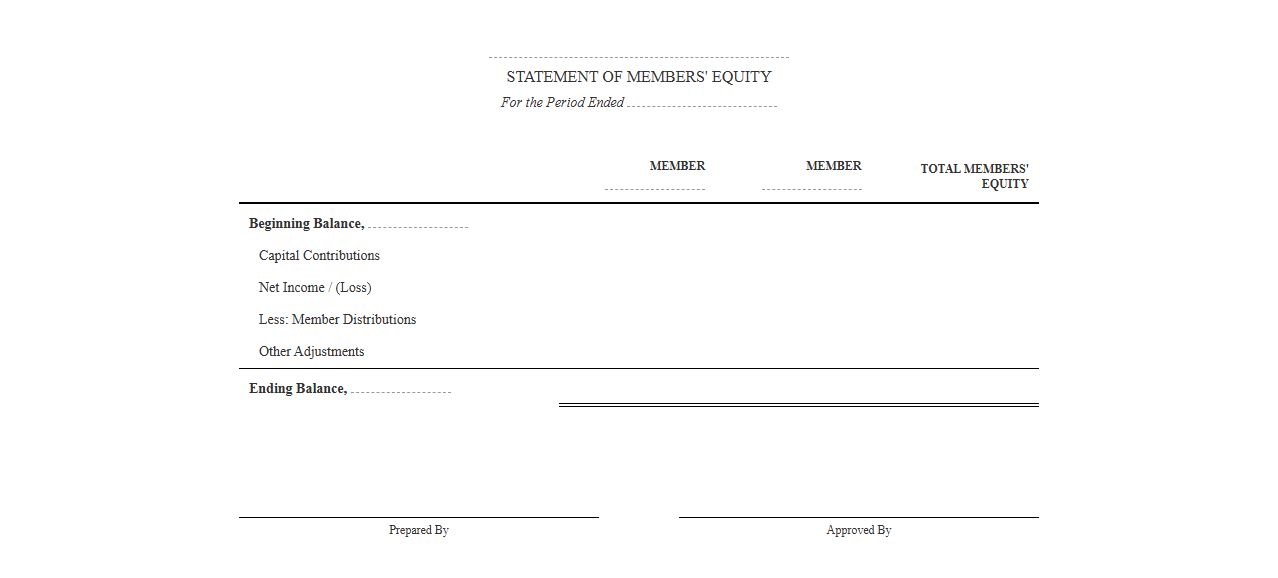
Members Equity Financial Statement Format
 Download: .PDF
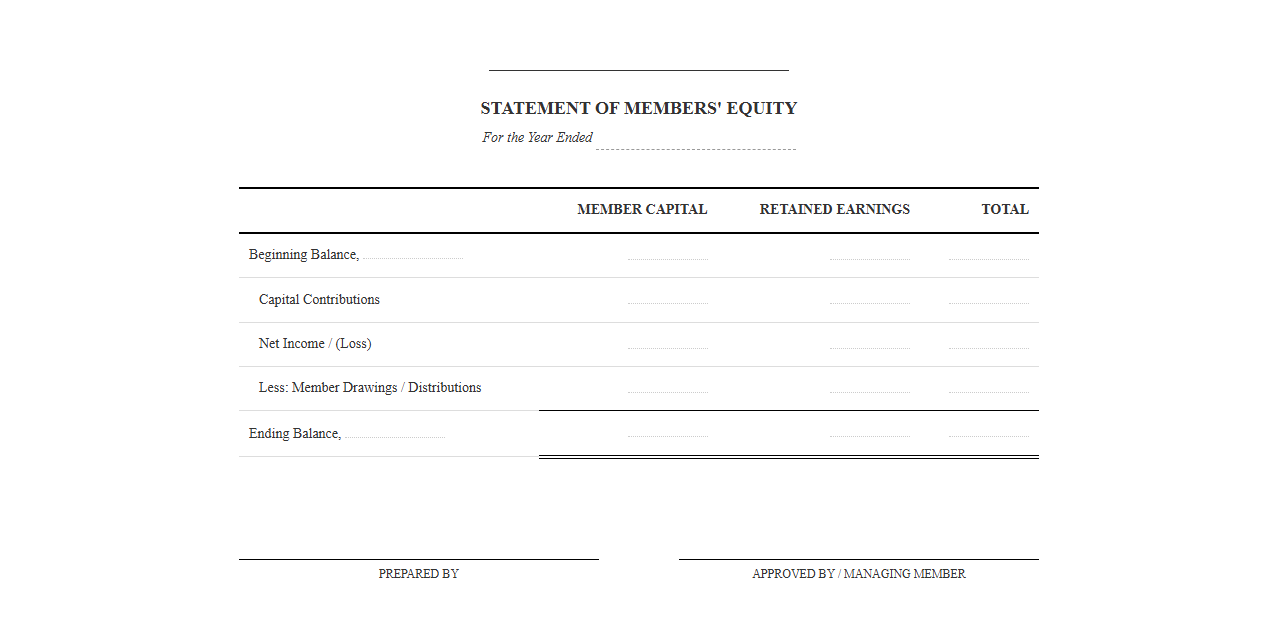
Annual Statement of Members Equity Template
 Download: .PDF
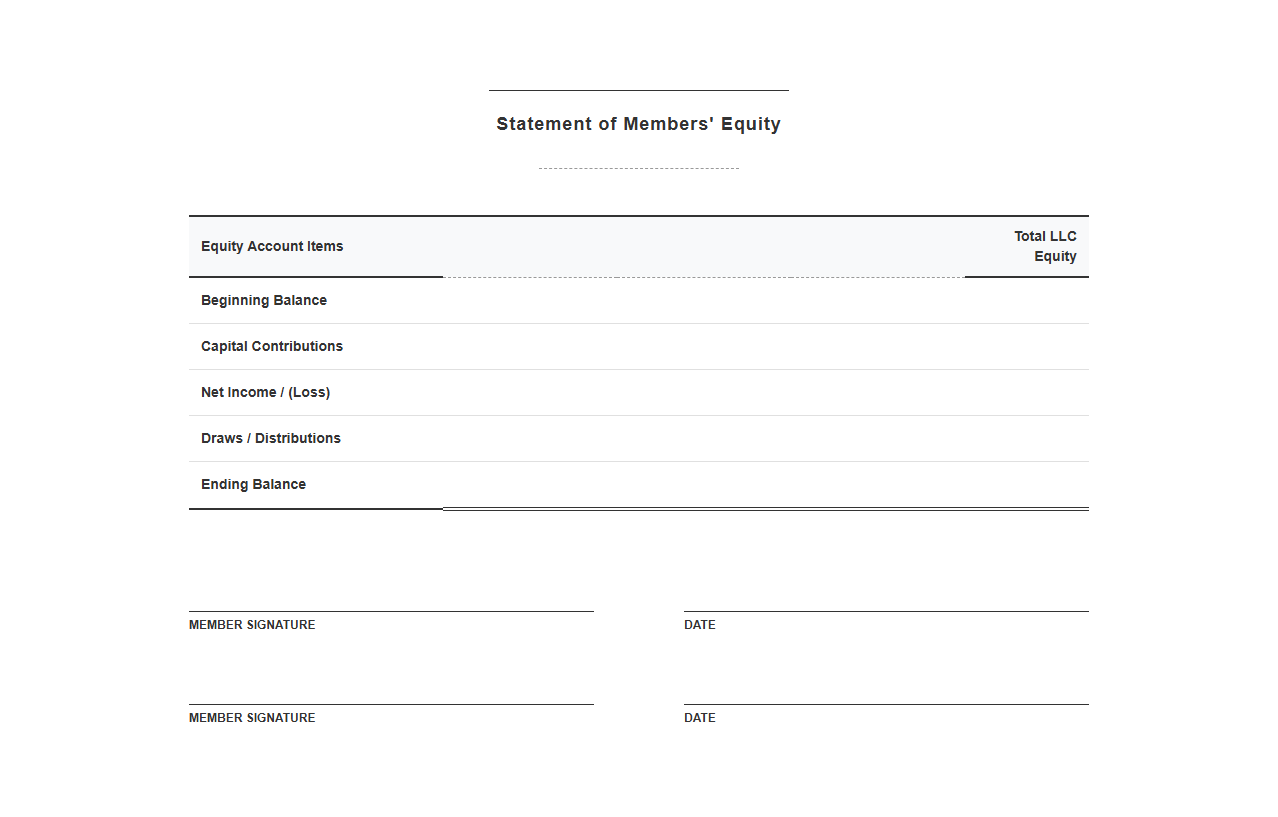
Multi Member LLC Equity Statement Template
 Download: .PDF
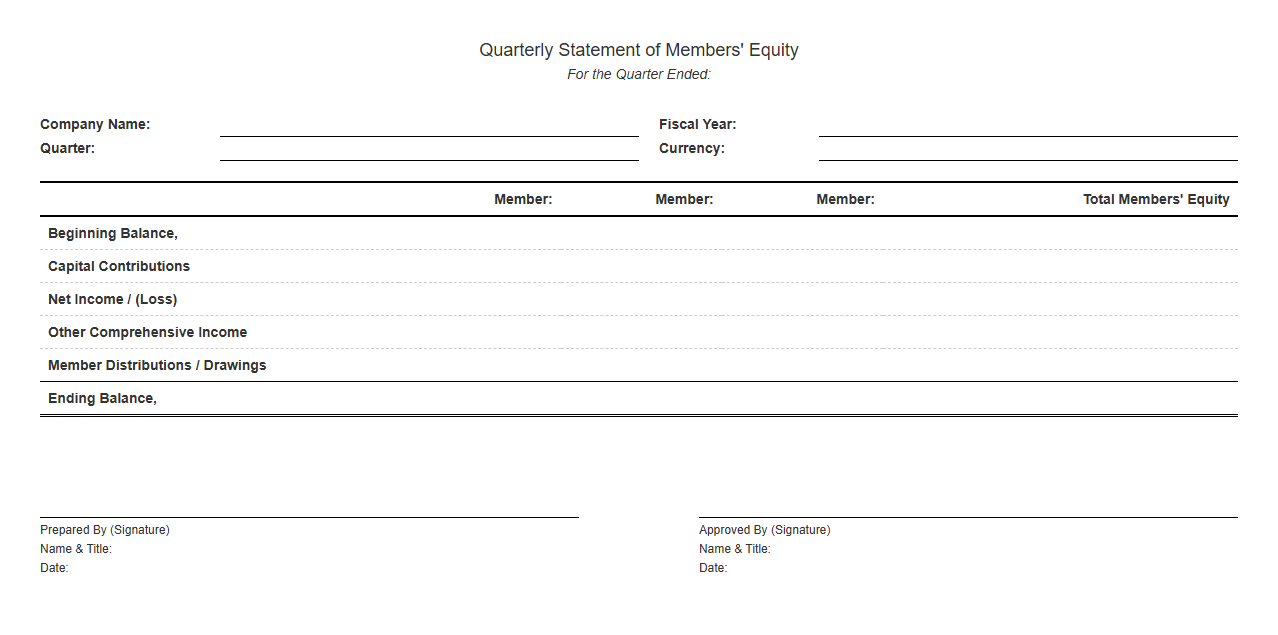
Quarterly Members Equity Statement Template
 Download: .PDF
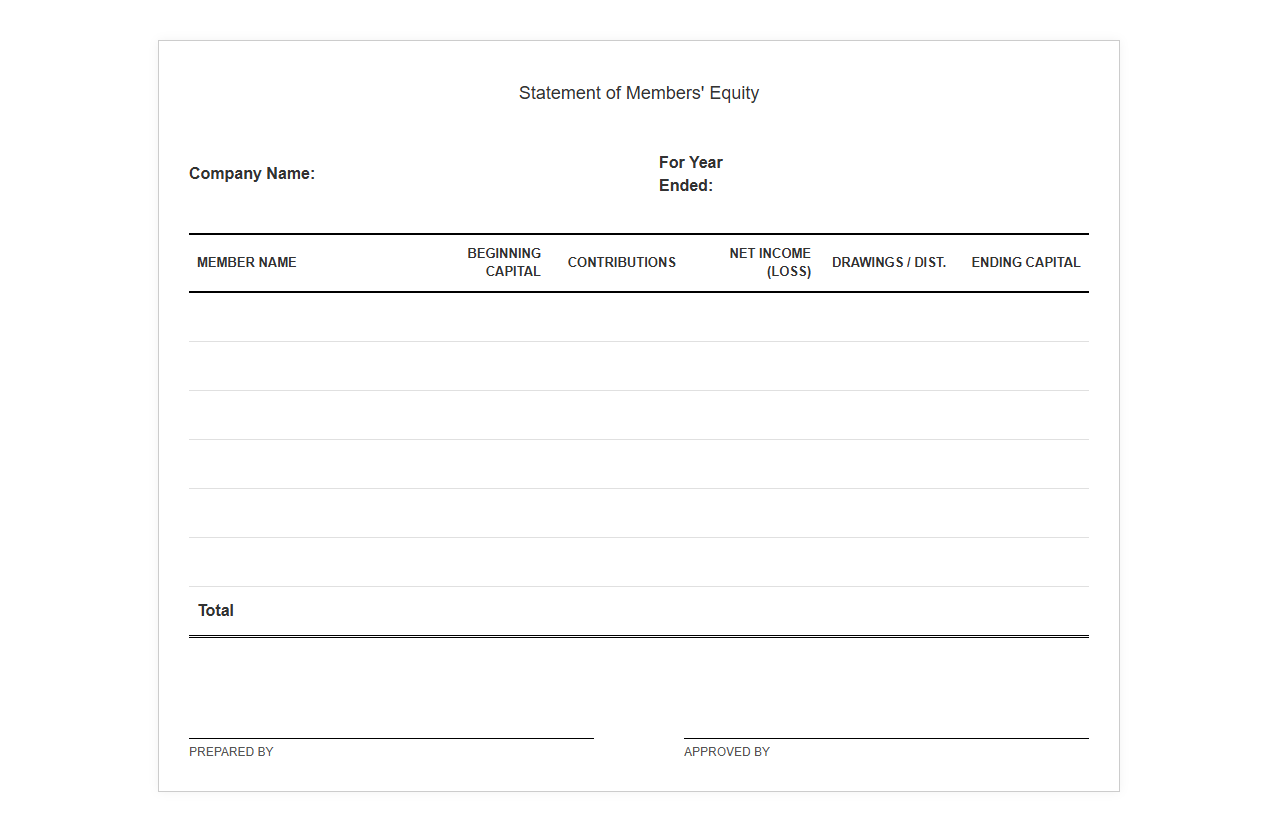
Members Capital Account Statement Template
 Download: .PDF
Partnership Statement of Members Equity
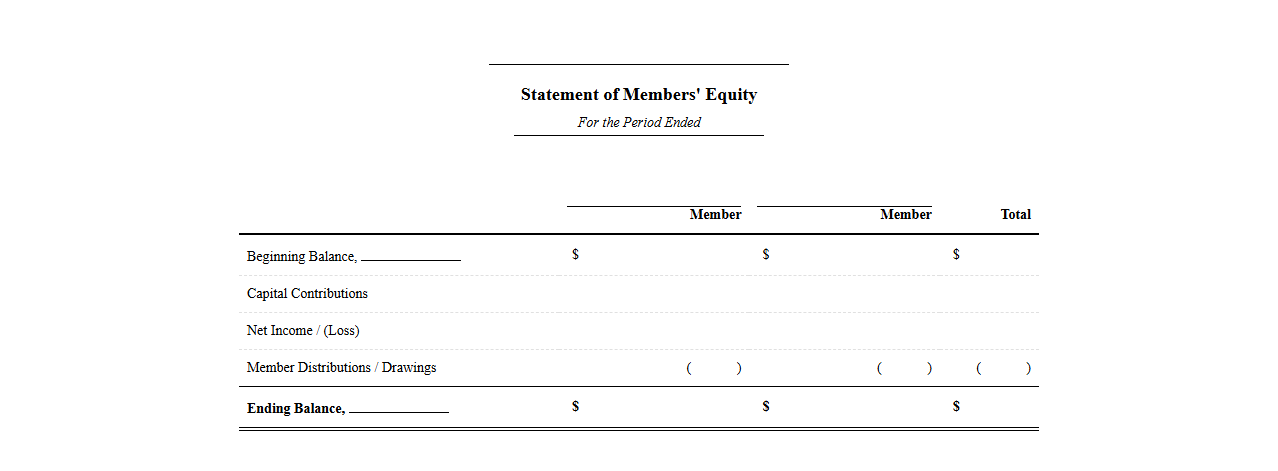 Download: .PDF
Simple Members Equity Statement Template
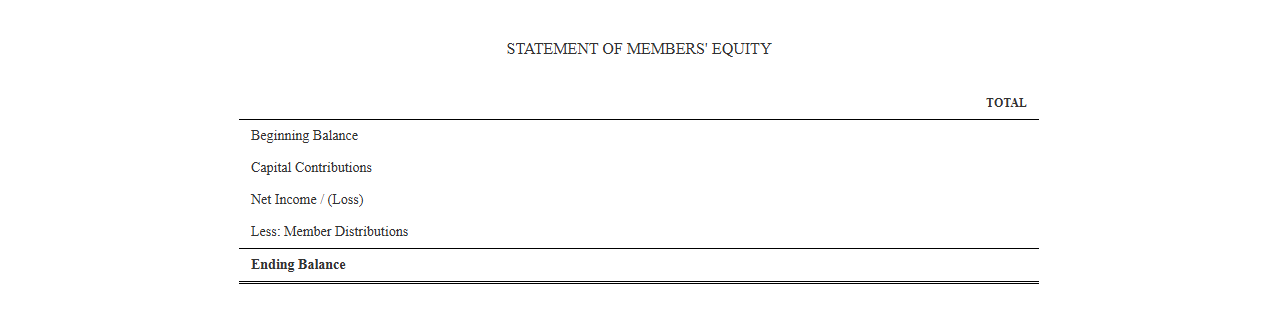 Download: .PDF
Demystifying Member's Equity Across Business Models
A Statement of Member's Equity acts as a financial GPS, tracing the net worth of a business belonging to its owners at a specific point in time. Understanding how capital flows in and out of an enterprise is critical for maintaining overall business health, securing loans, and attracting future investors.
Capital tracking ensures transparency and prevents disputes, but the exact reporting methods vary wildly based on organizational structure. Whether operating as a solo entrepreneur or managing a complex multi-member LLC, tailoring your equity reporting to your specific business model is key to maintaining regulatory compliance and financial clarity.
Capital Tracking for Sole Proprietorships: Owner's Equity Basics
For a sole proprietorship, the business and the owner are legally the same entity. Consequently, tracking capital is relatively straightforward, focusing on the owner's personal financial relationship with the business.
Core Components of Owner's Equity
Sole proprietors measure their equity by monitoring three primary financial activities:
- Owner Investments: Direct cash injections or personal assets brought into the business to fund operations.
- Net Income: The total revenues minus total expenses generated during the fiscal period.
- Personal Drawings: Funds or assets taken out of the business by the owner for personal use.
Partnership Capital Accounts: Allocation and Alignment
Partnership structures introduce additional layers of complexity, as capital must be tracked individually for each partner. Maintaining separate capital accounts ensures that initial contributions, ongoing profit or loss allocations, and distributions remain aligned with the agreed-upon partnership terms.
| Partner Name | Initial Capital Contribution | Profit/Loss Allocation Ratio | Distributions Made |
|---|---|---|---|
| Partner A | $50,000 | 60% | $12,000 |
| Partner B | $40,000 | 40% | $8,000 |
Statement of Members' Equity for LLCs: Managing Multi-Member Complexity
Limited Liability Companies (LLCs) combine the flexibility of partnerships with the liability protection of corporations. Managing equity in a multi-member LLC requires rigid tracking of individual member capital accounts, which document each member's financial stake, initial contributions, and subsequent distributions.
The Role of the Operating Agreement
"The operating agreement serves as the foundational source of truth for an LLC, defining how profits, losses, and distributions are allocated among members, regardless of their initial capital contribution percentages."
Transitioning to Corporations: Shareholder Equity vs. Member's Equity
When a business transitions from an unincorporated entity to a corporation, the concept of member's equity shifts to shareholder's equity. This transition introduces more structured, regulated components of ownership that are tied to shares of stock rather than individual capital accounts.
The primary elements of corporate equity reporting include:
- Common Stock: The par value of the shares issued to the owners of the corporation.
- Additional Paid-In Capital: The amount shareholders paid for stock above its par value.
- Retained Earnings: The cumulative net income retained in the corporation after dividends are paid to shareholders.
Key Elements of an Effective Equity Statement Template
To ensure compliance and financial clarity, a standardized equity tracking template must contain specific variables. These elements capture the continuous movement of equity throughout the fiscal year, providing stakeholders with an accurate view of the organization's net worth.
- Beginning balances at the start of the reporting period.
- Net income or loss additions that directly increase or decrease equity.
- New owner investments and capital contributions.
- Member distributions, dividends, or owner drawings that reduce equity.
- Ending balances showing the current net worth of owner equity.
Best Practices for Simplifying and Automating Capital Tracking
Manual equity tracking can easily lead to costly accounting errors and legal compliance issues. To simplify capital tracking, businesses should leverage modern cloud-based accounting software to automatically sync bank feeds and record transactions in real-time.
Additionally, performing regular financial reconciliation prevents year-end headaches. Partnering with a qualified CPA ensures that your equity statements accurately reflect tax liabilities and legal agreements, protecting the financial foundation of your enterprise.

Leave a comment