

For corporate tax departments and their legal counsel, "scope creep" remains a persistent and costly drain on resources, routinely transforming predictable advisory retainers into uncompensated, high-stakes projects. As global tax regulations become increasingly volatile, the dividing line between routine compliance and complex, specialized advisory has blurred, rendering traditional, open-ended agreements obsolete.
A precisely structured retainer agreement grants corporate clients budget predictability while protecting advisory firms from margin erosion. Establishing clear contract stipulations is essential to managing expectations; these must explicitly define where baseline monitoring ends and out-of-scope services-such as handling unexpected transfer pricing audits or navigating sudden multi-jurisdictional tax changes-begin.
This article outlines the essential strategies for drafting legally compliant corporate tax retainers, establishing enforceable service boundaries, and implementing adjustment clauses that protect both parties.
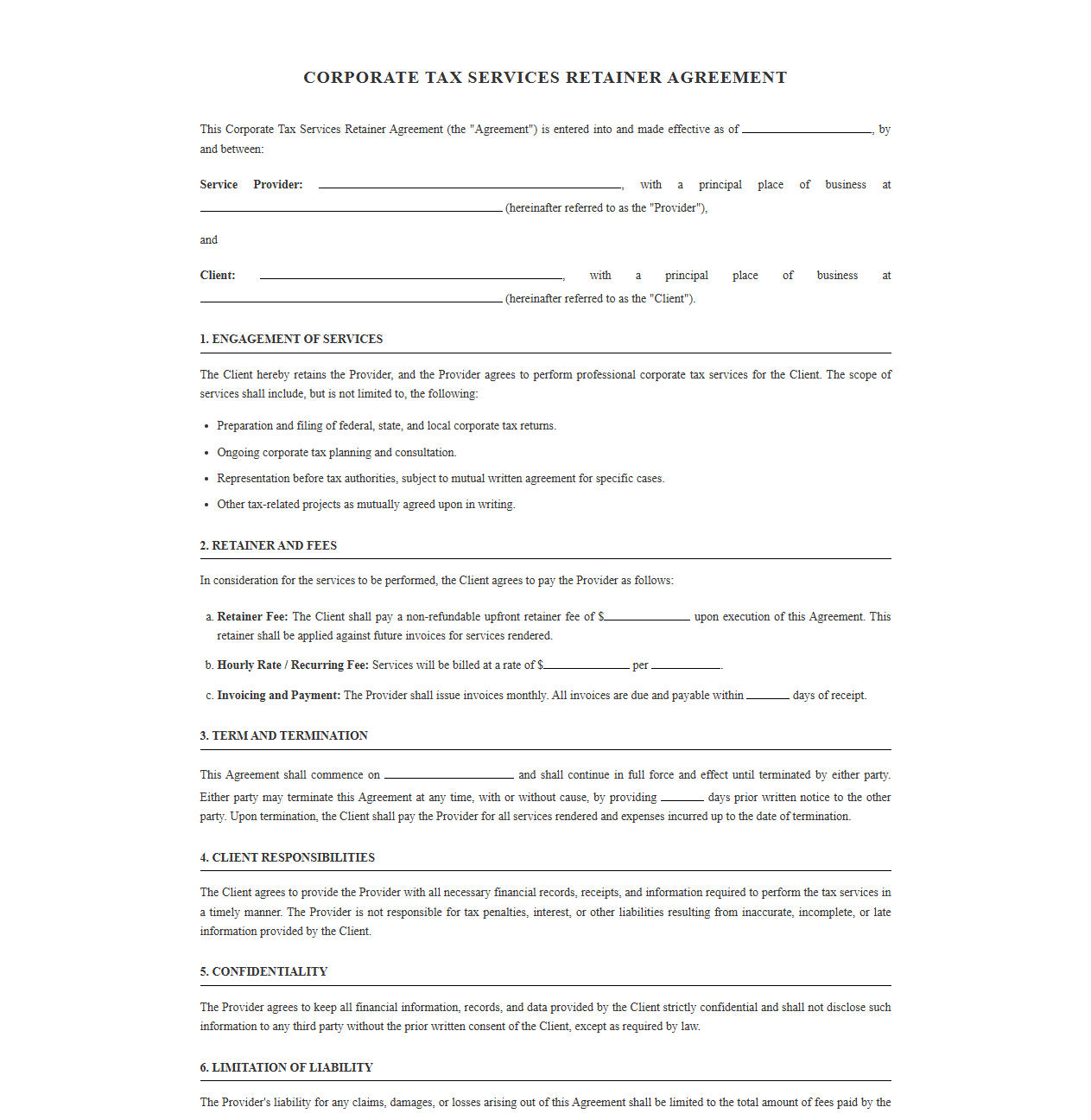
Corporate Tax Services Retainer Agreement Template
 Download: .PDF
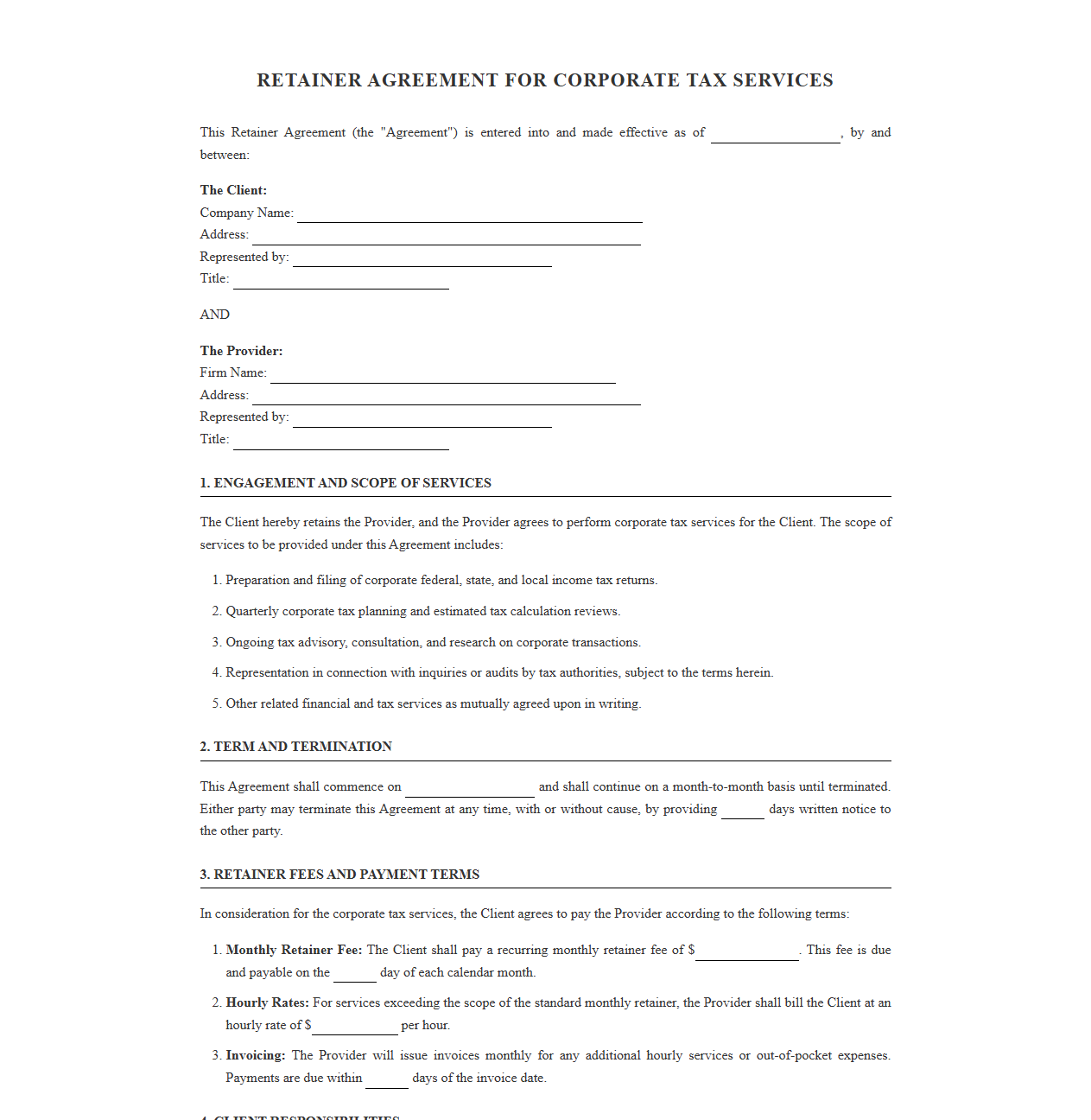
Retainer Agreement for Corporate Tax Services
 Download: .PDF
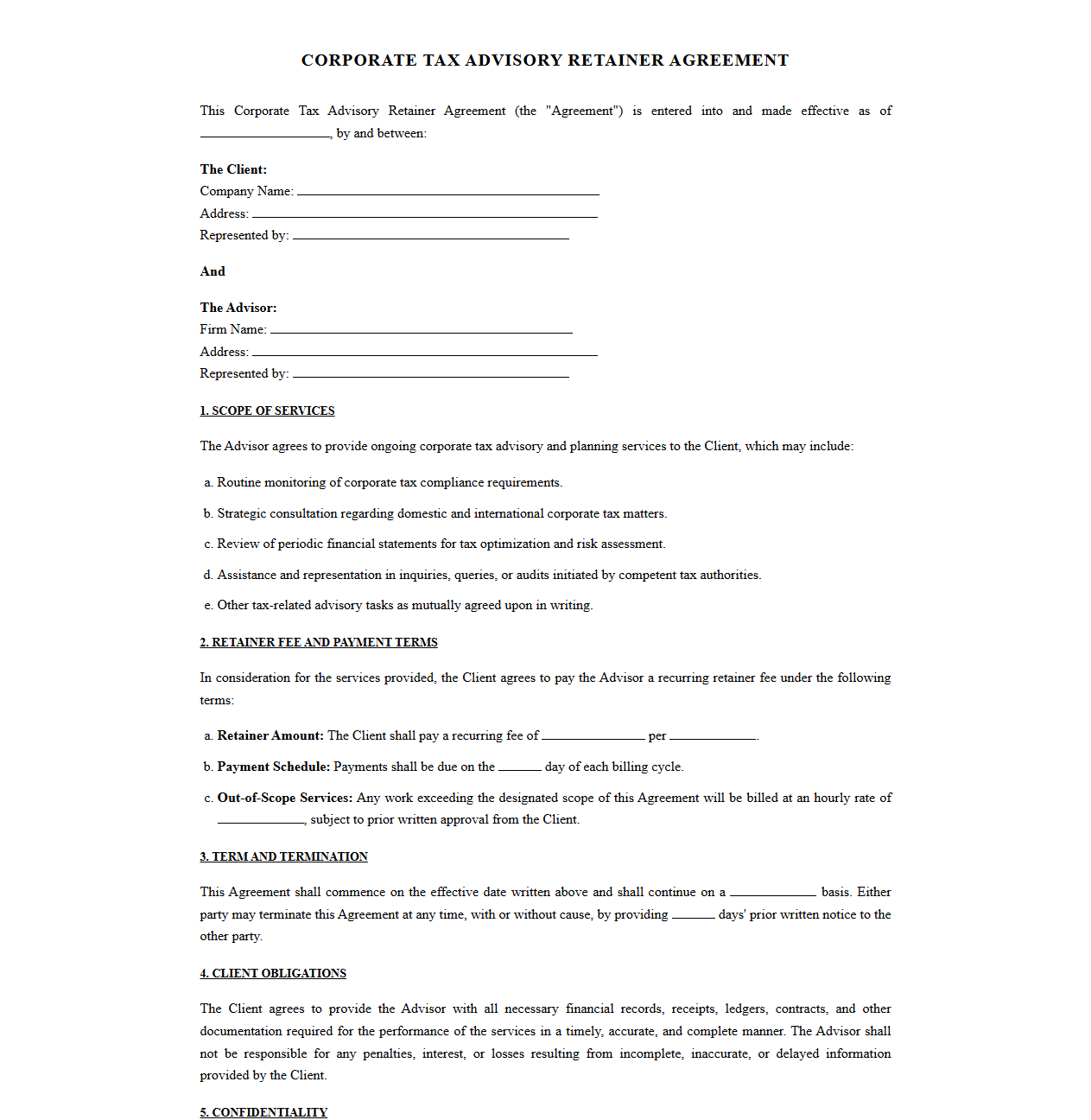
Corporate Tax Advisory Retainer Agreement
 Download: .PDF
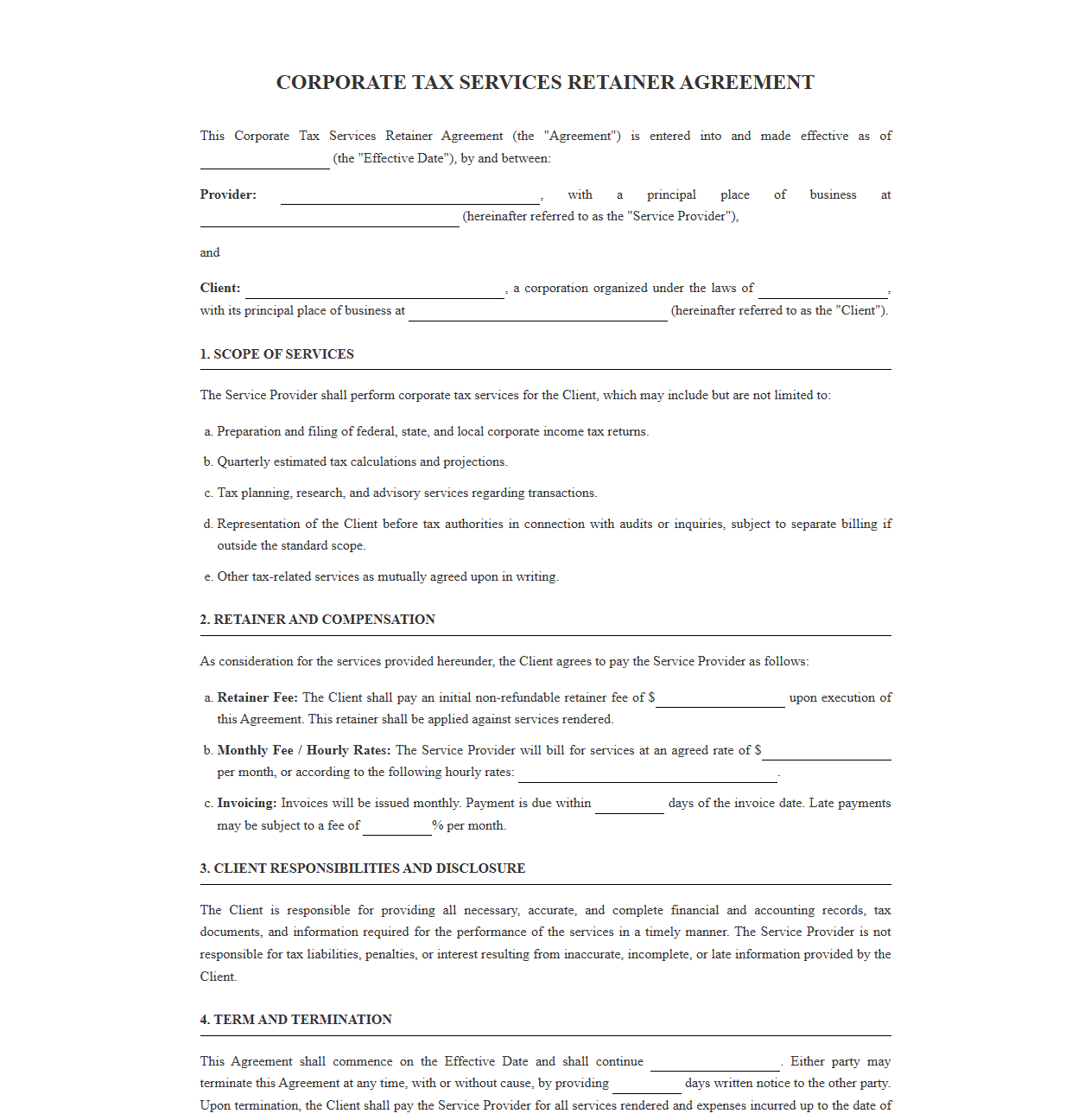
Tax Retainer Agreement for Corporations
 Download: .PDF
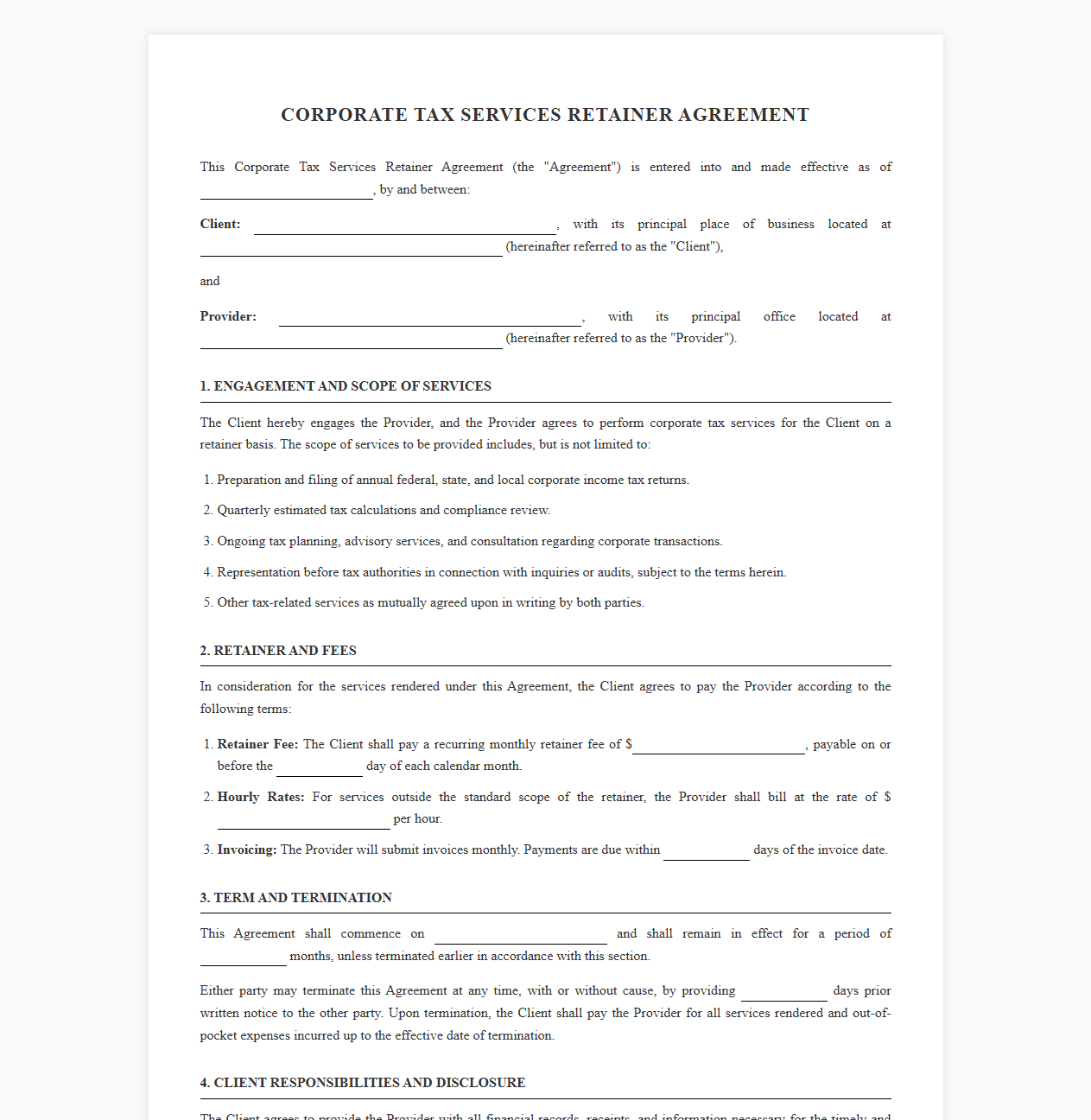
Standard Corporate Tax Services Retainer Contract
 Download: .PDF
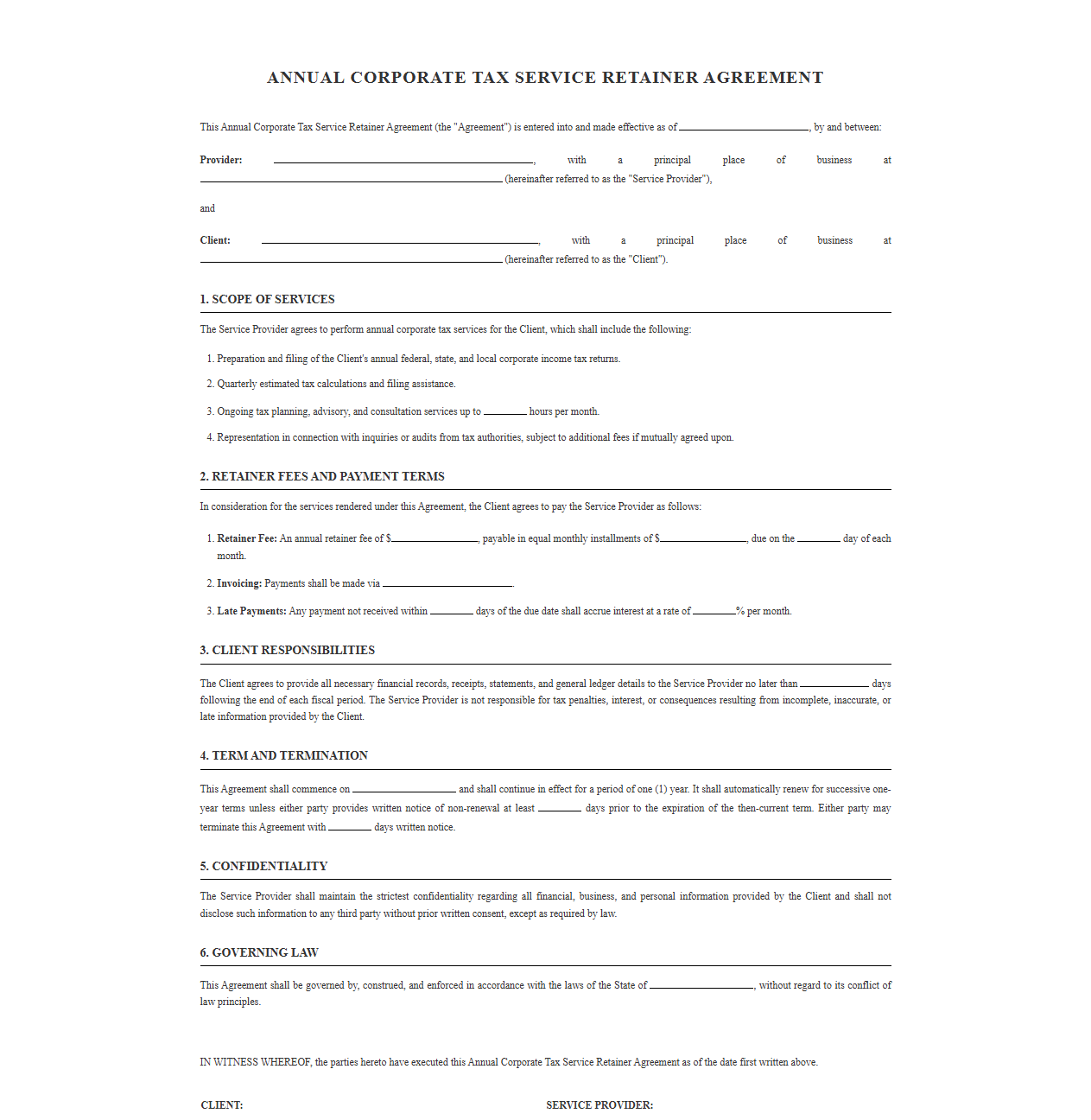
Annual Corporate Tax Service Retainer Agreement
 Download: .PDF
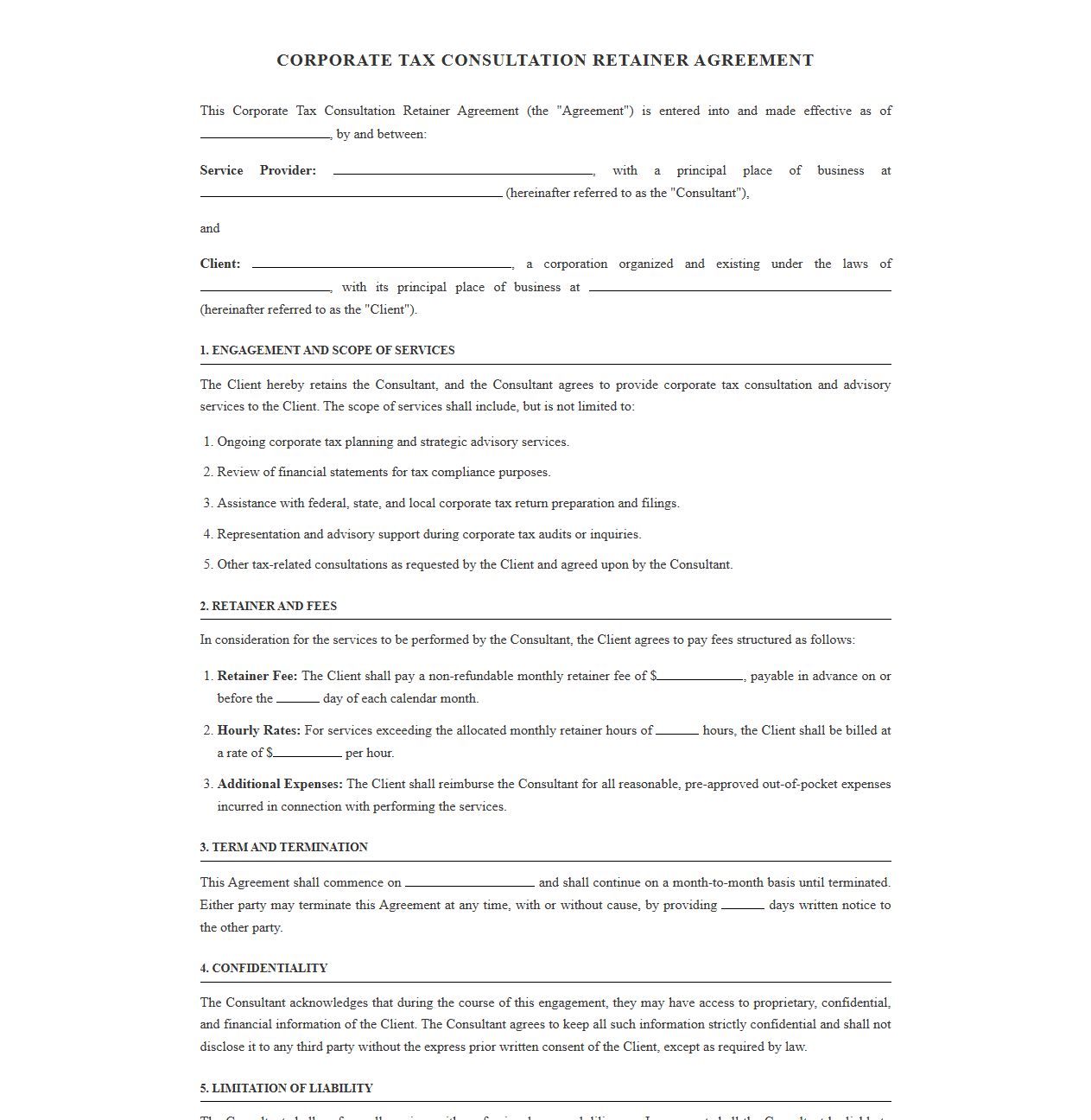
Corporate Tax Consultation Retainer Agreement
 Download: .PDF
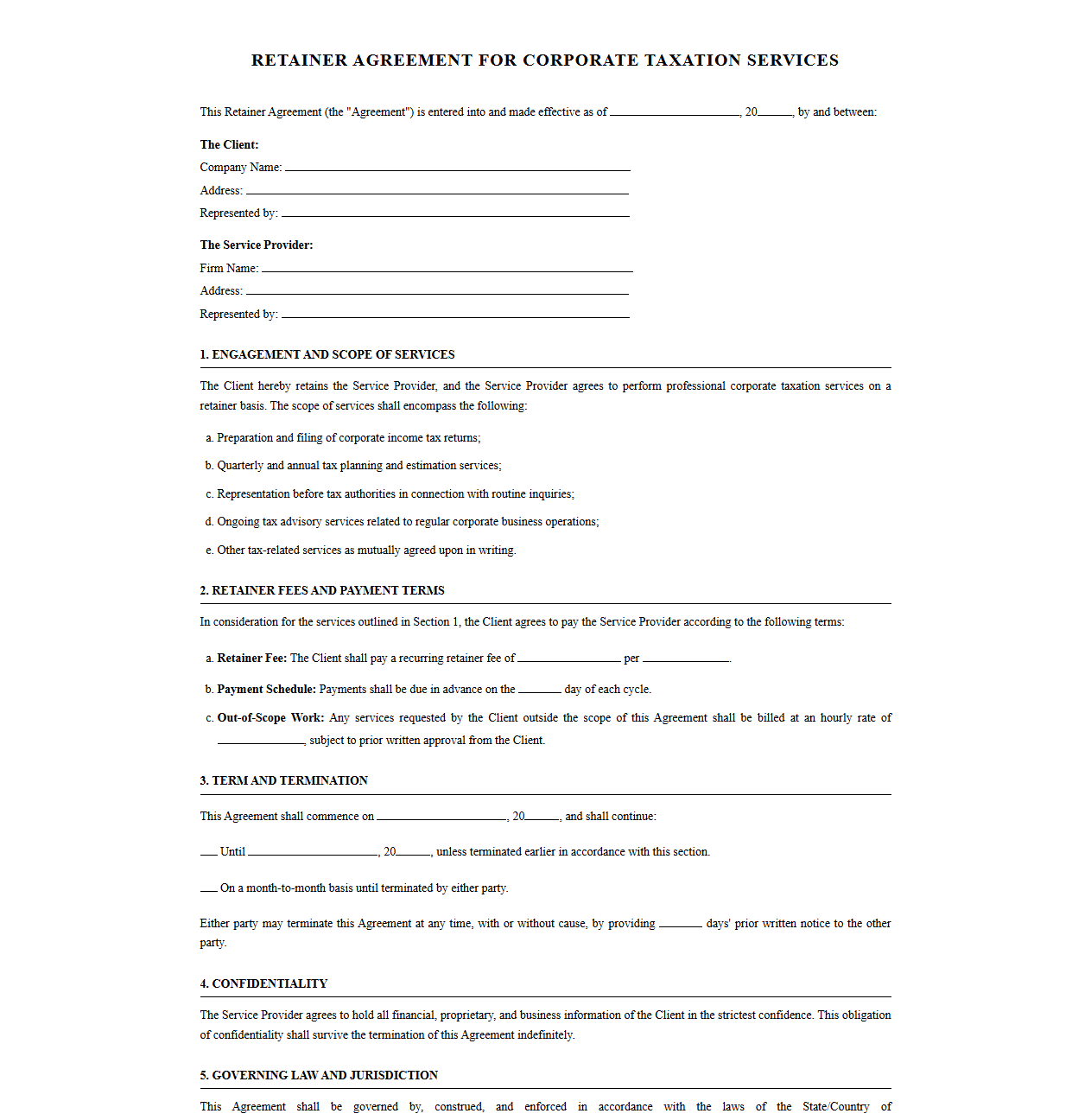
Retainer Contract for Corporate Taxation Services
 Download: .PDF
The Anatomy of Scope Creep in Corporate Tax Retainers
Corporate tax retainer agreements are highly susceptible to scope creep due to the dynamic and unpredictable nature of tax compliance, regulatory shifts, and business transactions. Unlike fixed-scope projects, corporate tax advisory often deals with fluid business environments where a simple compliance question can quickly spiral into a complex, multi-jurisdictional analysis. Because clients frequently view their retained tax professionals as on-demand consultants, they may initiate requests that blur the line between routine maintenance and specialized advisory work without recognizing the additional labor required.
For law and accounting firms, this fluid boundary poses severe financial risks. Uncontrolled scope creep leads directly to uncompensated labor hours and substantial margin erosion on what should be highly profitable engagements. Furthermore, when tax professionals perform out-of-scope work under the pressure of tight deadlines, they incur a high opportunity cost, diverting critical resources away from other high-margin projects. Overworked staff attempting to accommodate undocumented requests also increases the risk of operational errors, thereby heightening the firm's professional liability exposure and potentially jeopardizing client relationships when billing adjustments are belatedly introduced.
Defining the Core Scope with Absolute Precision
To mitigate the risk of uncompensated work, the retainer agreement must define the "Included Services" with absolute clarity. Rather than using broad, ambiguous terminology such as "general tax advisory services," the contract should specify the exact tax years, jurisdictions, and specific entities covered by the agreement. Setting hard boundaries ensures that the client understands precisely what deliverables are covered under their recurring fee and when a request falls outside the pre-negotiated framework.
A well-drafted core scope section should explicitly list the covered deliverables and set numeric thresholds where appropriate. The core services must be defined by quantitative limits, such as:
- Preparation and filing of Federal Form 1120 (U.S. Corporation Income Tax Return) for the designated parent entity only.
- Preparation of state income tax returns for up to three (3) pre-defined state jurisdictions (e.g., California, New York, and Texas).
- A maximum allocation of four (4) hours of routine tax advisory and correspondence per calendar month.
- Assistance with standard quarterly estimated tax calculations based on client-provided financial statements.
Establishing Formal Out-of-Scope Triggers
A successful retainer agreement must anticipate the necessity of out-of-scope work without allowing it to occur automatically. Firms should establish a formal written authorization workflow that stops work the moment a request exceeds the agreed boundaries. The client must be notified that the request is out-of-scope, provided with a cost estimate, and required to sign an Additional Services Addendum (ASA) before any billable work commences.
To enforce this boundary legally, the retainer contract should include a dedicated clause outlining the mechanics of out-of-scope work authorization. Below is a sample clause designed to protect the firm from unauthorized work disputes:
"Any service requested by the Client that is not explicitly enumerated in the 'Included Services' section of this Agreement shall be deemed Out-of-Scope Work. The Firm shall have no obligation to perform Out-of-Scope Work until a formal Additional Services Addendum (ASA) detailing the specific scope of work, estimated timeline, and additional compensation has been executed by authorized representatives of both parties in writing."
Aligning Fee Structures with Deliverables
Aligning the fee structure with specific deliverables is critical to maintaining profitability and managing client expectations. Different billing models offer varying levels of predictability, and selecting the right model depends on the stability of the client's tax environment. Implementing a structured payment schedule tied to concrete milestones further ensures that the firm is compensated before major deliverables are finalized.
The table below compares common billing structures used in modern corporate tax retainer agreements:
| Billing Model | Structure Description | Risk of Scope Creep | Mitigation Strategy |
|---|---|---|---|
| Flat-Rate Recurring | Fixed monthly fee for a pre-defined set of compliance and basic advisory services. | High | Set strict caps on monthly advisory hours and specific entity limits. |
| Hybrid Value-Billing | Fixed fee for core compliance combined with value-pricing for high-impact consulting projects. | Medium | Draft separate, stand-alone engagement letters for specialized advisory projects. |
| Retainer Against Hourly | Upfront monthly deposit drawn down against actual hourly rates for work performed. | Low | Provide regular burn-rate reports and require prompt replenishment of deposits. |
Integrating IRS Circular 230 and Legal Compliance Standards
Corporate tax retainers must be grounded in federal and state professional standards to protect both the practitioner and the client. Central to this effort is the integration of IRS Circular 230 Standards, which regulate practice before the Internal Revenue Service. Retainers should explicitly clarify that the firm will rely on client-provided information without independent verification, unless otherwise agreed, to satisfy the Circular 230 Section 10.22 diligence requirements. This prevents the firm from being held liable for inaccuracies stemming from incomplete client data.
Additionally, the agreement should address professional liability limitations and state-specific regulatory nuances. The contract must feature a limitation of liability clause, capping the firm's exposure to a multiple of the fees collected under the retainer. It is also essential to reference state-specific accountancy board regulations and legal privilege rules, ensuring that any tax advice provided remains protected under applicable tax practitioner-client privilege laws where relevant.
Dispute Resolution and Unilateral Termination Clauses
When disagreements arise regarding scope, fees, or deliverables, a structured dispute resolution protocol prevents administrative paralysis and avoids costly litigation. Furthermore, the firm must retain a unilateral right to pause work or terminate the contract if the client breaches the agreement, fails to pay invoices timely, or refuses to sign an ASA for required out-of-scope tasks.
To manage these scenarios, firms should implement a mandatory, multi-step escalation and termination process:
- Written Notification: The initiating party must provide a formal written notice detailing the specific dispute or payment default.
- Good Faith Negotiation: Authorized representatives from both organizations must meet within fifteen (15) business days to attempt to resolve the issue.
- Work Suspension: If the dispute or outstanding invoice is not resolved within thirty (30) days of the initial notice, the firm retains the unilateral right to suspend all active tax work and filings.
- Unilateral Termination: If non-payment or breach persists past forty-five (45) days, the firm may terminate the retainer immediately, providing the client with transitional files as required by professional ethics.
Best Practices for Annual Retainer Audits and Client Onboarding
Preventing scope creep is an active, ongoing process that begins during the client onboarding stage and continues throughout the lifecycle of the engagement. An annual retainer audit is vital to assess whether the client's actual service needs have outgrown their original contract terms. Corporate structures evolve through acquisitions, restructuring, or international expansion, and these changes must be reflected in revised agreement terms to prevent compliance drift.
A structured onboarding process sets the stage for a transparent, professional relationship where scope boundaries are respected from day one.

Leave a comment