
Managing subcontractor compliance remains a persistent administrative bottleneck for general contractors, frequently leading to costly audit penalties, labor disputes, and project delays. Before addressing these operational headaches, it is critical to understand the shifting landscape of federal and state labor standards. Standardizing your compliance framework grants your firm immediate audit-readiness and robust legal protection. However, as an educational stipulation, these templates must always be adapted to meet specific state-level labor laws to ensure total enforceability.
By implementing concrete tools like Certified Payroll Reports (Form WH-347) and unconditional lien waivers, you establish a transparent, verifiable paper trail that protects all parties. In this guide, we will examine the essential payroll document templates required to secure your subcontractor agreements, mitigate financial liability, and streamline your project workflows.
Subcontractor Payroll and Payment Agreement Template
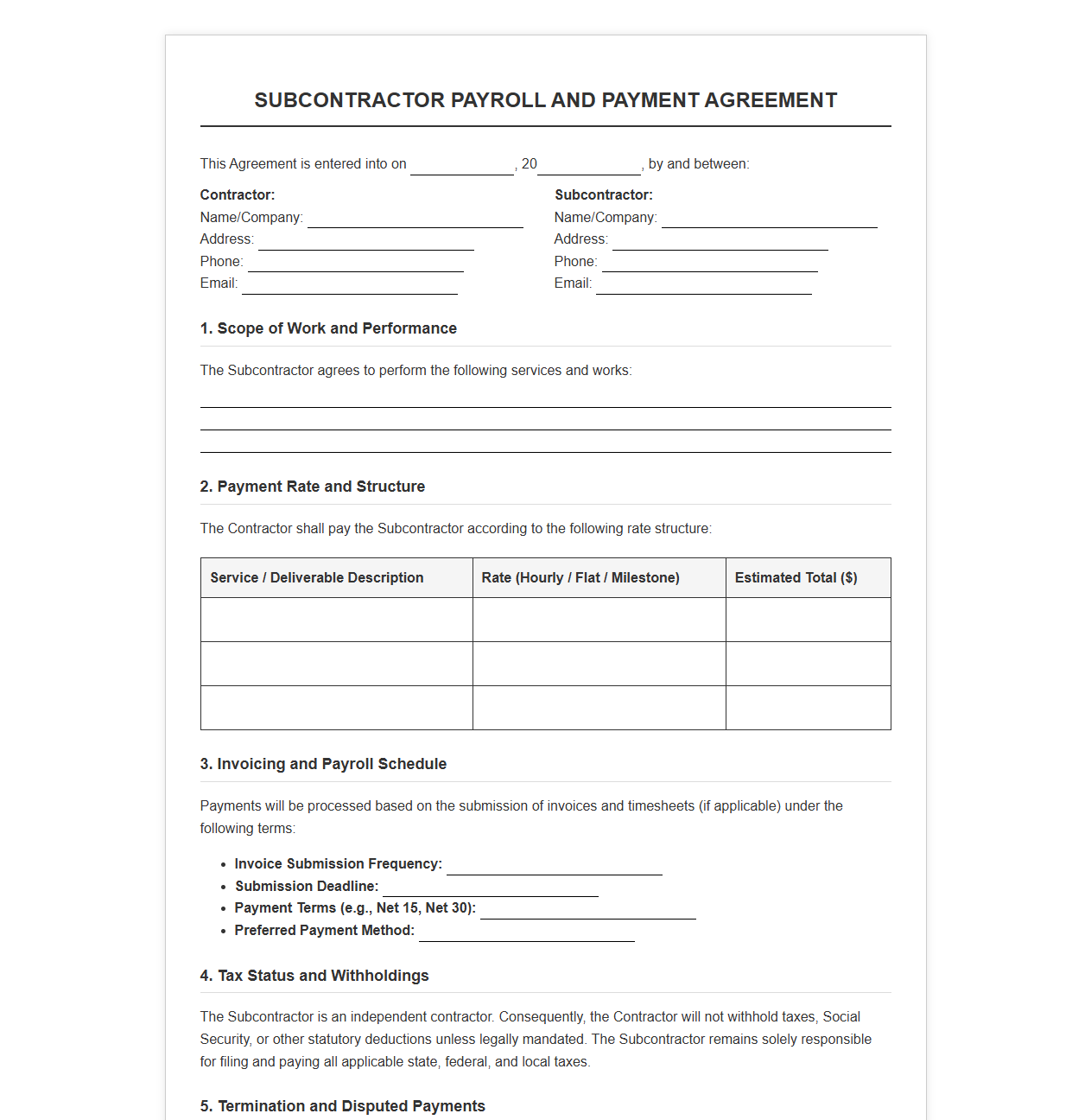 Download: .PDF
Independent Contractor Payroll Processing Agreement
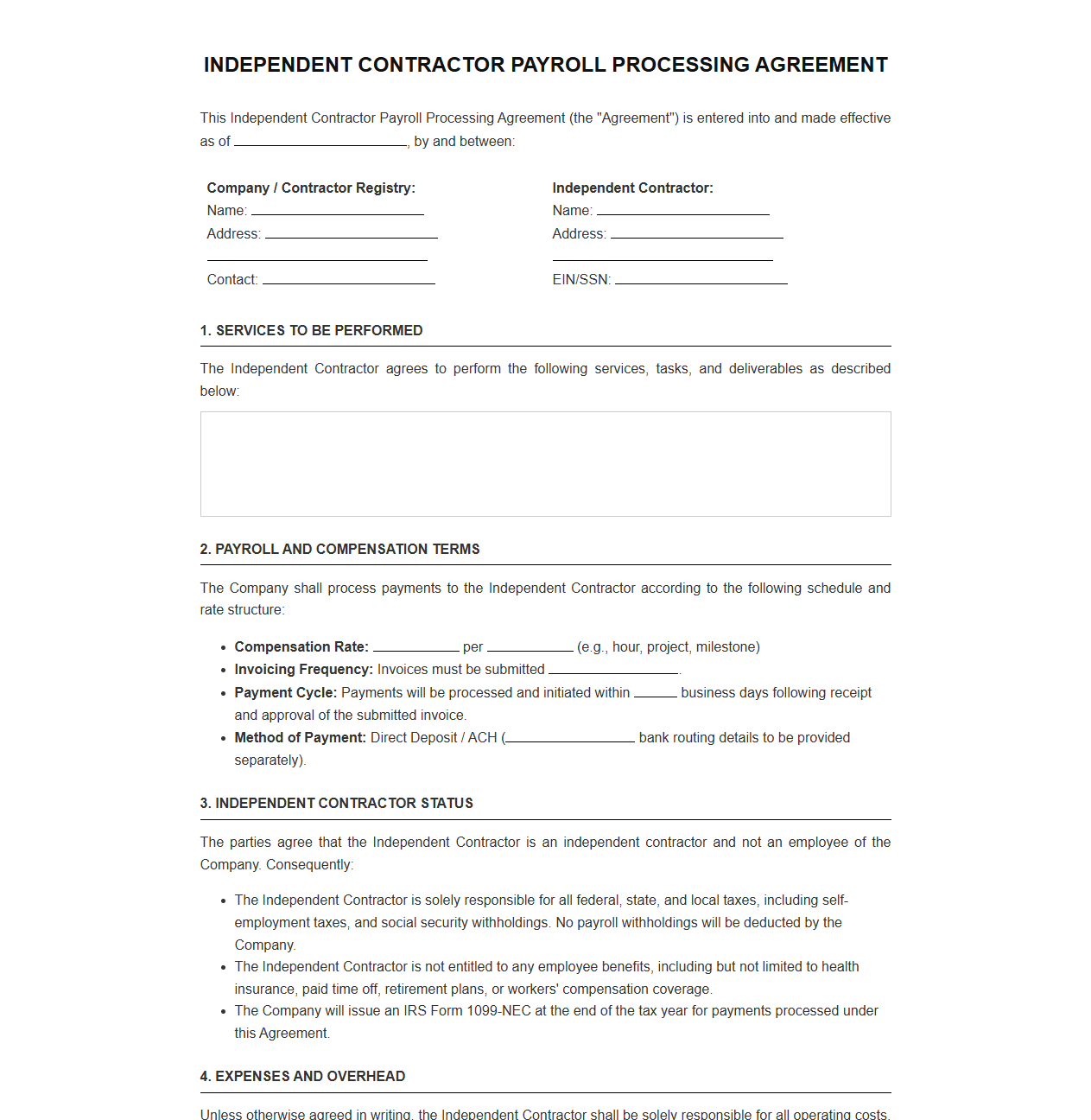 Download: .PDF
Subcontractor Compensation and Invoice Template
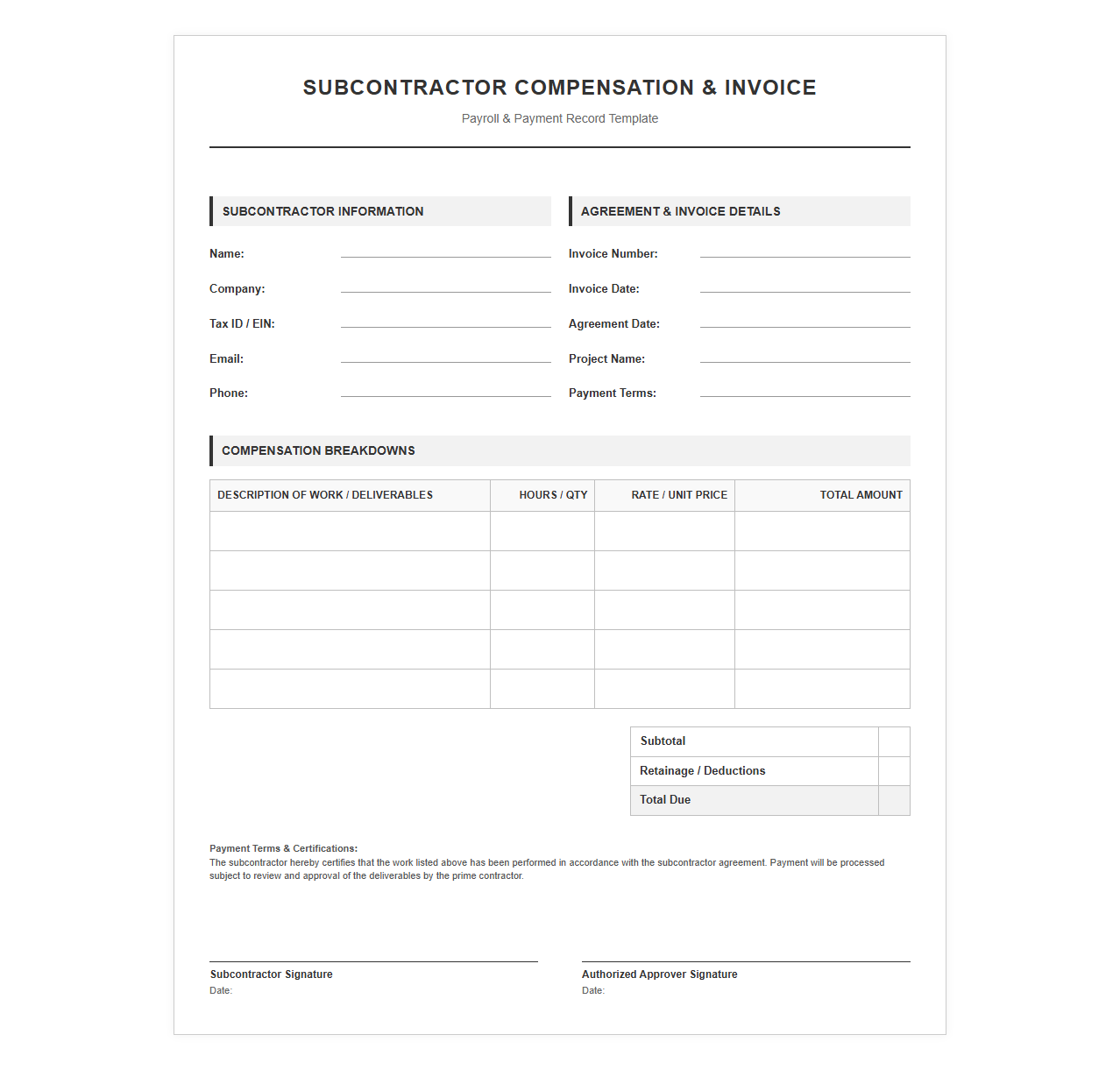 Download: .PDF
Contract Labor Payroll Authorization Form
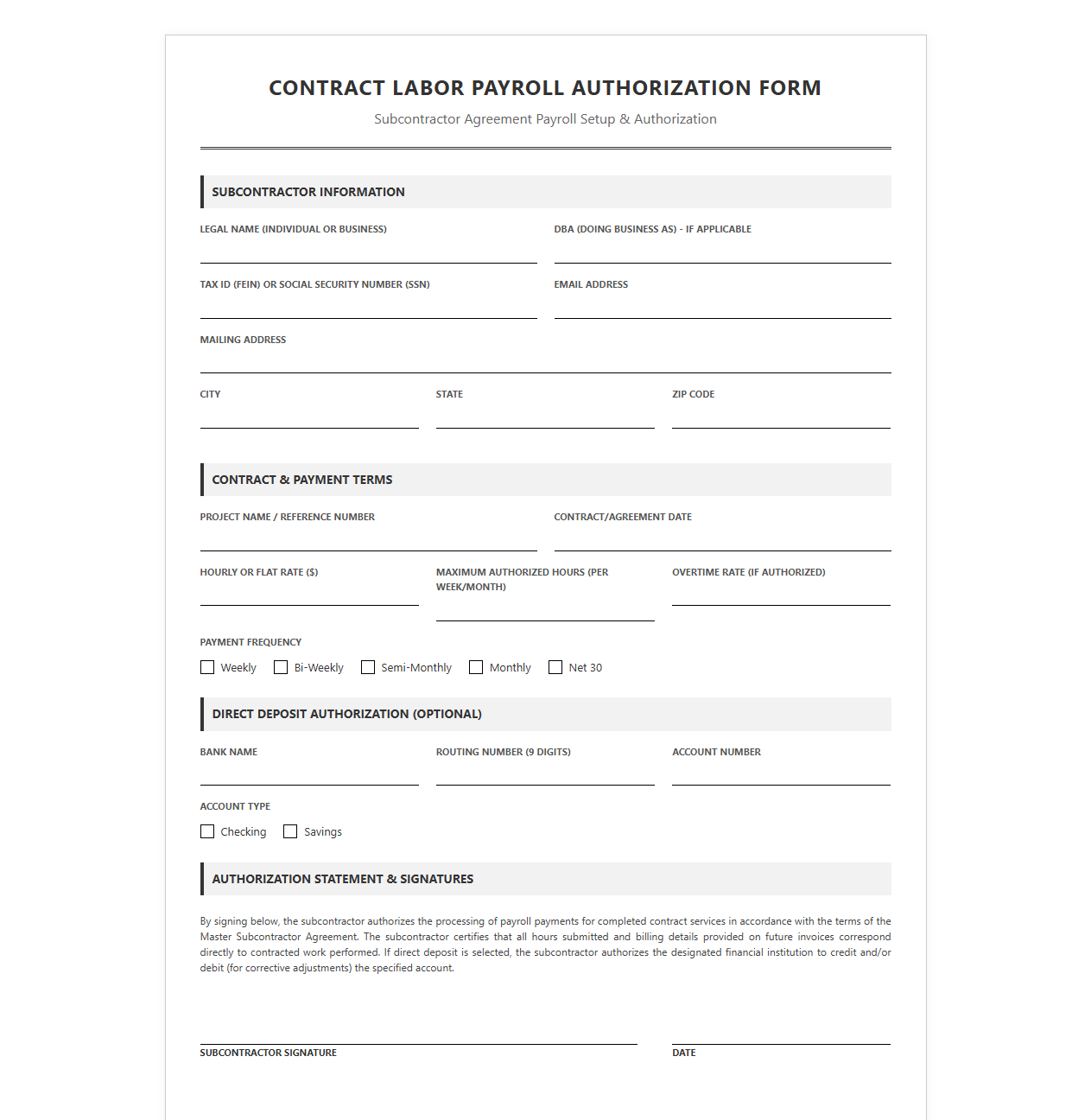 Download: .PDF
Subcontractor Payment Terms and Payroll Schedule
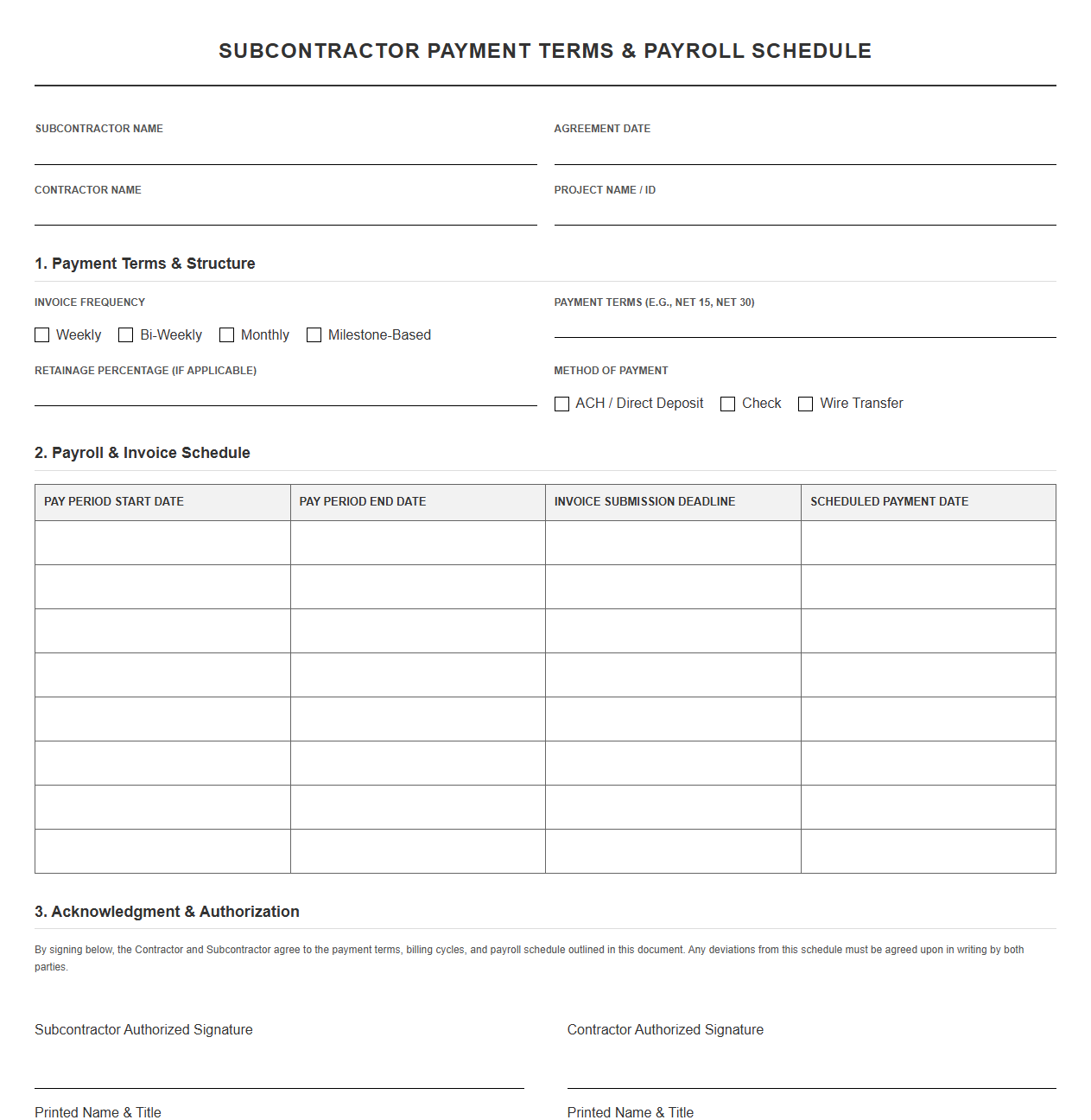 Download: .PDF
External Contractor Payroll Agreement Template
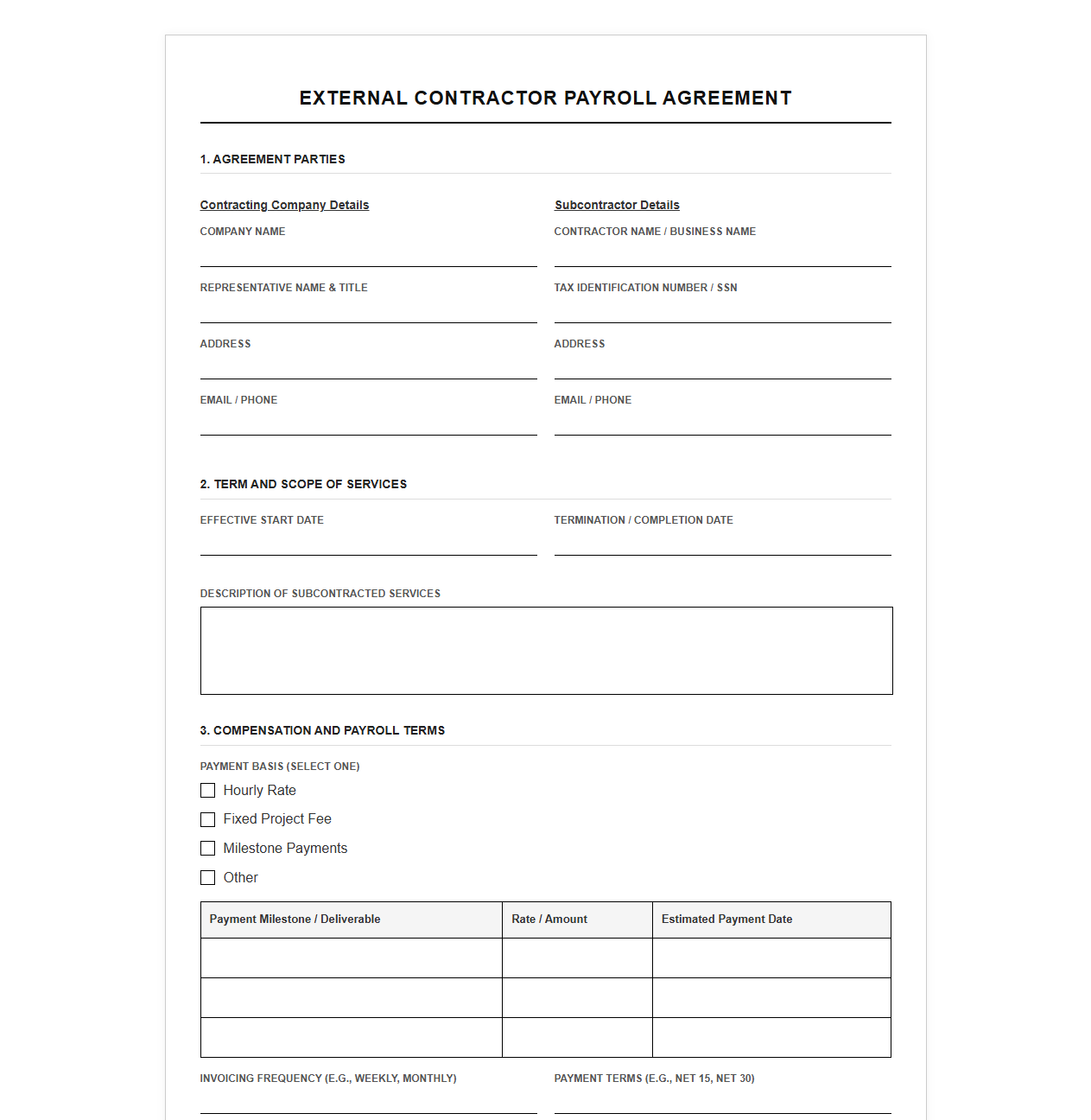 Download: .PDF
Subcontractor Wage and Payroll Ledger Template
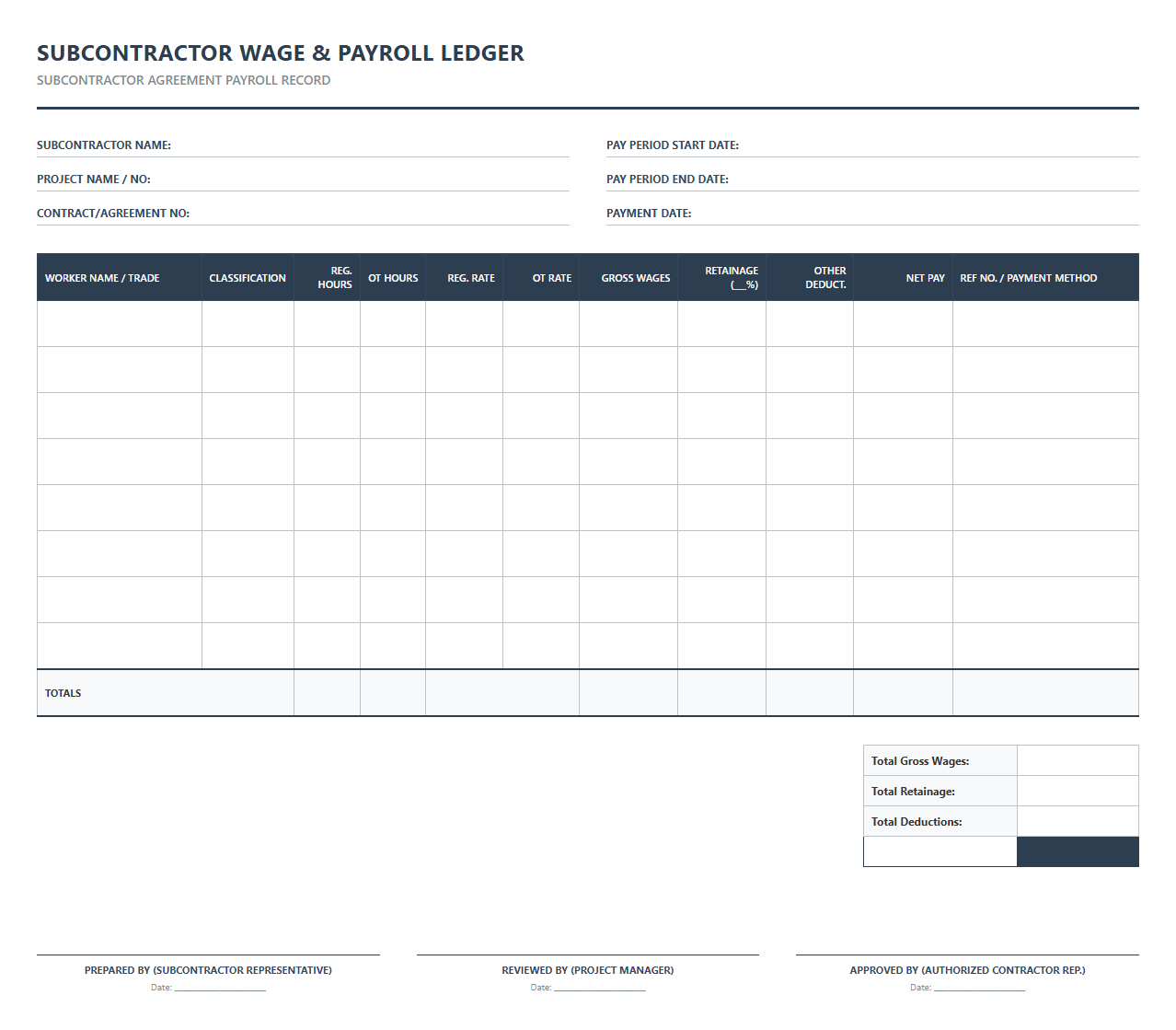 Download: .PDF
Freelance Contractor Payroll Agreement Form
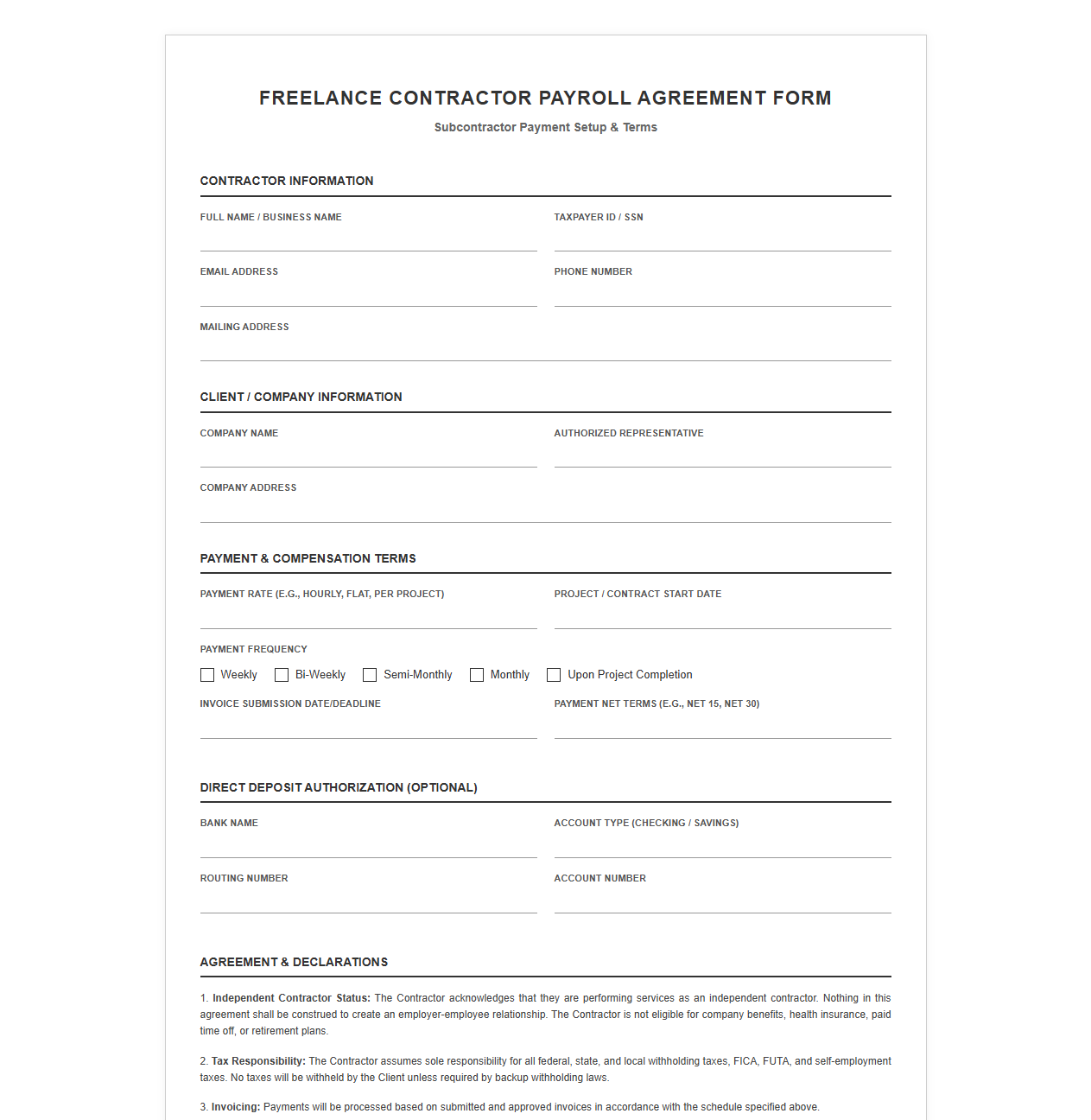 Download: .PDF
Subcontractor Fee Disbursement Agreement Template
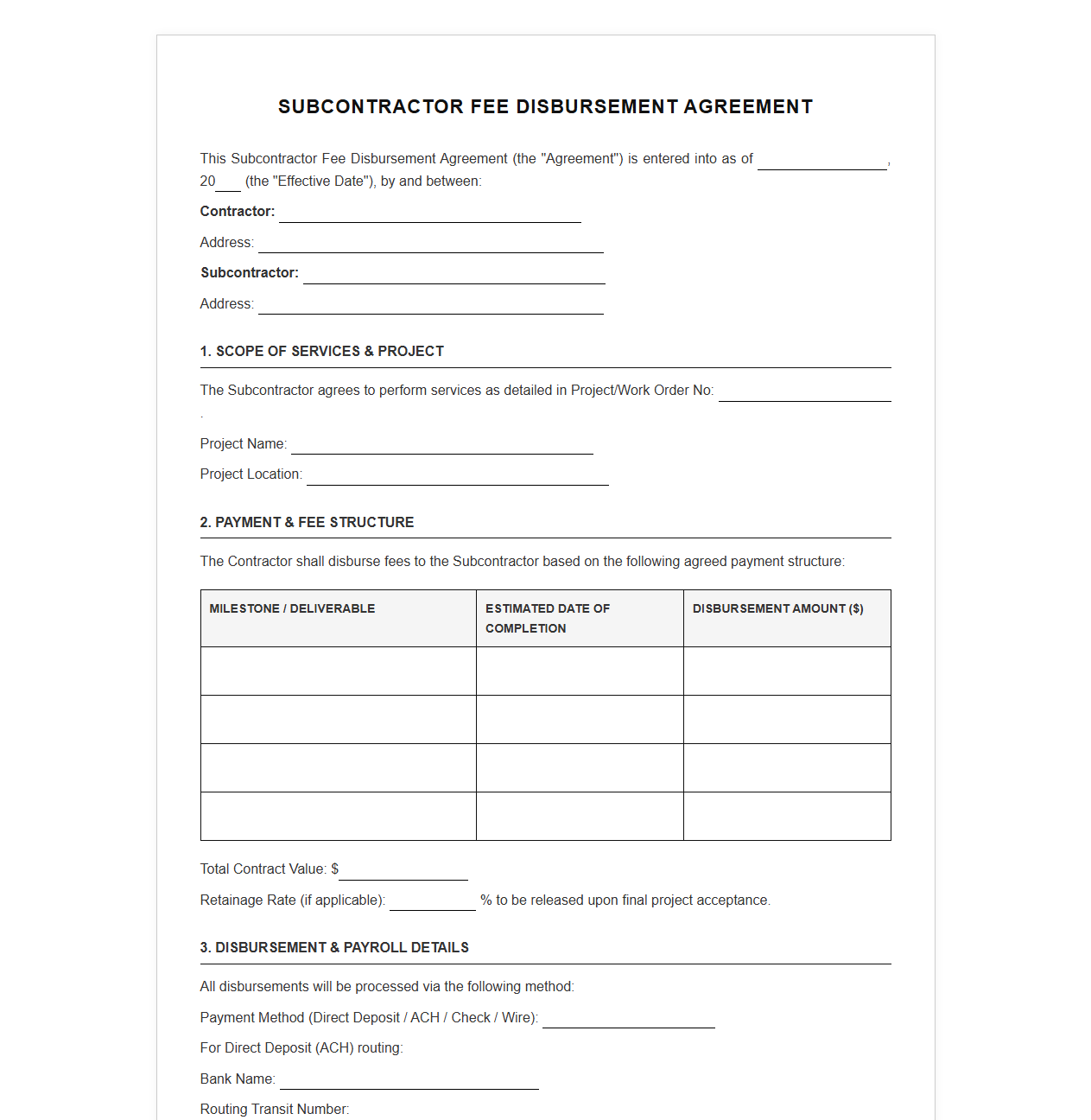 Download: .PDF
The Foundation of Subcontractor Compliance
In the construction and contracting industries, maintaining rigorous subcontractor compliance is not just an administrative chore-it is a critical shield against catastrophic operational risk. When prime contractors fail to verify that their subs are adhering to labor laws, tax codes, and wage standards, they open the door to severe financial liabilities. Poor payroll documentation can trigger devastating class-action lawsuits, costly union grievances, and severe government penalties. Without a standardized compliance framework, a single subcontractor's administrative oversight can halt an entire project, compromise funding, and permanently damage a prime contractor's professional reputation.
Why Standardized Payroll Templates Are Essential
Standardized payroll templates serve as a universal language between prime contractors and subcontractors. By establishing a uniform format for data collection, these templates eliminate ambiguity and drastically reduce the likelihood of legal disputes over hours worked or wage rates. When regulatory bodies or internal auditors request documentation, having a structured, predictable system ensures immediate audit readiness, preventing costly delays and penalties.
Furthermore, standardization fosters a culture of transparency and mutual trust. Subcontractors appreciate clear expectations and faster payment processing times, while prime contractors gain peace of mind knowing that every dollar paid is backed by verifiable, consistent records.
Certified Payroll Reports and Prevailing Wage Projects
On government-funded and public works projects, contractors must comply with the Davis-Bacon Act by submitting weekly Certified Payroll Reports. This requirement ensures that workers receive the local prevailing wage and fringe benefits. Managing this complex weekly administrative burden can easily overwhelm project managers without a dedicated template structure.
Using a standardized template that aligns directly with federal standards simplifies this reporting workflow:
- Form WH-347: The official Department of Labor form used to report wages, benefits, and hours worked.
Statement of Compliance: The mandatory certification signed by the subcontractor affirming the accuracy of the payroll data.- Automated Calculations: Pre-built mathematical formulas within templates that prevent rounding errors in gross wages and deductions.
Lien Waivers and Progress Payment Releases
Lien waivers are critical risk-mitigation instruments in the payment cycle, acting as receipts that prevent subcontractors from placing a mechanics lien on a property after receiving payment. Integrating these waivers directly with payroll workflows ensures that payments are only released when compliance is fully verified, protecting the project owner and prime contractor from double liability.
Tax Classification and W-9 Onboarding Templates
Properly onboarding subcontractors is the first line of defense against costly IRS misclassification audits. Misclassifying an employee as an independent contractor can result in retroactive payroll taxes, interest, and substantial fines. Standardized onboarding templates ensure that every worker's tax status is thoroughly documented before they ever step onto the job site.
- W-9 Collection: Gathering taxpayer identification numbers and certifications systematically during the onboarding phase.
- Worker Classification Checklists: Utilizing objective criteria to distinguish between W-2 employees and 1099 independent contractors.
- Document Verification: Reviewing business licenses and insurance certificates to substantiate independent business operations.
Digital Workflows for Secure Document Tracking
Relying on physical filing cabinets or chaotic email threads to track subcontractor compliance is a recipe for administrative failure. Transitioning to a secure, digital workflow streamlines document management while safeguarding sensitive payroll data from unauthorized access.
- Implement Secure Cloud Storage: Centralize all compliance documents in a secure, encrypted cloud environment accessible to authorized stakeholders.
- Set Automated Deadline Alerts: Use automated notifications to warn administrators before subcontractor insurance certificates, licenses, or payroll reports expire.
- Leverage Digital Signatures: Accelerate the execution of lien waivers and certified statements using legally binding e-signature tools.
Achieving Frictionless Subcontractor Management
Building a proactive compliance document library is the most effective way to eliminate project delays, protect profit margins, and maintain outstanding relationships with your subcontractors. By standardizing your payroll reporting and onboarding processes, you establish a seamless operational standard that ensures audit readiness and legal protection at every stage of construction.
Take the first step toward safeguarding your projects today. We invite you to download our comprehensive starter pack of professional payroll templates to streamline your compliance workflows immediately. Access the Subcontractor Compliance Starter Pack Now.
Leave a comment