
For both landlords and prospective buyers, the brief window between agreeing on a property and signing the final contract is often fraught with anxiety. Landlords risk losing qualified applicants to market delays, while buyers constantly fear being gazumped after investing time and emotional energy.
In today's highly competitive real estate market, verbal agreements are no longer sufficient. Securing a mutual commitment requires a structured transitional step. Utilizing a professional holding deposit receipt grants both parties immediate financial clarity and legal peace of mind by formalizing the intent to transact.
Crucially, users must recognize that a deposit receipt is not a final lease or purchase contract; rather, it is a temporary reservation governed by strict stipulations. To serve as concrete proof of commitment, a robust receipt must explicitly outline key variables, such as refundable conditions and the exact duration of the hold.
This article will explore the essential components of reliable holding deposit templates, outline critical legal considerations, and provide actionable frameworks to safeguard your next property transaction.
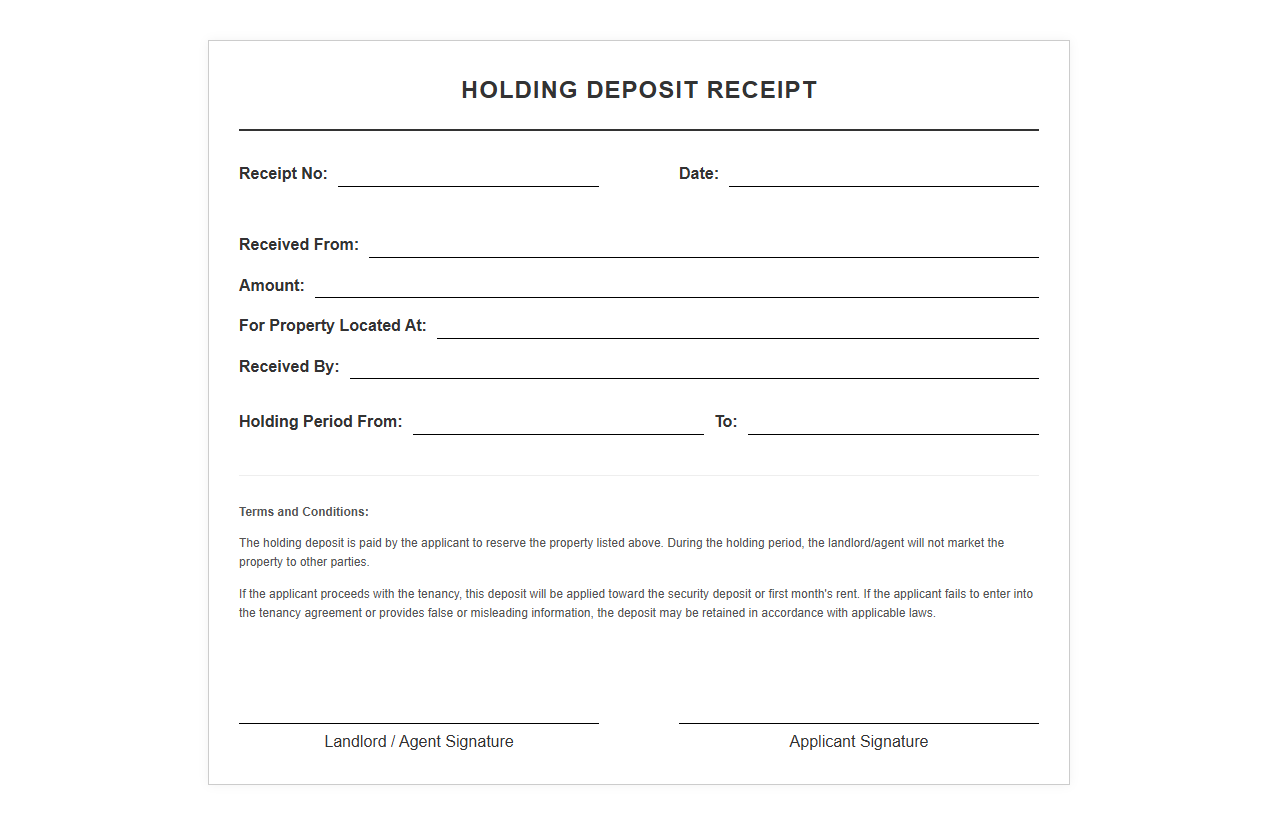
Simple Holding Deposit Receipt Template
 Download: .PDF
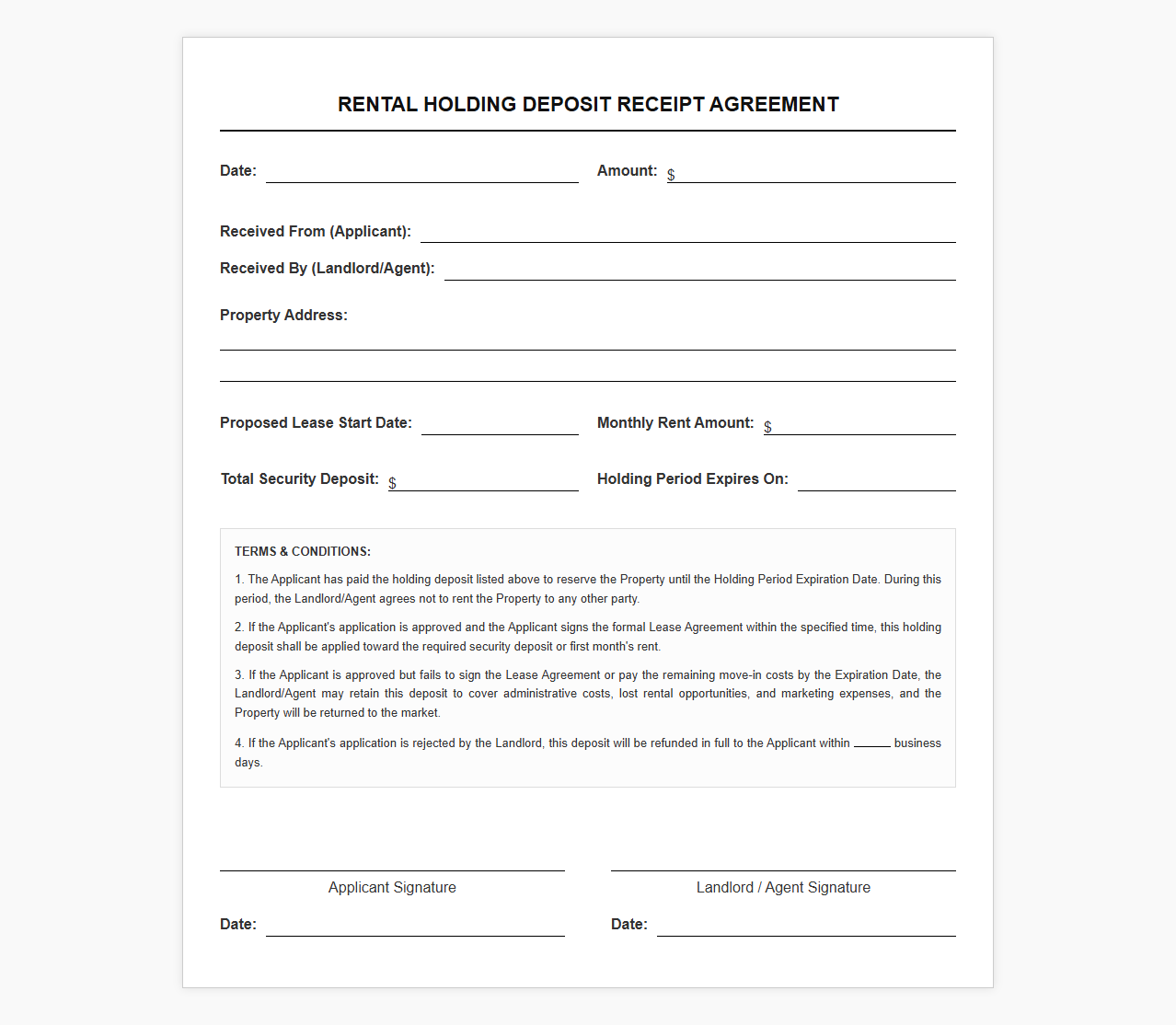
Rental Holding Deposit Receipt Agreement
 Download: .PDF
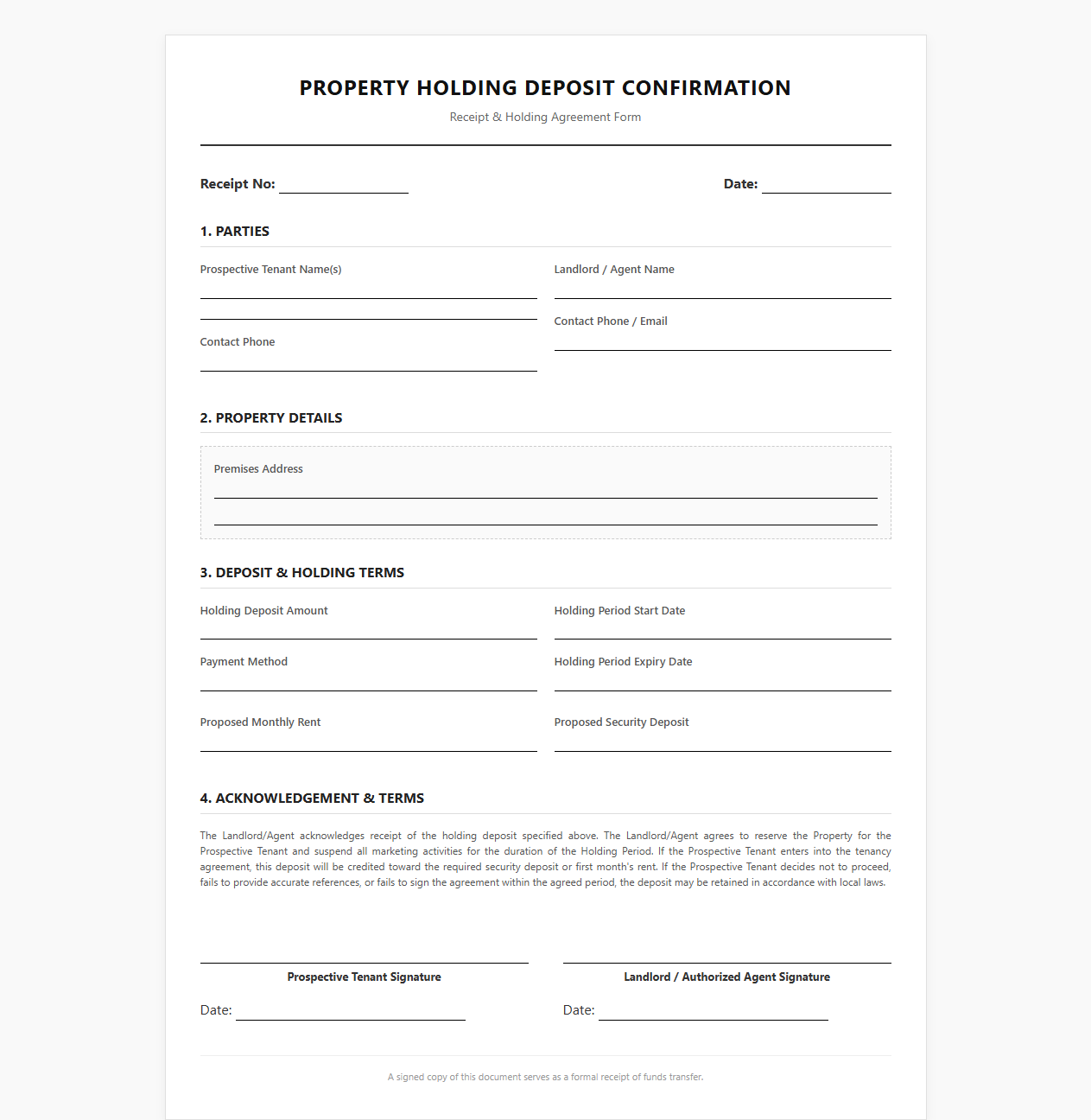
Property Holding Deposit Confirmation Form
 Download: .PDF
Holding Deposit Receipt and Agreement Template
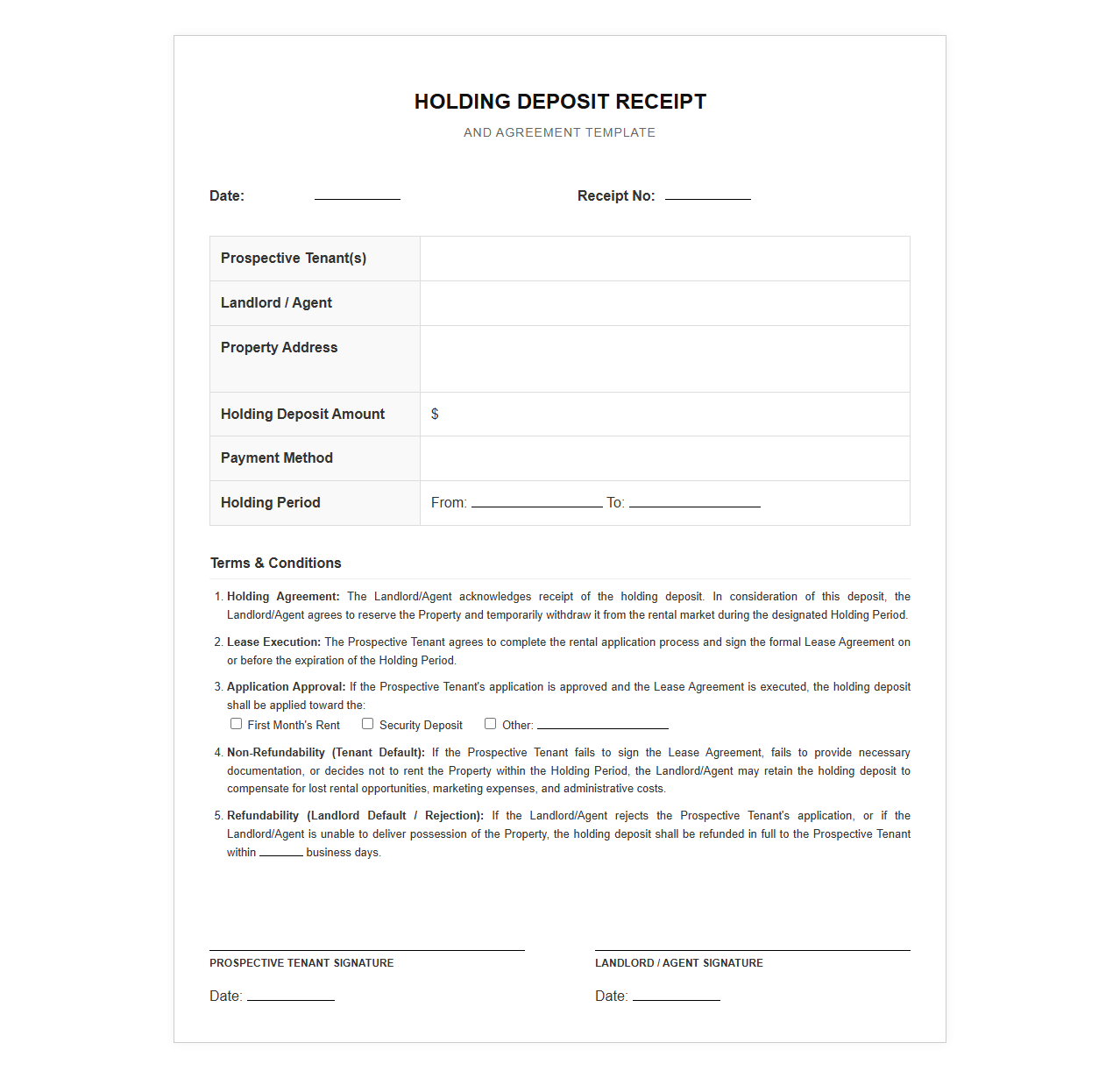 Download: .PDF
Tenant Holding Deposit Receipt Template
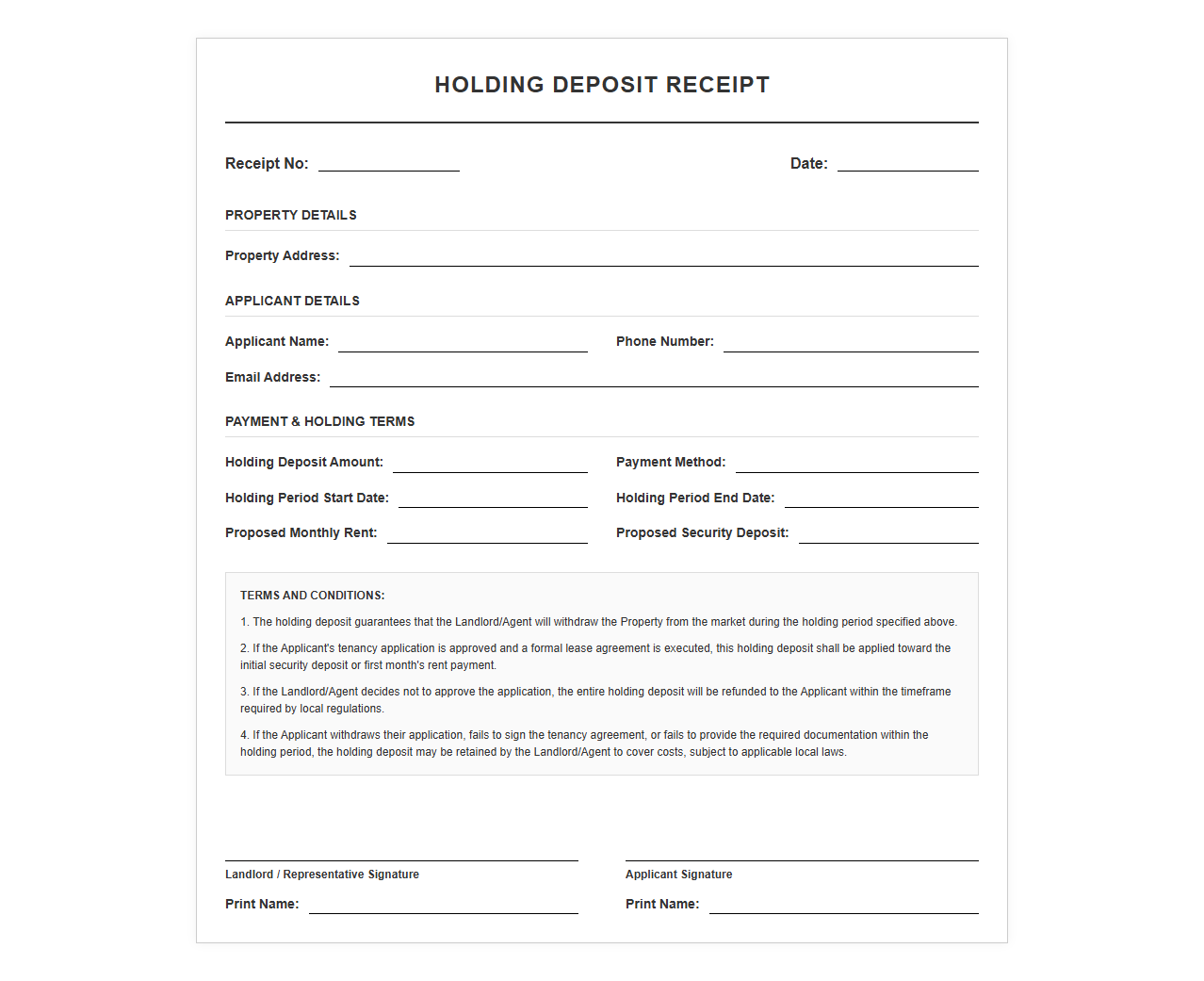 Download: .PDF
Vehicle Holding Deposit Receipt Template
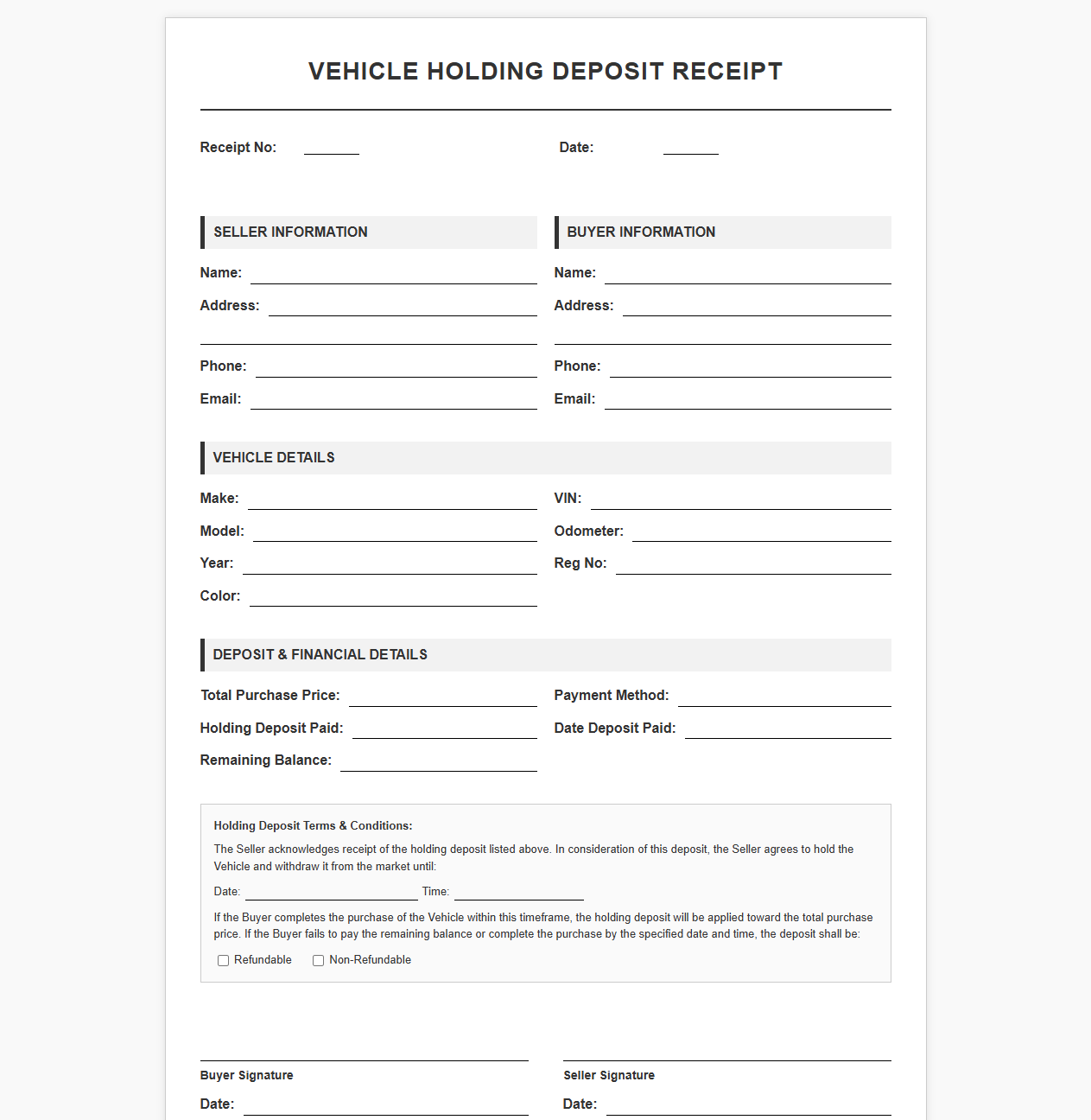 Download: .PDF
Real Estate Holding Deposit Receipt Form
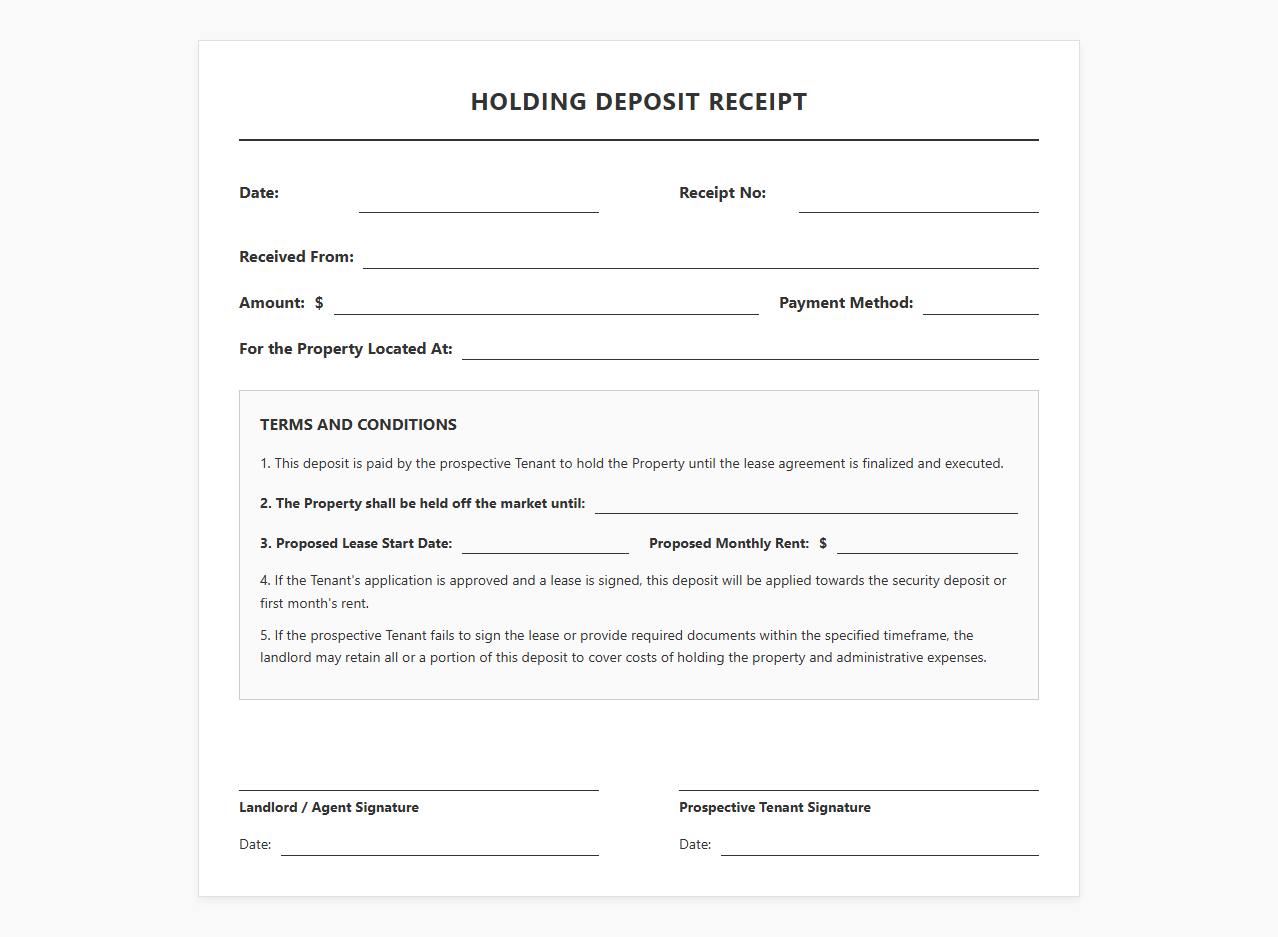 Download: .PDF
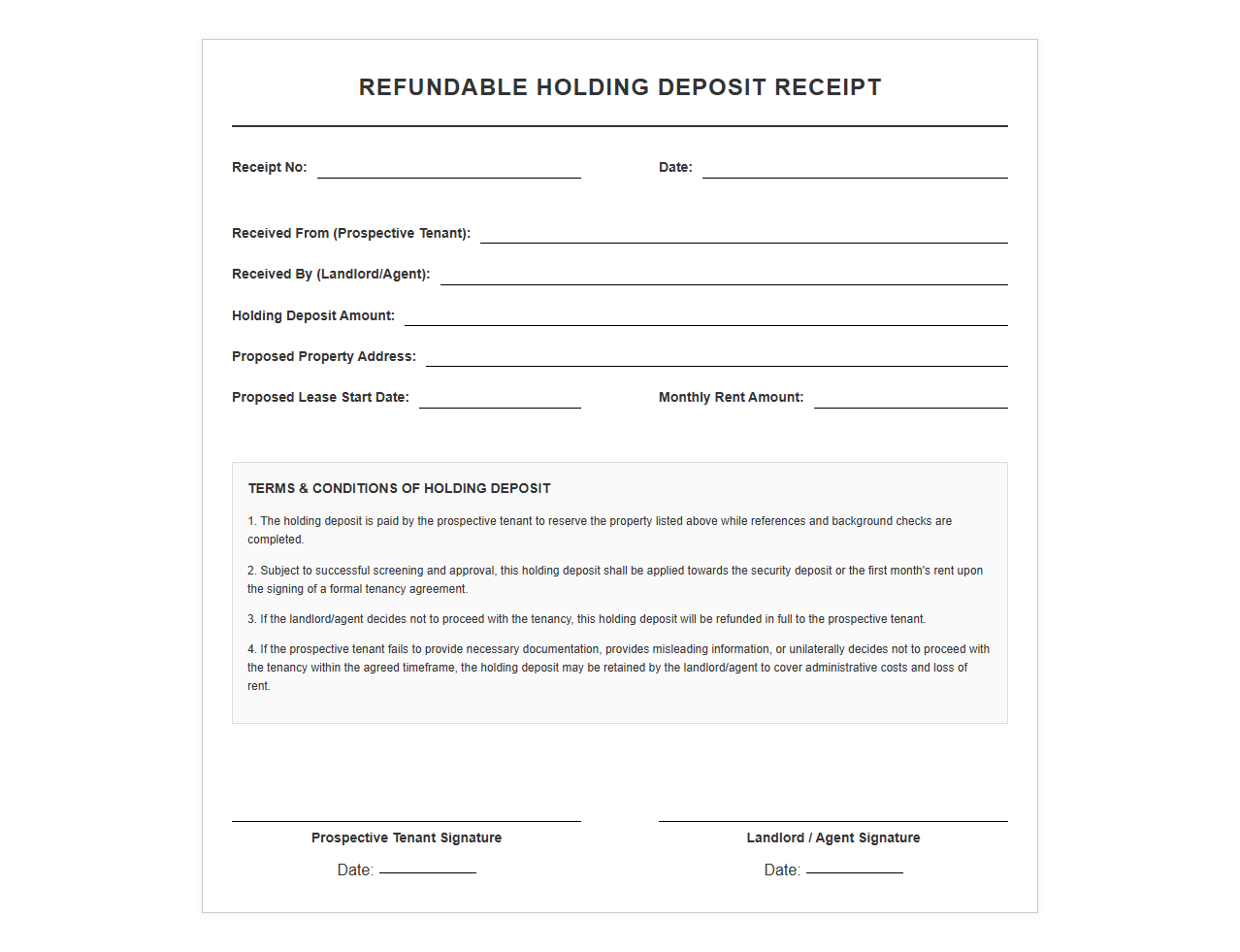
Refundable Holding Deposit Receipt Template
 Download: .PDF
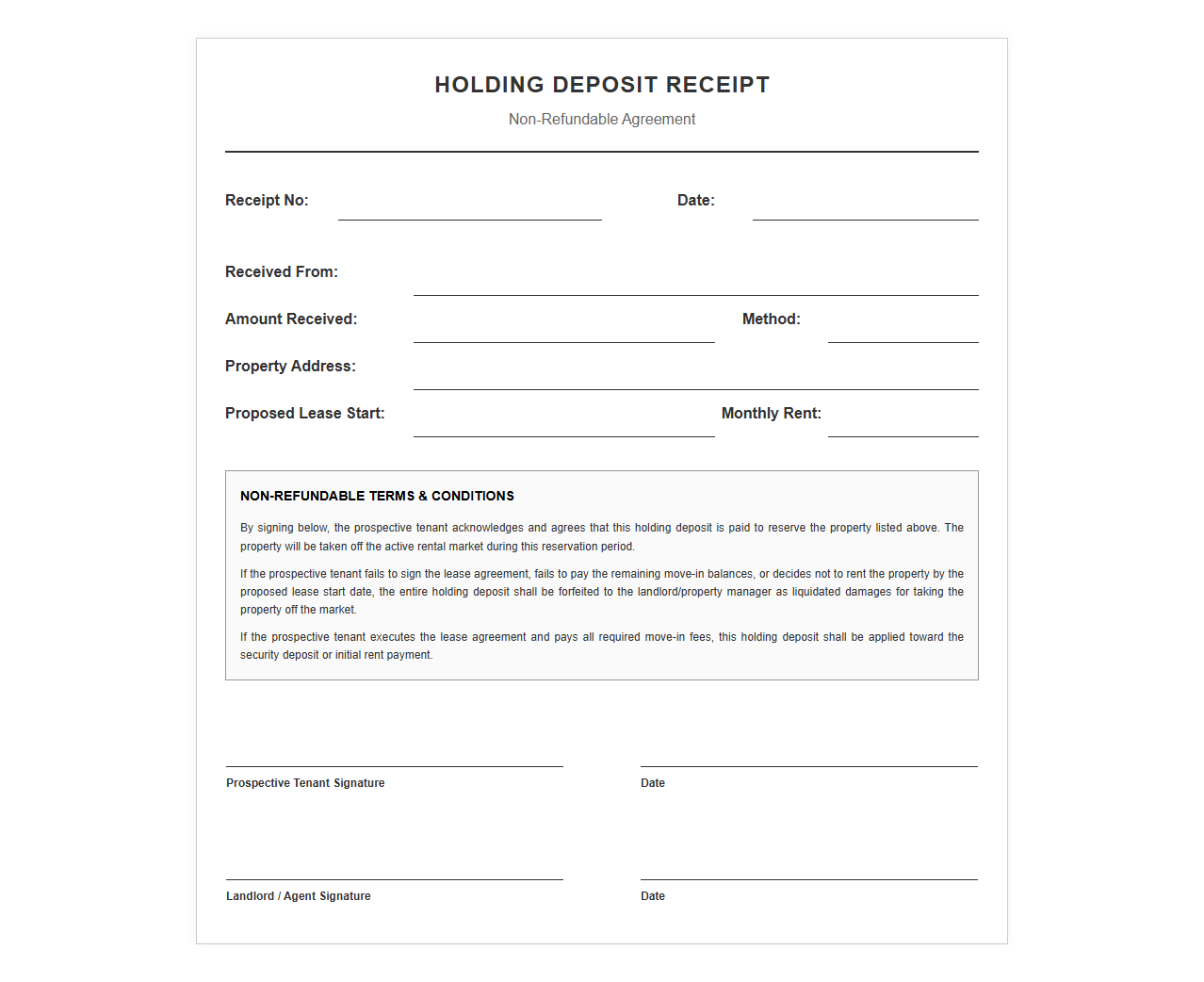
Non-Refundable Holding Deposit Receipt Template
 Download: .PDF
Understanding the Role of Holding Deposits in Real Estate
In the fast-paced real estate market, securing a desirable property requires swift action and mutual trust. A holding deposit-sometimes referred to as a holding fee-is a sum of money paid by a prospective tenant or buyer to a landlord or seller to temporarily reserve a property. This financial gesture acts as a guarantee of serious intent, ensuring that the property is taken off the market while background checks, lease agreements, or initial legal evaluations are finalized.
By establishing a clear commitment between both parties, holding deposits mitigate risk. For the housing seeker, it provides financial security by ensuring the property will not be rented or sold to someone else in the interim. For the property owner, it guarantees that the applicant is genuinely interested, compensating them for the time the property is withheld from other active prospective applicants.
Why a Written Holding Deposit Receipt is Essential
Handing over money without formal proof is a significant risk in any financial transaction. A written holding deposit receipt provides immediate legal and financial protection for both the payer and the receiver. It acts as an official paper trail, confirming that the funds were transferred and outlining the exact terms under which the money is being held.
Without written proof, resolving conflicts becomes incredibly difficult. Having a signed document is crucial for preventing misunderstandings, as it clearly details what happens to the funds if the transaction fails to proceed. Furthermore, utilizing formal paperwork sets a highly professional tone from the very beginning of the relationship, establishing clear expectations and mutual respect between the parties involved.
Essential Components of a Professional Holding Deposit Receipt
To ensure validity and completeness, a holding deposit receipt must contain specific, detailed information. Missing key details can render the document ineffective if a dispute arises later. Every professional receipt should include the following core elements:
- Identification of Parties: The full names and contact information of both the prospective tenant/buyer and the landlord/seller.
- Property Address: The complete physical address of the specific property being reserved.
- Deposit Amount: The exact monetary sum received, specified in numbers and written words, along with the method of payment.
- Validity Period: The exact date and time the holding agreement expires, marking the deadline for signing the final contract.
- Terms of Refundability: A clear statement outlining under what conditions the money will be returned or kept.
How Landlords Should Handle and Document Holding Deposits
As a property owner, managing holding deposits with care is vital to maintaining legal compliance and protecting your business reputation. Implementing a structured process ensures a smooth transition from applicant to confirmed occupant.
- Safely Accept the Deposit: Secure the funds through a traceable payment method, such as a bank transfer, certified check, or a secure online payment portal, avoiding untraceable cash payments.
- Issue the Receipt Immediately: Fill out and sign the receipt document, providing a completed copy to the applicant instantly while keeping a duplicate for your own financial records.
- Take the Property Off the Market: Pause all active advertising, update online listings to "Pending," and stop hosting property showings for other prospects during the agreed-upon reservation period.
Tenant and Buyer Best Practices Before Paying
Before handing over hard-earned money to reserve a property, prospective buyers and tenants must conduct due diligence to protect their investment. Rushing into a holding deposit agreement without verifying critical details can lead to financial loss or falling victim to rental scams.
Warning: Never pay a holding deposit before verifying that the individual collecting the funds is the actual owner of the property or an officially authorized agent. Always request to view the property in person and read the terms of the holding agreement thoroughly before signing.
Navigating Refund and Forfeiture Conditions
One of the most common sources of friction in real estate transactions is the handling of deposits when a deal falls through. To prevent conflict, the receipt must explicitly outline the scenarios that lead to either a return of funds or their retention.
A full Refund is typically warranted if the landlord decides not to proceed with the transaction, fails reference checks on their end, or if the property becomes unavailable due to unforeseen maintenance issues. On the other hand, the Forfeiture of the deposit generally occurs if the buyer or tenant backs out of the agreement without a legally valid reason, provides false information on their application, or fails to sign the final contract within the designated time limit.
Professional Holding Deposit Receipt Template
Below is a clean, standard template that landlords, sellers, tenants, and buyers can easily copy, customize, and use to document holding deposits professionally.
-----------------------------------------------------------------
                    HOLDING DEPOSIT RECEIPT
-----------------------------------------------------------------
Date: [Date of Payment]
Receipt Number: [Unique Number]
1. PARTIES
Landlord/Seller Name: [Full Name]
Tenant/Buyer Name: [Full Name]
2. PROPERTY ADDRESS
Address: [Full Property Address, Unit #, City, State, Zip]
3. DEPOSIT DETAILS
Amount Received: $[Amount in Numbers] ([Amount in Words])
Payment Method: [e.g., Bank Transfer, Check, Card]
4. RESERVATION PERIOD
This deposit secures the property from [Start Date/Time]
until [End Date/Time] (the "Expiration Deadline").
5. TERMS AND CONDITIONS
- If the Tenant/Buyer signs the final lease/sales contract by the
  Expiration Deadline, this deposit shall be applied toward the:
  [ ] Security Deposit  [ ] First Month's Rent  [ ] Purchase Price
- If the Landlord/Seller decides not to proceed, the deposit will
  be refunded in full within [Number] business days.
- If the Tenant/Buyer fails to sign the contract or backs out before
  the Expiration Deadline, the deposit may be forfeited.
6. SIGNATURES
Landlord/Seller Signature: _______________________ Date: _________
Tenant/Buyer Signature:    _______________________ Date: _________
-----------------------------------------------------------------
Leave a comment